Client Profile
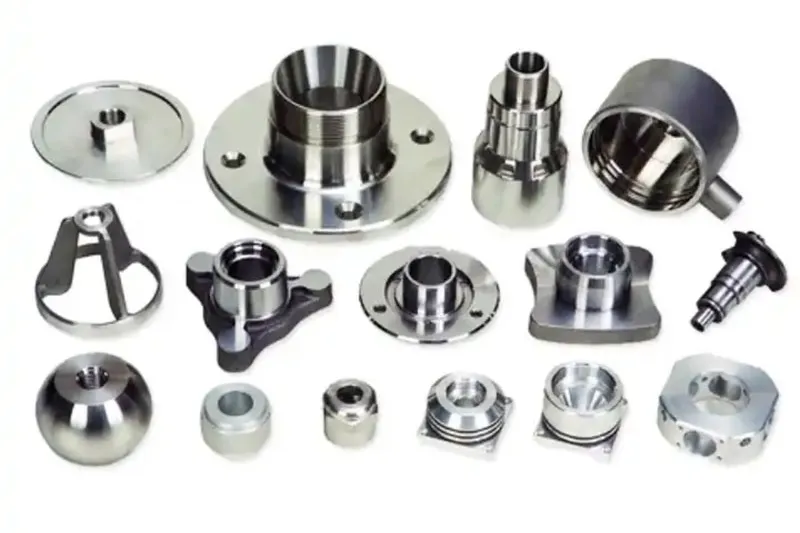
A tier-2 Japanese automotive supplier producing precision CNC-machined components — brackets, housings, and mounting plates — for a major Japanese OEM’s EV powertrain program.
The parts required tight tolerances (±0.02mm on critical dimensions), specific surface finish specifications, and full PPAP (Production Part Approval Process) documentation.
Three Chinese machining suppliers had been qualified for production, but real-world quality performance was falling catastrophically short of automotive standards.
The Challenge
The defect rate across the three suppliers averaged 2,400 parts per million — 0.24% defective, which may sound small but is catastrophic in automotive. At this defect rate, the OEM’s incoming quality team was finding roughly 24 defective parts in every 10,000 received.
The client had received three formal supplier rejections from the OEM in the preceding 12 months. A fourth would trigger a full re-sourcing review and potentially loss of the entire program — worth $12M in annual revenue.
Root cause analysis revealed the problems were systemic: none of the three suppliers were using statistical process control (SPC). Dimensional inspection was done post-production on a sampling basis, not in-line.
When tools wore and tolerances drifted mid-batch, no one caught it until inspection — and by then, hundreds of parts were already out of spec. On-time delivery was just 72% because rejected batches triggered re-runs that cascaded through the production schedule.
“In automotive, good isn’t good enough. We needed zero-defect manufacturing, and our Chinese suppliers weren’t even measuring.”
Our Solution
LeelineGroup’s solution started with an uncomfortable truth: two of the three suppliers couldn’t meet automotive-grade requirements even with process improvements. Their equipment was older, their quality culture was commodity-grade, and neither was willing to invest in SPC infrastructure. We terminated both.
We sourced and qualified three new CNC machining partners — all with ISO 9001:2015 and IATF 16949 certification, the latter being the specific quality management standard for automotive production.
Each new partner had in-line CMM (coordinate measuring machine) capability, automated SPC software tracking key dimensions in real time, and documented PPAP processes.
The transition included full PPAP Level 3 submissions for every part number — dimensional results, material certifications, process FMEA, control plans, and capability studies (Cpk > 1.67 required on all critical characteristics).
A LeelineGroup QC engineer was embedded on-site for the first three production runs to validate process stability and audit SPC data in real time.
Automotive-Grade Transformation:
- 2 non-compliant suppliers terminated, replaced with IATF 16949-certified partners
- In-line CMM + automated SPC on all critical dimensions
- Full PPAP Level 3 package for every part number
- Cpk > 1.67 requirement on all critical characteristics
- Embedded QC engineer for first 3 production runs
Results
Technical Results
| Metric | Before | After |
|---|---|---|
| PPM Defect Rate | 2,400 (0.24% defective) | 15 (0.0015% defective) |
| On-Time Delivery | 72% | 99.4% |
| Dimensional Tolerance Compliance | 87% within ±0.05mm | 99.8% within ±0.02mm |
Commercial Results
| Metric | Before | After |
|---|---|---|
| Annual Rework + Scrap Cost | $420K | $8K |
| Supplier Rejections (12 months) | 3 formal rejections | 0 rejections |
| Per-Part Cost | $4.80 | $4.15 |
In six months, the PPM defect rate dropped from 2,400 to 15 — a 99.4% reduction and well within automotive acceptable quality levels. On-time delivery went from 72% to 99.4%.
The OEM’s quality team recorded zero rejections in the 12 months following the transition, and the client was awarded an additional two part numbers for the next-generation EV platform.
Per-part costs actually decreased by 14% — the new suppliers’ efficiency and lower rework rates more than offset any premium for certification.
Automotive tolerances demand automotive-grade suppliers. We source to spec — and hold suppliers accountable.
Key Results Summary
PPM Defect Rate
On-Time Delivery
Annual Rework + Scrap Cost
Commercial Results
Annual Rework + Scrap Cost
Supplier Rejections (12 months)
Per-Part Cost