Client Profile
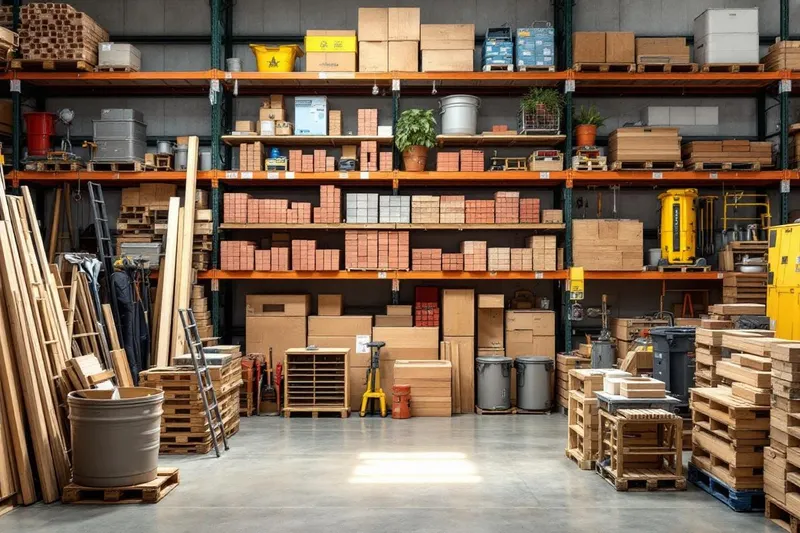
A Dubai-based building materials distributor supplying ceramic tiles, sanitary ware, aluminum profiles, and hardware to construction projects across the UAE and GCC region.
The company had been sourcing from three Chinese factories for five years and was hitting the ceiling of what their existing supplier relationships could handle. Growth was being constrained not by demand — their order book was full — but by supply chain throughput.
Every new construction project they won meant stress-testing a supply chain that wasn’t built to scale.
The Challenge
At five containers per month, the existing setup was barely functional. The three factories they worked with were all in Foshan (Guangdong province), creating a single-point-of-failure geographic concentration.
When Foshan experienced COVID-related production restrictions, all three factories were affected simultaneously — and 18% of shipments were delayed by three weeks or more.
Scaling to 40 containers per month — the volume their project pipeline demanded — would require a fundamentally different sourcing strategy. More factories, across multiple provinces, with sufficient redundancy that no single event could halt supply.
But the distributor’s team was lean: two procurement managers in Dubai handling all supplier communication, QC coordination, and logistics. Adding seven factories would require an operational team they couldn’t afford to build.
“Our projects were winning. Our supply chain was not. Five containers a month to forty — that’s not a negotiation, that’s a transformation.”
Our Solution
LeelineGroup designed a multi-province, multi-factory sourcing strategy to match the scale of demand.
We expanded the supplier base from three factories in Foshan to nine factories across three provinces: Guangdong (ceramics and tiles), Zhejiang (sanitary ware and bathroom fixtures), and Shandong (aluminum profiles and hardware).
Geographic diversification eliminated the single-point-of-failure risk.
The critical structural change was centralized production management. Instead of the client’s two-person procurement team managing nine factories, LeelineGroup deployed a dedicated account team — sourcing lead, QC manager, and logistics coordinator — to manage the entire supplier network.
The client received a single weekly report covering all nine factories: production status, QC results, container loading schedules, and shipping ETAs.
On logistics, we consolidated shipments at a bonded warehouse in Shenzhen — combining products from all three provinces into optimized container loads before ocean freight to Jebel Ali Port. Container utilization improved from 72% to 94%.
We also negotiated annual volume contracts with two shipping lines serving the China-UAE route, locking in priority loading and fixed rates.
Scaling Infrastructure:
- 3 factories (Foshan only) → 9 factories across Guangdong, Zhejiang, Shandong
- Dedicated LeelineGroup account team: sourcing lead + QC manager + logistics coordinator
- Bonded warehouse consolidation — 72% → 94% container utilization
- Annual shipping contracts — priority loading, fixed rates, guaranteed space
Results
Technical Results
| Metric | Before | After |
|---|---|---|
| Monthly Container Volume | 5 containers/month | 40 containers/month |
| On-Time Shipment Rate | 82% (18% delayed) | 99% |
| Supplier Base | 3 factories, single-province | 9 factories, 3 provinces |
Commercial Results
| Metric | Before | After |
|---|---|---|
| Per-Unit Material Cost | Baseline pricing | 18% reduction |
| Monthly Procurement Value | $180K | $1.2M |
| Demurrage & Detention Charges | $34K/month average | $2K/month average |
Within ten months, container volume scaled 8× from 5 to 40 per month — supporting a 6.7× increase in monthly procurement value.
On-time delivery reached 99%, and the geographic diversification paid off: when a typhoon disrupted Zhejiang production for four days, the Guangdong and Shandong factories maintained uninterrupted supply. Per-unit costs decreased 18% through volume consolidation.
Demurrage and detention charges — a constant headache at 5 containers/month — dropped from $34,000/month to just $2,000/month through better logistics planning and priority shipping contracts.
Outgrowing your supply chain is a good problem to have — but only if you solve it. Let’s build the infrastructure your growth demands.
Key Results Summary
Monthly Container Volume
On-Time Shipment Rate
Per-Unit Material Cost
Commercial Results
Per-Unit Material Cost
Monthly Procurement Value
Demurrage & Detention Charges