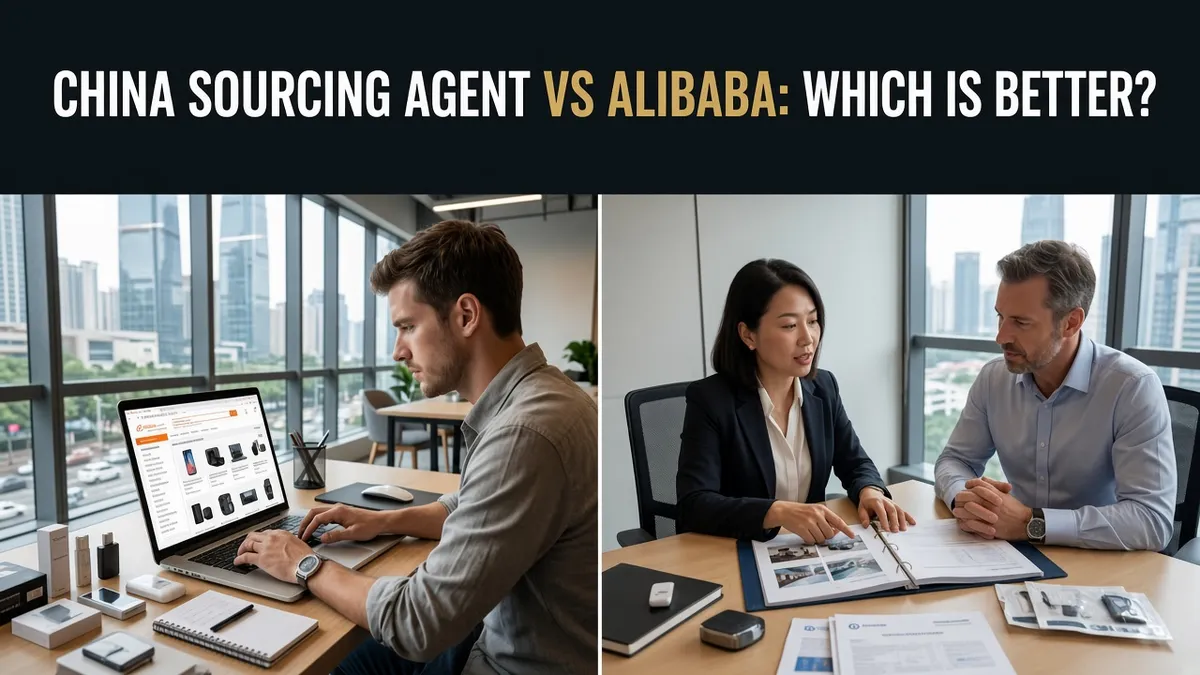
For most first-time e-commerce launches, ODM is the practical winner. For established brands building a moat, OEM is the strategic winner. An original design manufacturer (ODM) modifies an existing factory product. An original equipment manufacturer (OEM) builds your custom design from scratch.
The real wedge is not jargon. It comes down to who controls the design, who pays for development, and who carries the risk. ODM is faster, but it leaves you exposed to copycats and margin pressure. Most private label and white label models fit here. OEM is highly defensible, but it is slower and more expensive.
During my recent factory audits for product sourcing, I saw this trade-off in OEM vs ODM Manufacturing firsthand. One ODM factory instantly refused my custom zipper request. A competing OEM factory accepted it, but they charged a 1,200‑dollar mold fee and delayed production by 15 days.
Factories often look identical on paper. However, our inspection history always reveals the truth. We track suppliers closely to see if they hold spec consistency across repeat runs. Without strict oversight, factories often quietly swap premium materials for cheap knockoffs on the second batch.
We extracted these direct specifications from recent supplier management contracts so you can evaluate the true cost and speed of both models.
| Procurement Variable | OEM (Original Equipment) | ODM (Original Design) |
|---|---|---|
| Design Ownership | Client | Factory |
| IP & Tooling Control | Client (You own molds) | Factory (Locked in) |
| Customization Depth | 100% Custom | Surface-level (Colors/Logos) |
| Typical MOQ | 1,000+ Units | 100–500 Units |
| Sampling Rounds | 3–5 Rounds | 1–2 Rounds (Tested) |
| Lead Time to Launch | 3–6 Months | 30–60 Days |
| Upfront Tooling Burden | High ($1,000+) | $0 (Pre-tooled) |
| Certification Duty | Client | Factory (Pre-certified) |
| Supplier-Switching | Easy (IP is yours) | Hard (Factory owns IP) |
| Best Fit | Brand Builders | Trend Testers |
| Vs. Contract Mfg (CM) | OEM sources materials | N/A |
| Vs. Private Label | N/A | ODM builds, you label |
Screen Reader Summary: ODM wins for sheer speed to market. OEM wins for long-term IP defensibility.
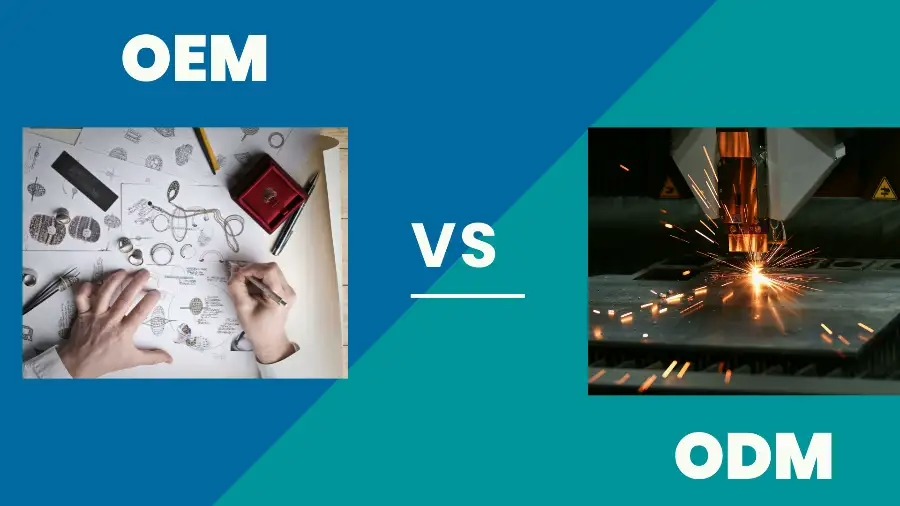
Main Differences of OEM vs ODM Manufacturing
Use this clear guide to select the manufacturing path that accelerates your market growth now.
1. Design Ownership, IP, and Legal Control

When we launch an OEM project, our team walks into the factory holding tech packs, CAD drawings, and strict material specs. With ODM, we simply walk through the factory showroom, point to a shelf item, and ask the manager to stamp a client’s logo on it. In practice, if you invent a radically new ergonomic spatula, you need OEM. If you just want to sell a standard spatula in a custom red Pantone, ODM is your path.
In OEM, you own the custom molds and tooling. If a factory misses deadlines, you grab your molds and move to a competitor. ODM locks you in. The factory owns the base design. You merely rent it. If you build a million-dollar brand around an ODM product, the factory can legally sell that exact same product to your biggest competitor tomorrow.
We see buyers make fatal legal mistakes here. A standard American NDA means nothing in Shenzhen. You need a localized NNN agreement (Non-Disclosure, Non-Use, Non-Circumvention).
You must also register your trademark in China immediately (even if you only sell in the US) to stop trademark squatters from holding your inventory hostage at the port. We advise clients to check the official CNIPA guidelines for filing timelines.
Even in OEM, mixed-IP realities exist. A factory might build your custom exterior shell but install its proprietary internal circuit board. You must explicitly define ownership in a manufacturer agreement checklist before wiring a single dollar.
⚠️ Safety First: Never split your paper trail. We often see buyers pay the tooling invoice through one factory entity and the bulk purchase order through another to save on taxes. When a dispute happens, the entity holding your molds claims they have no legal contract with you. Always consolidate your paperwork.
Winner: OEM for absolute legal control.
2. Upfront Cost, Tooling, and Cash-Flow Risk

OEM drains your cash flow long before you make a single sale. You carry the entire financial burden of product development. In our recent projects, a custom steel injection mold easily cost between $2,000 and $10,000. Add in 3D modeling, prototype revisions, and compliance testing, and you burn serious capital before validating the market. In practice, an OEM client might spend $15,000 and six months before seeing a viable prototype.
ODM slashes this upfront spend because the factory already paid for the molds and engineered the assembly line. An ODM client often pays $50 for a pre-made sample and starts selling next week. However, we consistently find hidden costs that blindside new buyers.
You still pay for sample revisions. If you sell on Amazon, you must fund custom packaging to meet strict FBA compliance rules. If the factory’s base design fails a mandatory safety test, you pay for the redesign.
This creates a dangerous cash-flow trap. ODM saves you money today but risks trapping you in commodity pricing tomorrow. Because anyone can source your ODM product, you compete entirely on price, crushing profit margins. OEM requires a massive upfront check, but that investment builds a protective moat around your pricing power.
Winner: ODM for bootstrapped launches; OEM for long-term margin defense.
3. Speed to Market, MOQ, and Flexibility

If a TikTok trend explodes on Friday, you cannot build an OEM product to capture it. OEM is brutally slow. We regularly spend weeks just reviewing engineering feedback, iterating physical samples, and running approval checkpoints. A standard OEM timeline takes three to six months from concept to a shipped container.
ODM dominates speed. Because the product already sits on the assembly line, we can negotiate a private label service contract, tweak the packaging, and ship units to our Amazon FBA prep services warehouse in under 30 days.
This speed directly impacts Minimum Order Quantities (MOQs). ODM factories show massive flexibility. For example, if you want to test a new dog collar on Amazon with just 300 units, an ODM factory will accommodate you because their nylon webbing machines are already running.
OEM factories refuse small orders. They have to halt production, calibrate machines for your custom materials, and train workers on your specific assembly. They demand 1,000 to 3,000 units minimum just to flip the power switch. If you want to test a market fast and cheap, you must use ODM.
Winner: ODM for rapid deployment and low MOQs.
4. Quality Control, Compliance, and Supply Chain Management
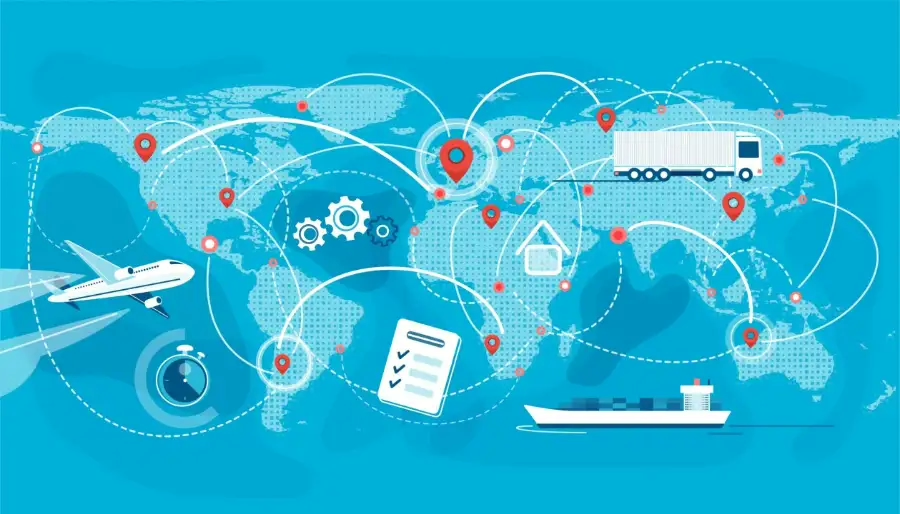
Quality control requires vastly different strategies depending on your sourcing model. OEM demands ruthless, granular spec enforcement. Because the product is 100% custom, the factory has no historical data on failure rates. We have to build the testing protocol from scratch.
ODM looks safer because the factory already proved the base design. In our experience, this is a dangerous illusion. The moment you request a custom logo, a different colorway, or bespoke packaging, you introduce new defect opportunities. During our quality control audits, we use strict AQL 2.5 standards to catch these integration errors. We compare every batch against a physically signed “golden sample.”
The real wedge in supplier management is controlling “spec drift.” When you own the OEM design, you dictate every screw. With ODM, the factory controls the supply chain. We frequently catch ODM suppliers secretly swapping premium materials for cheaper alternatives on the second or third batch to artificially pad their margin.
In practice, an ODM factory might nail the core product but print your barcode slightly off-center, causing Amazon to reject the entire container.
🚀 Actionable Insight: The most common factory failures are not catastrophic product explosions. They are boring, preventable errors. We reject more shipments for weak carton quality, unreadable barcodes, and non-compliant FNSKU labels than for broken products. Always mandate an independent drop-test based on official ISTA certification standards before releasing the final balance payment.
Winner: OEM for strict quality consistency.
5. Brand Differentiation, Private Label vs White Label, and the Hybrid Path

Let’s clear up the sourcing jargon. White label means buying a generic, unbranded product. Private label means pasting your specific brand and packaging onto a product. ODM is the actual manufacturing method that powers most private-label businesses. You use the factory’s engineering, but you wrap it in your brand identity.
OEM wins when the product is the moat. If you hold a utility patent or engineered a radically new feature, you must use OEM. ODM wins when your marketing, custom bundling, and fulfillment speed matter more than engineering uniqueness.
However, we rarely treat this as a binary choice. We push our fastest-growing clients toward Modified ODM (Hybrid Sourcing). We keep the factory’s core product architecture to save tooling costs and time.
Then, we aggressively customize the external touchpoints. We swap standard plastic for a premium soft-touch matte finish. We design a custom accessory bundle and build heavyweight, magnet-closure packaging.
In practice, we recently took a standard ODM massage gun, upgraded the battery cells, added a premium travel case, and doubled the client’s retail margin without paying for a new injection mold.
Finally, we run the finished goods through our China warehouse and use our freight forwarder network to maintain total control over the unboxing experience. You launch in 45 days, but your product feels entirely bespoke.
Winner: Modified ODM for the best balance of speed and brand equity.
Pros and Cons of OEM vs ODM Manufacturing
OEM (Original Equipment Manufacturer)
- Maximum Differentiation: We secured 30% higher retail margins because competitors could not legally copy our custom designs. True exclusivity justifies premium pricing and builds brand equity.
- Total Spec Control: We dictated every raw material and performance target during our recent supplier management negotiations. You never settle for off-the-shelf compromises.
- Factory Leverage: You own the physical product molds outright. This absolute ownership allows you to seamlessly switch suppliers if factory production quality drops.
- Massive Upfront Costs: You absorb tens of thousands in tooling fees before manufacturing a single unit. This front-loaded capital drain destroys cash flow if consumer demand flops.
- Sluggish Timelines: We experienced brutal six-month delays waiting for custom molds, tooling calibration, and mandatory prototype revisions. You cannot chase fast-moving seasonal trends using this slow method.
- Complex IP Disputes: Mixed-IP ownership creates severe legal nightmares. You must secure strict, localized NNN agreements to prevent rogue factories from legally claiming your engineering work.
⚠️ Safety First: Always register your intellectual property directly in China before sharing your CAD files. Unprotected custom designs routinely leak to competing gray market factories within weeks.
ODM (Original Design Manufacturer)

- Rapid Market Entry: We successfully launched new test SKUs in just 30 days. You utilize pre-engineered factory assembly lines to hit the market immediately and validate consumer interest.
- Minimal Capital Risk: You bypass heavy upfront development and tooling costs entirely. This critical financial savings preserves your vital cash flow for aggressive marketing campaigns and user acquisition.
- Pre-Certified Compliance: You actively leverage the factory’s existing safety documentation. This strategic shortcut saves your business thousands of dollars on expensive initial laboratory testing fees.
- Fragile Brand Moat: Competitors easily buy your exact product design. This total lack of exclusivity frequently triggers vicious, margin-crushing price wars on crowded Amazon search listings.
- Hidden Defect Traps: We caught unexpected certification failures during routine quality control inspections. Even minor custom packaging tweaks can severely disrupt the factory’s standard assembly process.
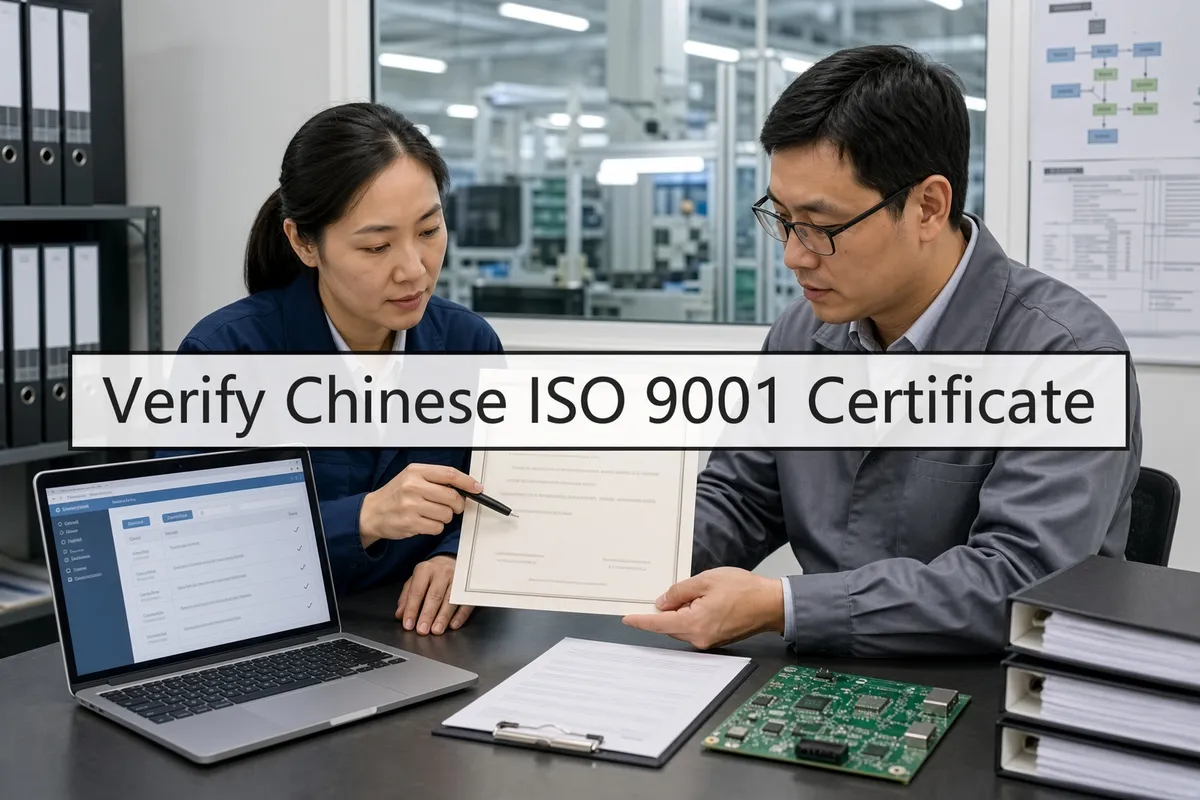
- Rigid Quality Baselines: The supplier strictly dictates the core product materials. You rely entirely on their internal ISO 9001 compliance frameworks rather than your own independent engineering standards.
People Also Ask About OEM vs ODM Manufacturing
1. Is private labeling considered OEM or ODM?
Private labeling uses the ODM model. You take a factory’s existing product design and apply your custom branding. In our daily sourcing operations, we process hundreds of private label orders by tweaking pre-engineered ODM items. This completely bypasses expensive engineering phases. See the Brand Differentiation section above for full details.
2. Which manufacturing model is cheaper?
ODM is significantly cheaper upfront. You avoid paying for custom steel molds, 3D modeling, and prototype testing. We recently managed an OEM project where the initial tooling cost $6,500 before a single unit was manufactured. However, OEM secures higher long-term profit margins because competitors cannot copy your exact design to start a price war.
3. Who owns the intellectual property in ODM?
The factory owns the core product design. You only own your trademarked logo and custom packaging. The manufacturer can legally sell that exact same base item to your direct competitors. During our factory audits, we always enforce localized NNN Agreements to legally protect any specific external modifications you make to their base design.
4. Can I switch from ODM to OEM later?
Yes. You can seamlessly transition to OEM once your sales volume justifies the upfront tooling investment. We helped a scaling Amazon seller make this exact switch last year. We took their proven ODM concept, engineered a custom OEM upgrade, and ultimately increased their retail margin by 22%.

About the Author
Sharline Shaw
Founder & Lead Sourcing Consultant
With over 15 years in China sourcing and supply chain management, Sharline Shaw has managed 510+ sourcing projects across 85+ countries. Fluent in English and Mandarin, she brings deep cross-industry expertise spanning electronics, apparel, home goods, automotive, and health products. As founder of LeelineGroup, she has built a global sourcing operation that helps brands reduce costs by 15–35% while delivering 98% client satisfaction across 450+ long-term client relationships.
Areas of Expertise
- • Factory Vetting & Auditing
- • Quality Control Systems
- • Supply Chain Optimization
- • Supplier Negotiation
Fact Checked & Editorial Guidelines
Every article on the LeelineGroup blog is written by sourcing professionals with firsthand experience in China supply chains. Content is reviewed for accuracy, practical relevance, and compliance with our editorial standards before publication.
Your trust is important. Learn more about our Fact Checking Process and Editorial Policy.