I have overseen global supply chain management on the ground in China for years, and I constantly see the same fatal mistake. E-commerce founders and procurement officers treat Supplier Sourcing as a simple price-shopping exercise.
The reality is that your manufacturing partner search dictates your cost of goods sold (COGS), product consistency, delivery speed, and brand risk. Unresolved supply chain vulnerabilities can erase half a year’s profits over a decade, according to McKinsey’s supply chain resilience data. The right supplier improves your margins. The wrong one creates devastating returns, stockouts, compliance exposure, and hidden logistics costs.
At its core, supplier sourcing is the process of identifying, evaluating, and partnering with facilities that can reliably manufacture your goods. In 2026, modern sourcing demands more than a low unit price. You must balance cost with operational resilience, environmental, social, and governance (ESG) expectations, and global supply volatility.
Whether you are an Amazon FBA seller trying to lower COGS without hurting reviews, a mid-sized procurement team balancing savings with compliance, or a product developer needing reliable manufacturing partners, you need a proven playbook.
Drawing on LeelineGroup’s daily experience auditing facilities, this guide explains how the strategic sourcing process actually works. You will learn how to execute a strictsupplier vetting and audit, when to hire a China sourcing agent versus a direct factory, and how to spot severe red flags like hidden subcontracting and misaligned incentives.

What is Supplier Sourcing?
In our daily operations, we define supplier sourcing as the process of identifying, evaluating, and managing the exact factories that deliver the best overall value for your brand.
Think of sourcing like hiring a specialized contractor to build a house. You do not just accept the cheapest bid. You review their past work, verify their safety compliance, and negotiate a strict contract to ensure the foundation never cracks.
Professionals strictly separate sourcing from purchasing. According to the Chartered Institute of Procurement & Supply, procurement is the entire purchase-to-pay function. Sourcing is simply the crucial first step. Strategic sourcing takes this further as a repeatable framework designed to lower your total cost of ownership over years, not just one order.
A successful sourcing scope requires intense groundwork. The basic steps include:
- Market research and supplier discovery and product matching
- Quotation comparison and cost breakdowns
- Aggressive price and terms negotiation
- Factory audits and compliance checks
- Trial orders and physical sampling
- Ongoing supplier relationship management
How do buyers actually secure products in 2026? We see businesses succeed using five primary models:
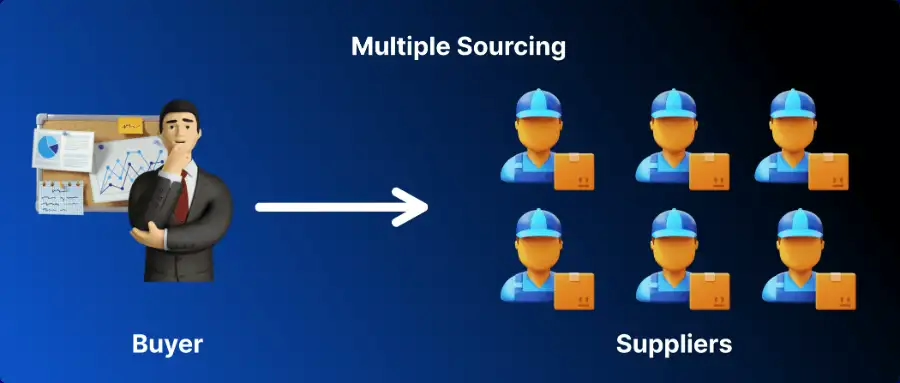
- Factory direct sourcing: This works best when your order volume is massive and your internal team speaks the local language.
- China sourcing agent: This model wins when you need local communication, rapid factory screening, and boots-on-the-ground verification for customization and factory readiness.
- Procurement outsourcing services: Choose this when you want a dedicated external team to run a large, ongoing supply chain function.
- Wholesale product sourcing: This path prioritizes speed and requires zero customization. It carries lower risk but yields much lower profit margins.
- Low-cost country sourcing: We constantly warn clients that this is a cost-driven strategy, not a geographic guarantee. A lower unit price will quickly cause a net loss if you mismanage quality, freight, or tariffs.
🌍 Real-World Context: Whether you are an Amazon seller launching a single SKU or a corporate director managing global supply lines, choosing the right sourcing model directly dictates your ultimate profit margin.
When you audit a profitable e-commerce brand or enterprise pipeline, you do not find a magic factory contact. You find a rigid strategic sourcing process. We treat supplier sourcing like programming a software loop: vague inputs guarantee defective outputs. After walking hundreds of factory floors, we built this seven-step operational workflow to turn unpredictable overseas manufacturing into a reliable system.
7-Step Supplier Sourcing Process
Step 1: Define the Product and Sourcing Brief

Poor sourcing starts with vague specifications. If you ask a factory for a “high-quality glass bottle,” they will guess your tolerances to win the bid. You must build a factory-ready brief.
Include exact product drawings, materials, finishes, precise measurements, tolerances, and barcode needs. We require clients to define order quantity targets, compliance requirements, and the shipping destination upfront. Amazon FBA sellers and Shopify brands must also outline retail packaging, custom inserts, prep requirements, and replenishment assumptions before requesting quotes.
This brief directly informs your golden sample. Once approved, this physical sample becomes the absolute benchmark for all mass production.
Step 2: Build a Longlist and Shortlist of Suppliers
Next, execute a targeted manufacturing partner search. We pull supplier leads from online directories, global trade shows, proprietary sourcing databases, local network referrals, and B2B marketplaces.
However, more leads do not equal better sourcing. A mid-sized procurement team might evaluate 20 factories, while a boutique retailer only needs five curated options. Do not blast your brief to fifty suppliers. Filter ruthlessly. Build a tight shortlist of manufacturers that specialize in your specific material and product category.
Step 3: Run Supplier Vetting Before Price Negotiations
Do not confuse supplier vetting and audit stages. Vetting is a broad desktop screening. An audit is a physical or third-party verification.
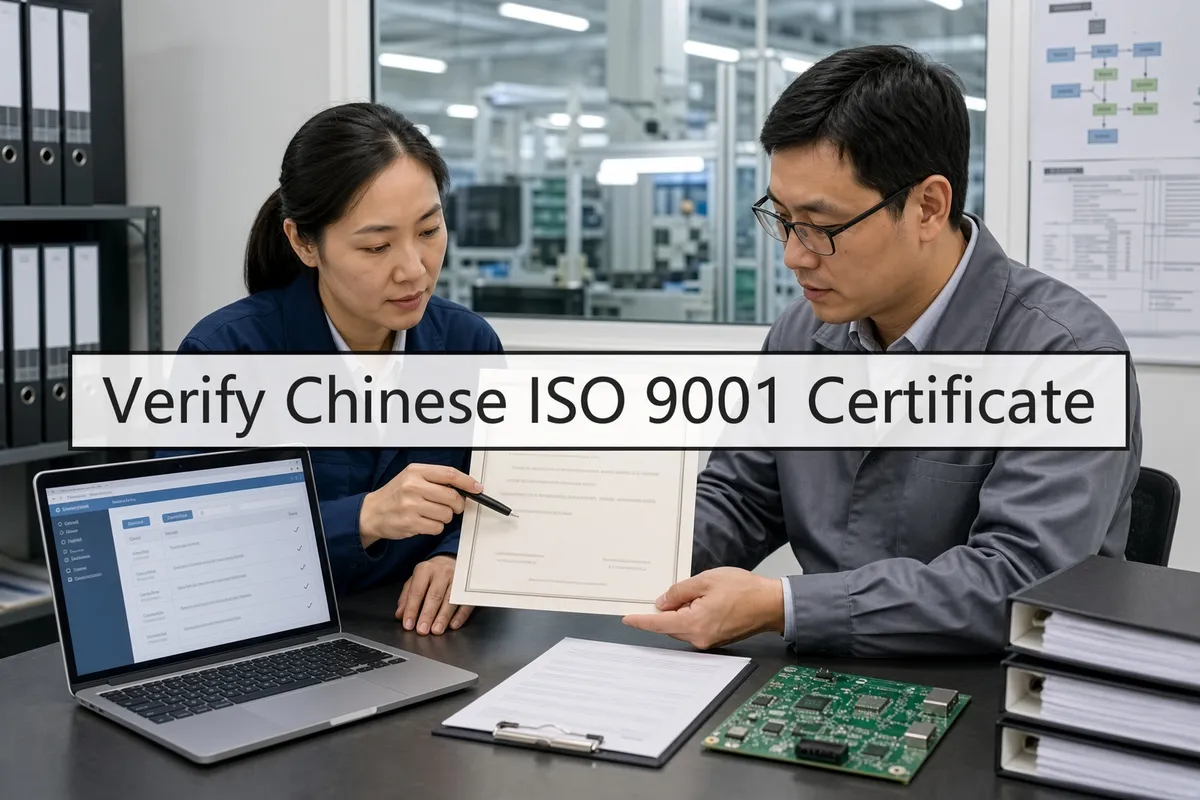
We run a strict vetting scorecard before discussing unit price. We screen the supplier for exact product capability, historical export experience, production capacity, and financial stability. We also verify their tooling capability, document quality, and ensure their minimum order quantity fits your budget. If a factory claims to hold an ISO certification, we verify the certificate number against global databases like the IAF CertSearch.
Step 4: Conduct Factory Audits and Spot Red Flags

This is where boots-on-the-ground experience saves businesses. You must physically audit the facility to verify vetting claims.
When we walk a factory floor, we look for structural inconsistencies. Sometimes a factory claims they own the production line, but the machines on the video tour do not match the quoted product category. We watch how staff react when we ask to see the raw material warehouse or historical quality records. Hesitation is a massive red flag. We often see polished documentation, yet the actual assembly machines sit idle.
The biggest threat we hunt for is hidden subcontracting. A factory will often win a bid and quietly move your production to an unapproved, dirty workshop to hit deadline targets. For Amazon sellers and product brands, this hidden network causes severe quality drift, IP leakage, and compliance failures.
Step 5: Compare Samples, Negotiate Terms, and Choose the Right Supplier
You cannot select a partner based on unit price alone. We compare quotes using a total landed cost matrix.
We evaluate tooling costs, packaging upgrades, defect allowances, and lead times. We also negotiate Incoterms, payment terms, rework policies, and sampling credits. The best supplier is rarely the cheapest. The cheapest factory usually cuts corners on raw materials to offer that price.
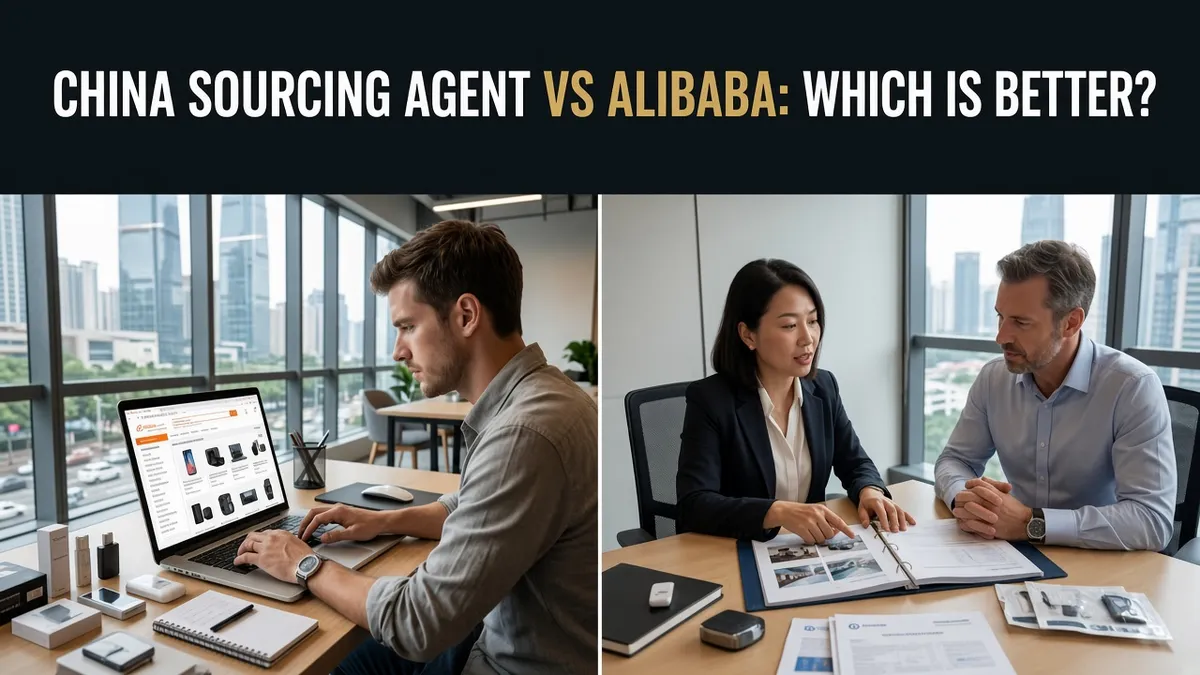
At scale, factory direct sourcing wins on raw unit cost. However, an experienced China sourcing agent wins on speed, bilingual negotiation, production verification, and shipping consolidation.
Step 6: Lock Compliance, Quality Controls, and Logistics

Before you wire the deposit for mass production, establish strict production controls. We map out checkpoints for pre-production confirmation, approved sample matching, in-line inspection, pre-shipment inspection, and packaging checks.
You must also lock in your 2026 trade compliance strategy. Global buyers now demand updated Environmental, Social, and Governance (ESG) reporting from international suppliers. Review labor and environmental documentation, secure product-specific testing reports, and ensure raw material traceability meets international standards like the GRI Framework. Verify your items meet specific marketplace safety rules, such as Amazon’s prep requirements.
Embed your exact quality control process into a binding contract so the factory knows how you penalize failed inspections. Set the rules for supplier oversight before the machines turn on.
Step 7: Onboard, Monitor, and Improve Supplier Performance
Sourcing does not end when you place the order. You must transition into active supplier relationship management.
We grade our suppliers using quarterly scorecards. We track their quality, on-time delivery rate, communication responsiveness, ESG compliance, cost improvement, and willingness to execute corrective actions. If a supplier drops below an 85% score, we place them on probation.
This oversight connects your factory directly to your broader global supply chain management strategy. You must align production schedules with your freight coordination to avoid port delays or stockouts. For fast-growing brands, we utilize inventory consolidation and buffer stock to protect against unexpected supply shocks and develop second-source backups.
Transitioning from DIY purchasing to a managed China sourcing agent transforms unpredictable expenses into measurable margin lift. Relying on random factory hunting burns cash and delays critical product launches. Here is how disciplined supplier sourcing directly protects your time, money, and bottom line.
Key Benefits of Strong Supplier Sourcing
Reduces Total Landed Cost
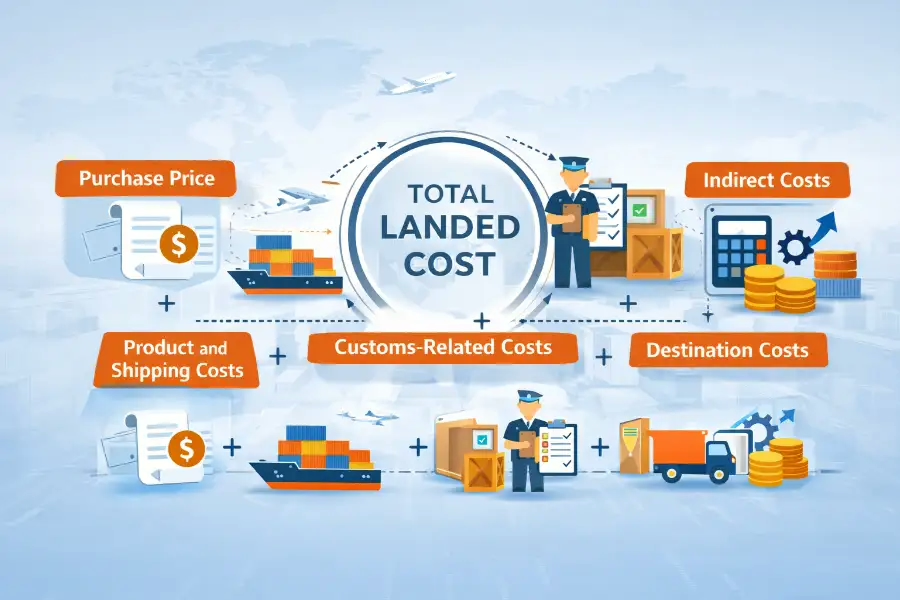
Blindly pursuing low-cost country sourcing backfires when hidden fees hit the port. We optimize negotiation, packaging dimensions, and freight routes to control your true Cost of Goods Sold (COGS). The International Trade Administration warns that unexpected logistics expenses routinely erase profit margins. By managing the entire chain, we consistently cut total landed costs by 15%.
Eliminates “Quality Fade” Surprises
We enforce AQL 2.5 standards through physical audits and golden samples. This prevents the manufacturing shortcuts that often ruin second production runs. By locking down consistency, you protect Amazon ratings and drastically lower return rates. In one recent audit, rigid factory oversight dropped a client’s defect rate from 8% to 0.5%.
Accelerates Private-Label Scaling
Precise product sourcing documentation and rigorous DFM reviews eliminate communication delays. We match your spec sheet with the correct facility immediately. You skip the frustrating back-and-forth over botched prototypes. We found this precision cuts sampling times by 30%, allowing you to launch new SKUs months faster than competitors.
Fortifies Supply Chain Resilience

We establish dual-sourcing networks and vet backup facilities before you need them. You avoid stockouts during Q4 rushes. Integrating this discipline into your global supply chain management turns vulnerability into leverage. Gartner research shows that resilient procurement networks absorb disruptions twice as fast as reactive setups.
Unlocks VIP Manufacturing Leverage
Active supplier relationship management moves you past transactional buying. We build entrenched partnerships with factory owners. This relationship capital dictates who gets priority during peak seasons. You secure faster problem resolution and unlock superior payment structures, such as Net-30 terms, preserving your cash flow.
📈 ROI Check: Always measure supplier sourcing success by total landed cost. Factor in initial quotes, customs duties, sea freight, and historical defect replacement costs to reveal your true profit margin.
The Reality Check: Risks and Limitations of Supplier Sourcing

Good supplier sourcing builds profit, but rarely operates without friction. No model is perfect. Top-tier suppliers still require constant monitoring because production quality drifts over repeat orders. Here is exactly what goes wrong.
Quality Drop-Offs via Hidden Subcontracting
We routinely catch suppliers quoting as direct manufacturers, only to outsource production to unverified workshops. Hidden subcontracting bypasses quality control. During our local factory audits, these outsourced batches consistently failed AQL 2.5 standards and broke material traceability. You pay for a state-of-the-art facility, but a shadow factory builds your product.
Seized Shipments from 2026 ESG Compliance Gaps
International sourcing in 2026 requires flawless documentation for labor laws, carbon tracking, and material safety. The U.S. Customs and Border Protection strictly enforces supply chain traceability. If your supplier vetting and audit process misses one labor violation, customs agents seize the container.
Production Delays from MOQ and Spec Mismatches
Factories maximize profit through volume. Startups need flexible, low minimum order quantities. This mismatch creates daily friction. We see buyers lose margin because they submit unclear specifications or request late design changes. Slow approvals stall production lines, triggering steep factory delay fees.
Inventory Stockouts from Single-Supplier Overreliance

Relying on one factory creates significant operational vulnerability. Low-cost country sourcing fails quickly if a port strikes or Q4 seasonal capacity peaks. We experienced logistics bottlenecks firsthand during recent regional supply shocks.
🛡️ Mitigation: Always qualify a backup supplier before placing peak-season orders to prevent three-week delays from emptying your inventory.
Conflict of Interest Policy: Why a Sourcing Agent Should Never Take Factory Kickbacks
Hidden commissions distort supply chain transparency. Many agents secretly take factory kickbacks, skewing supplier recommendations. They prioritize their hidden payout over your product quality. This practice eliminates price clarity. Ethical procurement outsourcing services strictly separate service fees from factory compensation. A reliable China sourcing agent explicitly discloses their payment structure upfront.
⚠️ Critical Warning: Never wire a deposit to a new factory without a signed, bilingual manufacturing contract defining defect penalties. Without it, you lack legal recourse for failed production runs.
The Final Verdict on Supplier Sourcing
Ultimately, supplier sourcing is far more than a simple price-shopping exercise. It is a disciplined process of finding, verifying, selecting, and managing the exact manufacturing partners who support your long-term growth.
While the upfront friction of physical audits may feel slow, this rigorous groundwork prevents devastating quality fade, hidden subcontracting, and customs seizures. In 2026, the strongest sourcing strategies must combine aggressive cost control with uncompromising quality systems, ESG awareness, and active relationship management.
Our final decision rule is simple: If you have strong in-house sourcing capability and native language skills, factory-direct sourcing can work. However, if you need faster validation, seamless local communication, and boots-on-the-ground control, partnering with a transparent China sourcing agent is the smarter route.
Before you place your next order, review your current workflow for critical blind spots. Are you exposed to unclear specifications, skipped audits, weak quality gates, missing backup suppliers, or opaque agent incentives? A single failure in any of these areas will easily destroy your profit margin.
If you want to eliminate these risks, we can help. Whether you need reliable product sourcing, hands-on supplier management, or strict quality control, our team provides the local infrastructure to scale your business safely. Contact LeelineGroup today to build a resilient supply chain you actually control.

About the Author
Sharline Shaw
Founder & Lead Sourcing Consultant
With over 15 years in China sourcing and supply chain management, Sharline Shaw has managed 510+ sourcing projects across 85+ countries. Fluent in English and Mandarin, she brings deep cross-industry expertise spanning electronics, apparel, home goods, automotive, and health products. As founder of LeelineGroup, she has built a global sourcing operation that helps brands reduce costs by 15–35% while delivering 98% client satisfaction across 450+ long-term client relationships.
Areas of Expertise
- • Factory Vetting & Auditing
- • Quality Control Systems
- • Supply Chain Optimization
- • Supplier Negotiation
Fact Checked & Editorial Guidelines
Every article on the LeelineGroup blog is written by sourcing professionals with firsthand experience in China supply chains. Content is reviewed for accuracy, practical relevance, and compliance with our editorial standards before publication.
Your trust is important. Learn more about our Fact Checking Process and Editorial Policy.