I have seen bad packaging wipe out profit margins overnight. Recently, a client lost $3,400 in air freight penalties because their corrugated cartons were too thick.
Choosing the right types of Packaging Materials goes beyond aesthetics. You must balance three buying pressures: protecting products, controlling landed costs, and meeting ISO packaging standards.
Each section includes LeelineGroup Insights for sea versus air freight to safeguard your product sourcing and supplier management.
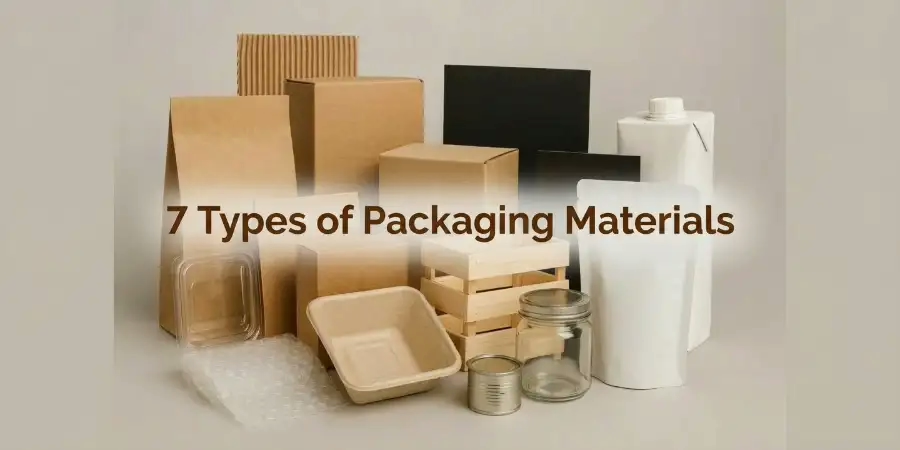
7 Types of Packaging Materials
Get practical examples and tips so you can upgrade your packaging strategy fast.
1. Corrugated Cardboard and Paperboard
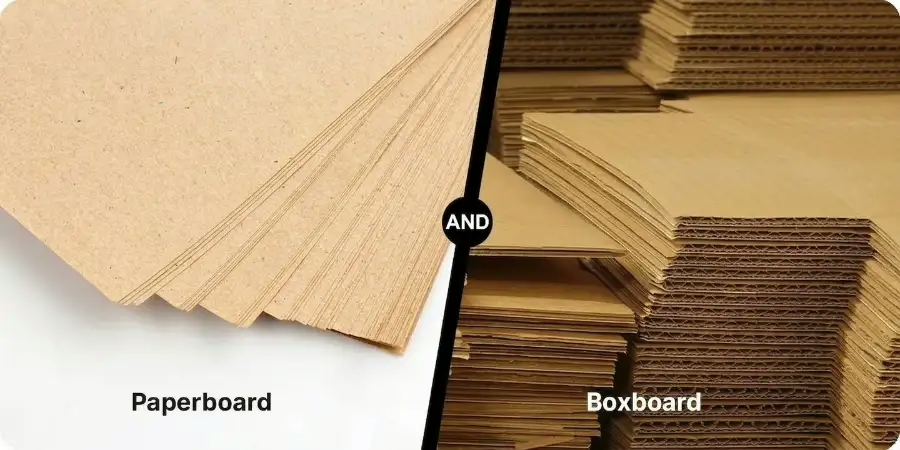
I regularly see importers confuse retail presentation with export protection. During a Shenzhen factory audit, I watched a client lose inventory because they shipped 350 GSM paperboard boxes without a proper master carton. The boxes looked beautiful but crumpled under freight pressure.
Separate these types of Packaging Materials into three distinct layers:
- Kraft Paper: This raw, unbleached material serves as cheap, effective void fill.
- Paperboard (Folding Carton): Primary and secondary packaging. It takes high-definition printing perfectly for retail displays.
- Corrugated Cardboard: Tertiary packaging. This heavy-duty export workhorse absorbs transit impacts.
Corrugated shipping cartons rely on internal fluting:
- E-flute: Best for small, rigid retail boxes.
- B-flute: The standard for everyday e-commerce shipping.
- C-flute or Double-wall: Required for heavy or fragile items.
Verify structural specifications before production. Use the Edge Crush Test (ECT) established by the Fibre Box Association to measure stack compression strength. Use the Mullen Test to check burst resistance against drops. Ask your supplier for the paper GSM (Grams per Square Meter). Higher GSM means a denser liner, helping you judge true puncture resistance.
LeelineGroup’s Verdict: Sea vs. Air Freight. Your shipping method dictates your carton strategy. Air express involves rapid manual handling, requiring high Mullen burst strength to survive drops. Sea freight introduces severe humidity risks and weeks of stack compression. We require clients to use double-wall, moisture-resistant master cartons for ocean transit. Verify these requirements during quality control inspections before releasing goods to your freight forwarder.
⚡ Power Move: Stand on a blank sample of your master carton. If it buckles under your weight, it will fail inside a shipping container.
2. Flexible Plastic Films, Poly Bags, and Laminates
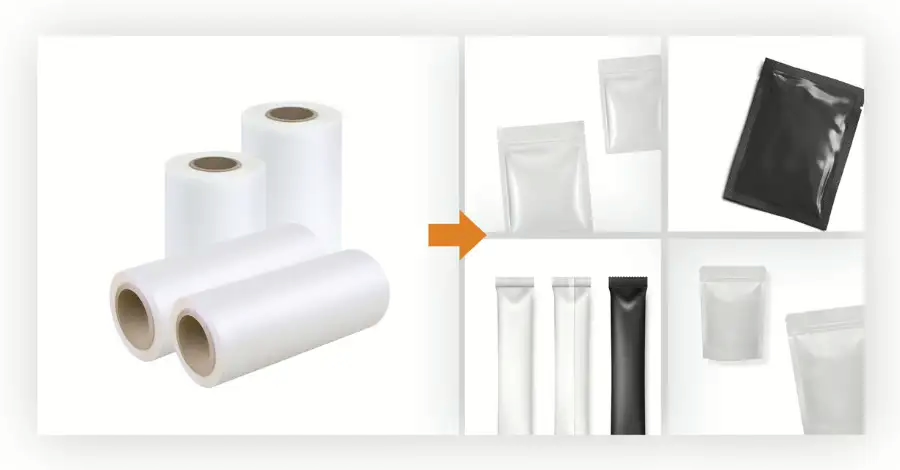
Many sellers treat flexible plastic as cheap wrapping. But when you pay shipping by the gram, it becomes a vital performance tool. Unlike rigid corrugated boxes, flexible plastic molds directly to your product to save space. We use these daily for lightweight poly mailers, waterproof carton liners, shrink film, and multi-layer pouches.
Surviving transit requires understanding thickness. Factories measure plastic film in microns or “mils” (one-thousandth of an inch). Higher micron counts provide better puncture resistance. When I source poly bags in Yiwu, I always stress-test the side seams. Weak seams split under pressure. According to ASTM packaging standards, proper film thickness directly dictates load stability.
Amazon sellers must follow strict FBA prep requirements. FBA requires poly bags to completely enclose items and seal flat. The plastic must meet a 1.5 mil minimum thickness. Any bag with an opening five inches or wider needs a visible suffocation warning. Fail these checks, and the warehouse rejects your inventory.
LeelineGroup’s Verdict: Sea vs. Air Freight. Sea freight traps massive humidity inside shipping containers during transit. For ocean shipments, use flexible film as an inner moisture barrier inside your rigid carton to prevent mold. Air express requires a different strategy. Durable products ship perfectly in heavy-duty poly mailers to slash dimensional weight. To avoid FBA rejections, our Amazon FBA prep services team handles bagging, thickness checks, and labels before goods leave China.
🚀 Actionable Insight: Use standard 1.5 mil bags for soft apparel, but upgrade to 2.0 mil for items with sharp zippers.
3. Rigid Plastic Containers and Trays
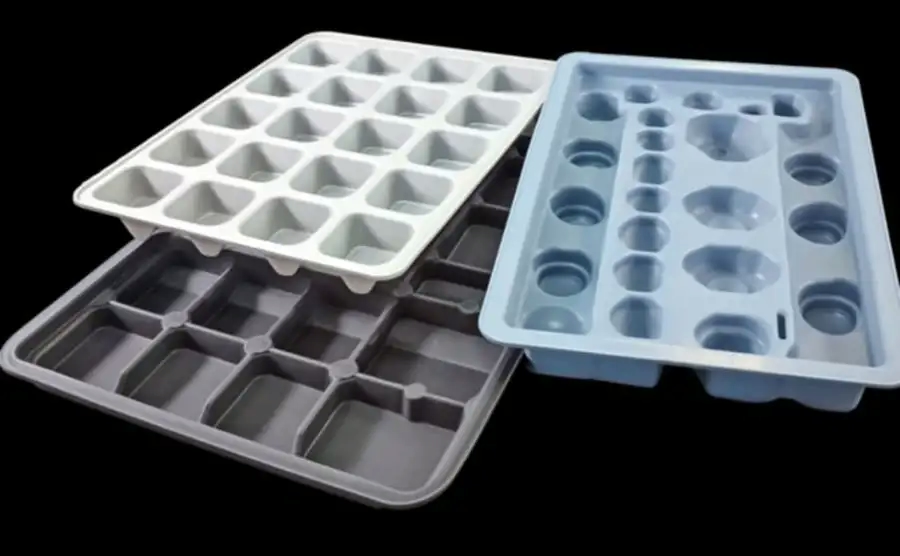
I hate seeing clients pay thousands for custom molds, only to discover the factory secretly owns the rights. Rigid plastic sits perfectly between cheap flexible bags and heavy glass. As one of the most versatile types of packaging materials, it is durable, moldable, and dominates the food, beauty, household, and electronics markets.
Typical formats include supplement bottles, skincare jars, retail clamshells, trays, and custom inserts. Factories generally use PET for clear items or HDPE for opaque bottles. You do not need a polymer degree. You just need to know which resin survives cold winter transit and meets official EPA recycling guidelines.
Unlike flexible alternatives, rigid containers offer incredible crush resistance and perfect stackability. They provide a sturdy canvas for high-end private-label formats. The tradeoff includes higher tooling costs and strict recycling limitations. If you design custom product packaging, you must clarify mold ownership upfront. Secure an explicit ownership agreement before paying any tooling invoices.
Our Verdict: Sea vs. Air Freight. Rigid plastics eat cargo space. For air express, shipping empty bottles kills margins through massive dimensional-weight charges. You literally pay to ship air. For sea freight, your trays and clamshells must nest together perfectly. Poor nesting efficiency easily doubles your container costs. We audit your product development files to ensure custom inserts stack tightly. This prevents permanent plastic deformation under high ocean freight temperatures.
⚡ Power Move: Always demand a physical sample from the actual steel mold. 3D-printed prototypes hide plastic shrinkage issues.
4. Glass Packaging

I love the premium feel of glass, but choosing it means shipping heavy, fragile cargo. I recently audited a cosmetics shipment in Shenzhen, where a client lost 15% of their glass serum bottles. They used basic bubble wrap instead of custom molded pulp inserts.
Glass dominates specific types of packaging materials for a reason. You need it for liquids, food, high-end cosmetics, and fragrances. It offers unmatched chemical inertness, ensuring your formula will not degrade. The clear visibility instantly communicates luxury.
This presentation comes with a severe freight penalty. Glass is exceptionally heavy and carries a high breakage risk. To survive global parcel networks, you must add extensive dunnage and heavy cushioning. This extra volume eats into your profit margins.
Our Verdict: Sea vs. Air Freight. Never ship glass via air express if you sell low-margin e-commerce SKUs. The weight and volume charges will destroy your profit. For sea freight, success depends entirely on pallet stability. We require clients to use double-wall master cartons with individual corrugated dividers for every unit. Skip these dividers, and ocean vibration will shatter your inventory before it reaches the port.
⚡ Power Move: Demand your factory pass an ISTA standard drop test from one meter before approving mass production.
5. Aluminum and Foil
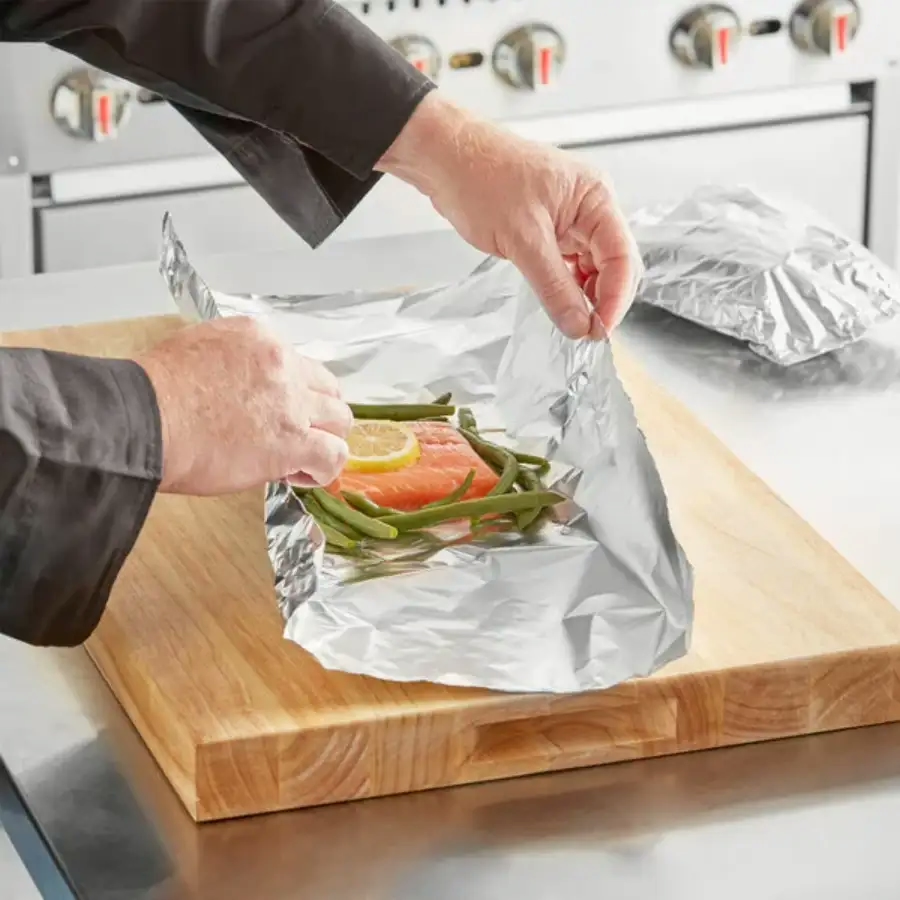
I have seen bad packaging ruin expensive cosmetics. Oxygen and light destroy sensitive formulas fast. You need an absolute barrier. Aluminum prioritizes product protection above all else.
Cans, squeeze tubes, lids, and foil laminates dominate this category. They block moisture, light, and oxygen to meet strict FDA packaging standards and extend the shelf life of food and skincare. When we sourced vitamin pouches for a client, switching to a foil laminate stopped their powder from clumping.
Pure aluminum gives your brand a premium finish, and the Aluminum Association confirms it recycles infinitely without losing quality. You must weigh these benefits against physical risks. Rigid aluminum suffers dents during warehouse handling, and custom forming costs remain high. Flexible foil laminates combine plastic and metal layers, making local recycling nearly impossible.
LeelineGroup’s Verdict: Sea vs. Air Freight. Sea freight exposes cargo to extreme humidity, meaning pure aluminum containers risk surface oxidation during ocean transits. Foil-laminate pouches thrive here because they provide an absolute moisture barrier. For air express, rigid aluminum cans add too much dimensional weight. We advise clients to use flat foil pouches because they outperform bulky rigid packs and slash shipping costs.
6. Wood Pallets, Crates, and Export Dunnage
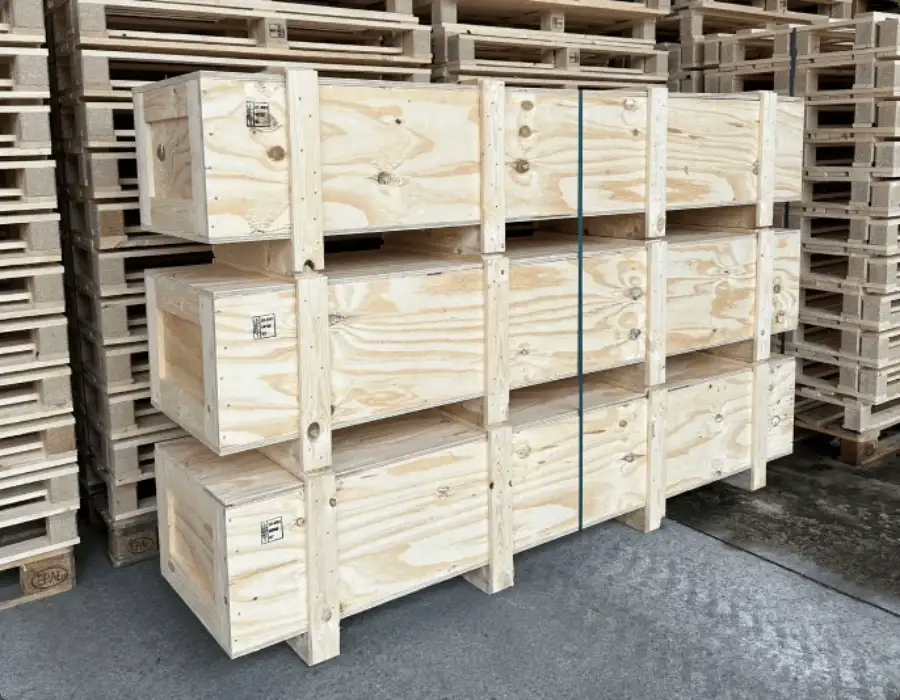
Corrugated cardboard has hard limits. When you ship heavy machinery or dense metal parts, corrugated alone will fail. Among all types of packaging materials, you need industrial wood to survive the ocean journey. Wood pallets, custom crates, and solid blocking secure these awkward loads. Wood bracing prevents high-value shipments from shifting and destroying the container from the inside out.
But physical strength is only half the battle. I once watched a client lose three weeks and thousands of dollars at the port because they used untreated wood dunnage. You must follow the ISPM 15 standard for all raw wood packaging.
This global rule stops the spread of wood-boring pests. Every piece of raw wood must carry a visible HT (Heat Treated) stamp. If your factory uses unmarked wood, Customs and Border Protection will stop your shipment. They will order expensive quarantine treatments or reject your container entirely.
LeelineGroup’s Verdict: Sea vs. Air Freight. Wood adds massive weight to your shipments. For air express, this weight penalty quickly destroys profit margins. Only use custom wood crates for air transit if the product holds immense value. For sea freight, wood pallets and dunnage are mandatory for securing heavy industrial goods. We rigorously inspect all export wood at our China warehouse before loading. We verify every single HT stamp to guarantee smooth clearance when we hand your cargo to the freight forwarder.
7. Molded Fiber, Paper Void Fill, and Biodegradable Cushioning
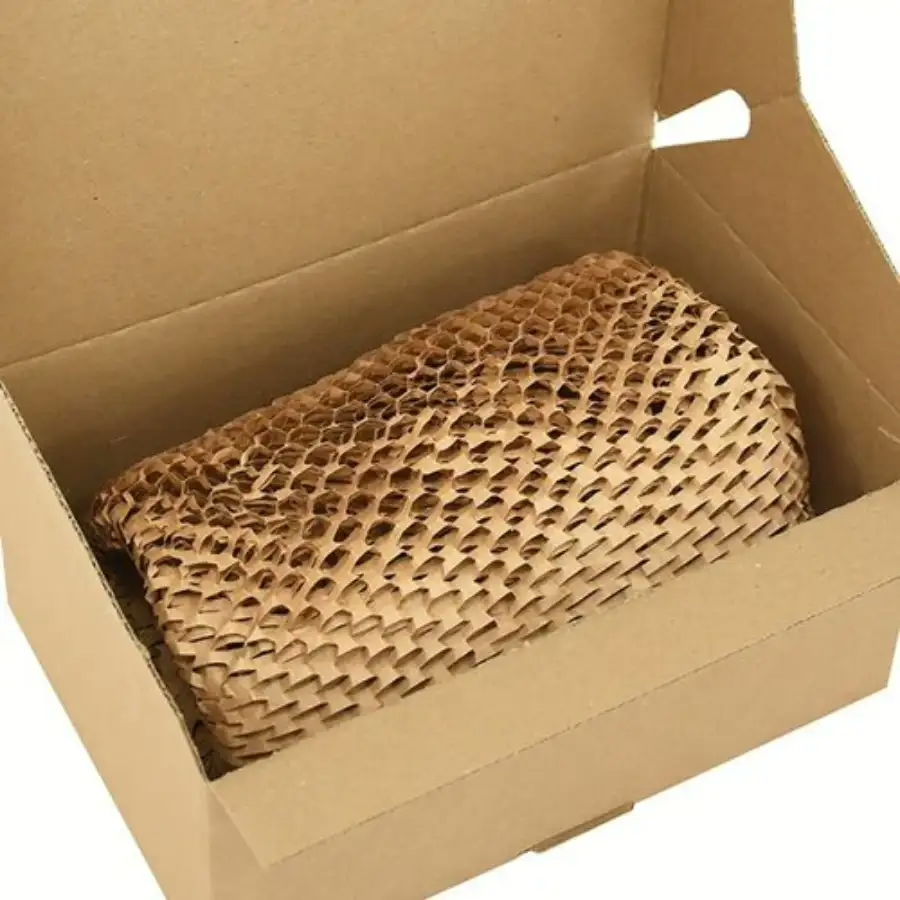
Brands often switch to sustainable packaging only to watch their damage rates spike. I once inspected a container in Shenzhen where high humidity turned a client’s biodegradable packing peanuts into sticky mush. You must balance green marketing with actual physics.
When choosing among different types of Packaging Materials, each eco-friendly option carries distinct tradeoffs. Molded pulp offers rigid protection for fragile electronics and absorbs severe shocks. The tradeoff is it eats up massive warehouse space.
Honeycomb paper and kraft wrap serve as excellent space-saving bubble wrap alternatives. They store flat and deliver a premium unboxing experience. But beware: cheap low-GSM paper flattens out under heavy weight.
Kraft crinkle paper works beautifully for lightweight, presentation-heavy retail goods. Just warn your fulfillment team. It creates a massive mess and slows down automated packing lines.
Recycled air pillows automate easily but frequently pop under heavy cargo compression. Biodegradable starch peanuts dissolve in water, making them highly vulnerable to moisture.
Our Verdict: Sea vs. Air Freight. Sea freight traps intense moisture inside shipping containers. This humidity destroys starch peanuts and weakens thin paper void fill. For ocean transit, we recommend thick molded fiber inserts. They hold their shape over long journeys. Air express involves rapid pressure changes that easily pop cheap air pillows. For air shipping, honeycomb paper offers lightweight, reliable protection.
🚀 Actionable Insight: Before you commit to any sustainable material, mandate a 50-unit pilot run using ISTA performance standards to verify compression strength before a full rollout.
How to Choose the Right Types of Packaging Materials?
I review hundreds of shipment plans every month. Sellers constantly lose money because they pick materials based on looks instead of logistics. You must build a system to compare specs and sourcing risks like an operator.
Step 1: Map Your Product and Sales Channel

Assess your product fragility and moisture sensitivity. Base your quality control standards on your target sales channel. Choose flexible bags for soft goods to cut your landed costs. Pick rigid containers for fragile liquids.
Next, compare a flat-pack design against a set-up format. Flat-packs save shipping space. Set-up formats deliver a premium private-label service unboxing experience. Always separate your primary retail packaging from your outer shipper carton. The outer carton exists purely to take physical abuse.
Step 2: Use the Technical Spec Decoder
Do not trust generic factory claims. Force your suppliers to use exact measurements.
- Paper: Specify the exact GSM (Grams per Square Meter). Higher GSM equals thicker paper.
- Plastics: Demand a specific micron count. Use 1.5 to 2.0 mil for standard poly bags.
- Corrugated Cartons: Request the TAPPI T 811 Edge Crush Test (ECT) to verify stacking strength. Use the Mullen test to measure physical burst resistance.
During our supplier management audits, I often catch factories swapping 300 GSM paper for 250 GSM to save pennies. Secure physical sample approvals before you authorize mass production.
Step 3: Run Transit and Drop Tests
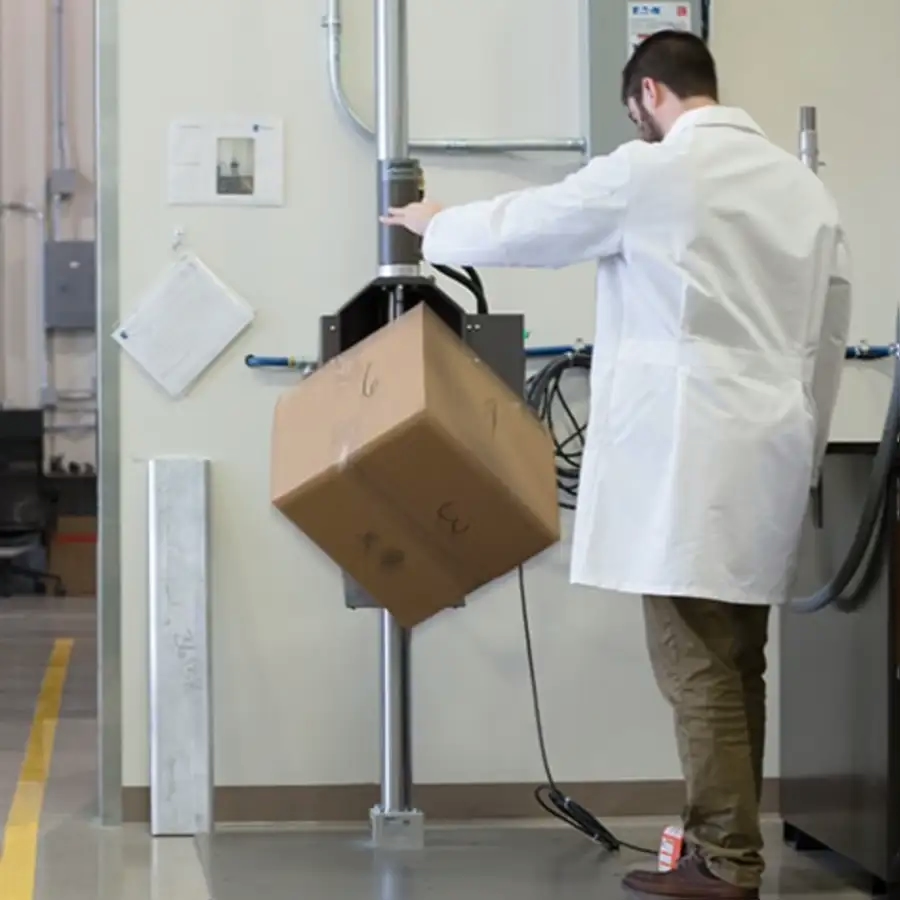
Never ship blind. Test your packaging physically. During the product development phase, command your suppliers to conduct formal transit testing. Execute a standardized ISTA 1A drop test from one meter high. Complete this process while your inventory still sits in a China warehouse. Never wait until the goods arrive at your local port. You will see how your box handles real transit conditions.
Author’s Verdict: The biggest mistake I see is skipping the drop test. If your factory refuses to drop a packed master carton on its corner, fire them. It means they know the inner boxes will fail.
Stop guessing with your supply chain. Reach out to our team via our contact page to build a bulletproof packaging plan today.
People Also Ask About Types of Packaging Materials
1. What is the difference between flexible and rigid packaging?
I always tell clients that flexible packaging molds to your product, while rigid packaging holds its own shape. Flexible plastics, like poly mailers, save cargo space and drastically cut air freight costs.
Rigid containers, like glass or heavy plastics, offer unmatched crush resistance but cost more to ship. In our warehouse tests, rigid items nested poorly and doubled ocean freight volume. Always check EPA recycling guidelines before choosing a rigid mold.
2. Which corrugated cardboard is best for export shipments?
In my experience auditing factory loads, double-wall C-flute cardboard is the absolute minimum for ocean freight. Single-wall boxes easily crush under the massive weight of a stacked shipping container.
You must use heavy-duty master cartons to survive long transit times and high humidity. We strictly verify these structural limits during our quality control inspections. If the carton fails a basic drop test, we reject the shipment immediately.
3. How do you compare GSM and micron for packaging?
Buyers often confuse these two vital measurements. You use GSM (Grams per Square Meter) to measure the density and weight of paper products like cardboard. You use microns to measure the thickness of plastic films like poly bags.
I always warn clients that a higher GSM means a stronger box. A higher micron count means better puncture resistance for plastics. Never let a factory lower either metric without your explicit approval.
4. Are poly bags good for Amazon FBA?
Yes, poly bags work perfectly for e-commerce because they reduce dimensional weight. However, Amazon enforces strict rules. Your bags must be at least 1.5 mils thick. If the opening exceeds five inches, you must print a visible suffocation warning.
Our Amazon FBA prep services team handles these exact requirements daily in China. We ensure your factory uses the correct thickness so the fulfillment center accepts your inventory without delays.
5. When do buyers need ISPM 15 for wood packaging?
You must follow this rule whenever you export raw wood packaging like pallets or heavy crates. The global standard prevents the spread of timber pests. I once saw customs seize an entire container because the dunnage lacked the required Heat Treated stamp.
Every piece of solid wood must display this official mark. Check the Customs and Border Protection guidelines carefully before you load any heavy industrial goods.
Author’s Verdict: Do you need help designing compliant packaging or finding reliable factory partners? Reach out through our contact page and let our sourcing experts secure your supply chain today.

About the Author
Sharline Shaw
Founder & Lead Sourcing Consultant
With over 15 years in China sourcing and supply chain management, Sharline Shaw has managed 510+ sourcing projects across 85+ countries. Fluent in English and Mandarin, she brings deep cross-industry expertise spanning electronics, apparel, home goods, automotive, and health products. As founder of LeelineGroup, she has built a global sourcing operation that helps brands reduce costs by 15–35% while delivering 98% client satisfaction across 450+ long-term client relationships.
Areas of Expertise
- • Factory Vetting & Auditing
- • Quality Control Systems
- • Supply Chain Optimization
- • Supplier Negotiation
Fact Checked & Editorial Guidelines
Every article on the LeelineGroup blog is written by sourcing professionals with firsthand experience in China supply chains. Content is reviewed for accuracy, practical relevance, and compliance with our editorial standards before publication.
Your trust is important. Learn more about our Fact Checking Process and Editorial Policy.