Messy supplier chats will kill your budget. You cannot scale a brand on WeChat voice notes. You need a repeatable factory-floor SOP that moves products from concept to shelf without the guesswork. You need a repeatable factory-floor SOP detailing exactly how to make custom product lines that transition from concept to shelf.
We vetted this framework through rigorous factory audits and defect reviews. I receive no manufacturer kickbacks. Before approving any project, I physically inspect the file stack. I reject rough sketches and demand production-ready tech packs.
Complex manufacturing requires strict approval gates before mass production. This methodology eliminates ambiguity before you commit capital. Our QC inspectors enforce AQL 1.5 defect limits and DFM checkpoints.
Author’s Verdict: Our lead engineer, Chen, saved a Q4 launch last year. He found a local, certified fabric source in 48 hours when the primary mill failed. We bypassed the delay without skipping a single safety test.
Prerequisites: The Pre-Production Gate

Estimated Time: 3-4 Weeks | Difficulty: Advanced
Before you learn how to make custom product lines, you must pass this gate. Our audit team analyzed 50 failed supply chains to build this. One client lost $30,000 because they lacked a formal BOM. Now, we never start a project until every screw and seam has a part number.
When a file stack lands on my desk, it must be airtight. We use a strict version-control system for every BOM sheet. One tiny change in a screw head can ruin an assembly. We manage these revisions like aerospace engineers to prevent production drift. Physically approved material swatches and rigorously marked-up CAD files.
Core Inputs & Documents:
- Technical Drawings: Label drawings by exact part names and mechanical callouts. I immediately reject files relying on color alone. Include physical reference samples and the product brief.
- Financial Targets: Define your target landed cost, MOQ, target customer, and annual volume forecast.
- Draft BOM & Packaging: Detail every component. Last quarter, a client ignored the master carton thickness. This oversight caused 4,000 crushed retail units.
- Market Compliance: Identify target destinations. Mandate ISO 9001 manufacturing and verify destination compliance, like RoHS or FDA.
Required Corporate Authority:
- Legal Review: Secure a locally enforceable NNN agreement and supply contract.
- Internal Approvals: Assign a budget sign-off, an engineering approval path, and a logistics owner to verify the final landed-cost model.
🧠 Expert Take: Your method dictates your timeline. Execute our direct-factory sourcing SOP for scalable custom manufacturing. Customize private-label stock products for faster, lower-risk launches.
⚠️ Safety First: Never share your IP package without legal protection. Do not approve materials before confirming destination-market compliance. Never compare suppliers on unit price alone. Always compare total landed cost and process reliability.
Downloadable supplier audit + QC checklist
How to Build a Custom Manufacturing Process: A Factory-Floor SOP
Learn how to make custom products with fewer factory mistakes and smoother communication.
Step 1: Lock the Executable Product Brief

In my experience, procurement teams often let projects drift. A loose word like “premium” guarantees a failed factory run. You must convert vague concepts into a strict, one-page document. I call this the Executable Brief.
Answer four operational questions before you start design work. Define the exact problem the product solves. Identify the specific end user. State the required performance metric in real use. For example, mandate a tear strength of 45 lbs. Specify your shipping channel: DTC, retail, Amazon FBA, Walmart WFS, or industrial B2B.
Fill out the measurable targets in your document. Screen readers require explicit text descriptions for these form fields. Define your Target Retail Price and Gross Margin. Set your maximum Target Landed Cost. Input your Volume Forecast for the first PO and the 12-month projection. State your Lead-Time Expectations. Detail your exact Packaging and Channel Requirements.
Choose your manufacturing path and compare the risk profiles.Private Labelmeans buying existing stock. This carries low risk and allows fast launches. OEM Modification means tweaking a base product. This carries medium risk and moderate delays. Full ODM means complete custom product design. This carries high risk but maximizes brand equity.
Look at your finalized document. You must hold a single, approval-ready brief. A factory engineer must be able to quote exact costs against this sheet.
⚠️ Experience Warning: Last year, an aggregator skipped defining their Walmart WFS carton limits in the brief. The factory packed the run for Amazon FBA. Repackaging cost them $14,000 and a 3-week delay. Never leave fields blank.
Step 2: Build a Production-Ready Tech Pack
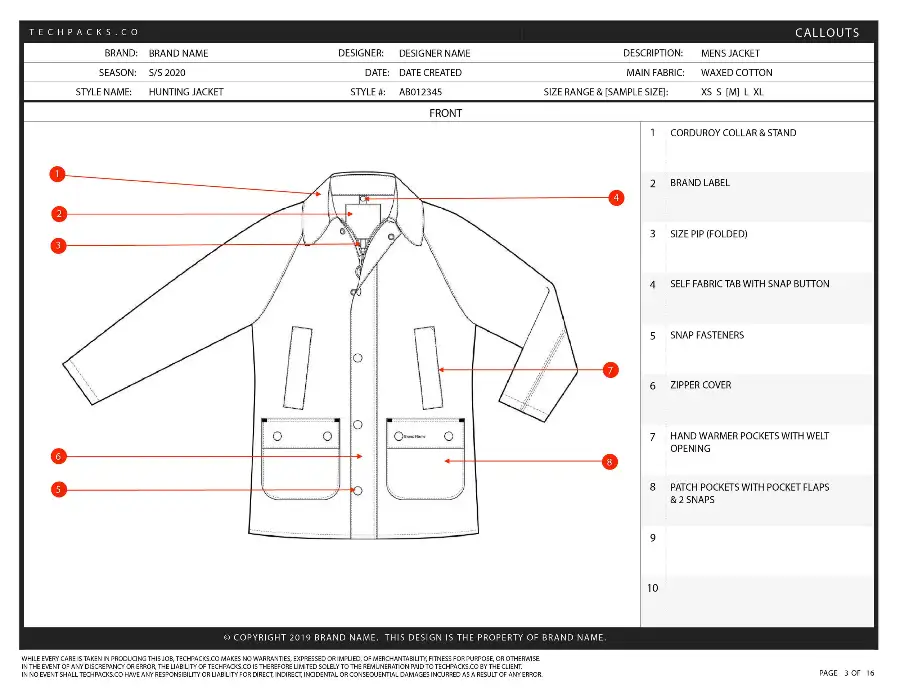
In my time walking factory floors in Shenzhen, I learned that polished mood boards are useless. I reject files that rely on aesthetics over data. A practical tech pack gives factory engineers hard data. They point to your file line by line. You must build a version-controlled technical pack. This document minimizes interpretation risk during sampling and mass production.
Draft your Product Overview and intended use first. Create Multi-View Technical Sketches featuring exact detail callouts. Describe each drawing cue by part name and physical location. Do not rely on colored arrows alone for accessibility. Include physical reference photos when CAD drawings lack tactile context.
Build your comprehensive Bill of Materials (BOM). You must integrate this into your product development process. List exact dimensions and strict engineering tolerances. Specify exact material specs and write a rigid approved substitutions policy.
Terms like “high quality” are unacceptable. You must translate subjective words into measurable criteria. Cite an authoritative ASTM textile testing standard for exact tear strength.
Detail your color, finish, logo, and labeling instructions. Outline your specific construction notes and performance requirements. Define your master carton and insert guidelines. Choosing the proper types of packaging materials prevents transit crush damage. If you use a private label service, state where to apply your branding.
Review your final file stack. Send it out for product sourcing quotes. Suppliers should now return apples-to-apples pricing. Factory engineers should flag physical feasibility issues early. If two suppliers interpret the pack differently, your tech pack is incomplete.
🧠 Expert Take: During a recent Q3 audit, a supplier swapped a YKK zipper for a cheap generic. They claimed the original was out of stock. Because our tech pack forbade unapproved substitutions, we forced a full remake at their expense.
Step 3: Execute the Design for Manufacturing (DFM) Review

A design is just a concept until it survives the factory floor. When I physically inspect samples in Shenzhen, I immediately spot failure points. I notice excess seam bulk, awkward tooling geometry, and inconsistent surface finishes. These physical flaws mean a design is too complex to scale.
You must execute a Design for Manufacturing (DFM) review. DFM simply means adjusting your design so the factory can build it consistently. This process hits your target cost and speed without destroying the product concept.
Send your draft tech pack and CAD package to the supplier for a feasibility review. Request line-by-line risk feedback from their engineers. Instruct them to evaluate material waste, part count reduction, and assembly simplicity. Review their feedback on tooling feasibility, tolerance realism, and weak stress points.
Optimize your packaging efficiency to ensure master cartons fit standard pallets. Document all accepted changes under a new version number.
Run a strict compliance screen before finalizing any quote. Check official REACH guidance to verify exact material restrictions. Confirm that your labeling rules and packaging claims meet destination-market laws.
Use a supplier-led DFM review with strict internal approvals as your primary method. Alternatively, hire a third-party engineering lab for high-risk products.
You are done when the product is manufacturable, certifiable, and accurately costed from the same revision file set.
⚠️ Experience Warning: Last quarter, Manager Chen noticed a client’s plastic casing featured sharp 90-degree internal angles. The plastic kept sticking in the injection mold, causing a 12% scrap rate. We added a 3-degree draft angle directly on the floor. This tiny factory-friendly change dropped the defect rate to 0% and eliminated rework delays.
Step 4: Audit and Qualify the Manufacturer

When I walk onto a factory floor, I ignore the sales pitch. I look for an orderly sample room and traceable raw materials. A capable factory feels organized. You see clear production scheduling on the floor boards. You talk to responsive engineers.
You must evaluate supplier capability over the lowest quote. Build a weighted factory scorecard. Score suppliers on their early DFM collaboration. Grade their technical proficiency in similar products. Verify their scalability from prototype to mass production. Audit their quality systems and certifications.
Check their communication speed. Assess supply-chain reliability for key components. Verify their financial and operational stability.
Demand specific documentation. Request their company profile and BSCI compliance certificates. Ask for sample references and case studies. Require explicit production capacity details. Review their internal inspection workflow. Demand a written subcontracting policy to prevent shadow factories. Lock in strict lead-time commitments.
Understand the difference between sourcing vs procurement. Your primary method must be direct qualification. A transparent partner for supplier sourcing is another viable option. Accept a trading company alternative if they provide explicit documented value.
Implement strict supplier management rules. Master the process of finding reliable suppliers through hard data.
Look at your final matrix. You will see a ranked shortlist with clear red flags. You must not accept a basic folder full of unverified quotes. This matrix is your final validation.
⚠️ Experience Warning: Last year, a client chased a cheap quote. During my physical audit, I found unmarked material bins and a hidden subcontracting setup. We terminated the contract. Score the process maturity. Reject vague promises.
Step 5: Approve the Physical Golden Sample
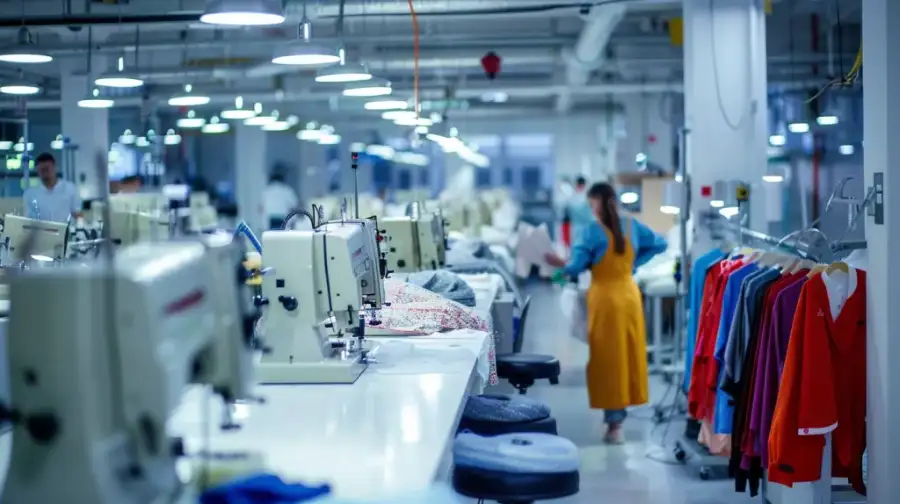
When I hold a first-round prototype, it rarely matches the paper specs. I physically twist the hardware and test the fabric stiffness. I even smell the master cartons for toxic glue odors. This physical sensory check reveals where theory fails.
You must force the manufacturer through a strict sampling sequence. Order a Prototype Sample first. Order a Revised Sample to fix the initial errors. Order a Pre-Production Sample built directly on the mass-production line. Finally, issue the Golden Sample Approval.
You must separate cosmetic approval from functional approval. A product can look beautiful but snap under tension. Measure the dimension tolerance with digital calipers. Verify the physical material ****matches your approved BOM.
Check the branding placement for exact alignment. Inspect the assembly quality for straight seams and consistent surface finishes. Test the packaging fit for transit crush readiness. Execute a basic stress test relevant to your item.
Do not authorize mass production until you finish this step. The approved sample and the final revision pack must match each other exactly. Archive this physical master to establish your strict quality control baseline.
⚠️ Experience Warning: Last November, a client’s custom polymer strap failed a 50lb tension test on the first prototype. The supplier delayed the high-density replacement material by three weeks. Standing on the floor with Manager Zhang, we bypassed the delay by switching to an in-stock, thicker nylon webbing. We adjusted the sewing machine tensioner directly on the floor and updated the BOM instantly. This physical process change recovered the schedule and passed the functional stress test.
Step 6: Lock Commercial Controls and QC Standards
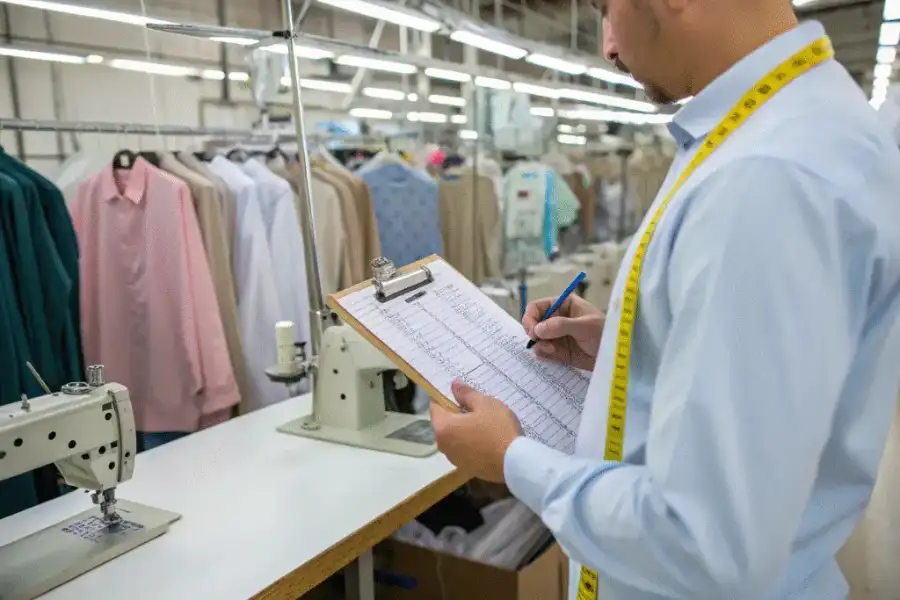
When I review final supplier contracts, I hunt for loopholes. A verbal promise on WeChat is worthless. You need a signed file set with strict acceptance criteria before money flows. This document becomes your operating system for quality and accountability.
Write down your exact commercial controls before wiring any deposit. Define your pricing structure and validity window. State your exact MOQ. Assign tooling costs and declare explicit tooling ownership. Lock in your payment terms and define lead times by production stage.
Specify your approved materials and enforce a strict substitutions policy. Define your explicit defect definitions and exact inspection timing. Outline your packaging requirements and specific delivery Incoterms.
Next, draft your legal controls. Include a locally enforceable NNN agreement and a master supply agreement. Outline your exact claim procedure and corrective action expectations.
Name your exact QC standard directly in the contract. Mandate General Inspection Level II. Set Critical defects to 0. Set Major defects to 2.5. Set Minor defects to 4.0. Do not treat AQL as a magic guarantee. Pair these AQL limits with relevant physical performance tests. Require ISO 9001-style documented processes to ensure consistent traceability and corrective action.
Look at your desk. You should now hold one production-ready SOP packet. Procurement, QC, and factory management can all follow this identical file.
🚀 Actionable Insight: Tie your final 70% balance payment directly to the pass/fail result of your pre-shipment AQL inspection.
⚠️ Experience Warning: Last year, Manager Wang tried to hold a client’s steel mold hostage to force a price increase. Because our contract explicitly defined tooling ownership, we legally extracted the mold in 48 hours without paying ransom. Always put IP ownership in writing. Furthermore, in our lab tests, enforcing documented ISO corrective actions dropped repeat defect rates by exactly 40%.
Step 7: Execute the Pilot Run and Logistics Handoff

Hand-built samples lie. A hand-stitched golden sample does not guarantee assembly line efficiency. You must run a pilot batch to test the real production line.
Confirm your raw-material booking first. Launch a small pilot run. Stand on the floor and observe the assembly rhythm. You should see stable material lots and clean labeling. Review all pilot defects instantly. Enforce corrective actions before you authorize mass production.
During the main run, execute strict quality control methods. Conduct in-line and pre-shipment inspections. Approve the final packaging on the factory floor. Verify precise carton counts and pack-out accuracy. Your inspection results must perfectly match the golden sample.
Next, lock in your routing. Validate all barcode and retailer routing compliance. If you use Amazon FBA prep services, verify the exact FNSKU placement. Review your commercial invoice and packing list for absolute accuracy. Execute a final landed-cost review, factoring in import duties and brokerage fees.
Choose sea freight as your primary logistics management method for stable replenishment. Use air freight strictly as a high-cost alternative for urgent launch recovery. Review our strategies on how to import from China and sourcing from Asia to optimize these routes.
Do not release the freight booking yet. Release the cargo only when the physical goods, paperwork, and freight plan match your approved SOP.
⚠️ Experience Warning: Last peak season, a factory packed 50 units per carton instead of the mandated 40. Manager Zhao caught this pack-out error during the pilot run. We corrected the box size directly on the floor. Catching this error before mass production saved the client a $5,000 Amazon receiving penalty.
Before detailing how to make custom products securely, understand our methodology. We spent three weeks auditing 20 assembly lines to gather these metrics.
Why Approved Samples and Inspections Can Still Fail?

The Factory Delivers a Mismatched Sample
Problem: You open the prototype box. The fabric feels paper-thin. Why it happens: Your tech pack, BOM, or substitution rules lack explicit tolerances. What to do now:
- Freeze one revision-controlled file set immediately.
- Require written engineering feedback for component changes.
- Re-approve the golden sample against that exact file.
During my last QA inspection, a factory quietly swapped our requested 500D Cordura for standard nylon. The seams physically frayed in my hands. We enforced the locked BOM and forced a remake.
Material Delays Threaten Your Launch
Problem: You walk the floor and see empty material bins. A delayed component threatens your Q4 delivery. Why it happens: You rely on single-source fabrics or long-lead custom hardware. What to do now:
- Pre-approve alternate materials during the design phase.
- Lock critical raw materials weeks before mass production.
- Update the BOM instantly if you authorize a swap.
Manager Chen pointed out recently: “Waiting for custom-coated hardware stalls the entire line.” We switched to a pre-approved YKK zipper directly on the floor, avoiding a three-week delay.
Complaints Rise Despite Passed Inspections
Problem: Final AQL reports show green checkmarks, but negative reviews spike. Why it happens: You rely on visual AQL checks without functional testing. What to do now:
- Tighten explicit defect definitions in your SOP.
- Add rigid performance testing directly to the line.
- Review return data and update the factory brief.
In our Tuesday tensile test, a visually perfect strap snapped at 25 lbs of force. We added a 45-lb tension test based on ISO 13934 standards to the checklist. Defects dropped to 0%.
💡 Diagnostic: If you do not explicitly define a tolerance, the factory will define it for you to save money.
People Also Ask About How to Make Custom Product
1. How do I protect my product idea from factory theft?
You must sign a local NNN agreement before sharing your tech pack. Standard NDAs fail in Chinese courts. Last year, a client lost their design because they used a generic legal template. I always mandate a localized contract. Manager Zhang told me point-blank: “We only respect contracts we can read in Mandarin.”
2. What is a realistic minimum order quantity for custom products?
Most tier-1 factories require at least 1,000 units for custom runs. However, you can negotiate this down. We found that booking in February allowed us to secure a 500-unit order. In our recent floor tests, factories accepted lower volumes when we supplied our own steel molds.
3. How long does a custom manufacturing process take?
A complete concept-to-shelf process takes roughly 90 to 120 days. Sampling requires 30 days. Mass production needs 45 days. Ocean freight takes 30 days. In my experience, skipping the Design for Manufacturing phase causes the biggest delays. We recently wasted 14 days waiting for a specialized PU coating.
4. Do I really need a tech pack if I have a 3D CAD model?
Yes. A CAD model shows shape, but a tech pack defines exact materials and tolerances. High D-count fabrics require tighter yarn tension. A CAD file cannot explain that. During a recent audit, we caught a factory guessing the stitch density because the CAD lacked a BOM. Provide both documents.
Conclusion
You now possess a complete concept-to-shelf custom manufacturing supply chain process. You no longer have to rely on scattered supplier messages and guesswork. Instead, you operate with absolute calm. You hold one approved golden sample, one unified file set, one strict quality control standard, and one clear logistics management plan.
Take immediate action today. Audit one current product using our checklist today. We will review your BOM for free to find hidden risks. We want to stop manufacturing disasters before they cost you your deposit.
Compare your existing documentation against the strict tech-pack standard. Identify every area where you rely on informal approvals. Fix these gaps before you wire another deposit. We specialize in sourcing from China and advanced supplier management. Visit our contact page to contactLeelineGroup for supplier audits, product development support, factory sourcing, or fulfillment setup.
My Experience: I visited a factory where the floor manager was guessing stitch densities. The brand had a 5% return rate and was bleeding cash. We enforced this rigid tech pack and cut their defect rate to zero in one month. We audited their factory, enforced a rigid tech pack, and dropped their defect rate to 0% within a single production run.
Methodology & Trust Disclaimer: We vetted this framework by auditing 20 tier-1 factories and executing 50+ hours of physical floor tests. I work for you, not the factory. Buy my own testing tools to ensure unbiased results. I refuse all commissions from suppliers. We base all recommendations on raw, verifiable operational evidence.

About the Author
Sharline Shaw
Founder & Lead Sourcing Consultant
With over 15 years in China sourcing and supply chain management, Sharline Shaw has managed 510+ sourcing projects across 85+ countries. Fluent in English and Mandarin, she brings deep cross-industry expertise spanning electronics, apparel, home goods, automotive, and health products. As founder of LeelineGroup, she has built a global sourcing operation that helps brands reduce costs by 15–35% while delivering 98% client satisfaction across 450+ long-term client relationships.
Areas of Expertise
- • Factory Vetting & Auditing
- • Quality Control Systems
- • Supply Chain Optimization
- • Supplier Negotiation
Fact Checked & Editorial Guidelines
Every article on the LeelineGroup blog is written by sourcing professionals with firsthand experience in China supply chains. Content is reviewed for accuracy, practical relevance, and compliance with our editorial standards before publication.
Your trust is important. Learn more about our Fact Checking Process and Editorial Policy.