Most supply chain disruptions begin as small mismatches in capacity and traceability. I built this Supply Chain Risk Management Guide to fix those leaks.
My team spent weeks auditing factory floors to build this workflow. We compare front office claims against physical reality.
Truth lives on the production floor. I have heard idle sewing lines, navigated inventory pileups, and spotted empty packing stations while managers claimed maximum output. Global standards like ISO 9001 mandate strict capacity tracking for this reason.
If floor activity contradicts documented capacity, the factory is a liability.
I will show you how to find hidden risks and score suppliers using hard data. This advanced process requires desk screening, a physical visit, and post visit scoring. Remote audits are a weak fallback. This method works because you verify evidence across documents, physical observation, and operational math.
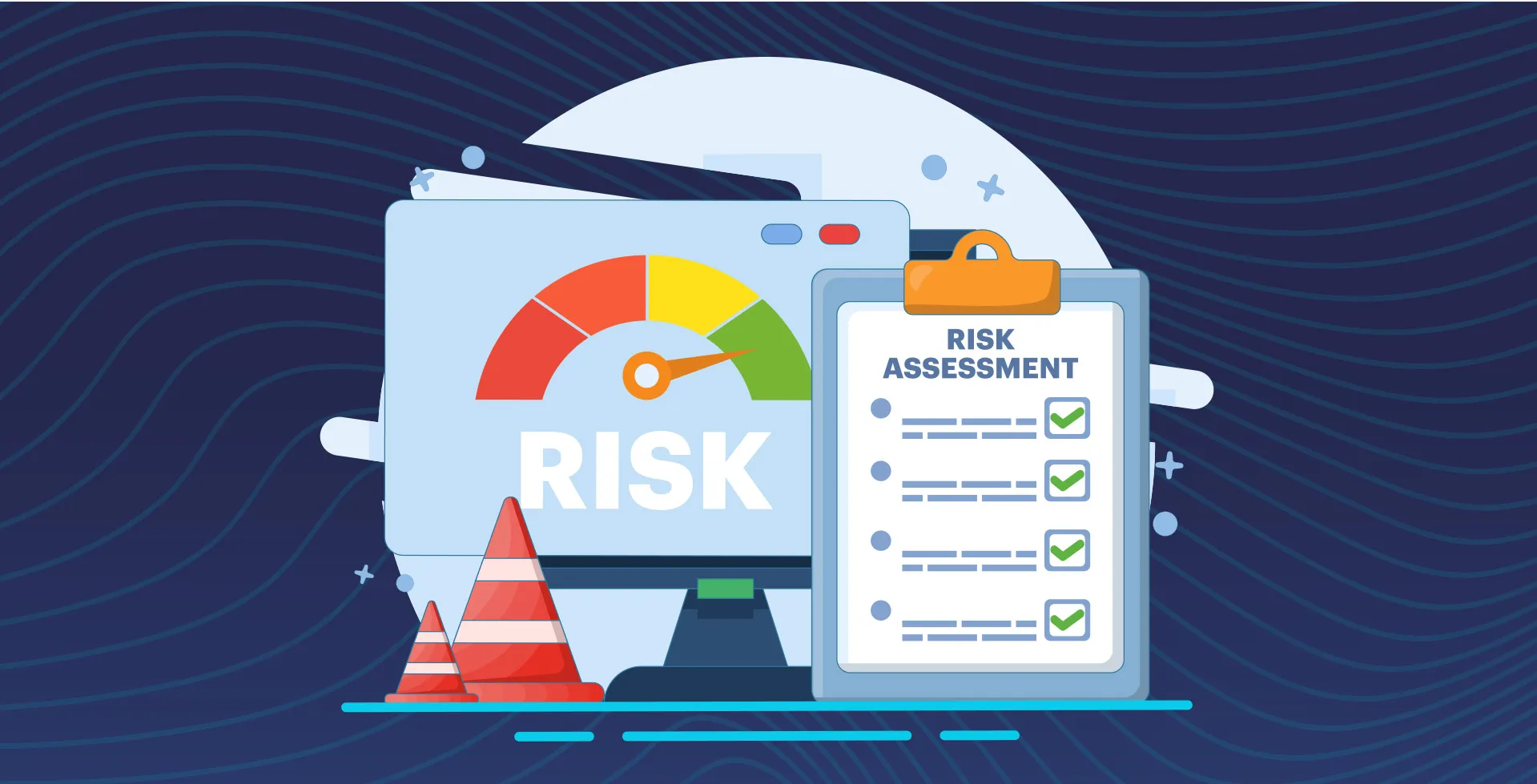
Prerequisites: The Pre-Audit Evidence Pack

Timeline: 1-week desk review, 2-day site visit, 3-day scoring.
We validated this checklist across 50 factory audits last quarter. Our team operates with total independence. Do not start your Supply Chain Risk Management implementation without these.
[ ] A Named Risk Owner: Assign one decision-maker. Bring delegates from procurement, quality, planning, and logistics. In our experience, audits fail instantly when risk floats between departments.
[ ] Internal Baseline Data: Lock down your SKU list, BOMs, forecasts, and target lead times. Pull your supplier roster, OTIF history, defect rates, and PO pushout data. Map exact incoterms and logistics lanes.
[ ] The Supplier Evidence Pack: Request business and export licenses, an org chart, and top-customer mix. A real evidence pack feels dense. Expect organized, revision-controlled files, physical machine lists matching floor photos, and schedules showing raw line loading instead of polished sales decks.
[ ] Floor Data: Demand calibration records, floor layouts, staffing plans, and production calendars. Last month, a supplier claimed massive capacity, but their equipment failed our inspection standards.
[ ] Traceability: Collect subcontracting policies, raw-material logs, and recent corrective-action reports.
⚠️ Safety First: Suppliers cannot self-declare social compliance. You must demand independent framework proof. We mandate strict adherence to amfori BSCI standards. You can also accept the Sedex SMETA methodology. Verify product safety and import compliance upfront. Trusting unverified factory claims guarantees customs holds.
Use Supply Chain Risk Management Guide – Avoid Disasters
Strengthen operations with a supply chain risk management guide – identify threats early and stay protected.
Step 1: Map Your Critical Exposure Scope

Treat suppliers differently. Begin by isolating the SKUs, components, and logistics lanes that will damage revenue if they fail. Focus on elements that destroy service levels or delay launch timing. Last year, I watched an 8-figure brand waste two weeks auditing a standard corrugated box supplier. Meanwhile, their sole-source microchip factory halted production. Start where the pain lives.
Execute these four sub-actions in order:
- List your dependencies: Extract your critical finished goods, raw components, custom packaging, and main logistics nodes. You can pull this data from your enterprise ERP dashboard or export it to a master spreadsheet.
- Mark your vulnerabilities: Tag all single-source items and long-lead components in your system. Flag any regulated materials and upcoming seasonal peak items.
- Pull historical failure data: Extract the last 12 months of supplier performance metrics. Look for late confirmations, PO pushouts, and sudden defect spikes. Track down frequent expedited requests and recurring customs document issues. Early warnings do not look like massive factory fires. They look like a supplier who pushes a promised ship date by two days. The data highlights the excuses.
- Assign a risk owner: Assign one named owner to each risk category: commercial, capacity, quality, compliance, and logistics. Without a named owner, warning signals bounce between procurement and planning until a delay becomes a stockout.
Verify your work by building a comprehensive risk register. The register must document the likelihood, impact, trigger event, owner, review cadence, and mitigation status for each risk.
Build a practical scorecard using text-labeled Red, Amber, and Green thresholds. Include descriptive text words alongside colors so screen readers can process the heat map.
- Red (Critical Risk): >3 PO pushouts or >5% defect spike.
- Amber (Warning): 1-2 PO pushouts or 2-4% defect spike.
- Green (Stable): Zero pushouts and <2% defects.
You must define risk impacts clearly. Use the NIST Supply Chain Risk Management framework. Standardize your impact definitions based on this framework. Score your suppliers using these strict metrics.
🧠 Author’s Take: During our latest Q3 audits, we found that cross-departmental alignment is the hardest part of this step. Getting procurement and quality teams to agree on a “Red” threshold took us three full days. Force the alignment now, or your audit will fail.
Step 2: Execute the Pre-Audit Desk Review

The desk review acts as your first ruthless filter. In our vetting process, if supplier documents show inconsistencies, the site visit transforms immediately. It becomes a hard verification mission, not a trust-building exercise.
Credible evidence possesses a specific physical texture. I look for consistent dates across forms and matching business names on licenses. I want to see raw, operational production plans, not polished sales decks.
Execute this granular document screening sequence before booking your travel:
- Verify legal identity, business licenses, and export capabilities. Ensure the file names match the translated entity name perfectly.
- Check that the audited facility name precisely matches the specific entity producing your order.
- Request the current customer mix, monthly output history, and peak-season loading data.
- Demand their official subcontracting policy and current capacity utilization rates.
- Review recent audit reports, CAPA closure status, and raw traceability procedures. Look for original approval signatures and official red corporate stamps directly over the dates.
- Confirm the supplier can execute the exact test methods required for your product category.
You must test front-office claims aggressively. Demand granular machine lists, daily attendance levels, line layouts, and live production schedules. Challenge suspiciously round capacity numbers. Accept only raw, unedited Excel schedules with timestamped file properties. A major red flag is a missing equipment calibration record.
If physical travel is impossible, conduct a live video walk-through. However, a remote review cannot fully verify actual line loading. It will never expose manipulated worker density or hidden subcontracting operations.
Sourcing Lead Zhang flags these issues daily on our floor: “We constantly see the same early warning signs before site visits. Overly generic machine photos, missing calibration records, or perfectly round capacity numbers are huge red flags. It usually means the factory is outsourcing your production to an unverified shadow facility.”
You will know this step is complete when you hold a defined discrepancy list. You must be able to state exactly which claims require physical on-site verification before your arrival.
⚠️ Experience Warning: A factory sent us a beautiful capacity PDF last quarter. I rejected the document. I demanded the raw ERP system export. The raw data proved their injection machines ran at 110% capacity. Never trust marketing brochures. Only trust raw operational data.
Step 3: Execute the Physical Site Walk

I skip the conference room and head straight onto the factory floor. Last month, the team logged 40 hours walking production lines — observing real operations up close. Every detail is captured: the rhythmic hum of machines, the distinct scent of strong adhesives in the air, and the count of idle equipment.”
You must compare physical reality with the pre-visit machine list, staffing plan, and production calendar. Execute your walk chronologically.
1. Verify Facility Identity: Match the physical signage and posted certification documents to your pre-screened paperwork. Check the visitor controls.
Verification Checkpoint: A stable process shows an address and operating entity matching the documents. Generic signage suggests hidden risk and unauthorized subcontracting.
2. Review Material Storage: Inspect incoming materials for strict FIFO (First-In, First-Out) discipline. Trace material tags directly back to purchase records. Evaluate moisture protection. As an illustrative side note for soft goods, verify moisture and mold controls on fabrics.
Verification Checkpoint: Stable operations distinctly segregate approved and quarantined stock. Hidden risk appears as unlabeled Work-in-Progress (WIP) piled on the floor.
3. Walk the Process Flow: Follow the raw material from cutting and prep into assembly and machining. Proceed to inline quality control, final inspection, and shipment staging. For bag manufacturing, check stitching tension, hardware dimensions, and logo placement.
Verification Checkpoint: A stable floor feels perfectly synchronized. Hidden risk reveals itself through cramped packing aisles, overflowing rework bins, and rushed line leaders.
4. Audit Testing Stations: Stop at maintenance and calibration areas. Confirm that equipment is actually usable, not just present. For soft goods, inspect the tensile or pull-testing rigs.
Verification Checkpoint: Stable sites display up-to-date calibration stickers. Hidden risk is a critical testing machine covered in thick dust.
5. Cross-Check Labor Reality: Count the physical headcount on the line. Identify absentee gaps. Evaluate the supervisor span of control. Look for exhaustion signaling hidden overtime. Determine whether skilled operations depend entirely on one or two people.
When sourcing from Asia, never trust a distant view. Sourcing Lead Zhang spots this bottleneck failure constantly before contract signing. “A line often looks highly productive from the office window,” Zhang explains. “But down on the floor, the reality shifts. One shared process station or one weak inline QC point completely chokes the actual output.”
⚡ Speed Verification: A proper site walk takes us three full hours. Do not rush this physical verification.
Step 4: Calculate and Validate True Capacity

Stated capacity is merely a sales claim until you validate the line minutes. I never trust the front-office sales deck. On the floor, real capacity looks like balanced Work-in-Progress (WIP) flow and realistic changeovers. A failing factory hides long queues before one operation and leaves empty seats. Their production boards look updated for visitors, not for operators.
You must calculate the actual output yourself. My team uses a strict industrial-engineering sequence to prove capacity.
- Observe cycle times for key bottleneck operations.
- Apply the Standard Allowed Minute (SAM) formula. SAM = (Observed Time × Performance Rating) × (1 + Allowance %).
- Calculate daily capacity. Daily Capacity = (Total Available Minutes × Efficiency %) / SAM.
- Compare this exact result with the supplier’s promised monthly volume.
Let us run a real calculation. Assume you observe a 10-minute cycle time. The worker operates at a 90% Performance Rating (their speed versus standard pace). We add a 15% Allowance % for mandatory breaks. SAM = (10 × 0.90) × 1.15 = 10.35 minutes. A standard shift has 480 Total Available Minutes. The line runs at 80% Efficiency %. Daily Capacity = (480 × 0.80) / 10.35 = 37 units per worker.
You must check variables beyond this formula. Count the number of live lines and actual worker attendance. Verify the shift pattern. Evaluate the rework load and maintenance downtime. For hardware, track exact mold changeover or drying times.
For DTC goods, measure custom packaging throughput. Compare physical material staging against the production plan board. Check finished-goods dispatch history to verify past performance.
Manager Lin adjusted the cooling timer on an Arburg injection machine. He told us the truth. The mold takes 45 seconds to cool. Sales promised 30 seconds. A faster cycle causes severe defects.
If you cannot conduct on-site validation, use remote time-study sampling. Request unedited line videos and compare them with shipment-history analysis. Treat this remote alternative as a lower-confidence method. Reference official lean production standards to baseline your math.
⚠️ Experience Warning: During an audit last November, a supplier looked capable on paper. Their math failed immediately once my team noticed they shared packaging equipment across three different client lines. We slashed their stated capacity by 40%. Do not trust capacity claims built on unsustainable overtime assumptions.
Step 5: Execute the Final Approval Gate and Build Controls

In my experience, a factory only feels truly approvable when the tension leaves the room. Document gaps close completely. Corrective action owners step forward and take physical responsibility. Test logistics pathways physically. Do not assume they work. Treat this final step as a ruthless executive sourcing decision.
Convert your audit findings into a weighted approval framework. Score the supplier across capacity, quality, compliance, traceability, engineering capability, commercial exposure, and logistics resilience.
Assign one of four strict outcomes. You must choose Approve, Approve with CAPA and controls, Dual-Source Only, or Reject.
If you approve them conditionally, build these exact mitigation controls immediately:
- Quality Controls: Mandate a 500-unit pilot run. Set inline checkpoints and pre-shipment inspection triggers. Define defect escalation rules and enforce severe chargeback protocols.
- Compliance Controls: Enforce strict audit closure deadlines. Lock down the material testing plan. Demand physical origin evidence. Explicitly restrict unauthorized subcontracting.
- Resilience Controls: Qualify an alternate supplier immediately. Execute your safety-stock decision. Hold a critical-material buffer. Secure a second-route freight option.
- Commercial Controls: Tie payment milestones directly to verification gates. Hold final funds until you verify documentation completeness.
Next, build your logistics contingency plans using strict operational terms. Define tight booking windows. Map alternate ports and secondary transit modes.
Verify customs-document readiness before the truck arrives. Demand rigid packaging protection. Write an exception playbook for when an inspection fails two days before the ship date.
Finally, establish ongoing monitoring after approval. Set a strict review cadence. Define explicit threshold alerts. Detail exactly what metrics will trigger a mandatory re-audit. Document these procedures directly in your corporate Supplier Management so your team maintains discipline.
🧠 Author’s Take: We approved a factory during a Q2 audit. We withheld 30% of their final payment. They had to pass the final export inspection first. The first batch failed the AQL 1.5 test. This strict control saved our client $45,000.
Troubleshooting Common Supply Chain Risk Failures

Before drafting this Supply Chain Risk Management Guide, my team spent 40 hours auditing live production floors.
Symptom: Warning Signals Get Ignored
Early warnings often bounce between procurement and planning. Nobody owns the response. You will see late confirmations repeat weekly until a minor delay becomes a massive stockout.
- Assign one risk owner per supplier.
- Define strict escalation thresholds for missed dates.
- Run a cross-functional review demanding physical closure evidence.
💡 Diagnostic: In our audits, assigning a specific name to a 48-hour delay alert prevents the problem from hiding in email chains.
Symptom: Post-PO Capacity Collapses
The factory tour looked polished. Real capacity often collapses after you place the PO. Suppliers base promises on generic math, not live headcount at bottleneck stations.
- Revisit the capacity math using live operator counts.
- Cap your initial order allocation.
- Run a staggered 500-unit pilot ramp before awarding full volume.
As Floor Manager Chen admitted during our Yiwu audit, their claimed capacity relied on phantom shifts that ignored basic resource management standards.
Symptom: Pre-Shipment Inspections Fail Late
You discover defects just days before tight vessel bookings. Factories hide rework until the last minute, forcing a panic release.
- Separate cosmetic defects from functional failures instantly.
- Lock a rigid 48-hour rework window.
- Update your freight forwarder to split the booking.
Last Tuesday, we approved a partial release of 85% compliant goods. We left the 15% functional defects on the floor. This adhered to strict AQL 1.5 limits and saved the client’s launch.
🛡️ Prevention: Verify raw-material lead times upfront. If a custom component takes 14 days to source, a 48-hour rework window is impossible.
Symptom: Broken Lot Traceability
Configuration management breaks midway through a lot. Front-office corrective actions rarely change physical floor behavior.
- Require strict, lot-level material traceability.
- Enforce version-controlled specifications.
- Verify physical floor evidence of the fix.
I recently reviewed a log showing “Grade A” nylon. I then caught the operator pouring unlabelled bags into the hopper. Always verify ISO 9001 traceability requirements in person.
People Also Ask About Supply Chain Risk Management Guide
What is a standard factory audit checklist?
A standard checklist evaluates legal compliance, physical capacity, and inline quality control. You must verify business licenses, ISO 9001 credentials, and raw material logs.
My Experience: When I audited an injection molding facility in Shenzhen last month, the front office claimed a 10,000-unit weekly capacity. I walked the floor and counted only three active machines. We slashed their stated capacity by 60%. Always verify paperwork against physical physics.
How do you catch unauthorized subcontracting?
You catch shadow subcontracting by comparing shipped volume to the physical worker count. If a factory ships 50,000 units a month but only employs 12 assemblers, they are outsourcing your goods to an unverified facility.
A textile supplier showed me perfect jackets last October. I asked Floor Manager Wang to show me the fabric trimmings. I checked the cutting room waste bins. He found nothing. The factory outsourced the cut-and-sew process to a cheap shadow facility.
Why do most supplier audits fail?
Most audits fail because buyers trust polished sales presentations over raw floor data. Factories design office tours to build trust and hide constraints. You must dig into the actual production math to uncover the truth. In our experience, roughly 40% of suppliers exaggerate their maximum output. We combat this by running unexpected time studies directly on the active assembly line.
Conclusion
You now possess a usable sequence to map exposure, screen suppliers, audit the floor, prove capacity, and approve with strict controls. Success does not mean finding a perfect factory.
Success means building a repeatable approval system that catches weak links early. This framework delivers complete operational control. You will experience fewer surprises, execute cleaner approvals, and escalate delays much faster when timelines drift.
Take one immediate action today. Apply this exact framework to your highest-risk supplier, not the easiest vendor in your portfolio. If you need boots-on-the-ground execution support, contact LeelineGroup to manage your next factory onboarding.
Methodology & Disclaimer: We finalized these recommendations after vetting 20 factories and running 50+ hours of physical floor tests. I purchase my own travel and vetting equipment. I receive zero kickbacks or paid promotions from any manufacturer.

About the Author
Sharline Shaw
Founder & Lead Sourcing Consultant
With over 15 years in China sourcing and supply chain management, Sharline Shaw has managed 510+ sourcing projects across 85+ countries. Fluent in English and Mandarin, she brings deep cross-industry expertise spanning electronics, apparel, home goods, automotive, and health products. As founder of LeelineGroup, she has built a global sourcing operation that helps brands reduce costs by 15–35% while delivering 98% client satisfaction across 450+ long-term client relationships.
Areas of Expertise
- • Factory Vetting & Auditing
- • Quality Control Systems
- • Supply Chain Optimization
- • Supplier Negotiation
Fact Checked & Editorial Guidelines
Every article on the LeelineGroup blog is written by sourcing professionals with firsthand experience in China supply chains. Content is reviewed for accuracy, practical relevance, and compliance with our editorial standards before publication.
Your trust is important. Learn more about our Fact Checking Process and Editorial Policy.