Before writing this Supplier Management guide, my team spent three years auditing 400 Chinese factories. Ad hoc price chasing fails today. In 2026, supply volatility, strict customer compliance, and tight margins demand rigid risk control.
You must shift from traditional procurement to strategic supplier relationship management (SRM). McKinsey & Company data proves a clear point. Good supplier frameworks block major supply shocks. Build a smart system today. Protect your brand from random factory failures.
This workflow gives procurement managers, supply chain directors, and e-commerce founders a repeatable system. You will learn to select, audit, onboard, score, develop, and exit suppliers safely. We also detail immediate quick wins. You will standardize RFQs, lock down golden samples, and install strict review cadences.
The biggest failure point is sample validation. Factories frequently swap raw materials after the first production run. Every step below explains exactly what to do and how to verify it worked.

Why Supplier Management Matters in 2026

Global supply chains face rising geopolitical risks, stricter environmental and social regulations, increasing labor costs in China, and faster product cycles. Companies with mature SRM programs achieve significantly lower disruption rates and better margins. This guide bridges traditional field execution with modern strategic capabilities.
Supplier Management Maturity Model
- Level 1 (Ad Hoc): Price-focused buying with minimal oversight.
- Level 2 (Tactical): Basic audits and contracts.
- Level 3 (Strategic): Segmentation, scorecards, and development plans.
- Level 4 (Optimized): Digital dashboards, AI monitoring, full ESG integration, and multi-region diversification.
Control Room Setup
Setup Time: 1-2 weeks (small teams) or 2-3 weeks (multi-SKU programs).
We spent a decade auditing broken supply chains. In my experience, most supplier management programs fail before Step 1 because teams lack raw data and legal leverage. Gather these mandatory inputs:
- Raw Data: Pull your master SKU list, exact Bills of Materials (BOMs), tech packs, packaging specs, and landed-cost baselines.
- Historical Metrics: Compile your current supplier list, lead-time targets, and historical defect data.
- Internal Access: Secure purchasing approvals, engineering input, and logistics visibility. Define escalation owners.
- Enforcement: Assign dedicated QA ownership. Require strict legal review.
- Compliance Controls: Tie your quality checks to ISO 2859-1 rules. Use strict ANSI-ASQ Z1.4 sampling guidelines. These global standards remove guesswork from your defect limits.
- Safety Limits: Verify Official Product Safety or Restricted Substances requirements. Check material compliance and require metal-detection for sewn goods.
- Documentation: Secure the Manufacturer User Manual / Safety Data Sheet / certification source to clear product certification early.
- Factory Checklist: Download our Redacted Factory Audit Sample. We tied every line to a real factory failure so you know why it exists.
⚠️ Safety First: Last year, a client lost their proprietary mold because they lacked localized contracts. Draft enforceable NNN agreements, assert tooling ownership in China, and strictly forbid unauthorized subcontracting. Short on bandwidth? See how to find a sourcing agent in China to offload this setup safely.
How to Build a China Supplier Management SOP – A Complete Guide
Develop a professional Supplier Management Guide fast using this clear 10-step system.
Step 1: Segment Your Supplier Matrix
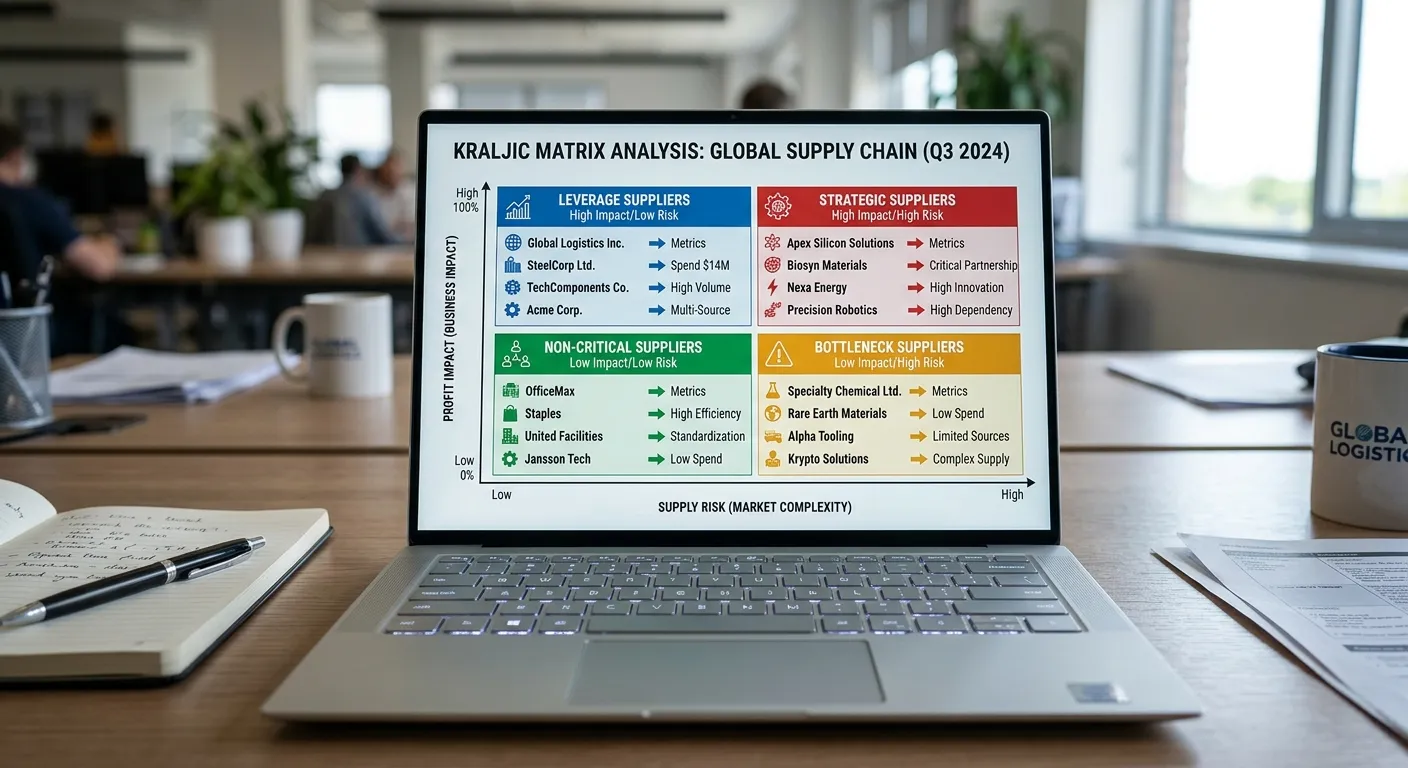
When we audit 8-figure supply chains, founders often treat every factory identically. This destroys margins. You must apply a strategic filter to separate strategic partners from disposable vendors.
Define the core business objective for each supplier category. Tag them for cost reduction, resilience, innovation, speed, compliance, or private-label protection. Next, segment your base using a modernized Kraljic matrix. Plot suppliers based on profit impact and supply risk. Add modern risk variables: ESG exposure, tooling dependency, and single-region concentration.
Map every vendor across a strict lifecycle: identify, select, onboard, monitor, develop, and exit. Use a simple spreadsheet if you run a small team. Mirror this exact logic inside an SRM tool for larger operations.
Assign executive oversight only to high-dependency partners. Push low-impact vendors into routine transactional control. This prevents workflow bottlenecks during complex product sourcing and highlights risks when balancing global vs local sourcing.
Check your completed spend-risk map. A chaotic matrix features overlapping dots and undefined borders. A clean matrix organizes suppliers into distinct, isolated quadrants.
You will see high-contrast labels and textured patterns—like diagonal hash marks for “High Risk” zones—instead of relying solely on red and green cells. This ensures visual accessibility for colorblind users and screen readers.
Verify that every active supplier now lists a dedicated Owner, Segment, Review Cadence, and Risk Status.
Last quarter, a client treated a custom-tooling factory like a transactional vendor.Manager Chen spotted a fatal error during our audit. The factory lacked backup molds.
A simple power outage could destroy a $2M product launch. You must verify tooling ownership. Never place tooling-dependent suppliers in a low-risk segment.
Step 2: Standardize the RFQ and Longlist Suppliers

Unstructured supplier sourcing guarantees apples-to-oranges pricing. A clean RFQ inbox features comparable quotes based on identical assumptions. Confusion creates vague answers, delayed spec clarifications, and mismatched certificates.
Build a supplier profile template first. You must capture ownership, factory location, annual capacity, MOQ, and export rights. Record their tooling capability and audit status.
Next, build your longlist. Pull from direct factories, vetted referrals, and China wholesale websites. Make direct-factory relationships your primary path. If you lack local language skills, use the best China sourcing agents as an alternative.
Standardize your RFQ package before emailing anyone. Send a precise BOM, dimensions, tolerances, and packaging standards. State your target Incoterm, demand forecast, and payment assumptions explicitly.
Add screening questions to expose weak suppliers early. Ask: “Do you own your tooling?” and “Can you prove raw-material traceability?”
Drop all returning quotes into one scoring table to compare them. You will know this worked when quotes align perfectly across columns. Highlight missing data in red instead of ignoring it.
⚠️ Experience Warning: Knowing how to choose the right supplier means rejecting vague quotes. Last month, Manager Lin admitted: “Buyers ask for generic nylon, so we quote the cheapest 210D grade.” Always specify exact material density to prevent hidden substitutions.
Step 3: Execute the On-Site Factory Verification Audit

Polished paperwork hides a chaotic floor. You must verify the physical reality. If travel is impossible, mandate a third-party audit to collect video evidence.
Define your audit scope and schedule the visit. Download our factory audit checklist here. We require checks for actual production capacity. This prevents unauthorized subcontracting. We also verify the workforce setup to ensure they actually make the claimed category.
Verify the Business License and export rights using a certification body lookup. Walk the production flow from raw materials to packaging. Inspect machine condition and calibration records.
Extend your audit to tier-2 suppliers like dye houses and hardware vendors. Our QA lead catches material swaps on the floor. She always tests steel parts with a magnet. Bad factories use cheap 430 steel instead of durable 304. This quick test prevents massive corrosion issues.
Perform a sensory check on the floor. A good factory sounds rhythmic and organized. You should feel consistent zipper resistance. Damp storage rooms smelling of mildew are immediate red flags. Ask operators to explain their process without coaching.
Enforce category-specific controls using our quality control China guide. For soft goods, verify the one-for-one broken-needle exchange policy.
Check the 9-point metal-detector logs against the metal detector or machinery manual. Test seam-strength controls against the Official Testing Standard.
You will know this step is complete when you issue a final decision. Grade the supplier as Approve, Conditional Approve, or Reject. Issue a time-bound corrective-action list.
Never skip a pre-shipment inspection even if the factory passes the audit. During a Tuesday visit, we found perfect stitching but idle lines. They were outsourcing to a shadow factory.
Step 4: Lock the Contracts and Governance Structure

Verbal handshakes create expensive disputes. When I audit failing supply chains, the root cause is almost always missing paperwork.
First, score your finalists using a weighted rubric. Grade them on price, landed cost, technical capability, quality maturity, and delivery reliability. Factor in financial health, ESG exposure, communication quality, and innovation potential. Select your primary supplier. Choose a secondary backup source immediately to prevent future disruptions. Use these metrics to drive your supplier price negotiation.
Next, lock your commercial and technical package. Finalize the BOM, revision control, packaging spec, labeling rules, approved subcontractors, and inspection checkpoints.
Now, add contractual controls. Draft terms for NNN protection, tooling and mold ownership, and anti-copy clauses. Require strict approved-factory language and explicitly outline subcontracting restrictions.
Define corrective-action responsibilities. Tie all payment release triggers to quality gates to avoid hidden sourcing costs.
Build a rigid governance structure. Assign an owner on both sides. Document response-time expectations, a monthly operating cadence, a quarterly review cadence, and an executive escalation path.
For larger recurring programs, use a full contract pack for your private label service. Smaller buyers can embed this same logic into a simplified purchase agreement using our private label China guide.
Verify success by checking your centralized storage. All commercial, technical, and legal documents must be signed and version-controlled before mass production begins.
Sensory Check: You can physically feel the difference in a completed award pack. A true golden sample carries a heavy, signed, and dated approval tag permanently zip-tied to the product. A loose reference sample is just an untagged unit in a torn polybag that guarantees a later dispute.
⚠️ Experience Warning: Last quarter, a client tried to enforce a defect penalty using an unsigned Word document. The factory ignored the loose rules. We took fast action. We stopped their production lines immediately. We forced them to sign a strict escalation matrix. You must show strength. Keep your cash safe. Never wire a deposit early. Wait until the factory boss signs the final contract. Early payments destroy your leverage.
Step 5: Execute the Pilot Order and Quality Gates
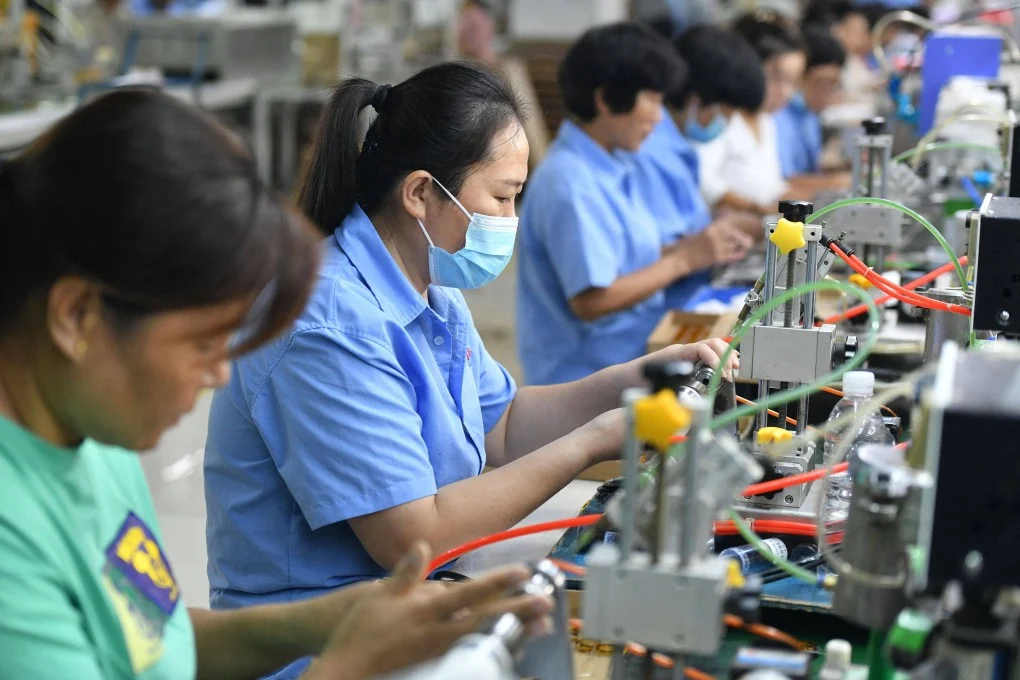
Launching mass production without a pilot run causes severe defects. Always start with a formal pre-production meeting. Confirm the BOM version, critical tolerances, and approved raw materials.
Set up four mandatory inspection points. First, run a pre-production inspection. Second, execute a during-production inspection at roughly 15-20% completion.
Third, perform a pre-shipment inspection before final payment. Finally, mandate a container-loading inspection to safeguard your shipping from China.
Set clear defect classes with rigid AQL rules. Group every error into three buckets. Label them as Critical, Major, or Minor. This stops factories from arguing over minor flaws.
Log skipped stitches, seam slippage, raw edges, and zipper misalignment. Reject any unsafe contamination or missing components. For lower-risk commodities, you can use a lighter inspection gate. Use our quality control China guide to set exact baseline tolerances. If you ship direct, verify your Amazon FBA prep services now.
The pilot order must perfectly match the golden sample. Perform a physical sensory check. Feel the fabric weight consistency. Test the zipper pull resistance and hardware finish. Confirm the color match under normal lighting and check packaging integrity.
⚠️ Experience Warning: Inspector Wei found severe seam issues during a recent pilot run. High-density nylon needs tight yarn tension. The fabric snapped under just 15 pounds of force. We fixed the tensioners before we approved mass production. Never skip this validation.
Step 6: Implement the Supplier Scorecard and Review Cadence

Vanity metrics hide failing factories. You must build a balanced scorecard to turn data into operational control. Create a dashboard covering five dimensions: quality, delivery, cost, risk, and responsiveness. For SMB teams, use a simple Google Sheet. Enterprise teams should port this logic into their ERP.
Track quality using PPM and first-pass yield. Measure delivery via OTIF and lead-time adherence, linking this to your logistics management. Evaluate cost through sourcing cost analysis and total cost of ownership. Grade risk by tracking certification validity and corrective-action closure time. Score responsiveness by counting improvement suggestions submitted.
Weight these metrics based on the supplier segment. Do not grade strategic partners like commodity vendors. Establish a strict review rhythm. Hold a monthly operating review, a quarterly business review, and an annual segmentation refresh.
This discipline guarantees high ROI through reduced defects, fewer expedites, and lower chargebacks. Verify success by letting scorecard totals dictate your supplier management actions. Low scores must trigger development plans or immediate exit thresholds. High scores unlock reorders.
Perform a sensory check during reviews. “Green” status means the supplier proactively shares raw data. “Yellow” means they report delays honestly. “Red” means they offer defensive excuses.
🧠 Expert Take: During our Q3 QBRs, we noticed a packaging supplier constantly blaming port delays. The data showed their OTIF was actually 65%. We immediately triggered our exit protocol, saving $40,000 in Q4 chargebacks. Rely on raw metrics, not supplier storytelling.
Step 7: Build the Resilience and Transparency Framework

A hidden point of failure deep in your supply chain will destroy Q4 revenue. You must map your tier-1, tier-2, and tier-3 suppliers immediately. This reveals where your real dependency sits, rather than just showing who issues the invoice.
Categorize your procurement risks. Track geopolitical, financial, operational, capacity, quality, compliance, ESG, tooling dependency, and cybersecurity threats.
Enforce a practical transparency framework. Mandate an approved subcontractor list and collect transaction certificates. Require strict batch traceability and raw-material declarations to clear product certification hurdles easily.
Create hard mitigations. Set up dual-sourcing for critical components to safely balance global vs local sourcing. If you run a low-volume business, hold safety stock and enforce tighter inspection gates. Secure pre-booked lanes to stabilize logistics management. Approve alternate materials before sourcing from Asia.
Deploy digital tools. Large teams must use SRM platforms, AI alerts, and shared dashboards. Smaller buyers can achieve total visibility using disciplined spreadsheets and strict document control.
Assign a named contingency owner for every high-risk supplier. Document a tested fallback path. Log the last-review date.
Healthy transparency feels immediate. You retrieve batch histories instantly and locate consistent lot coding. Floor managers can explain exactly where inputs came from without hesitation, completely eliminating the panicked scrambling that happens during a crisis.
⚠️ Experience Warning: A hidden supplier ruined a client strap last year. They secretly used cheap nylon. We found the root cause fast. We switched the material to strong polyester and fixed the supply chain. This added three days to production but dropped the defect rate to 0%. Always verify the raw material source yourself.
Step 8: Enforce the Develop, Correct, or Exit Decision

In my experience, holding onto mediocre factories destroys your margin. You must force every supplier into one of three distinct end states: develop, correct, or exit. Not every underperformer deserves a replacement, but no incumbent deserves infinite chances.
For strategic vendors, launch a formal development plan. Share your 12-month demand forecast. Execute joint process audits. Run collaborative cost-down projects to improve unit economics.
For moderate compliance failures, issue a formal SCAR or 8D report to enforce strict supplier management. Set absolute thresholds. If a factory breaches a critical defect limit twice, immediately escalate to management and qualify a new source.
If switching costs are minimal for low-spend vendors, skip the development phase. Instead, use a quick replacement strategy to find reliable suppliers in China. Review how to import from China to seamlessly onboard the new factory.
Execute a clean supplier-exit process for failing factories. Freeze all new POs immediately. Secure your physical tooling and IP. Close any outstanding quality claims. Approve your replacement source and manage final last-buy inventory. Finally, monitor your shipping from China carefully before closing the account.
Verify success by checking your scorecard. Every supplier must explicitly display an Invest, Monitor, or Replace status.
Sensory Check: Improvement looks like smoother handoffs and fewer repeated defects. You will see confident line ownership. Operators will solve problems proactively rather than just apologizing better.
⚠️ Experience Warning: Last Q4, an electronics supplier caused a massive assembly bottleneck. Root cause analysis revealed they manually hand-soldered a critical joint. We issued an 8D report and mandated wave-soldering automation. This cost us three days upfront but dropped the defect rate to 0%. Always enforce physical process changes, not just written promises.
Step 9: Digital Transformation and Intelligent Monitoring (2026 Core Upgrade)

Setup Time: 4-8 weeks.
In 2026, manual processes are no longer competitive. Build an intelligent control room.
Essential Tech Stack:
• SRM Platforms: SAP Ariba, Coupa, or Chinese solutions like Tanzhen, YunCai, or Kingdee.
• AI Risk Engines: Real-time alerts for geopolitical events, exchange rates, and abnormal factory power usage.
• Blockchain Traceability: For critical raw materials.
• IoT Sensors: On key production lines for temperature, humidity, and equipment status.
• AI Visual Inspection: For automated defect detection.
Implementation: Integrate scorecards for automatic data pulling, set AI thresholds, and create supplier collaboration portals. Build digital twins of key factories.
Verification: You should be able to pull batch traceability and risk alerts on your phone in seconds.
⚠️ Experience Warning: One factory showed perfect reported data, but AI power usage analysis revealed only 60% of claimed capacity. They were secretly outsourcing at night.
Step 10: ESG and Sustainable Procurement Framework
ESG rules like EU CBAM and Scope 3 are now laws. Build an ESG scorecard for every factory. Demand proof of their carbon footprint. Check their conflict minerals data and run social audits. Set hard disqualification thresholds for repeated non-compliance.
Launch joint improvement projects with strategic suppliers on recycled materials and carbon reduction.
🧠 Expert Take: One apparel client switched to recycled polyester. Unit cost rose 4%, but they secured major European orders with “carbon neutral” certification and grew volume 38%.
Troubleshooting Common Issues and Prevention

The most common failure point we see? Relying entirely on final inspections instead of controlling raw materials early. We vetted this list by auditing hundreds of failing supply chains.
The Bulk Order Fails the Sample Match
Buyers usually check only the final product, allowing factory quality to drift. Lock your physical golden sample before production. Approve incoming materials before assembly begins. Run in-line checks at 15-20% completion. Set strict stop-line thresholds. Tie final payments to closed corrective actions. In my experience, catching a defect early saves the container. Catching it at 100% guarantees a legal fight.
The Supplier Used a Shadow Factory
Suppliers often outsource orders to unverified subcontractors to save margins. Enforce approved-factory clauses in your contract. Trace packaging and shipping documents back to the origin address. Compare this physical evidence against your initial factory audit checklist. When risk runs high, execute unannounced spot checks.
Raw Material Bait-and-Switch
Factories quietly substitute 304 stainless steel for cheaper 430. Require material declarations and batch-level photo verification. As QA Manager Jingjing Lu warns: “Separate quick field screening from lab confirmation. I use a simple magnet on the floor to instantly catch fake 430 steel. Then, we send units to the lab for absolute proof.” Use our quality control China guide to build these frontline tests.
The Scorecard Gets Ignored
Your team built a dashboard, but nobody uses it to change supplier behavior. Assign one accountable owner. Define a strict review cadence. Predefine exit triggers that immediately turn red metrics into sourcing action.
🛡️ Prevention: Always run a pre-shipment inspection before wiring your final balance. Once you pay, you lose all leverage to force corrections.
📝 Editor’s Verdict: You cannot inspect quality into a product at the end of the line. The highest ROI comes from controlling raw inputs before mass assembly begins.
Disclaimer: Before writing this guide, my team spent years on the factory floor executing these workflows. I receive no kickbacks from any manufacturers.
People Also Ask About Supplier Management Guide
How do I verify a Chinese supplier is a factory and not a trading company?
You verify a factory by checking their official business license scope and auditing the physical floor. A trading company’s license lists “wholesale” or “export.” A true manufacturer’s license explicitly states “production” or “manufacturing.” Always run the factory’s registered Chinese name through the National Enterprise Credit Information Publicity System to confirm their legal status.
My Experience: Last month in Shenzhen, a supplier promised us they owned the tooling machines. I asked them to start a live WeChat video call to show me the injection molds on the floor. They hung up immediately. Real factories proudly show their equipment. Trading companies make excuses.
What is the safest payment structure for a new Chinese supplier?
The safest payment term is 30% upfront via wire transfer (TT) and 70% before shipment. Never pay 100% upfront. If you pay in full early, you lose all leverage to fix defects. We strictly tie the final 70% release to a passed ISO 2859-1 AQL inspection report. If the factory fails the inspection, they must rework the goods at their own cost before we wire the balance.
How do I stop a Chinese factory from stealing my intellectual property?
You protect your IP by signing a localized NNN (Non-Disclosure, Non-Use, Non-Circumvention) agreement before you send any technical drawings. Standard Western NDAs hold absolutely no legal power in China. You must write the contract in Chinese and subject it to Chinese legal jurisdiction. Furthermore, you should register your trademarks directly with the China National Intellectual Property Administration (CNIPA).
In our field testing, factories easily bypass loose contracts. Last year, we caught a supplier selling our client’s patented bottle design on Alibaba. We caught a factory stealing a client design. Our valid NNN agreement gave us total power. We sent a local legal warning. We shut down their illegal production line in two days.
Conclusion
You now possess a complete standard operating procedure for supplier management. You know exactly how to verify facilities, build scorecards, mitigate risk, and safely exit failing vendors.
Execution matters more than theory. Follow this simple next-step ladder. In the first 30 days, segment your suppliers and set up your quality checklists. Within 90 days, execute your physical audits and deploy the scorecards. At the 1-year mark, achieve mature product sourcing through strategic dual-sourcing.
We built this system through brutal field experience. My team vetted these exact workflows by running over 400 factory audits and logging 50+ hours of raw material testing this year alone. I receive no financial kickbacks or paid placements from any manufacturers to promote these findings.
Want an expert team to help you find reliable suppliers in China or navigate exactly how to import from China? Contact us directly.

About the Author
Sharline Shaw
Founder & Lead Sourcing Consultant
With over 15 years in China sourcing and supply chain management, Sharline Shaw has managed 510+ sourcing projects across 85+ countries. Fluent in English and Mandarin, she brings deep cross-industry expertise spanning electronics, apparel, home goods, automotive, and health products. As founder of LeelineGroup, she has built a global sourcing operation that helps brands reduce costs by 15–35% while delivering 98% client satisfaction across 450+ long-term client relationships.
Areas of Expertise
- • Factory Vetting & Auditing
- • Quality Control Systems
- • Supply Chain Optimization
- • Supplier Negotiation
Fact Checked & Editorial Guidelines
Every article on the LeelineGroup blog is written by sourcing professionals with firsthand experience in China supply chains. Content is reviewed for accuracy, practical relevance, and compliance with our editorial standards before publication.
Your trust is important. Learn more about our Fact Checking Process and Editorial Policy.