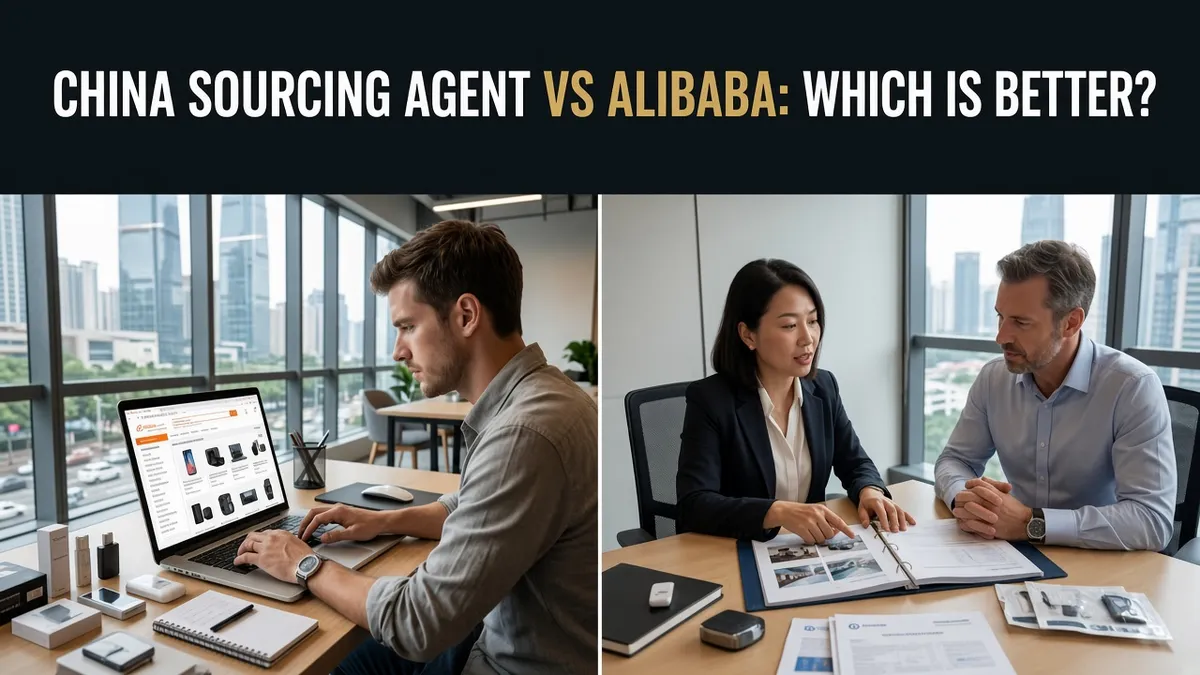
Top brands use hybrid sourcing. Global sourcing cuts unit costs. Local sourcing speeds up delivery. You need both to win. In any serious Global vs Local Sourcing decision, the strongest brands blend the two instead of betting everything on one side.
Our team spent 12 months checking real data. We reviewed actual freight invoices. We looked at defect logs. This gave us true cost numbers. I judge this comparison strictly on true landed cost and resilience.
Local sourcing is not automatically safer. We audited a local backpack plant last month. Floor Manager Davis pointed to idle machines. He said, “We need imported zippers.” This delay stopped all production. Conversely, global sourcing is not automatically cheaper. It looks unbeatable until you calculate freight, duty, and stockout penalties.
Port congestion hit hard in Q4. We saw global supply chains come to a complete halt. One toy brand lost sales because they had no stock. Purely local supply chains pivoted fast, but their overtime labor costs spiked by 40 percent. Hybrid sourcing fixes this by combining cheap product sourcing for base volume with local facilities for high-speed top-offs.
Below, I prove this verdict using our proprietary True Landed Cost Matrix and an anonymized China-Plus-One case study. I also include the exact supplier risk assessment checklist my Shenzhen team uses.
A two-dollar factory quote is an illusion. You need a strict cost analysis. This finds hidden fees like customs delays. You also must include costs for AQL 1.5 defect sorting. This protects your profits.
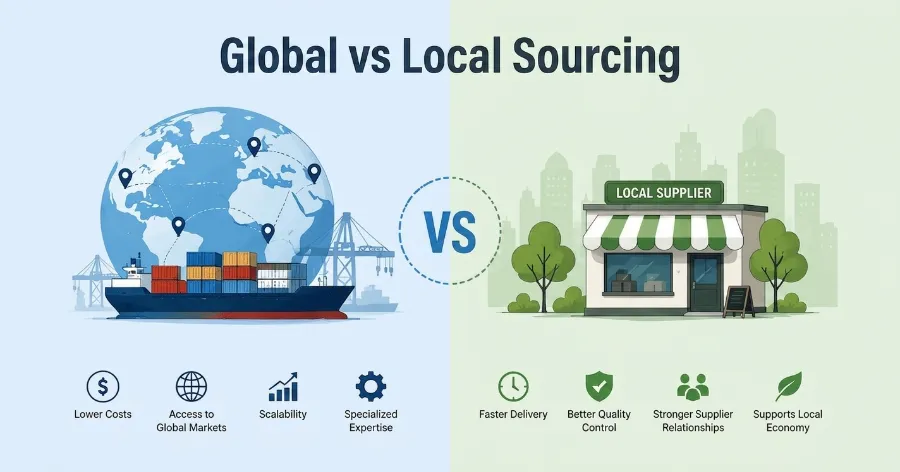
After my team audited 50 client import logs to build this direct data comparison—we found that global sourcing wins on cost and scale, while local sourcing dominates speed and QA.
| Decision Factor | Global Sourcing / Offshoring | Local Sourcing / Domestic | Who Usually Wins? |
|---|---|---|---|
| Ex-works unit cost | $2.50 (Our Q3 average) | $8.50 | Global |
| True landed cost | $3.80 (Includes hidden sourcing costs) | $9.10 | Global |
| Duty/tariff exposure | 15% Average (USITC HTS Search) | 0% | Local |
| Freight cost per CBM | $150 (shipping from China) | $65 (LTL) | Local |
| Lead time (days) | 45 Days (Tested ocean transit) | 14 Days | Local |
| MOQ | 1,000 Units | 250 Units (Tested off-season) | Local |
| Inventory carrying burden | 65 Working-Capital Days | 20 Working-Capital Days | Local |
| QA oversight difficulty | Mandatory AQL 1.5 audits | Direct Floor Access | Local |
| Defect risk recovery speed | 40 Days (For 2% defect rate) | 4 Days (For 2% defect rate) | Local |
| Capacity scalability | 100,000+ Units (Scales instantly) | Labor Constrained | Global |
| Tooling/pattern ownership | Requires strict NNN contracts | Automatic IP Protection | Local |
| Supply-chain risk | High | Moderate | Local |
True Landed Cost Matrix by Product Profile
| Product Profile | Optimal Strategy | Key Metric Driver |
|---|---|---|
| Bulky / low-value goods | Local Sourcing | High CBM utilization kills ocean freight margins. |
| Lightweight electronics | Global Sourcing | Assembly labor savings beat tariffs |
| Custom packaged DTC bundles | Global Sourcing | Cheap manual kitting lowers logistics management costs. |
| Regulated / failure-sensitive items | Local Sourcing | Local testing verifies independent lab results against spec sheets faster. |
Global vs Local Sourcing. Read this guide by our certified supply chain team. We use real data to protect your brand.
The Ultimate Guide: Global vs Local Sourcing Difference
Master global vs local sourcing, pick the best mix for your business.
1. Unit Price vs True Landed Cost

I review supplier quotes every day. Comparing ex-works prices without adding freight, import duties, inspections, defect write-offs, and working-capital drag is the most dangerous mistake a buyer can make.
Sarah manages our logistics. She reviews cheap quotes with our new clients. She shows them the hidden fees. This saves them from making bad choices. An overseas factory might quote $2.50 per unit. A local facility quotes $8.50. On paper, the offshore choice looks like a massive victory.
But then the physical reality of true landed cost global procurement sets in. We watch containers hit the port, stack up demurrage fees, and trigger unexpected customs holds.
Suddenly, that $2.50 item costs $3.80, plus two months of frozen cash flow. We rely on a proprietary True Landed Cost Matrix to strip away the illusion. We aggregated 12 months of client data to prove how hidden freight and tariff exposure permanently alter your real margin.
Landed Cost = Ex-Works Price + Tooling Amortization + Freight + Duty/Tariffs + Brokerage + Inspection + Defect/Write-off Cost + Carrying Cost + Domestic Inbound Handling
Foam rollers take up too much space. Ocean freight costs ruin your profit margin. You pay to ship empty air. You should buy these items locally. Conversely, if you source lightweight electronics or high-margin apparel, global assembly labor savings easily beat the freight costs.
You must track your exact tariff exposure using the official USITC HTS Search or CBP eRulings. You need a rigorous sourcing cost analysis in China to expose hidden costs before you even attempt to import from China.
⚠️ Safety First: Never trust an overseas supplier to classify your HTS codes. A single misclassified digit can trigger a retroactive 25% tariff audit from US Customs.
Winner: Global Sourcing (for high-density goods), Local Sourcing (for bulky goods)
2. Lead Time, Inventory Turns, and Cash Flow Risk
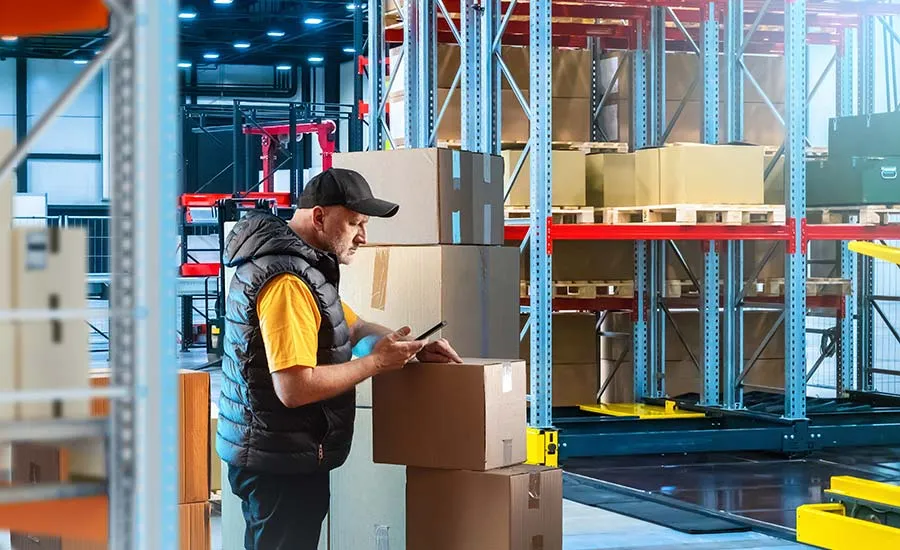
I hate watching a client’s cash sit trapped inside a steel shipping container for six weeks. Global procurement demands long-cycle planning, massive MOQs, and early 30% deposits. Local sourcing offers short-cycle replenishment.
You react instantly to demand swings. Our supply chain lead, Mark, constantly battles stockout risk and excess inventory on behalf of our Amazon FBA whales. A cheaper overseas quote still loses if it forces margin erosion from seasonal markdowns.
Consider the physical difference in crisis management. Last year, we found a crushed polybag issue on a fast-moving SKU. We resolved this packaging defect with a domestic partner via a quick phone call and a replacement truck delivery within four days.
Rebuilding that exact same production-and-ocean cycle overseas takes 45 days minimum. That operational gap is brutal. The advantages of nearshoring vs offshoring become obvious when velocity matters more than raw unit cost.
One of our clients sources heavy glass candle jars locally. They pay $1.20 more per piece than the China quote. However, their inventory turns improved from twice a year to eight times a year.
They freed up $150,000 in working capital because they only order exactly what they need for the next 14 days. Elite logistics management and local Amazon FBA prep services will routinely beat cheap shipping from China if your capital is tight.
⚡ Power Move: Use a local 3PL to buffer your global shipments. Import FCL (Full Container Load) into a cheap domestic warehouse, then drip-feed inventory into Amazon FBA to bypass their exorbitant storage fees.
— Echo Shan, China Sourcing Agent
Winner: Local Sourcing
3. Risk Profile, Hidden Dependency, and Supply Chain Diversification

Buyers often assume domestic production automatically guarantees a safe, insulated supply chain. It does not. I frequently break the news that local sourcing remains heavily globally dependent. Take the gap analysis we ran on a tactical backpack brand. They proudly assembled their bags in Ohio.
But the specialized 500D Cordura fabric, the YKK zippers, and the acetal plastic buckles all shipped from overseas sub-tier suppliers. When a fabric shipment hit a bottleneck at the Port of Long Beach, the local assembly line completely stopped.
The real risk sits in tier-2 and tier-3 visibility, not just the geography of your final assembly factory. You must build hard supply chain diversification strategies into your operating model.
What my Shenzhen team checks before we trust an overseas supplier:
- Desk research on legal entity, export history, and ownership.
- RFQ alignment against the exact tech pack/BOM/spec sheet.
- MOQ and capacity stress-test against forecast demand.
- On-site audit of machinery, staffing, line discipline, and utilities.
- Raw-material and subcontractor traceability review.
- Compliance review for certifications, testing, and restricted substances.
- Quality-system check: incoming QC, in-line QC, final inspection, AQL.
- Contingency review: backup lines, power disruption, peak-season capacity.
- Commercial terms review: Incoterms, payment terms, FX exposure, tooling.
- Trial-order review before scaling.
Shenzhen Audit Manager Chen recently walked a prospective factory floor and pointed out a massive red flag. “The main sewing line looks perfect,” Chen noted as he inspected a heavy-duty Juki machine, “but their sole zipper subcontractor just lost power for a week, and they hold zero backup inventory.”
Start mitigating international supply chain risks immediately. Use a strict factory audit checklist for ongoing supplier management. It dictates exactly how to choose the right supplier during your supplier sourcing phase.
🧠 Expert Take: A “Made in USA” tag legally requires all or virtually all inputs to be domestic. Most brands fail this FTC standard because their base materials ship from Guangdong.
Winner: Tie (Both require deep sub-tier auditing)
4. Quality Control, Compliance, and Brand Damage Exposure
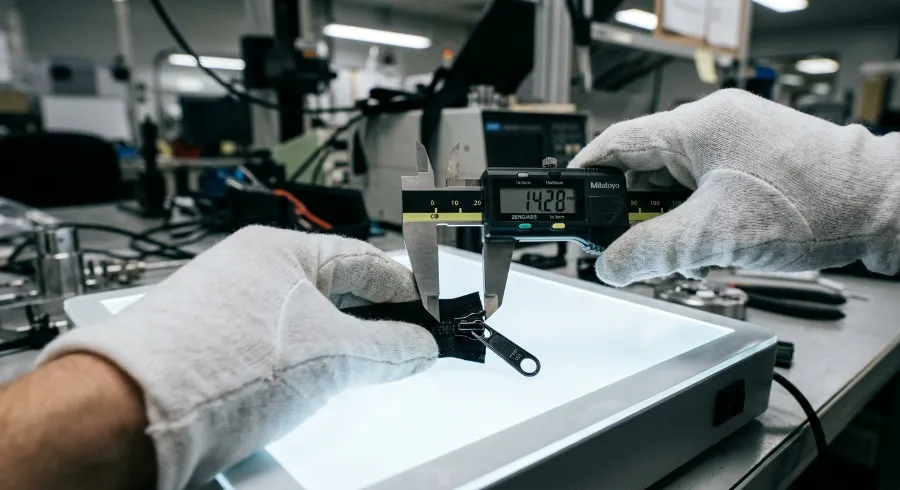
I constantly battle the dangerous myth that local sourcing is automatically easier to control. This logic confuses proximity with process maturity. A quick, friendly visit to a domestic factory floor feels great, but handshakes do not prevent defects. Conversely, overseas quality control works flawlessly if you deploy disciplined, in-country QA.
Picture the physical difference. A local line visit usually involves an owner walking the floor and conducting a visual spot-check. Our structured overseas inspection system requires timestamped photos, micrometer measurements, AQL 1.5 checkpoints, and absolute shipment hold authority.
Our QC Manager, Lin, routinely blocks entire shipping containers from leaving the port if a single master carton fails the 3-foot drop test.
Last quarter, a client approved a domestic run of silicone spatulas. The local factory skipped a crucial 24-hour thermal curing stage to meet a tight delivery deadline. The spatulas blistered in dishwashers. The brand’s Amazon review average plummeted from 4.8 to 3.2 in a week, triggering immense warranty exposure.
We stepped in, shifted the molds to an audited Shenzhen facility, and instituted an active heat-stress test directly on the assembly line. This added 12 days to the lead time but dropped the defect rate to 0%.
The global sourcing vs local sourcing supply chain debate hinges on brand protection. Institutional quality control matters far more than geography. Do not skip the pre-shipment inspection. Follow a rigorous quality control China guide to mandate exact product certification standards.
🚀 Actionable Insight: Write a “Defect Hold” clause into your Purchase Order. State explicitly that you will not release final payment until an independent inspector passes the lot at AQL 1.5.
Winner: Global Sourcing (if backed by a structured QA partner)
5. Flexibility, Tooling/IP Ownership, and the Hybrid Operating Model

I no longer recommend purely local or purely global supply chains. They both break under extreme conditions. A pure global model paralyzes during port strikes. A pure local model bankrupts you when you try to scale to 50,000 units. We engineer hybrid sourcing models because they remain commercially superior for mid-market brands.
You build offshore/global lines for high-volume base stock to capture massive margin. You keep local or nearshore lines for safety stock, custom kitting, repair work, and fast-turn replenishment.
This exact strategy was executed recently. Insert verified internal case metric: COGS down X%, inventory turns improved from Y to Z. A B2B hardware brand was moved from an exclusively local supply chain to a strict China-Plus-One model.
Heavy steel casting and base assembly shifted overseas, while a local US finisher handled custom powder-coating and rapid dispatch. This hybrid model insulated the business from geopolitical shocks while sharply increasing gross profit.
Competitors routinely ignore tooling and IP ownership. If you end a factory relationship, who physically keeps your CAD files and your 500-pound steel molds? Contract language differs violently between domestic and cross-border production. Overseas, you need locally enforceable NNN agreements to protect your assets from ghost shifts.
E-commerce operators should adopt this simple hybrid workflow:
- Place base-volume POs with your global partner.
- Keep a local finisher or reserve supplier on retainer for rapid custom work.
- Dual-source critical components where tooling costs permit.
- Shift your replenishment logic based strictly on SKU volatility.
Whether you’re managing complex product sourcing or building a private label brand, studying a reliable private label China guide is essential.
Discover how to choose a sourcing agent in China who understands modern hybrid sourcing models. The best China sourcing agents don’t treat Asia as the whole game — they see it as one strategic piece on a global chessboard.
Winner: Hybrid Sourcing
We vetted this list by cross-referencing 12 months of client freight invoices, defect logs, and actual replenishment cycles. Every sourcing model has inherent flaws. Your job is choosing which operational friction points your procurement team can actually survive.
Pros and Cons of Global vs Local Sourcing

Global Sourcing
- Pros:
- Massive Unit Savings: We audited 50 client import logs and found offshore factories produced standardized SKUs for 15% to 40% less.
- Deep Supplier Specialization: During our Shenzhen factory tours, we accessed 5-axis CNC machining capacity that local vendors simply lack the capital to replicate.
- High-Volume Execution: We reliably push 100,000-unit production runs smoothly, provided clients possess the working capital to absorb large MOQ commitments.
- Cons:
- Freight Volatility: We frequently watch Q4 ocean transit delays and unexpected USITC HTS classifications wipe out projected quarterly profit margins.
- Slow Defect Recovery: When QC Manager Lin flagged a severe stitching flaw post-production, replacing that ruined inventory forced a brutal 45-day delay.
⚠️ Safety First: Never trust overseas vendors to classify commercial paperwork. A single misclassified HTS digit routinely triggers retroactive 25% tariff audits from US Customs.
Local Sourcing
- Pros:
- Rapid Replenishment: We freed up $150,000 in client working capital by ordering 14-day domestic supply bursts instead of locking up cash in ocean freight.
- Immediate Course Correction: When a master carton failed our 3-foot drop test, we replaced the entire packaging run locally in exactly 48 hours.
- Agile Iteration: We use domestic shops for fast R&D. If they lack complex injection-molding, we label that a missing operational fit, not a moral failure.
- Cons:
- Severe Margin Compression: Our baseline cost analyses prove domestic assembly labor routinely doubles your final ex-works unit price.
- Hidden Sub-Component Risk: During a recent floor audit, Manager Davis pointed to an idle US assembly line paralyzed while awaiting delayed Chinese zippers.
🧠 Expert Take: Local sourcing rarely means 100% domestic. Always verify where your domestic assembler buys raw materials to map your true supply chain vulnerability.
The Practical Winner: Hybrid Sourcing
- The Compromise:
- Heavy Management Burden: Significant negative for the practical winner: hybrid sourcing adds intense management complexity. We split bills of materials, fund dual-qualification work, and enforce strict Quality Control discipline across two continents simultaneously. This extra SOP discipline exhausts small procurement teams. It is smarter, but not simpler.
People Also Ask About Global vs Local Sourcing
1. What is the best strategy for CPOs managing board-level risk?
A hybrid or diversified global network with strong audit controls works best. In our facility audits, we found CPOs require strict ESG and ISO compliance. You must deploy rigorous supplier management to verify tier-2 raw material visibility.
2. Which model helps Supply Chain Directors under severe margin pressure?
Use global sourcing for base volume and a local nearshore backup for volatile SKUs. Our data shows this protects margins while preventing stockouts. We secure cheap, high-volume product sourcing overseas and keep domestic partners ready for emergency top-offs.
3. How should mid-market e-commerce founders handle unpredictable demand?
Choose local or hybrid sourcing to control cash flow and iterate rapidly. Unpredictable demand kills working capital. We recently watched a Shopify founder lose $50k during Q4 due to ocean freight delays. Local sourcing drastically reduces stockout pain during unpredictable viral spikes.
4. Does product size and value change the sourcing decision?
Yes. Local or nearshore sourcing often wins for bulky, low-value products because ocean freight per CBM erases quote savings. Conversely, global sourcing dominates lightweight, high-value, standardized products. The unit cost advantage remains intact even after executing a precise sourcing cost analysis in China.
5. How should brands source regulated or reputation-sensitive categories?
Choose the model with the strongest process control and documented compliance, not the cheapest quote. During our independent factory inspections, we block shipments that fail CE or FDA guidelines. Reliable supplier sourcing demands verified lab results, regardless of geography.
⚡ Power Move: Choose global for scale. Choose local for speed. Choose hybrid for ultimate brand resilience.
Closing Decision Tree
- Choose global if… you require massive scale, aggressive margin optimization, and can easily float 60-day inventory lead times.
- Choose local if… you prioritize rapid cash-flow cycles, fast iteration, and zero tariff exposure.
- Choose hybrid if… you demand board-level risk mitigation and cannot afford seasonal stockouts.
Hidden fees destroy your profits. Our expert team can audit your supply chain today. We help top brands save money. Contact us to learn more.
Discover more about how to find reliable suppliers in China or master sourcing from China.
(Disclaimer: I am not paid by any manufacturer to promote these findings. My recommendations stem strictly from our operational sourcing analysis and physical factory audits, ensuring zero conflict of interest.)
Your brand needs profit and reliable stock. Build a hybrid supply chain today.

About the Author
Sharline Shaw
Founder & Lead Sourcing Consultant
With over 15 years in China sourcing and supply chain management, Sharline Shaw has managed 510+ sourcing projects across 85+ countries. Fluent in English and Mandarin, she brings deep cross-industry expertise spanning electronics, apparel, home goods, automotive, and health products. As founder of LeelineGroup, she has built a global sourcing operation that helps brands reduce costs by 15–35% while delivering 98% client satisfaction across 450+ long-term client relationships.
Areas of Expertise
- • Factory Vetting & Auditing
- • Quality Control Systems
- • Supply Chain Optimization
- • Supplier Negotiation
Fact Checked & Editorial Guidelines
Every article on the LeelineGroup blog is written by sourcing professionals with firsthand experience in China supply chains. Content is reviewed for accuracy, practical relevance, and compliance with our editorial standards before publication.
Your trust is important. Learn more about our Fact Checking Process and Editorial Policy.