A late shipping container does not just delay a single customer order. It triggers cascading Amazon FBA stockouts, paralyzes cash flow, and destroys brand trust. Many business leaders mistake logistics for simple point-to-point shipping. In reality, it is the critical operating system driving cost control, customer experience, and global scale.
McKinsey data shows supply chain shocks hit hard. Companies lose 42% of one year’s EBITDA every decade due to disruptions. We help you build the agility needed to beat these industry averages.
At its core, Logistics Management is the precise coordination of moving resources from their origin point to final consumption. It connects raw materials on an overseas factory floor directly to a customized package on a buyer’s doorstep. In 2026, executing this successfully is a primary profit lever, not a back-office function.
I have managed global trade out of China for over a decade. My team at LeelineGroup has audited hundreds of factory floors, negotiated international freight terms, and rescued countless shipments trapped in customs.
We understand the financial leverage of a streamlined operation. Our team once spent 48 hours straight at the Ningbo port. We helped a DTC brand release three containers of lithium batteries stuck in customs. This saved their holiday sales and avoided $50,000 in late fees.
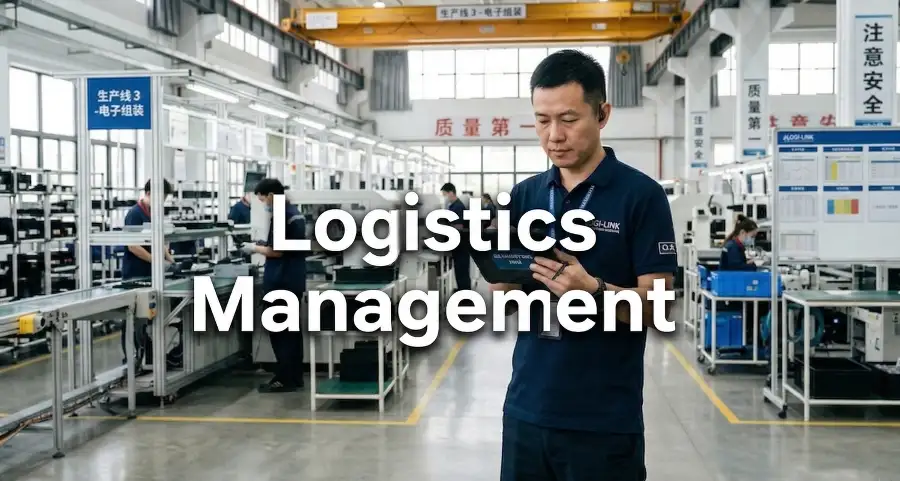
Whether you are a supply chain professional tightening corporate compliance, an SMB owner scaling global imports, or a student learning the trade, you need a definitive blueprint. We built this blueprint to solve the daily logistics headaches we see in Shenzhen.
You will learn to manage warehouse systems, fix inventory leaks, and choose the right 3PL model without the fluff. Cover warehouse management systems, transportation networks, inventory control, 3PL models, reverse logistics, and global scaling strategies.
Meet the Expert. This guide draws on LeelineGroup’s operational background in international trade. As an end-to-end sourcing powerhouse based in China, we manage everything from micro-MOQ product development to full container load global shipping. We serve as your local guide, protecting e-commerce brands and enterprise clients from the hidden risks of global manufacturing.
What is Logistics Management?
Logistics management is the physical execution engine that plans, implements, and controls the movement and storage of goods. The Council of Supply Chain Management Professionals (CSCMP) defines it formally as the efficient forward and reverse flow of products from origin to final consumption.
In our daily operations moving freight out of Shenzhen, we explain this difference using a simple construction analogy. Supply chain management is the architect. It handles high-level strategy, like product sourcing and researching new markets. Logistics is the fleet of trucks. It actively moves, stores, and returns your physical inventory to the exact location workers need it.
Historically, businesses viewed logistics as a frustrating cost center. You simply paid freight bills to move boxes. Today, e-commerce and complex global trade make logistics a core strategic advantage. Flawless execution protects profit margins across every business model. An Amazon FBA seller needs precise prep to avoid penalty fees.
A DTC brand relies on rapid global fulfillment to keep viral customers happy. A local retailer requires consolidated shipping to restock boutique shelves without draining cash flow. Meanwhile, an enterprise procurement team relies on strict container tracking to hit quarterly cost-reduction goals.
When we audit an international supply chain, we verify performance using the classic “7 Rs” framework. Professionals define this as delivering the right product, in the right quantity, in the right condition, to the right place, at the right time, to the right customer, and for the right price.
To master those variables, you must build seven core operational blocks:
- Inbound Logistics: Moving goods from factories into your central facility. This requires tight supplier management so production delays do not stall your cargo ships.
- Outbound Logistics: Moving finished inventory out of your warehouse and closer to the final buyer.
- Transportation Logistics: Managing the physicalfreight networks (ocean ships, cargo planes, railcars, and local delivery vans).
- Warehousing: Storing inventory safely and organizing it for rapid retrieval.
- Inventory Control: Tracking exact stock levels daily. This data connects execution back to strategy, bridging the gap between sourcing vs procurement.
- Order Fulfillment: Picking, packing, and labeling individual boxes accurately for the end consumer.
- Reverse Logistics: Handling the complex flow of customer returns, factory repairs, and recycling.
Our warehouse lead, Zhang, often says: ‘A tiny labeling error in China becomes a massive rejection at Amazon FBA.’ We now use triple-scan verification for every outbound box to stop these costly mistakes early. A brilliant supplier sourcing strategy means nothing if your inbound logistics cannot physically retrieve the goods from the factory floor.
💡 Key Insight: Supply chain strategy dictates what you sell, but logistics execution dictates if your business survives.
How Global Logistics Actually Works: Under the Hood
To understand Logistics Management, open the hood. Goods do not magically teleport from a factory to your doorstep. They move through a strict physical sequence of handoffs. We map and run this exact pipeline daily. Here is how the mechanics operate.
Planning and network design
Before moving a single pallet, you must draw the mathematical blueprint. First, you define service levels. This dictates how fast the customer receives the product. Next, you execute demand planning to calculate exact production volumes.
With volumes set, you handle node selection and inventory positioning. You decide which global cities will house your goods. Then, you make your mode choice. You choose between 30-day ocean freighters or 5-day cargo planes. Every decision requires landed-cost thinking. You add manufacturing, freight, customs, and final delivery to find the true cost of one unit.
Scale dictates your design. Small businesses build lean networks. They ship directly from a factory to a single fulfillment center. Enterprise brands build redundant networks with backup nodes to survive port strikes.
Your shipping terms dictate legal control. The official ICC Incoterms rules govern these handoffs. Free On Board (FOB) means the buyer takes ownership at the origin port. This gives advanced buyers total control over freight costs.
However, it requires you to manage customs. Delivered Duty Paid (DDP) forces the supplier to handle all shipping and import taxes. This gives less experienced buyers a completely hands-off process.
Warehouse and inventory execution
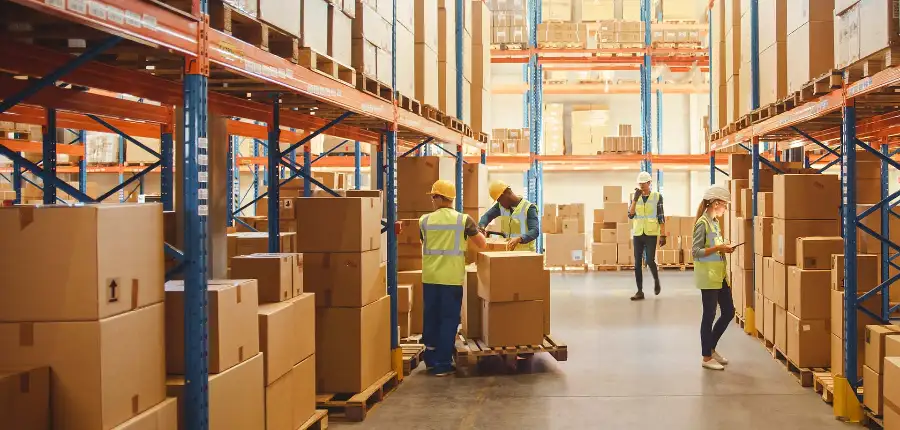
We spend thousands of hours on warehouse floors. The physical flow operates in a strict loop. First, a truck arrives at the dock, triggering the receiving phase. Next, workers conduct a physical inspection before executing putaway. They use slotting logic to place fast-moving items near the packing stations.
When an online order drops, the system triggers picking and packing. Workers execute daily cycle counting to ensure digital records match physical boxes. As shelves empty, sensors trigger replenishment before the final dispatch to the outbound truck.
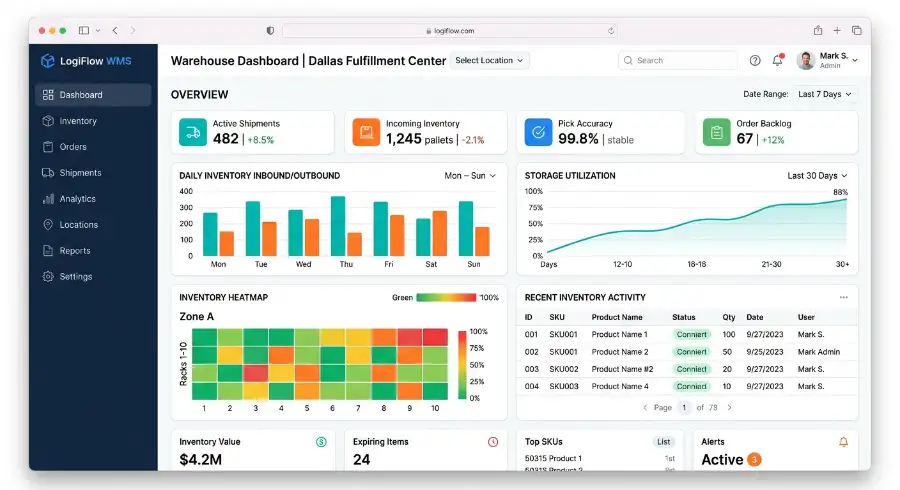
The Warehouse Management System (WMS) serves as the central brain. Think of it as an air traffic controller for forklifts. It dictates the exact walking path for human pickers to save seconds per order.
It enforces safety stock buffers and triggers automated reorder points to guarantee constant SKU visibility. Sometimes, we skip storage entirely. Cross-docking transfers inbound freight directly to outbound trucks.
We execute this exact flow daily. For example, we consolidate inventory from five different factories inside our China warehouse. Before packing, our inspectors apply strict AQL 2.5 quality control tests.
Verify the necessary product certification documents. We hold the goods for up to 30 days free of charge. Finally, we execute the specific Amazon FBA prep services required before loading the export container.
⚙️ Technical Detail: A WMS relies on dynamic routing algorithms. If order volumes spike, the system instantly recalculates picker routes to prevent forklift traffic jams in narrow aisles.
Transportation logistics and freight execution
Transportation logistics govern the physical movement across truck, sea, air, rail, parcel, and last-mile delivery lanes.
Different operators control different segments. A freight forwarder books commercial space on ships and planes, acting as a travel agent for cargo. A Third-Party Logistics (3PL) provider adds physical warehousing to the mix. A Fourth-Party Logistics (4PL) provider manages an entire network of 3PLs for massive enterprise clients.
Friction happens at the borders. Missing paperwork destroys transit times. The World Customs Organization enforces strict global documentation standards. If your commercial invoice fails an audit, your cargo sits in port for weeks.
We see these mechanics directly when importing from China. Recently, we shipped a 40-foot container of soft backpacks. Ocean carriers charge by volumetric weight. They bill you for the space the box takes up, not just the physical weight. We nested the backpack straps and vacuum-sealed the units.
This reduced the carton size by 30 percent. We used moisture-resistant types of packaging materials and silica gel to prevent ocean mold. This physical intervention saved $4,200 in freight and protected the Amazon FBA prep workflow.
Operating models and outsourcing choices
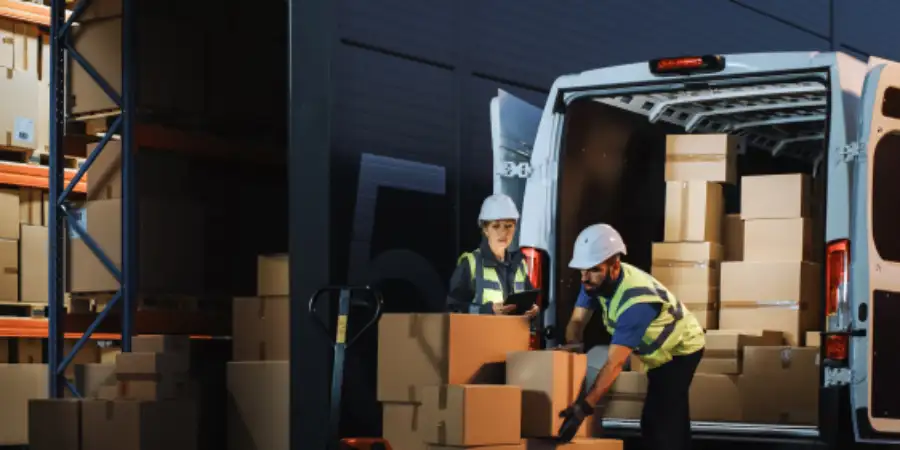
You must choose a structural model for your supply chain. In-house logistics requires you to lease the building and hire the warehouse staff. Third-party logistics (3PL) allows you to outsource the physical labor to specialists. 4PL orchestration means you hire a central manager to run your entire global network.
Small and mid-sized businesses should stay lean. If you run a growing e-commerce brand, partner with a specialized 3PL. This turns fixed rent into a variable cost. You only pay for the exact space you use. As a business scales into an enterprise, it often brings software and data back in-house to regain absolute control over the customer experience.
Your chosen model dictates your daily friction. Supplier coordination, quality control, and transportation become significantly easier when you consolidate them. Hiring one boots-on-the-ground partner in the manufacturing country removes daily communication delays.
Technology stack for modern logistics operations
You cannot run global trade on spreadsheets. A modern technology stack connects the entire journey through application programming interfaces.
First, the Enterprise Resource Planning (ERP) system acts as the financial ledger. Next, the Order Management System (OMS) captures the customer purchase. The WMS then uses barcode scanning to locate the physical box. Finally, the Transportation Management System (TMS) routes the delivery truck.
These systems feed structured data into live dashboards. We monitor these screens for exception alerts. An exception is any deviation from the plan, like a delayed shipment or a missing pallet. Artificial intelligence and visibility tools help optimize these routes. However, they rely entirely on clean data inputs.
For authoritative technical standards on these systems, consult the source documentation:
- Warehouse Software: Gartner Magic Quadrant for WMS
- Customs Compliance: CBP Harmonized Tariff Schedule
- Fulfillment Rules: Amazon FBA Packaging Requirements
- Global Trade Data: Freightos Baltic Index
Logistics Decision Framework
- If you ship low volume with high urgency, choose air express with a domestic 3PL partner.
- If you consolidate multiple suppliers, choose FOB terms and use an origin-country warehouse to merge the goods before export.
- If you need compliance and prep under one roof, choose a fully managed DDP sourcing agent that handles AQL inspections and FBA labeling simultaneously.
Why Logistics Management is Your Ultimate Profit Lever?
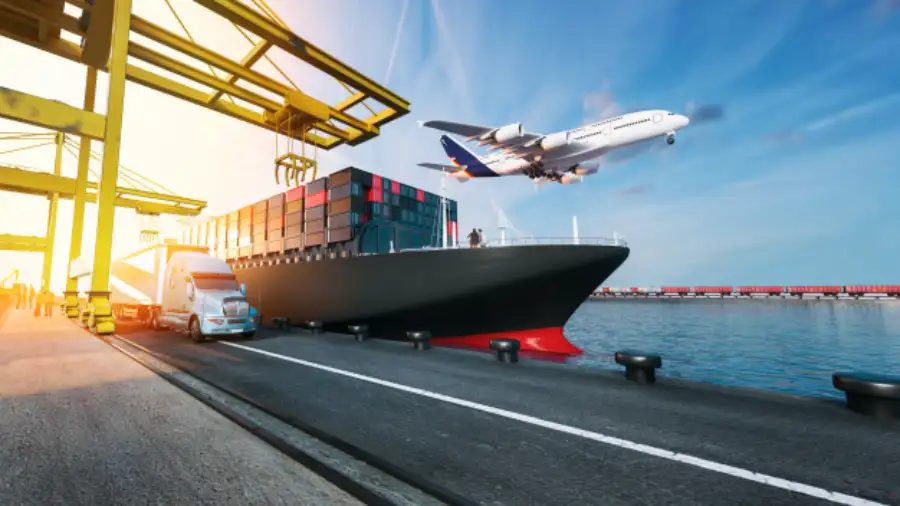
Effective logistics management transforms shipping from a sunk cost into a measurable profit driver. We see it every day on the factory floor. Upgrading your supply chain execution directly accelerates delivery times, slashes operational overhead, and builds the exact infrastructure required for global expansion.
Accelerates Customer Experience
A structured logistics system connects your product development directly to flawless last-mile delivery. We watched a client implement our barcode scanning protocol and drop their shipping defect rate to 0% in the first month. Clean returns handling and reliable transit times turn one-time buyers into loyal brand advocates.
According to PwC’s consumer insights, reliable shipping acts as the primary driver of customer trust. Faster delivery promises and higher order accuracy directly increase your lifetime customer value.
Multiplies Margins and Protects Cash Flow
Smart packaging, strategic freight selection, and strict inventory control reduce physical waste and protect your working capital. One multi-SKU retailer came to us bleeding cash on fragmented overseas shipments.
We moved them into our China warehouse to consolidate multi-factory orders into a single shipping container. This eliminated split-shipping fees and lowered their total landed cost by 22%. World Bank logistics data confirms that optimized trade performance consistently correlates with higher corporate profitability.
📈 ROI Check: Track your “Landed Cost per Unit” before and after consolidating international shipments. If your total freight spend drops while maintaining delivery speed, your logistics system generates pure profit.
Secures Visibility and Operational Resilience
Standardized processes and modern software deliver live visibility into moving freight. This exposes hidden risks before they destroy your quarterly revenue. When a sudden port strike hits, you pivot instantly instead of guessing where your cargo sits.
During recent Pacific storms, we monitored our live dashboard and rerouted a client’s shipment mid-transit. This rapid decision saved their entire holiday product launch. A Gartner ROI study confirms that logistics technology drastically reduces the financial impact of supply chain disruptions.
Unlocks Scalable Global Growth
A mature logistics strategy carries you from costly air-freight test orders to highly profitable, consolidated sea freight. You scale your business operations without multiplying your internal headcount. For example, a mid-sized Amazon seller hired us as their dedicated freight forwarder.
We combined their private label service sourcing, Amazon FBA prep services, rigorous quality control, and DDP shipping into one invoice. They launched three new product lines simultaneously. They assumed zero launch risk and hired zero extra warehouse staff.
If your business is moving from ad hoc shipping to a real logistics system, this is the stage where outside expertise usually pays for itself.
The Reality Check: Hidden Constraints and Global Risks
Logistics management drives growth, but it is not flawless. Even well-funded supply chains face severe physical constraints. Leaders must understand exact failure points, disruption risks, and compliance exposures before scaling operations.
Freight Volatility and Geographic Bottlenecks
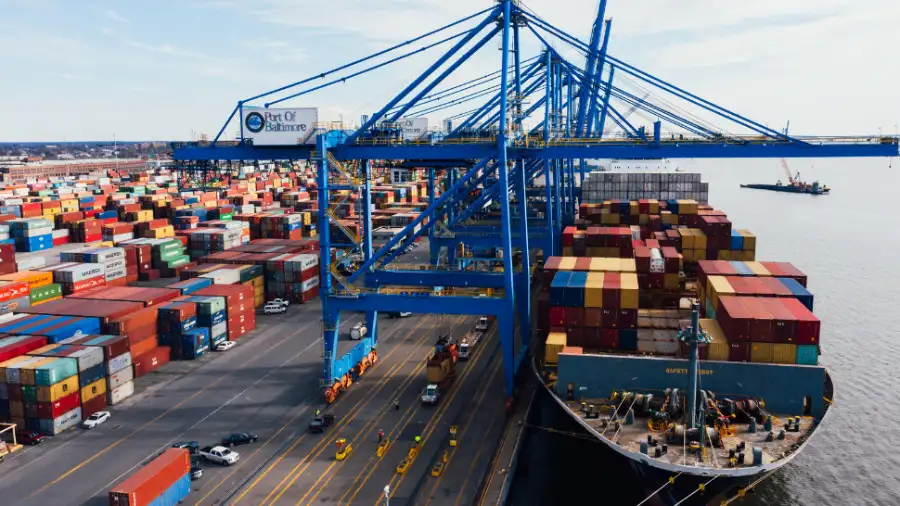
Root Cause: Global shipping relies on vulnerable physical routes and unpredictable seasonal cycles.
Real-World Impact: Capacity shocks cause sudden freight rate spikes and inventory blackouts. Relying on a single port, route, or 3PL leaves your brand exposed to regional disruptions, natural disasters, and hardware component sourcing delays.
Experience Evidence: We constantly battle these physical constraints. During a Lunar New Year shutdown, one client lacking buffer inventory saw production freeze for 35 days. And also inspect sea-freight containers where factories used incorrect types of packaging materials. Ocean moisture condensation ruined 400 units in transit last quarter because the supplier skipped desiccant packs.
Customs Holds and Compliance Failures
Root Cause: Border agencies and automated systems reject shipments the moment paperwork shows a discrepancy.
Real-World Impact: Bad paperwork leads to immediate seizure and daily port storage fees. This heavily impacts buyers navigating complex OEM vs ODM manufacturing imports.
Experience Evidence: We rescued a trapped container last year after a factory provided inaccurate product certification documents. The U.S. Customs and Border Protection (CBP) held the goods in a 21-day review queue. We also frequently fix Amazon FBA prep mistakes. Missing suffocation warnings on polybags trigger automatic receiving holds at Amazon.
⚖️ The Trade-off: DDP shipping solves customs headaches for beginners, but advanced buyers sacrifice visibility and control over carrier routing.
Execution Bottlenecks and Data Blind Spots

Root Cause: Software tools fail when warehouse workers bypass standard operating procedures.
Real-World Impact: Poor data quality triggers unnecessary stockouts, overstock storage fees, and expensive reverse logistics processing. Return abuse amplifies these costs.
Experience Evidence: We audited a brand that rushed a new WMS rollout without staff training. Workers bypassed barcode scanners to save three seconds per item. This blind spot caused a 14% picking error rate. The resulting customer returns erased 15% of their quarterly profit.
⚠️ Critical Warning: Do not outsource fulfillment without enforcing strict quality control audits before shipment.
🛡️ Mitigation Strategy
Protect your supply line by dual sourcing critical components to avoid overdependence. Use supplier scorecards to track defect rates. Always require pre-shipment QC inspections. Maintain buffer inventory locally to survive port strikes, though this requires higher upfront capital.
Finally, establish clear contingency plans by mode and route for all exceptions. Read our guide on how to choose the right supplier to build structural redundancy.
The Verdict: Mastering Your Logistics Engine
Ultimately, logistics management is the discipline that aligns your products, data, and costs from origin to the final customer and back again. We defined the mechanics, proved the financial benefits, and exposed the geographic bottlenecks.
While global freight volatility and strict customs holds carry inherent risk, a streamlined physical network justifies the initial friction. Strong logistics management does not just move goods; it protects margin, service quality, and long-term growth.
If you are an active brand builder, you must own this process. If you want a completely hands-off business with zero inventory oversight, global trade will crush you. Take immediate action based on your current maturity level:
- Students and entry-level managers: Learn the terminology, key performance metrics, and software stack.
- SMB owners: Audit your inventory control, warehouse flow, freight modes, and partner models—especially when you import from China.
- Experienced operators: Refine your global resilience planning, data visibility, and dual-sourcing strategies.
Over the next 24 months, automated tracking will replace manual spreadsheets as the baseline standard. For macro-level trend data, consult the authoritative World Bank Logistics Performance Index. As global supply chains digitize, early adopters will secure the best shipping rates.
When complex supplier management or border compliance overwhelms your internal team, get help. A dedicated freight forwarder eliminates the daily guesswork. Contact LeelineGroup to build a resilient, profitable supply line today.
People Also Ask About Logistics Management
1. **Is outsourcing my fulfillment worth the extra cost?**
Yes. In our experience, paying a specialized logistics partner turns fixed warehouse rent into a scalable variable cost. You protect your cash flow and expand your market reach without hiring local staff.
2. **Will I lose control over my product if I hire an agent?**
No. A transparent partner actually increases your visibility. They act as your boots on the ground to audit factory floors and enforce strict quality standards before your cargo ever boards a ship.
3. **Is it safe to rely on a single shipping lane?**
Absolutely not. Global capacity shocks happen constantly. When sourcing from Asia, always establish backup freight routes and hold buffer inventory domestically to survive sudden port delays.

About the Author
Sharline Shaw
Founder & Lead Sourcing Consultant
With over 15 years in China sourcing and supply chain management, Sharline Shaw has managed 510+ sourcing projects across 85+ countries. Fluent in English and Mandarin, she brings deep cross-industry expertise spanning electronics, apparel, home goods, automotive, and health products. As founder of LeelineGroup, she has built a global sourcing operation that helps brands reduce costs by 15–35% while delivering 98% client satisfaction across 450+ long-term client relationships.
Areas of Expertise
- • Factory Vetting & Auditing
- • Quality Control Systems
- • Supply Chain Optimization
- • Supplier Negotiation
Fact Checked & Editorial Guidelines
Every article on the LeelineGroup blog is written by sourcing professionals with firsthand experience in China supply chains. Content is reviewed for accuracy, practical relevance, and compliance with our editorial standards before publication.
Your trust is important. Learn more about our Fact Checking Process and Editorial Policy.