Procurement panic hits at 2 a.m. with a WeChat alert about a delayed shipment. It is the moment your single-country supply chain becomes visibly fragile.
Generic advice to leave China fails. You need a structured system for sourcing from Asia to protect margins and business continuity.
This advanced, executable process moves procurement leaders and e-commerce operators from reactive hunting to a documented playbook. While managing on-the-ground logistics atLeelineGroup, I found that supply chain research validates our approach. Stability requires prioritizing operational fit over the cheapest quote.
Chasing the lowest price in new markets usually causes quality failures. Prioritize factory infrastructure and compliance first.
We map dependencies, shortlist countries, model landed costs, verify suppliers, pilot orders, and scale production without added complexity.

Prerequisites for Sourcing From Asia

In my experience managing factory transitions, jumping into country comparisons without baseline data guarantees failure. Do not contact new suppliers until you have these exact artifacts open on your monitor:
- Strategic Alignment: Define your goal. Are you building a backup source, executing a dual-source split, or planning a full migration? Align your internal sourcing vs. procurement and supplier management rules.
- Data Artifacts: Open your supplier spend spreadsheet. You need your current annual spend by SKU, target landed margin, Incoterms, average lead times, defect return rates, and MOQ data.
- Compliance Log: Pull your exact customs classification codes and product testing requirements. Document your ESG expectations, IP protection plans, sanctions screening, and secure payment controls.
- Macroeconomic Baselines: Ground your financial models in reality. Review the Vietnam Government notice on 2026 regional minimum wages (effective January 1, 2026) and the Vietnam MoIT 2026 export target. For India, check the latest India official GDP release and the USTR notice on India GSP status. India’s GSP termination drastically alters import economics for U.S. buyers.
- Scorecard Formatting: When building supplier evaluation maps, label columns and criteria directly with text. Do not rely on color coding alone.
⚠️ Safety First: Never skip the tooling ownership check. I frequently see incumbent factories hold molds hostage during a transition. If the factory legally owns the mold, you cannot migrate immediately. Budget time and capital to cut new steel now.
In our audits at LeelineGroup, I often see buyers who think they are completely diversified. They use three different assembly factories. However, a quick check reveals that all three buy components from the same province. Turn your diversification strategy into a hard data audit before it becomes a desperate country-shopping exercise.
- Open your primary sourcing spreadsheet.
- Create new columns for SKU, Supplier, Factory City, Country, Raw-Material Origin, and Logistics Route. Fill in every single cell completely. Leave no blanks.
- Separate your direct risk from your hidden risk. Your final assembly factory may reside in Vietnam or India. However, fabrics, internal components, molds, packaging, or trims often still come from China. Document these hidden origins under your new Raw-Material Origin column.
- Note the visible warning signs in your spreadsheet. Highlight any single factory tied to most of your revenue. Mark repeated late-shipment cells in red. Expose raw-material dependencies hidden behind generic “Made in” labels.
- Score each product line on a scale of 1 to 5 for overall exposure. Grade them on Revenue Concentration, Lead-Time Sensitivity, Quality Sensitivity, Compliance Burden, and Substitutability. To standardize your risk categories, reference the official CBP C-TPAT guidelines.
- Define a strict trigger for diversification. Pick a measurable event to force action. Choose tariff exposure percentages, repeated shipment delays, board mandates, margin compression, capacity ceilings, or geopolitical concentration risk.
- Group your inventory into a simple A/B/C Priority Matrix. Label your most critical, high-risk products as A-items. You must dual-source these A-items first.
Verify your work. You are finished with this step when your spreadsheet tells a clear story. You must be able to point to the exact SKUs that will stay in China, move to a second country, or remain under observation.
⚠️ Experience Warning: Do not ignore the data. If your audit reveals that one factory controls the majority of your revenue, fix this specific bottleneck before negotiating with new suppliers. Sourcing from Asia without this baseline audit simply multiplies your existing operational risks.
5 Steps of Sourcing From Asia
Master 4 steps of sourcing from Asia with clear actions on suppliers, contracts, and inspections – ideal for procurement teams.
Step 1: Build a Weighted Country Scorecard

⚠️ Warning: Chasing the lowest hourly wage when sourcing from Asia is a massive trap. Build a weighted scorecard to evaluate real operational viability.
Open your spreadsheet. Create columns for China, Vietnam, India, Thailand, and Malaysia. Add Indonesia as an optional benchmark if your product is highly cost-sensitive.
In column A, list these ten evaluation factors: Labor Economics, Supplier Density, Raw-Material Access, Tooling Ecosystem, Engineering Depth, QC Coverage, Logistics Reliability, Customs Friction, Communication Maturity, and Scalability.
Enterprise procurement teams must use this full ten-factor matrix. If you run a smaller e-commerce brand, build a simplified three-factor version using only Landed Cost, MOQ, and Lead Time before gathering factory-level data.
Map each country to your exact product category. Assign Vietnam for labor-intensive goods like apparel. Choose Malaysia for technical or automated production, and Thailand for complex industrial manufacturing. Use India for major diversification, but evaluate it strictly on tariff impacts and compliance execution—never just cheap labor. Importing into Malaysia rather than sourcing out of it? Our Malaysia sourcing agent covers the buying, the SIRIM and JAKIM files and the duty-paid K1 entry.
Format your table to include dedicated columns for Weights (1-5), Notes, and Red Flags. In my experience, a real scorecard does not just use green and red cells; it requires narrative context. Write out the logic for accessibility. For example, explicitly state: “Vietnam scores a 5 on labor competitiveness but drops to a 2 on raw-material self-sufficiency.”
Build a 2026 Data Box to ground your strategy in current market realities. Log Vietnam’s January 1, 2026 regional wage levels and their 2026 export-growth targets directly into the sheet. For India, explicitly document their current non-GSP status for U.S. importers, alongside the latest official manufacturing GVA growth data. Grounding your matrix in official data prevents costly assumptions.
This matrix dictates your entire product sourcing strategy. During supplier sourcing, filter factories through these exact weights. If you require complex OEM vs. ODM development instead of basic white-labeling, heavily weight your Engineering Depth row to reflect the need for advanced tooling.
You will know this step is complete when a clear regional winner emerges from your calculated weighted totals.
⚠️ Experience Warning: India is a massive manufacturing opportunity, but losing GSP status completely changed the math for U.S. buyers. I recently saw a brand wipe out their margin because they only looked at labor rates and forgot to model the new import duties.
Step 2: Calculate the Total Landed Cost

I constantly watch procurement teams celebrate a cheap FOB quote from Vietnam, only to panic when hidden costs completely destroy their margin. To survive sourcing from Asia, you must shift your mindset from a unit-price quote to the total decision cost.
- Build the Baseline: Create a new spreadsheet tab named Landed Cost Model. Set up a side-by-side comparison for China, Vietnam, India, and Thailand/Malaysia using the same SKU family. Enter the FOB Price (or Ex-Works) at the top of each column.
- Add the Visible Cost Layers: Below the FOB price, create individual rows for the standard import math. You must include: Pre-Shipment Inspection, Ocean Freight, Destination Charges, Duties/Tariffs, Testing/Compliance, Packaging Changes, and Warehousing.
- Inject the Hidden Risk Buffers: This is where standard sourcing advice skips the reality of international trade. Add dedicated lines for a strict 3% Rework Allowance, Financing Cost, and a Delay Buffer. Next, add specific rows for regional risks: Power Interruptions, Port Bottlenecks, Transshipment Complexity, Smaller QC Ecosystems outside China, and ongoing Raw-Material Dependence on China.
- Run Scenario Planning: Do not rely on one static estimate. Next to your base model, create columns to model dynamic pricing: Normal Season vs. Peak Season. Calculate the exact financial impact of a Delayed Sample Cycle and a Failed First Inspection.
- Set Your Logistics Strategy: Default to an ocean-freight landed-cost model. For initial test orders, build an alternative Air Freight column. If you are a newer buyer, ask your freight forwarder to quote DDP instead of FOB. Read our guide on how to import from China to understand these logistics layers, and always factor in third-party quality control fees.
Verification: You are done when you can definitively state which country is cheapest on a landed basis, which route is fastest, and which creates the best resilience-adjusted margin.
⚠️ Experience Warning: I have seen India quotes look 15% cheaper than China on paper. After factoring in the smaller QC ecosystem and transshipment delays, the final landed cost was actually 8% higher.
⚡ Power Move: Consult the official US ITC Tariff Database to pull exact duty rates for your scenarios. Never rely on a supplier’s estimate for customs compliance.
Step 3: Shortlist Qualified Suppliers

Sourcing from Asia is a layered screening process, not a marketplace search. In my time managing complex supplier management transitions at LeelineGroup, I found that platform “gold stars” often hide sophisticated trading-company scams.
Build a longlist of direct factories first. Pull leads from trade shows, industry associations, and network referrals. Treat B2B marketplaces strictly as data-gathering tools, not final vetting platforms. Use our supplier sourcing strategies to identify actual manufacturers.
Adapt your approach by region. For China, follow the primary path: build a shortlist of direct factories, then hire a third-party auditor. For Vietnam or India, use the alternative path: hire a vetted sourcing agent or local team. Their vendor bases are highly fragmented and require relationship-led, on-site follow-up.
Execute a rigorous desk-stage verification before sending a single message. Open your spreadsheet and audit every vendor against a formal Supplier Verification Checklist:
- Entity Data: Confirm the Legal Entity Name and Business Registration.
- Location Check: Verify the Factory Address on a satellite map. Ensure it shows an industrial facility, not a residential block.
- Ownership: Check the Ownership/Beneficial Control. Verify you are talking to the actual factory owner.
- Capabilities: Assess their Export History, exact Product-Category Fit, and Tooling Capability. Ensure they handle product sourcing and OEM development in-house.
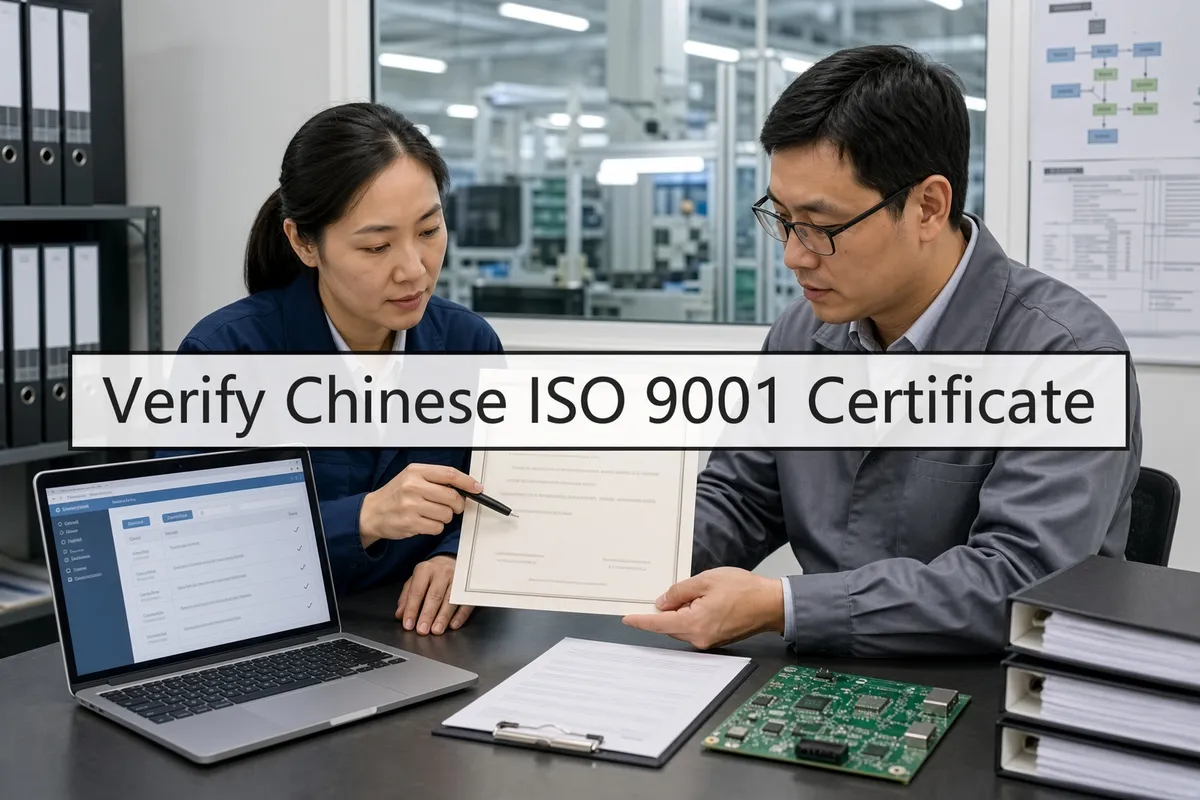
- Compliance: Verify quality certifications directly through the official IAF CertSearch database. Never blindly trust a provided PDF. Review ESG/Social-Audit Claims and actively call their Client References.
Next, demand real factory media. Request a clear, unedited production-line video. Look for consistent background details, identifiable machinery, and workers wearing proper safety gear. Their answers must sound deeply operational, not vague. Learn how to choose the right supplier using these exact sensory cues.
⚠️ Warning: A “verified” status means entirely different things across China, Vietnam, India, Thailand, and Malaysia. Never rely on platform badges alone.
Stop searching when you hold a refined list of three to five qualified suppliers per country. Document specific reasons for each inclusion on your sheet.
⚡ Power Move: Ask technical questions about their machinery. A real factory manager will instantly name their injection molding machine brands. A trading company will dodge the question.
⚠️ Experience Warning: Factory-floor videos are frequently faked. I always ask the sales rep to walk onto the production floor holding a piece of paper with today’s date and my company name. If they refuse, drop them immediately.
Step 4: Execute a Hard Validation Workflow

In my experience, paperwork lies. I have seen perfect compliance documents from factories operating out of tin sheds. Transition your shortlist into a forensic validation engine.
First, secure legal protection. Sign an NNN Agreement (Non-Disclosure, Non-Use, Non-Circumvention) before sharing designs. Send your RFQ Pack (Request for Quote). Order an initial product sample. Push the factory through a deliberate revision loop. Request a minor design change and track the exact hours it takes to receive updated CAD files. This tests their communication speed. Ask specific process-capability questions. Request their compliance documents. Schedule a formal management interview.
Next, require two forms of trust verification. Make a physical site visit your primary method before issuing any bulk PO. If travel is impossible, schedule a remote audit combined with a local third-party inspection.
⚠️ Warning: The remote trade-off sacrifices visibility into hidden subcontracting.
Run financial and reputation checks. Look for hidden litigation history. Verify payment stability signals. Confirm beneficial-owner consistency. Cross-reference their bank details with their official business license. A mismatch often indicates a trading company posing as a direct manufacturer.
During physical audits, rely on sensory cues. Listen to machine noise levels. If you have to shout, safety standards are low. Observe housekeeping discipline. Look for labeled work-in-progress bins on the floor. Check testing equipment for current calibration tags. Evaluate their packing flow. Test if sample consistency survives repeated handling.
Field Report (Vietnam): During a recent audit, the paperwork looked pristine. However, our boots-on-the-ground team noticed chaotic packing flows and missing calibration tags. We paused the product development phase to prevent massive private label defects.
Field Report (India): A supplier showed a flawless remote video tour. A physical visit revealed deafening machine noise and zero labeled work-in-progress. We shifted the OEM vs. ODM project to a backup facility to mitigate approval risk.
Ensure the factory meets the official ISO 9001 quality management standards. Verify their product certification documents against actual CPSC product certification requirements. Demand official OSHA safety data sheets relevant to your specific product class.
You are finished when you secure exactly one approved primary supplier and one qualified backup. Do not settle for a vague list. The winning factories must deliver sample accuracy and process transparency. They must demonstrate a documented CAPA (Corrective and Preventive Action) mindset. They must quote realistic lead times and accept strict quality control terms.
**⚠️ Experience Warning: **A factory refusing third-party inspection terms is hiding something. In our tests, dropping resistant suppliers early saves thousands of dollars in unsellable inventory. Always demand a documented CAPA procedure during the first meeting to weed out bad actors.
Execute Controlled Pilot Production and Risk Mitigation

Never migrate your entire production volume at once. In my experience, full migrations immediately trigger massive quality failures. Start with a controlled pilot order. Keep volumes small, enforce strict sampling, and set clear escalation rules in your contract.
- Split your manufacturing risk. Allocate your primary volume to a pilot purchase order with one factory. Keep a backup supplier ready for critical components. For enterprise brands, execute a category-by-category migration. Dual-source by SKU family, or split your sourcing countries based on product complexity. This prevents a single point of failure.
- Enforce a strict operating rhythm. Demand weekly milestone reporting from your supplier. You should receive a documented timeline outlining every production phase. Approve a physical pre-production sample before bulk manufacturing begins. Schedule an inline inspection at 20% completion. Conduct a final inspection before the booking window closes.
- Manage logistics and consolidation. Consolidate your shipments in a China warehouse to reduce total freight costs. Choose between DDP and FOB shipping terms. Verify your Amazon FBA prep needs against the official Amazon packaging requirements. Check your types of packaging materials for strict export compliance. Send the goods to your freight forwarder only after passing these checks.
- Demand tactile proof points. Do not pay the final balance blindly. Review timestamped inspection photos from the factory floor. Check the shipment for correct carton markings. Scan the printed labels to ensure they are scan-ready. Ask your inspector to physically test barcodes using a scanner app. Inspect the physical packaging for dirt. Verify that all shipment documents reconcile perfectly without last-minute edits. This discipline protects your private label brand reputation.
- Verify and decide. Wait for the pilot to order to land on time. Conduct a thorough post-arrival quality review at your facility. Finally, document a clear go, hold, or exit decision before scaling up your order volume.
⚠️ Experience Warning: Suppliers often treat pilot orders as a nuisance and rush the packaging phase. I always withhold 30% of the final payment until the scan-ready labels and carton markings pass a live video inspection.
Troubleshooting
Problem: New Country Landed Cost Exceeds China
Likely Cause: Hidden logistics and imported raw materials destroy your margin. Vietnam or India looked cheaper on paper.
Fix:
- Audit the logistics route for transshipment fees.
- Check the rules of origin for raw materials.
- Recalculate defect risks and financing assumptions.
When sourcing from Asia, I find that shipping Chinese raw materials into secondary countries easily adds 10% to your final invoice.
Problem: The Supplier Failed the Sample Stage
Likely Cause: They are a trading company secretly subcontracting your order. They sounded confident online, but ran a chaotic factory floor.
Fix:
- Halt the project immediately.
- Tighten site-visit rules before transferring deposits.
- Call three recent export references.
- Activate your backup supplier.
I frequently see sample quality drift between rounds when buyers skip physical audits. Verify the factory in person.
Problem: Dual-Sourcing Created Massive Delays

Likely Cause: You migrated too much volume at once. Supply chain bottlenecks immediately followed.
Fix:
- Narrow the rollout to a single SKU.
- Assign one dedicated owner per product line.
- Enforce strict pilot gates before full migration.
*I found that **commercial *invoices rarely match shipment documents during early runs. Clear the paperwork perfectly before scaling production.
People Also Ask About Sourcing From Asia
1. What is the cheapest country to source from in Asia?
No single country is the cheapest for every product. Vietnam offers low labor costs for apparel and wooden furniture. However, India often provides better pricing for textiles and metal goods. Thailand dominates the complex automotive and electronic parts.
When we calculate quotes for clients, we rarely look at the raw unit price. I found that missing raw material supply chains in cheaper countries easily add 10% to your final cost. Always compare the total landed cost, including tariffs and freight.
2. How do I verify a new factory outside of China?
You must conduct a physical site audit before you pay a deposit. Do not rely on B2B marketplace badges. You need to verify their business license, check their tooling equipment, and confirm their quality management system meets ISO 9001 standards.
My Experience: During a recent supplier search in Vietnam, the online paperwork looked flawless. However, when I walked the factory floor, I discovered they subcontracted 100% of their production to a residential facility. Always demand an unedited, real-time video tour if you cannot visit in person.
3. Do I need a sourcing agent to move my supply chain?
Yes, if you lack a local team. Moving production to a new country multiplies your operational risk. You face language barriers, unverified quality standards, and complex local export laws. A local partner protects your capital and enforces strict defect limits.
We act as your boots on the ground. We find the right factory, negotiate prices in the local language, and execute rigorous inspections before the container loads. This prevents you from paying for defective inventory.
Conclusion
You now have a complete sequence to move from dependency mapping to a successful pilot order. You know exactly what happens next. First, finalize your weighted country scorecard. Next, select one priority SKU family to test. Finally, launch your validation process while keeping a backup supplier ready.
Based on our review of hundreds of factories and thousands of hours managing delayed shipments, I know that DIY diversification is dangerous. A single misstep in compliance or quality testing can destroy your profit margin.
You need local leverage. Our boots-on-the-ground team removes the friction from international trade. We handle the heavy lifting—from aggressive supplier sourcing and factory audits to rigorous quality control and seamless freight forwarding.
Stop leaving your business exposed to single-country supply chain failures. Reach out through our contact page today, and let us build your resilient sourcing strategy.

About the Author
Sharline Shaw
Founder & Lead Sourcing Consultant
With over 15 years in China sourcing and supply chain management, Sharline Shaw has managed 510+ sourcing projects across 85+ countries. Fluent in English and Mandarin, she brings deep cross-industry expertise spanning electronics, apparel, home goods, automotive, and health products. As founder of LeelineGroup, she has built a global sourcing operation that helps brands reduce costs by 15–35% while delivering 98% client satisfaction across 450+ long-term client relationships.
Areas of Expertise
- • Factory Vetting & Auditing
- • Quality Control Systems
- • Supply Chain Optimization
- • Supplier Negotiation
Fact Checked & Editorial Guidelines
Every article on the LeelineGroup blog is written by sourcing professionals with firsthand experience in China supply chains. Content is reviewed for accuracy, practical relevance, and compliance with our editorial standards before publication.
Your trust is important. Learn more about our Fact Checking Process and Editorial Policy.