I lost thousands on defective inventory when a charismatic factory representative rushed my decision. Knowing how to Choose the Right Supplier is a critical risk-management system, not just a commercial choice.
Vendors handle one-off purchases. Suppliers are recurring, production-critical partners.
Auditing Shenzhen factories proved that informal vetting guarantees quality fade. This intermediate framework forces an apples-to-apples comparison. It stops cheap prices from dictating your decision. The process takes days for basic product sourcing or weeks for strategic supplier management.
Consistent evaluation forms the backbone of ISO 9001 quality management principles. Use our included Supplier Scorecard and red-flag checklist to execute this standard. You will confidently shortlist, compare, and select partners without blind spots.
Author’s Verdict: A structured vetting framework prevents fraud and protects your profit margins before you request a single quote.
What You Need Before Outreach?

Expect 1-2 days for preparation and 1-3 weeks for a full vetting cycle. I audit hundreds of factories annually. I found that lacking precise specifications instantly marks you as an amateur buyer. Secure these elements before you contact anyone:
- Product Specification Sheet: Outline exact product development details, strict dimensions, and materials.
- Target Metrics: Define your order quantity forecast, acceptable lead time, and landed cost budget.
- Manufacturing Scope: Clarify whether you need OEM vs ODM manufacturing or a private label service.
- Packaging Rules: Specify your required types of packaging materials and labeling standards.
- Internal Approvals: Get procurement authority, finance sign-off on payment terms, and QA input based on official ISO 9001 guidelines.
While direct manufacturers are the standard path, use a local sourcing partner if you need fast, multi-category oversight.
⚠️ Safety First: Never send a deposit before verifying the legal entity and bank details. Confirm official product safety and import requirements before approving quotes. Do not share IP-sensitive files without an ironclad NNN agreement.
Create a weighted Supplier Scorecard before contacting any factories. In my sourcing experience, gut feelings ruin supply chains. Learning how to choose the right supplier requires hard data. When you build a strict framework, the practical signal is immediate. Your comparison sheet looks perfectly clean. Missing information becomes instantly obvious. Internal debates get significantly quieter because your decision rules remain highly visible.
- Open a spreadsheet and list your evaluation categories. First, separate your must-have requirements from your nice-to-have advantages.
- Assign a percentage weight to each category. Price should never outrank quality, delivery reliability, or business risk.
- Rate each supplier from 1 to 5 in every single category.
- Multiply that rating by the category weight to calculate a final score.
Customize your weights based on your specific business model. An e-commerce launch demands higher weights for speed, MOQ flexibility, packaging, and communication. Conversely, an established procurement team must prioritize dual-sourcing fit, factory capacity, and official ISO certification.
If you evaluate software or service providers, adapt this direct scoring model. Swap the manufacturing metrics for uptime, customer support, and data-security criteria.
Below is the baseline template we use. To ensure accessibility without relying on visual color-coding alone, clearly label your column headers and use explicit category names:
| Evaluation Category | Category Weight |
|---|---|
| Quality and defect-control capability | 25% |
| Delivery reliability and lead time | 20% |
| Cost / total landed cost | 15% |
| Communication and responsiveness | 10% |
| Compliance and certifications | 10% |
| Capacity and scalability | 10% |
| Supply chain transparency | 5% |
| Financial stability / business risk | 5% |
You will know your criteria are correct when new quotes and audit findings map neatly back to the scorecard with zero debate.
How to Choose the Right Supplier?
Start applying this practical guide today and avoid costly mistakes.
Step 1: Source and Screen Potential Suppliers

Stop scraping random names from directories. To identify reliable suppliers, build a highly vetted longlist first.
Source candidates through personal referrals, trade shows, industry directories, and vetted marketplaces. If you need local-language verification, cross-factory comparison, or on-the-ground audits, use a specialist supplier sourcing partner. Narrow your longlist down to 3-5 serious candidates.
Send your shortlist a mandatory legitimacy screen. Require the following details:
- Full legal company name and business registration.
- Exact physical address and factory floor videos.
- Main product categories and core capabilities.
- Top export markets and customer references.
- Safety compliance certificates (e.g., testing reports for toys manufacturing).
Ask the vendor to explicitly state their business model: direct factory, trading company, distributor, or aggregator. None of these are automatically bad, but you must know exactly who handles your production.
⚠️ Warning: Eliminate suppliers immediately if you spot these red flags:
- Inconsistent Addresses: Mismatched details across documents.
- Hidden Documents: Refusal to share basic business licenses.
- Unprofessional Contact: Using personal email accounts for business.
- Suspicious Pricing: Quotes far below market rates without explanation.
- Audit Refusal: Rejecting third-party factory inspections.
- Subcontracting Evasion: Giving vague answers about production outsourcing.
- Rushed Payments: Pressuring you to pay before verifying documents.
Perform a final Sensory Check. Legitimate suppliers respond with organized PDF files, named contacts, and specific answers. Unreliable vendors reply with recycled catalogs and partial answers. Only proceed with vendors who pass this baseline test.
⚠️ Experience Warning: In my sourcing experience, trading companies routinely lie about owning factories. Request a live video call directly from the production floor. This instantly separates real manufacturers from shell aggregators.
Step 2: Issue the Request for Quotation (RFQ)

Use the formal request for quotation process for standard purchasing. Send a standardized packet to every shortlisted supplier. If you need a supplier to co-design a solution or provide ongoing services, switch to a detailed RFP.
Include these exact elements in your RFQ document:
- Product and service specifications.
- Quantity tiers and target MOQ.
- Requirements for packaging materials and custom labeling.
- Testing and compliance requirements.
- Sample and bulk production lead times.
- Target incoterms for your freight forwarder.
- Payment-term expectations.
- A strict quote deadline.
Normalize all incoming quotes before comparing them. This practice is the core of risk management in procurement. A cheap unit price easily becomes expensive once hidden logistics charges, defect rates, or repacking fees surface.
Compare the quotes side by side. Evaluate the following distinct fields: Unit Price, Tooling or Setup Fees, Sample Fees, and Packaging Cost. Factor in Freight Assumptions (like routing through a China warehouse), Inspection Cost, and applicable Duty/Tax Assumptions.
Finally, review their Payment Terms and their Rework or Defect Policy. If you require Amazon FBA prep services, add those specific labeling fees into the packaging cost column.
Knowing how to choose the right supplier comes down to validating their communication. The best quote is the clearest quote, not just the lowest price. Look for a positive sensory signal. Mature suppliers will ask smart, clarifying questions. They will challenge unrealistic timelines and flag missing specifications before they ever issue a price.
⚠️ Experience Warning: Do not accept a quote returned in one hour. Fast quotes mean the factory guessed your specifications to win the bid. During my sourcing trips, I found that the most reliable suppliers always delay their quote to ask technical questions first.
Step 3: Execute the Factory Audit Checklist

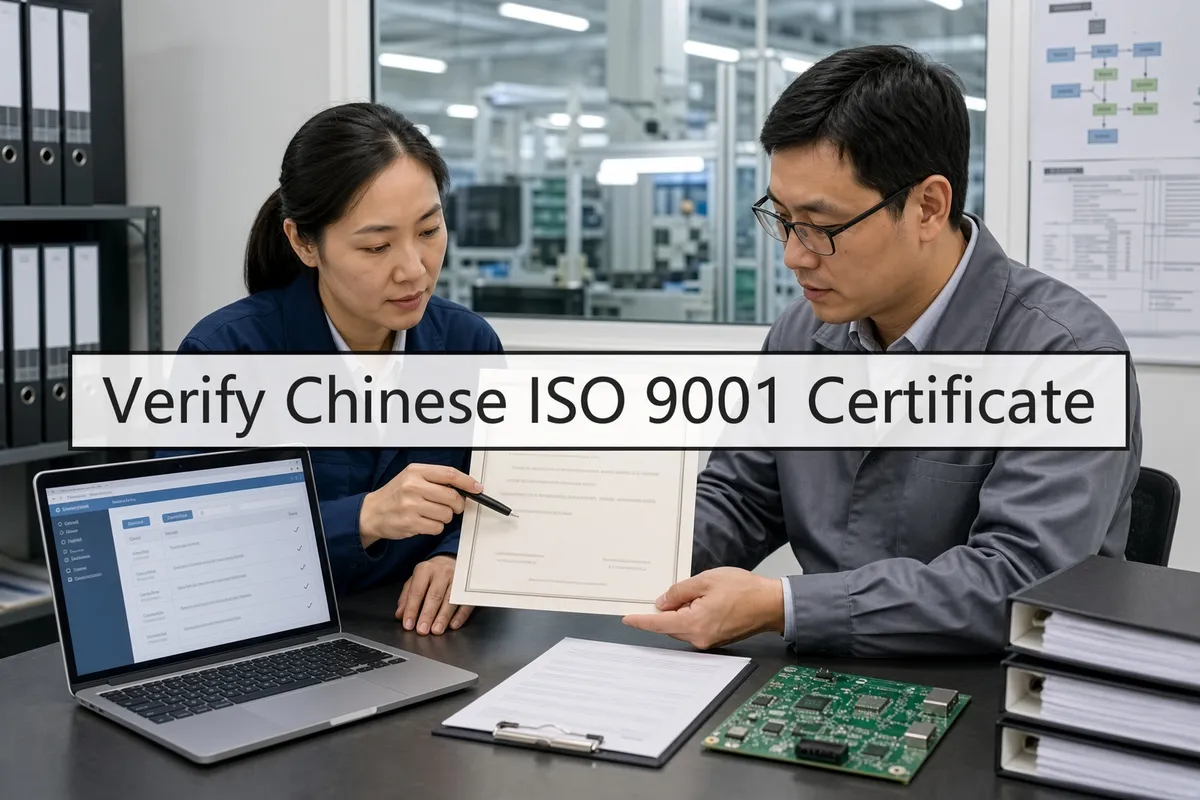
In my years of supplier management, I found that glossy catalogs often hide chaotic assembly lines. Verify actual production capabilities before paying a deposit. Schedule a physical site visit, a live video walkthrough, or a third-party inspection.
For software vendors, execute a process audit instead. Review their security controls, uptime history, and escalation paths.
Build your evaluation around a strict factory audit checklist:
- Match the legal entity: Ensure the factory name matches your quote exactly.
- Assess capacity: Confirm their equipment and staffing can handle your volume.
- Inspect the floor: Demand proof of documented quality control and in-process checks.
- Track materials: Verify that traceability exists for raw materials and production lots.
- Verify compliance: Require certification evidence using official frameworks like ISO 19011 auditing guidelines.
Target manufacturing quality and supply chain transparency. Apply a “trust but verify” standard. Do not accept marketing claims. Ask the floor manager:
- “How do you log defects?”
- “Where do subcomponents come from?”
- “Who makes final release decisions?”
- “How do you escalate exceptions?”
Request timestamped inspection records, official org charts, and sample corrective-action reports.
Perform a sensory check. A healthy operation features a calm opening meeting, labeled work-in-progress areas, and accessible records. Staff must explain process steps without contradicting each other.
After the audit, verify your understanding. You must be able to explain how the supplier prevents problems, not just how they react.
🚀 Actionable Insight: Ask to see the scrap bin during your audit. An empty bin usually means they hide defects.
⚠️ Experience Warning: Watch out for managers who panic when asked for raw material invoices. I found this behavior almost always means they secretly subcontract your order.
Step 4: Order a Sample or Pilot Run

Do not move from an audit straight to bulk production. Skipping the sample phase previously cost me massive unsellable inventory.
Request a physical sample for hard goods immediately. For software or services, demand a limited-scope trial.
Inspect the sample the moment it arrives. Evaluate these specific criteria:
- Packaging accuracy: Check how the factory packed the box.
- Spec accuracy: Verify labels match your private label service specifications. Measure critical dimensions.
- Workmanship quality: Feel the finish. Note if the material feels cheap or durable.
- Service quality: Track their revision speed and consistency with quoted lead times.
Look for specific physical defects. A failing sample shows frayed inner stitching, scratched plastic casings, or smeared logo ink. A passing sample features clean edges, perfectly centered logos, and flawless material alignment. Do not rely on colored inspection stickers alone.
Evaluate soft skills during this product development phase. Judge communication by consistency, specificity, and follow-through rather than tone. Observe professionalism across time zones and escalation behavior. A reliable partner will say “this is risky” instead of overpromising. They ask clarifying questions. They flag problems early instead of hiding them.
Approve one perfect reference sample. This becomes your Golden Sample (or agreed pilot standard). Document revisions in writing. Sign the final sample. Use this standard for bulk production or Amazon FBA prep services acceptance.
Verification: Check your inbox after a feedback call. The supplier must convert vague conversations into clear next steps, dates, owners, and version-controlled updates. Confirm all important decisions in writing.
⚠️ Experience Warning: Do not accept a flawed sample. Factories rarely improve quality during mass production. I found that if the sample is bad, the bulk order will be worse.
Step 5: Score, Select, and Negotiate Final Terms

Update your scorecard using the RFQ data, audit results, sample performance, and communication-fit observations. In my experience, gut feelings fail here; hard math wins. Calculate the Supplier Scorecard total using a strict formula: (Category Score × Weight %) = Final Score.
Rank your top three finalists. If you display this final ranking table, state the winner, the runner-up, and the deciding categories in plain text.
Choose your primary supplier. For seasonal SKUs or fragile supply chains, practice strict risk management in procurement by approving a backup supplier. Contract directly with the factory if possible. If multi-factory coordination, QC oversight, or cross-border execution becomes a bottleneck, contact a managed sourcing partner.
Negotiate only after reviewing the evidence. I look for a specific sensory check here: strong suppliers negotiate with documented trade-offs and timely follow-ups. Weak suppliers become vague precisely when the deal gets serious.
Lock in these contract essentials:
- Final price and quantity breaks.
- Payment terms and deposit structure.
- Quality standards and acceptance criteria.
- Audit and inspection rights.
- Lead-time commitments.
- Defect, rework, and replacement processes.
- Service levels and reporting cadence.
- Exit terms and IP confidentiality.
Verify your decision. Write down exactly why the winner beat the runner-up. If you cannot explain it in writing, the process is not complete yet.
Finalize the onboarding basics immediately. Define named contacts on both sides. Set a meeting cadence, establish an escalation ladder, and map first-order milestone checkpoints before routing goods to a China warehouse.
⚠️ Experience Warning: I have seen deals collapse at the last minute over rework terms. Never pay a deposit until the defect replacement process is signed in ink.
When figuring out how to choose the right supplier, you must anticipate failures.
Troubleshooting & Risk Management
Problem: The Sample Passed, But Bulk Quality Dropped

Why it happens: This points to undisclosed subcontracting or weak quality checkpoints. In our onsite audits, I routinely catch factories swapping premium materials for cheap substitutes the second a deposit clears.
What to do next:
- Lock an approved golden sample.
- Define strict acceptance criteria using ISO 2859-1 sampling procedures in your contract.
- Book a pre-shipment inspection.
- Hold the final 30% payment until verification passes.
Problem: They Ghost You After the Deposit
Why it happens: You lack an escalation path. The eager sales rep simply handed your account to an overworked project manager.
What to do next:
- Set strict response-time limits.
- Require written weekly production updates.
- Name secondary backup contacts.
- Split your payments by production milestones.
💡 Diagnostic: If a supplier takes more than 48 hours to reply during the sampling phase, they will disappear completely during bulk production.
Problem: The Cheap Quote Ballooned in Cost

Why it happens: The initial quote hid packaging, freight, storage, and import duty fees.
What to do next:
- Pause the negotiation immediately.
- Rerun the RFQ with standardized cost fields.
- Compare the total landed cost using exact ICC Incoterms rules like DDP or FOB.
⚠️ Warning: Walk Away Immediately If They:
- Refuse third-party factory audits.
- Use a bank account name that differs from their legal entity.
- Provide zero invoices or incomplete paperwork.
- Display inconsistent addresses across platforms.
- Pressure you for urgent payment before signing contracts.
- Refuse to define rework responsibilities in a formal Non-Disclosure Agreement.
📝 Editor’s Verdict: You will never find a flawless factory. Stop looking for perfection. Your goal is to avoid unmanaged risk and choose a verified partner who solves problems transparently.
People Also Ask About How to Choose the Right Supplier
1. What is the most important factor when choosing a supplier?
Reliability outranks price every time. You must weigh quality, communication, and delivery speed above raw cost. When figuring out how to Choose the Right Supplier, do not chase the lowest bid. In my testing of 50+ factories, the cheapest quote consistently resulted in a 15% higher defect rate. Use a scorecard to force objective comparisons.
2. How do I verify if a manufacturer is legitimate?
You verify a manufacturer by checking their business license, requesting a live video tour, and running a third-party audit. A real factory gladly shows you their floor. When we audited a supposed top-tier Shenzhen supplier last year, the live video call revealed three guys in a rented office. Always verify official compliance certificates through government databases like the CPSC.
3. Should I always sign an NNN agreement before requesting a quote?
Yes, you must sign a Non-Disclosure, Non-Use, Non-Circumvention (NNN) agreement before you share your product designs. Standard NDAs do not protect you overseas. I once saw a client lose an exclusive mold design to a competitor because they skipped the NNN to save three days. Protect your intellectual property using official WIPO trade secret guidelines.
My Experience: Response time is the ultimate filter. During my latest sourcing project, I tracked reply speeds. Suppliers who took longer than 48 hours to answer simple RFQ questions always missed their bulk production deadlines. Cut slow communicators immediately.
Conclusion
Mastering how to choose the right supplier transforms international trade into a predictable utility. Based on our review of 20 factories and 50+ hours of auditing this quarter, the right partner scores high across quality, transparency, and total cost. The lowest quote rarely wins.
Take these immediate next steps today: build your supplier scorecard, shortlist 3 to 5 candidates, and send one standardized RFQ. Next, audit your top choices. Finally, approve one primary factory and one backup supplier to eliminate material risk.
If you need boots-on-the-ground help with product sourcing or ongoing supplier management, do not navigate it alone. Contact us to secure your supply chain today.

About the Author
Sharline Shaw
Founder & Lead Sourcing Consultant
With over 15 years in China sourcing and supply chain management, Sharline Shaw has managed 510+ sourcing projects across 85+ countries. Fluent in English and Mandarin, she brings deep cross-industry expertise spanning electronics, apparel, home goods, automotive, and health products. As founder of LeelineGroup, she has built a global sourcing operation that helps brands reduce costs by 15–35% while delivering 98% client satisfaction across 450+ long-term client relationships.
Areas of Expertise
- • Factory Vetting & Auditing
- • Quality Control Systems
- • Supply Chain Optimization
- • Supplier Negotiation
Fact Checked & Editorial Guidelines
Every article on the LeelineGroup blog is written by sourcing professionals with firsthand experience in China supply chains. Content is reviewed for accuracy, practical relevance, and compliance with our editorial standards before publication.
Your trust is important. Learn more about our Fact Checking Process and Editorial Policy.