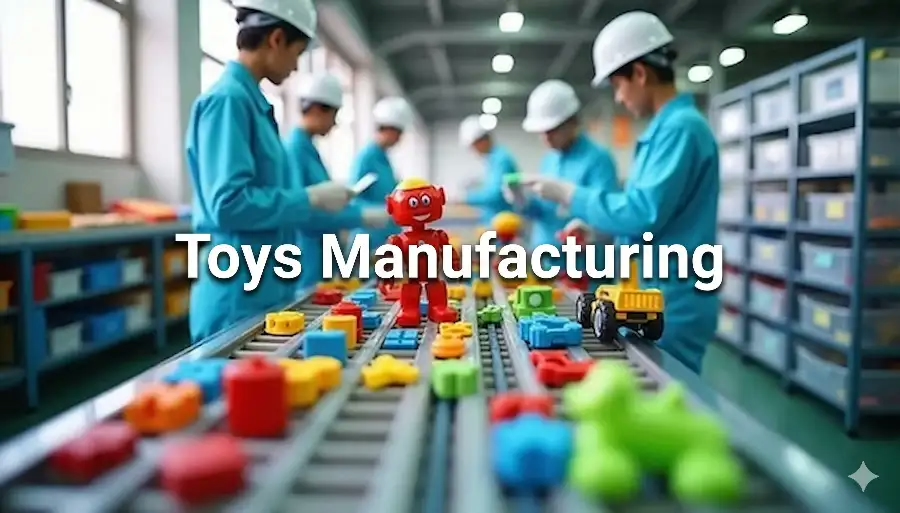
Toys Manufacturing is notoriously unforgiving. Developing a retail-ready toy requires navigating strict child-safety regulations, expensive tooling, and complex documentation. Over 10 years atLeelineGroup, I have managed this exact roadmap across hubs like Shantou and Dongguan. I routinely see Amazon FBA operators and private label sellers lose thousands on useless molds because they skipped compliance checks.
This guide provides toy inventors and procurement managers with a linear method for producing plastic, plush, and mixed-material goods. You must master factory audits, landed costs, and global safety standards like ISO 8124, ASTM, and EN71 before funding overseas suppliers.
The biggest financial risk is paying for a custom mold before validating child-safety requirements. Verify your lab testing prerequisites first.
Toys Manufacturing: Prerequisites
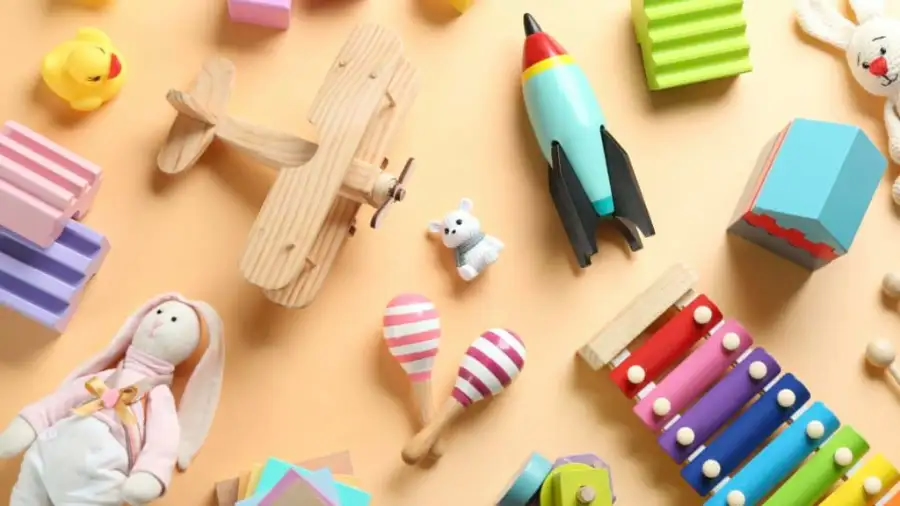
I mapped these requirements after guiding hundreds of brands through toy product development. Secure these before contacting factories.
- Technical Assets: Prepare a product brief, target age grade, and 3D CAD files or sketches. Execute an NDA/NNN template to prevent design theft.
- Strategic Targets: Define intended markets, estimated MOQ, target retail price, desired margin, packaging goals, and launch channel. Establish a decision-maker approval path.
- Landed-Cost Budget: Calculate unit cost, tooling, sampling, packaging, lab testing, inspection, freight, tariffs, warehousing, and channel prep. I see buyers ignore testing, which easily exceeds $1,000 per SKU.
- Realistic Timelines: Schedule concept validation, prototyping, tooling (allow 30 days), pre-production sample approval, testing, and your freight quote process.
- Global Safety Standards: The U.S. requires ASTM F963 and CPSIA. The EU/UK demand EN71 and CE conformity. Use ISO 8124 as a baseline. Flag magnets, button batteries, cords, sharp points, flammability, and chemical migration for scrutiny.
⚠️ Safety First: Whether using a product sourcing partner or navigating OEM vs ODM manufacturing, you hold full liability. Never authorize mass production without a certified lab test. Customs destroys non-compliant shipments.
Pause before contacting factories. Showing a concept sketch to buyers reveals flaws instantly. Watch their sensory reaction: do testers show immediate excitement, confusion, or age fit concerns? Validate commercial viability before engineering.
Define your toy category, age grade, and play pattern. Next, select your primary target channel: DTC, Amazon, specialty retail, or wholesale.
Pressure-test the idea against three filters: market demand, safety feasibility via the official CPSC Business Education portal, and margin feasibility. Apply our validation framework: compare similar products, set an expected retail price, calculate likely landed costs, and confirm the concept supports repeat orders or line extensions.
Choose your exact sourcing route. Use Private Label for existing designs, OEM for custom inventions, or ODM if factory engineers must finalize the design. Source toys from China for primary scale, keeping a backup geography for diversification.
✅ Verification Checkpoint: You must finish this step with a written product brief and a firm target cost ceiling.
⚠️ Experience Warning: Never skip the sensory check. I watched a buyer lose $15,000 on custom molds because their toy confused children during playtime.
Steps to Toys Manufacturing
Begin optimizing your process now.
Step 1: Conceptualize and Validate Your Toy Idea
Before investing time and money into design or prototyping, validate that your toy concept has real market potential. Research target age groups, current trends, competitor products, and pricing gaps.
Sketch initial ideas on paper or digitally, define the core play value, and gather early feedback from parents, kids, or potential customers. Create a simple mood board or basic concept description that outlines features, target market, and unique selling points.
Expected Result: A refined, testable idea with basic sketches and initial market validation that confirms demand and reduces the risk of developing something nobody wants.
Many new toy brands skip thorough concept validation and end up with great prototypes that have no market fit. Always test the idea early.
Step 2: Develop the CAD and Build the Prototype
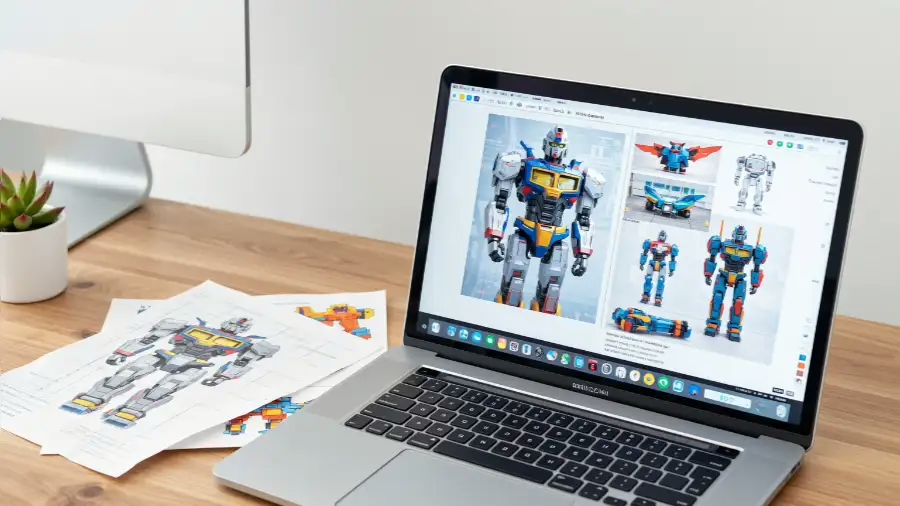
⚠️ Warning: Skipping from a sketch to factory tooling guarantees failure. Translate your 2D idea into a factory-ready format using strict Design for Manufacturing (DFM). A thorough product development review prevents mold revisions, assembly headaches, and mass-production test failures.
- Plastic: Review the CAD for moldability. Define the Part Split, Wall Thickness, and Draft Angles. Map your Paint Mask Zones and finalize the Screw/Clip Strategy.
- Plush: Lock in Pattern Making and Fabric Selection. Specify Fill Density and choose between Embroidery or Printed Details. Set a strict Stitching Tolerance and flag any Accessory Attachment Risk.
- Convert your sketch. Generate a 3D CAD model, a Technical Drawing, and a Bill of Materials (BOM).
- Build a mockup. Use a handmade or 3D-printed mockup for early concept validation before full engineering begins.
- Apply material-specific DFM rules:
- Plastic: Review the CAD for moldability. Define the Part Split, Wall Thickness, and Draft Angles. Map your Paint Mask Zones and finalize the Screw/Clip Strategy.
- Plush: Lock in Pattern Making and Fabric Selection. Specify Fill Density and choose between Embroidery or Printed Details. Set a strict Stitching Tolerance and flag any Accessory Attachment Risk.
- Commission a professional prototype. Execute at least one official prototype cycle before finalizing your supplier selection.
- Perform a physical sensory check. A promising prototype must feel real in your hands. Test the weight balance. Gauge the articulation resistance of moving joints. Squeeze for plush softness. Run your fingers over the seam quality to ensure every part fit is flush.
Expected Result: You hold a physical prototype that exposes obvious design flaws, backed by approved dimensions and a clear materials direction.
⚠️ Experience Warning: During factory deployments, I frequently see buyers rush the DFM review to save time. This consistently results in plastic parts warping during cooling or plush seams ripping under tension. Never cut steel for tooling without holding a validated, factory-ready prototype.
Step 3: Select Compliant Materials and Finalize Safety Documentation
During LeelineGroup factory audits, I immediately feel the difference between cheap and premium toys. Safe, production-ready materials feature odor-free ABS, a consistent plush nap, non-tacky coatings, and secured battery doors. Your material choice dictates tooling costs, durability, and testing scope.
Use ABS, PP, TPR, PVC, or silicone for plastic components. Select polyester plush, recycled fill, embroidery thread, and safe trims for soft toys. Require FSC wood, paper pulp trays, and lower-plastic options for types of packaging materials.
Evaluate sustainability claims carefully. Recycled or bio-based inputs alter MOQ, color consistency, molding behavior, and unit costs.
Map your compliance path by target market:
- U.S.: Follow official CPSC guidance for ASTM F963 and CPSIA chemical rules to generate your Children’s Product Certificate.
- EU/UK: Compile a strict technical file using European Commission EN71 standards for CE marking.
- Global: Benchmark broader markets using the ISO 8124 standard.
Isolate high-risk components like magnets, button batteries, cords, detachable small parts, liquid-filled parts, coatings, and scented materials that trigger added scrutiny.
Gather all documentation before production. Request test reports, declaration certificates, material declarations, and SDS/MSDS for battery shipping. If using a private label service, mandate these documents upfront.
Expected Result: You should be able to hand the factory a comprehensive material and compliance brief. Never just tell them to “make it safe.”
⚠️ Experience Warning: I have watched customs seize countless shipments because buyers lacked an MSDS for a tiny button battery. Always verify your paperwork.
🚀 Actionable Insight: Treat compliance and material choice as inseparable. Changing a plastic dye color late in the process triggers a completely new round of expensive chemical migration testing.
Step 4: Build a High-Scoring Factory Shortlist
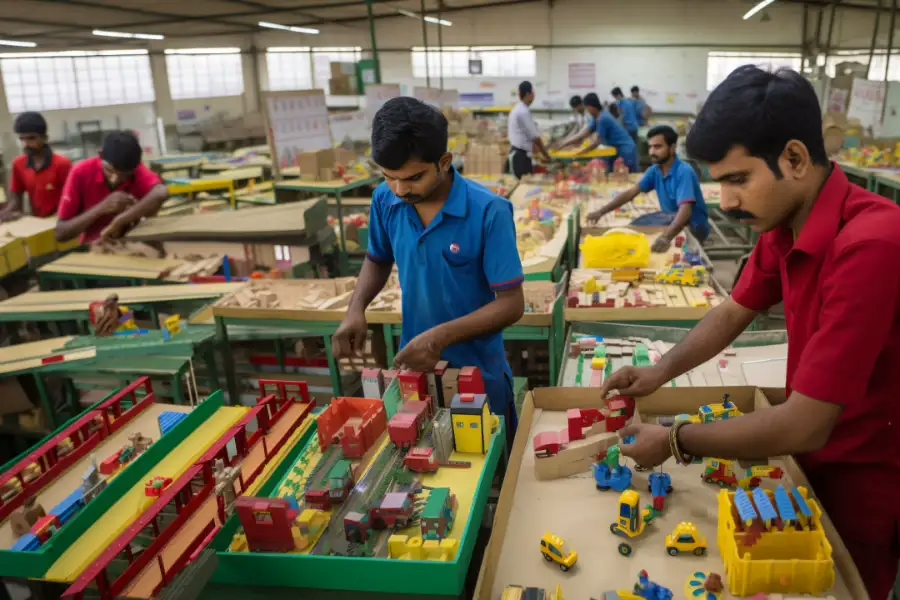
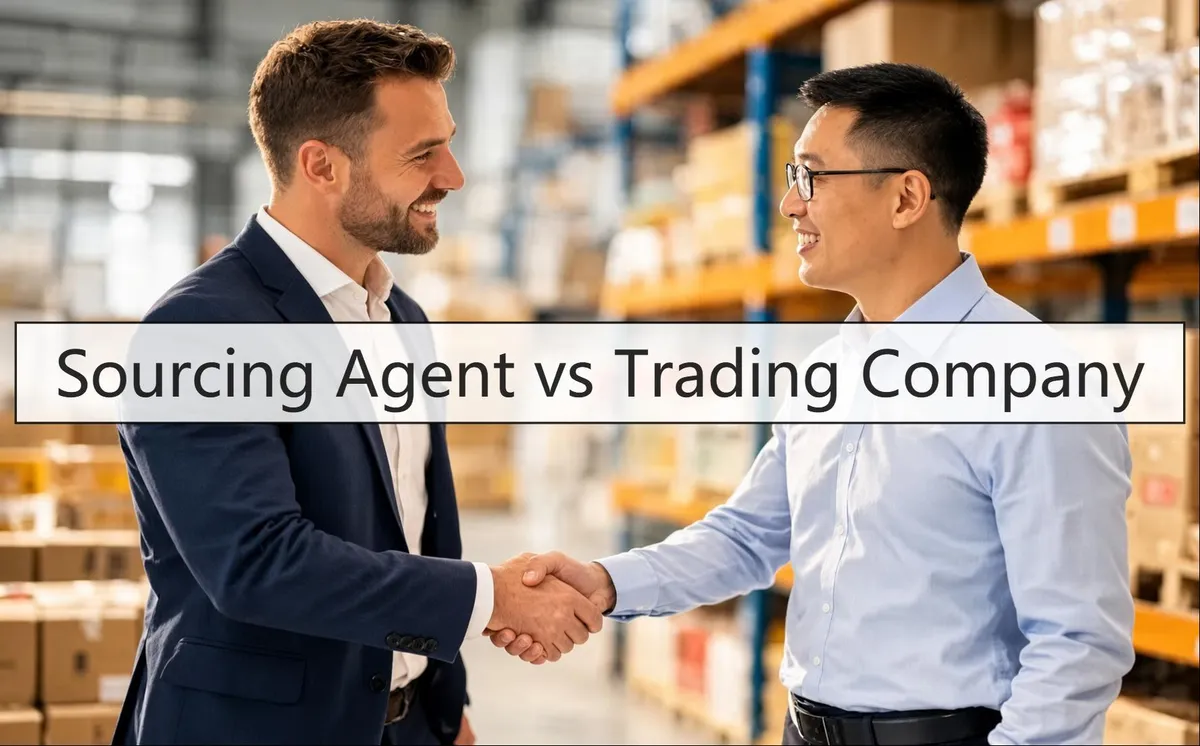
Choose your sourcing path based on your production needs. Use direct factories for high-volume custom molds. Use wholesale toy suppliers for off-the-shelf items. Partner with a product sourcing agent like LeelineGroup for complex, mixed-material assembly. Filter candidates by exact toy type. Separate plastic injection specialists from plush fabric assemblers to build your initial shortlist.
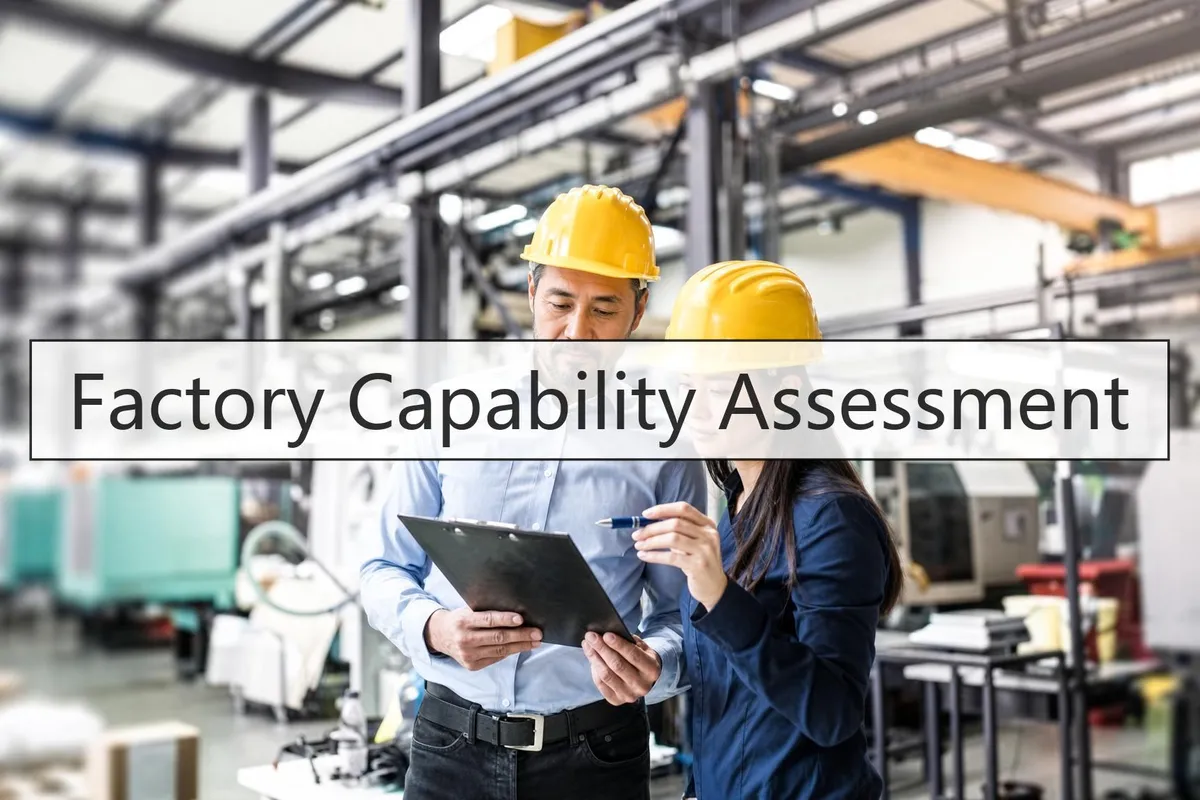
Grade each candidate using a strict factory-audit checklist. Do not rely on supplier sourcing directories alone. Verify the following on the ground:
- Category Experience: Check their past toy production lines.
- Tooling Capability: Inspect their mold maintenance process. Look for rusty molds or chaotic workstations.
- QC System: Confirm they meet strict AQL 2.5 expectations.
- Compliance: Demand social compliance documents like BSCI, Sedex/SMETA, or the official ISO 9001 standard.
- Capabilities: Assess their retail-label packaging setups.
- IP Protection: Lock in mold ownership terms and ban unauthorized subcontracting.
Focus your search on Chinese manufacturing clusters like Shantou or Dongguan. Mandate physical audits. Remote vetting works for simple goods, but remote-only sourcing fails for complex toys.
You need local teams on the ground to inspect organized material storage, catch inconsistent sample finishing, and manage fast rework. Implement strict supplier management protocols to track these metrics. LeelineGroup provides this exact local advantage across major hubs.
Expected Result: You hold a scored spreadsheet of three verified factories, not just a folder of unverified chats.
⚠️ Experience Warning: During an audit in Dongguan, I saw a brand lose thousands of dollars because their primary factory subcontracted plush assembly to an unverified workshop. The secondary workshop used weak thread, causing the final toys to fail standard tension tests. Always mandate strict subcontracting controls in your manufacturing contract.
Step 5: Approve the Golden Sample and Finalize Tooling
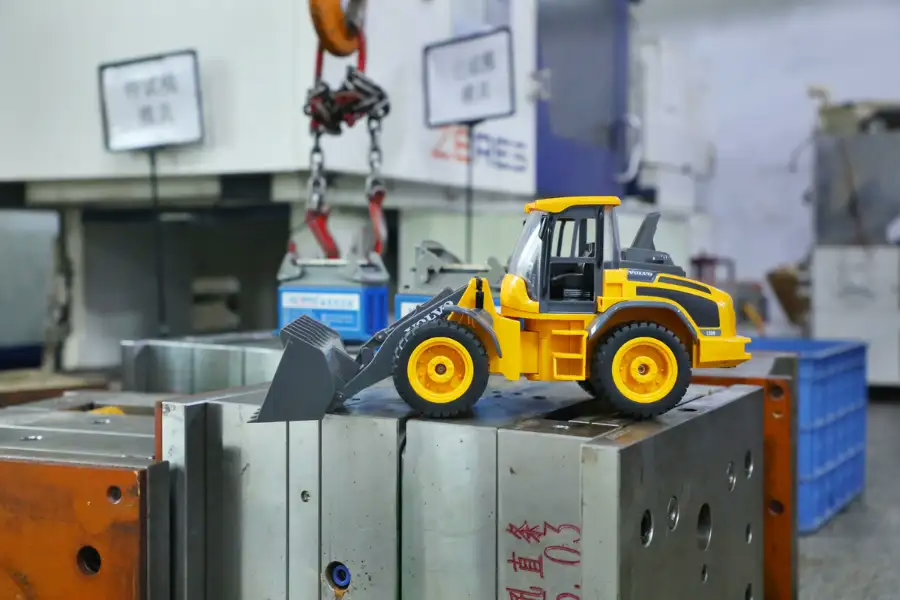
In my experience on the factory floor, the transition from digital file to physical toy is where buyers lose control. Manage this behind-the-scenes transformation to protect your investment.
Follow this exact sequence to build your toy safely:
- Review the CAD file. Approve the Design for Manufacturing (DFM) adjustments to ensure the factory can actually mass-produce the item.
- Inspect the 3D prototype. Handle the physical scale, surface texture, and component fit.
- Confirm the tooling. Pay your upfront tooling fees and lock in mold ownership. Clarify these terms during your OEM vs ODM manufacturing negotiations.
- Evaluate T1/T2 test shots. Request unpainted plastic test shots or plush counter-samples. Smell the materials for harsh chemical odors. Test joint articulation. Pull the plush seams to verify strength.
- Approve cosmetics and safety. Verify exact color accuracy, paint adhesion, and embroidery precision. ⚠️ Warning: Never casually approve battery compartments or magnets. Ensure battery doors are completely secure.
- Check the packaging. Review the retail carton presentation. Ensure all official CPSC warning labels are visible and compliant.
- Sign the golden sample. Approve the final, perfect unit.
Strict quality control at this stage prevents the classic “the production batch looked different from the prototype” complaint. The factory uses your signed golden sample to calibrate the assembly line.
Procurement teams must budget carefully. Tooling fees require a large upfront payment. Revision fees and air freight charges for physical samples add up quickly during the testing phases.
✅ Verification Checkpoint: You should end this step with a signed golden sample, an approved packaging proof, and a documented change log.
⚠️ Experience Warning: Never approve a test shot over a video call. I always hold the T1 sample in my hands to test seam strength and paint adhesion myself.
Step 6: Execute Quality Control and Packaging Approval
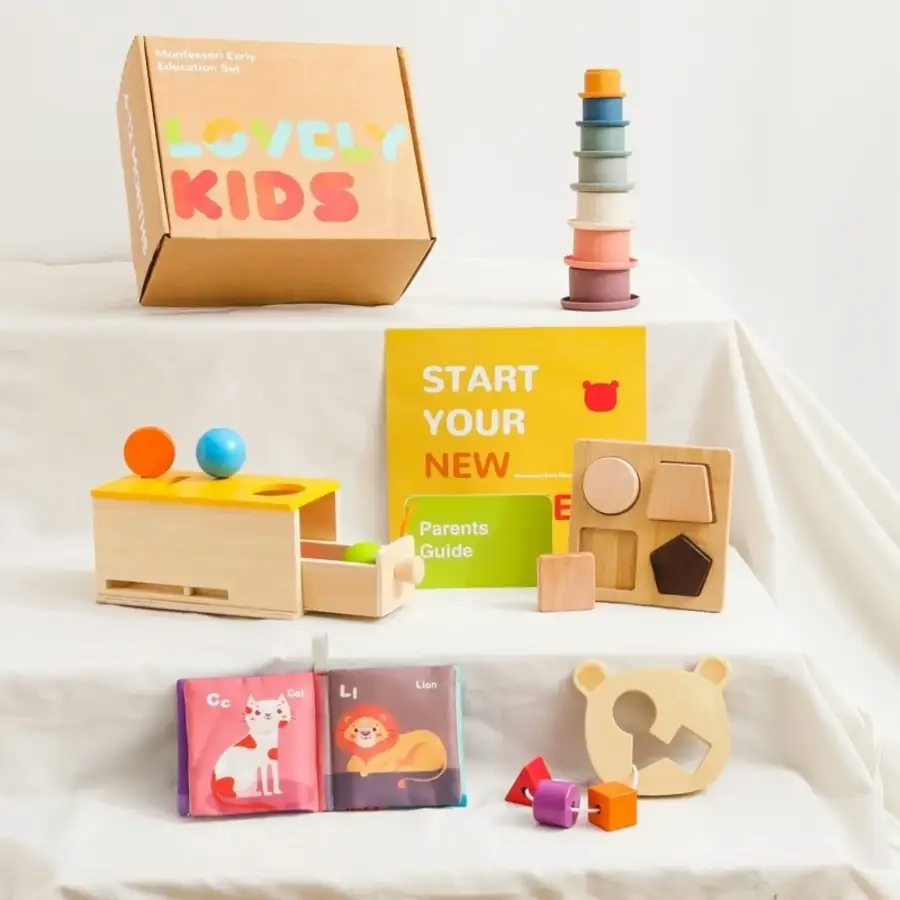
Treat production control as an operational system. Quality control is ongoing, not just a final inspection. During my factory audits, I look for physical signs of stable toys manufacturing: consistent paint lines, secure stitching, tight joints, smooth surface finishes, and odor-free materials.
Execute this production sequence:
- Confirm raw materials before line setup.
- Execute a pilot run to catch errors.
- Enforce in-process checks during final assembly.
- Perform a Final Random Inspection using AQL 2.5 standards.
Plastic and plush toys require distinct quality control checkpoints. For plastic toys, check for flash marks, sink marks, loose limbs, and paint bleed. For plush toys, inspect for weak stitching, color mismatch, and missing accessories. Mandate a 1-by-1 inspection for high-risk SKUs.
Hire a third-party inspector or sourcing partner in China before paying the balance. Do not rely on factory self-QC. Factory inspectors routinely ignore defects to ship orders faster.
Treat your types of packaging materials as a strict compliance checkpoint. Verify age grading, warnings, suffocation labels, and battery notices. Perform a carton drop-resistance test. Ensure labels integrate cleanly with Amazon FBA prep services to prevent crushed boxes, barcode errors, or mixed-carton mistakes.
Stop the shipment. Do not move inventory to the port until you receive the final inspection report, packaging approval, and completed documentation package.
⚠️ Experience Warning: Factory self-inspections are weak. I once caught a factory approving 5,000 units with mixed-carton packing errors that would have triggered an Amazon FBA suspension. Always verify production with independent eyes.
I frequently see sellers ruin profit margins by miscalculating final logistics. A successful launch requires total operational readiness.
- Amazon FBA: Apply FNSKU labels. Build in a 14-day receiving buffer. Use dedicated Amazon FBA prep services to prevent inbound rejection.
- DTC and Retail: Verify branded packaging and insert placement. Plan replenishment schedules to prevent stockouts.
- Calculate landed costs. Do not rely on the ex-factory quote. Factor in freight, duties, and prep.
- Select a shipping mode. Use air freight for fast launches, sea freight to protect margins, or a courier solely for final samples.
- Compile your export paperwork. Secure the commercial invoice, packing list, and mandatory toy safety certificates before booking transit.
- Execute channel-specific prep.
- Amazon FBA: Apply FNSKU labels. Build in a 14-day receiving buffer. Use dedicated Amazon FBA prep services to prevent inbound rejection.
- DTC and Retail: Verify branded packaging and insert placement. Plan replenishment schedules to prevent stockouts.
- Consolidate your shipments. Use a China warehouse to merge multi-factory orders. Hand sealed, properly marked master cartons to your freight forwarder to avoid split-shipment chaos.
✅ Verification Checkpoint: Your order is complete only when inventory lands compliantly and sells immediately.
⚠️ Experience Warning: Customs will seize your shipment if your commercial invoice and compliance documents mismatch. I once spent three weeks untangling a container hold over one missing testing certificate.
Troubleshooting of Toys Manufacturing
Error: Bulk Production Drifts From the Golden Sample
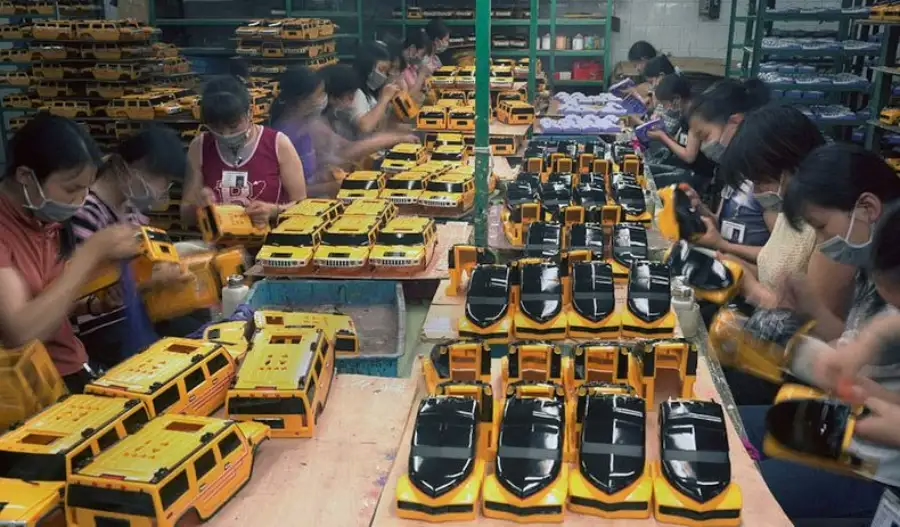
Factories secretly swap materials mid-run to widen profit margins. The sample passes, but the bulk run fails.
- Lock your golden sample with a physical signature.
- Define defect tolerances in your purchase order.
- Execute in-line quality control during the first 10% of production.
- Hold final payment until pre-shipment inspection passes.
💡 Diagnostic: We caught a factory swapping premium ABS for recycled plastic simply by checking the resin smell on the assembly line.
Error: Toys Fail ASTM/EN71 Compliance Late
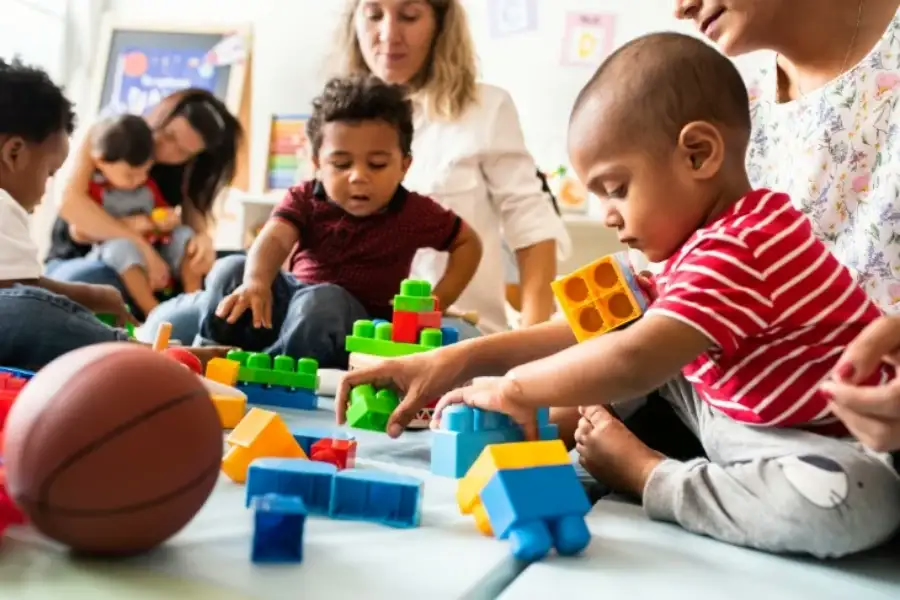
Designers often prioritize aesthetics over safety. This triggers late-stage chemical or mechanical failures against standards like ASTM F963.
- Involve compliance experts during raw material selection.
- Remove risky features like long cords during the CAD phase.
- Test unpainted T1 samples before mass production.
📝 Editor’s Verdict: I saved a client $20,000 by chemically testing raw plastic pellets before the factory molded 10,000 units. Never wait for the finished product.
Error: Supplier Hides Subcontracting or Disputes Molds
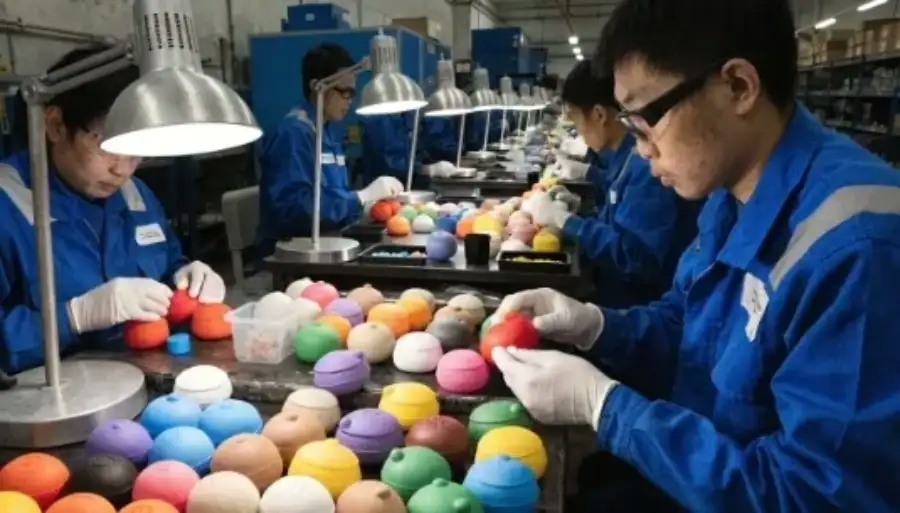
Factories frequently farm out overflow work to unvetted workshops. They may also hold your molds hostage.
- Audit the actual production location in person.
- Draft strict supplier management contracts confirming absolute mold custody.
- Require written approval before subcontracting assembly steps.
Error: Customs Seizes Battery-Powered Toys
Warning: Sloppy documentation for lithium batteries triggers immediate port holds and potential fines.
- Verify your battery MSDS and UN38.3 test reports match your commercial invoice exactly.
🛡️ Prevention: Build a corrective-action loop. Analyze customer returns monthly and update your factory checklist to prevent repeat defects on your next order.
People Also Ask About Toys Manufacturing
1. How much does it cost to manufacture a custom toy in China?
A custom plastic toy typically costs between $5,000 and $15,000 to launch. You must pay for 3D modeling, steel tooling, lab testing, and the first bulk order. During my time quoting projects at LeelineGroup, I found that steel molds consume the largest part of this budget. You can save money by choosing existing factory molds instead of custom shapes.
2. What is the minimum order quantity (MOQ) for toys?
Most Chinese factories set an MOQ of 1,000 to 3,000 units for plastic toys. In our testing, plush toy factories often accept smaller orders of 500 units because fabric patterns cost less to set up than steel molds. You can usually negotiate a smaller first batch if you agree to pay a higher price per unit.
3. Do I need a safety certificate to sell toys?
Yes. You must test your toy at a certified lab before you sell it. The United States requires a Children’s Product Certificate (CPC) backed by official ASTM F963 testing. The EU requires EN71 compliance for its CE mark. I have watched customs officials destroy entire containers of toys because the buyer forgot to secure a basic flammability test report.
My Experience: The biggest headache we face with new buyers is rushed testing. Factories will push you to skip third-party lab tests to save time. Never listen to them. Always hire an independent lab like SGS or Intertek to test your pre-production samples.
Conclusion
You now have a proven system to move your toy concept from a rough sketch to a shelf-ready product. Manufacturing success comes entirely from sequencing your decisions correctly. You must never separate your product design from safety compliance. You must also never separate your supplier choice from strict quality control and global logistics planning.
Based on my review of hundreds of factory runs, the most profitable brands treat sourcing as a repeatable system. They validate concepts early, audit factories in person, and inspect every batch before shipment.
Take your next step today. Create your initial design brief, establish your landed cost budget, and begin your supplier management shortlist. If you need local experts to handle your product sourcing and factory audits, contact LeelineGroup to secure your supply chain.

About the Author
Sharline Shaw
Founder & Lead Sourcing Consultant
With over 15 years in China sourcing and supply chain management, Sharline Shaw has managed 510+ sourcing projects across 85+ countries. Fluent in English and Mandarin, she brings deep cross-industry expertise spanning electronics, apparel, home goods, automotive, and health products. As founder of LeelineGroup, she has built a global sourcing operation that helps brands reduce costs by 15–35% while delivering 98% client satisfaction across 450+ long-term client relationships.
Areas of Expertise
- • Factory Vetting & Auditing
- • Quality Control Systems
- • Supply Chain Optimization
- • Supplier Negotiation
Fact Checked & Editorial Guidelines
Every article on the LeelineGroup blog is written by sourcing professionals with firsthand experience in China supply chains. Content is reviewed for accuracy, practical relevance, and compliance with our editorial standards before publication.
Your trust is important. Learn more about our Fact Checking Process and Editorial Policy.