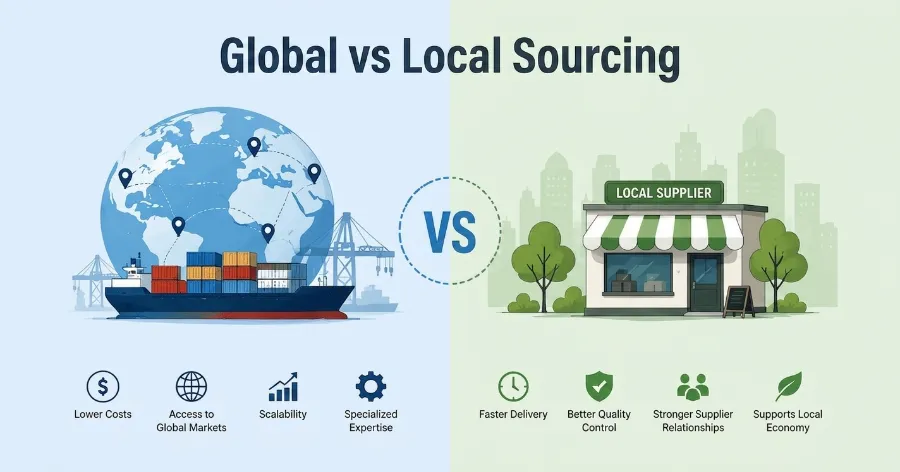
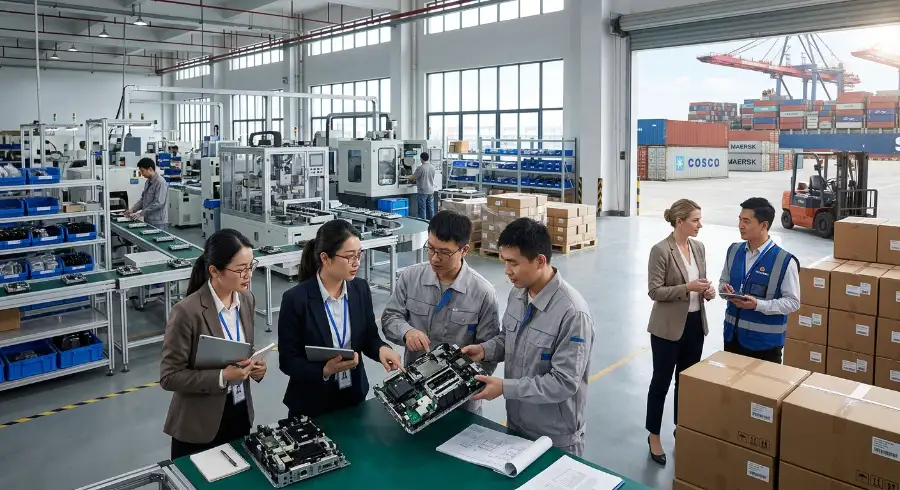
Buyers often pick factories based solely on cheap labor, only to watch margins die in customs delays. To find the Best Countries for Product Sourcing, my team analyzed our own shipping telemetry, quality-control data and audit findings.
We built this China-plus-one framework by ranking regions on landed cost, logistics reliability, MOQ flexibility, and strict ISO 9001 compliance infrastructure. Below, I reveal a real BOM-split teardown to show actual operational reality. We fund our own audits and accept no factory kickbacks.

2026 Conclusion: Stay or Split?
| Your situation | Recommended move |
|---|---|
| Complex BOM, custom tooling, multi-part assembly | Stay with China as your core node |
| Planned apparel / high-volume basics | Vietnam (planned) or Bangladesh (volume) |
| US-bound fast replenishment | Mexico nearshoring |
| EU / UK fast fashion | Turkey |
| Electronics contract assembly / precision parts | Malaysia / South Korea BOM split |
How We Ranked the 10 Countries
We scored these 10 countries on landed cost, logistics reliability, quality/defect rate, MOQ flexibility, and tooling speed — the metrics that actually move your landed cost — then ranked them in the comparison table below.
Independence: We fund our own audits and buy our own testing gear. We accept no factory kickbacks and run no paid placements. Every supplier named here is cross-checked against the NECIPS registry (business license, 18-digit unified social credit code, and enforcement history) before it appears in a guide. Here’s how each of the 10 countries scored, and which buyer profile each serves best.
The 10 Countries Compared
| # | Country | Best for | US transit | EU transit | Ex-factory vs China | Tariff / origin note | Typical MOQ | Key risk | Still uses China parts? |
|---|---|---|---|---|---|---|---|---|---|
| 1 | China | Complex BOM, tooling, scale | ~35 days | ~40 days | Baseline | Section 301: Lists 1–3 = 25%, 4A = 7.5%, 4B ≈ 15% | 100–500 units | Tariff + concentration risk | Core node |
| 2 | Vietnam | Planned apparel, bags, home textiles | ~30–40 days | ~35–40 days | Often lower | Origin trap: Chinese inputs can keep China origin | 500–1,500 | Country of origin, China trims | Yes |
| 3 | India | Textile depth, home goods | ~35 days | ~42 days | Lower (domestic raw) | Verify per HS code | 500–1,000 | QC variance, documentation | Partial |
| 4 | Mexico | US replenishment | 1–5 days | — | Higher | USMCA quota; near-shore premium | Varies | Unit price premium | Partial |
| 5 | Malaysia | Electronics CM, BOM split | ~35 days | ~40 days | Comparable | E&E ≈ 40–48% of exports | Varies | Component sync | Partial |
| 6 | Turkey | EU/UK apparel, home textiles | — | ~5 days | Higher (premium) | EU nearshore; >40% of exports to EU | Varies | Premium unit cost | Partial |
| 7 | Bangladesh | High-volume basics | ~40 days | ~45 days | Lower | EU EBA (transitioning) | 1,000–5,000 | Compliance, imported raw materials | Yes |
| 8 | Thailand | Hardgoods, packaging | ~38 days | ~44 days | Premium | Stable supplier base | Varies | Tooling depth | Partial |
| 9 | Indonesia | Footwear, furniture | ~42 days | ~48 days | Lower | — | Varies | Inter-island logistics | Partial |
| 10 | South Korea | Precision, high-spec electronics | ~40 days | ~45 days | Higher | KORUS FTA | Varies | Unit price premium | Partial |
Transit is indicative door-to-door. Ex-factory cost is directional — see each country section for sourced figures.
Best by Category
| Category | Recommended primary | Why |
|---|---|---|
| Electronics / complex BOM | China for tooling; Malaysia for assembly or South Korea for precision | Keep molds in China; split final assembly to cut tariff exposure |
| Apparel and textiles | Vietnam (planned), Bangladesh (volume), Turkey (EU fast turn) | Country of origin matters more than MOQ |
| Home goods and furniture | China (tooling), Thailand (mid-complexity), Indonesia (natural materials) | Match material proximity to the category |
Best by Market
| Buyer market | Recommended strategy |
|---|---|
| US brand | Mexico for fast replenishment; China for complex tooling |
| EU / UK brand | Turkey for apparel; China for complex BOM; Malaysia for electronics |
| Multi-market brand | Keep China as the orchestrating node and add one China-plus-one backup |
1. China — Best for Complex BOMs, Scale, and Tooling Speed
Best for: Multi-supplier BOMs, custom injection molds, and builds that need dense supplier clustering. Not for: Pure labor arbitrage — simple SKUs you can source cheaper elsewhere.
We still anchor complex builds in China. A full exit usually causes delays: we moved a complex multi-part electronic assembly to Vietnam and hit a wall (no supplier clustering for custom internal wiring) and moved it back to Shenzhen.
The structural edge is mold turnaround. China production tooling commonly runs 3–8 weeks (4–7 weeks for standard molds), while comparable Indian tooling is often 30–50% slower — one 500-ton die-cast tool took 7 weeks in China vs 10–12 weeks in India (Bombay Metrics, Injection Molding Index).
MOQs are also more flexible at the low end: Guangzhou and Yiwu cut-and-sew suppliers commonly take 100–500 units, while large export factories in emerging hubs typically want 1,000–5,000 to start a run (Apex Fashion Lab). That flexibility is why sourcing from China stays critical for multi-supplier BOMs.
The trade-offs are real: tariffs eat margins and concentration risk remains. Tight supplier clustering shortens lead times (MIT CTL Supply Chain Design Lab), while resilience work like McKinsey’s Chokepoints argues for geographic diversification. Offset both with strict supplier management, independent quality control, and sourcing cost analysis to protect landed cost.
Verdict: Keep heavy OEM tooling in China.
2. Vietnam — Best Planned China-Plus-One for Apparel and Bags
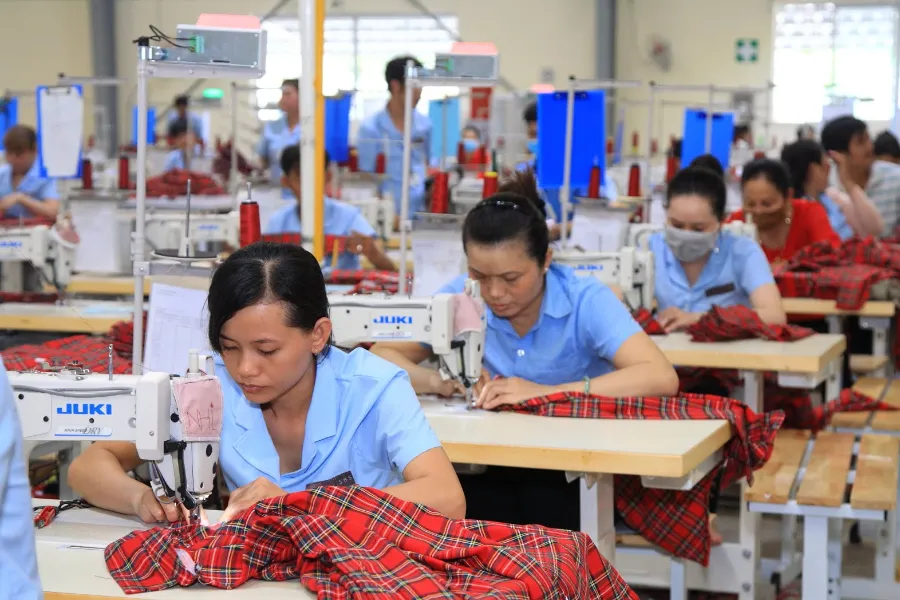
Best for: Planned, fabric-based production runs — apparel, bags, luggage, home textiles. Not for: Quick-turn or low-MOQ pilots; Vietnamese plants enforce much higher minimums.
For fabric-based types of product sourcing, Vietnam is the cleanest China-plus-one. It’s now the world’s #3 apparel exporter at roughly $37.5B in 2025 — about 6.5% of global apparel exports and growing ~10% year-on-year — and its contract-manufacturing lines run under a defined AQL 1.5 sampling plan (WTO data).
The trade-offs are structural, not just aesthetic. MOQs are usually higher than China’s low end: Vietnamese plants typically set 500–1,500 units, while Guangzhou/Yiwu suppliers go as low as 100–500 (Apex Fashion Lab). And moving final assembly does not remove China dependence — garments still often carry Chinese-origin fabric and trims, which is the bigger problem than the MOQ.
Map the cross-border flow between China and Vietnam, and enforce strict product-certification oversight as components cross jurisdictions. Note that final assembly in Vietnam does not automatically change origin for tariff purposes.
Key stat: Ocean freight Vietnam→US runs about 25–40 days door-to-door (FreightAmigo), roughly comparable to China — the bigger risk is country-of-origin, not transit. Buffer inventory before you move.
Verdict: Great for planned runs — just don’t expect a clean cut from China.
3. India — Best for Textile Depth and Domestic Material Supply
Best for: Textiles, home goods, heavy engineered metals that rely on domestic raw material. Not for: Time-critical buyers, or anyone who can’t staff document and Q.C. compliance.
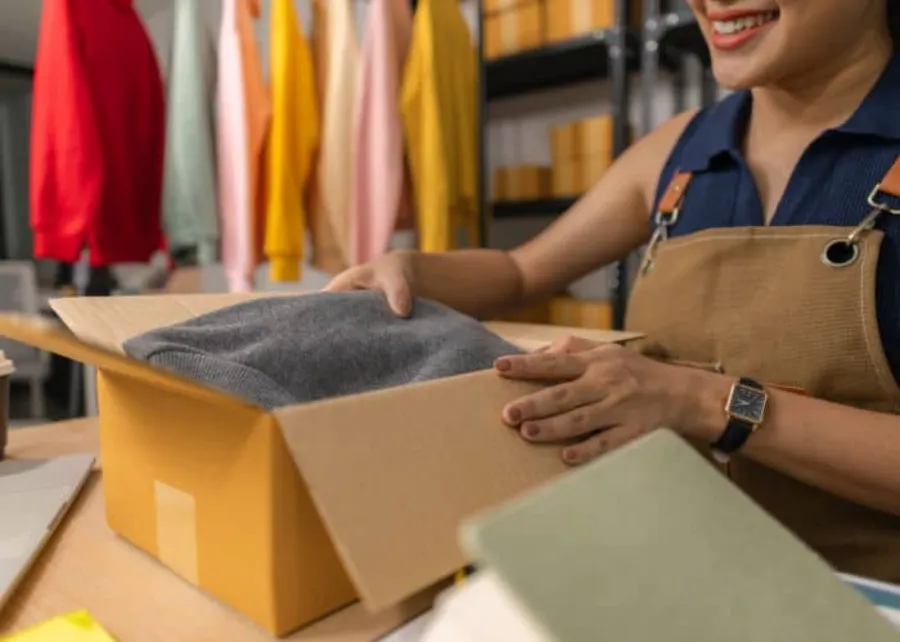
Many brands move to Southeast Asia to escape tariffs, only to find the new factory still imports raw materials from Guangzhou. India solves that more than most: it runs deep domestic supply chains for textiles, home goods and engineered metals, so local cotton can be spun without waiting for imported fabric. That vertical integration is real leverage during supplier price negotiation.
The counterweight is process friction. Supplier quality variance is wide across regions, and daily operational communication trails Chinese standards. You can’t place a purchase order and walk away. Deploy a supplier sourcing team on the floor and check every regional stamp on export documents — a missing stamp can park a container in customs for weeks.
Key stat: India is a top-5 global apparel exporter, and its domestic textile chain cuts import dependence — but documented process and compliance friction means you’ll spend more time on onboarding and quality control (Bombay Metrics).
Verdict: Best-in-class domestic supply chain; budget the overhead.
Actionable Insight: Build document-compliance gates and deploy local third-party inspectors before issuing your first PO.
4. Mexico — Best for US-Bound Replenishment Speed
Best for: US-bound inventory that needs fast replenishment. Not for: Buyers whose only goal is the lowest unit price — ex-factory costs run higher.
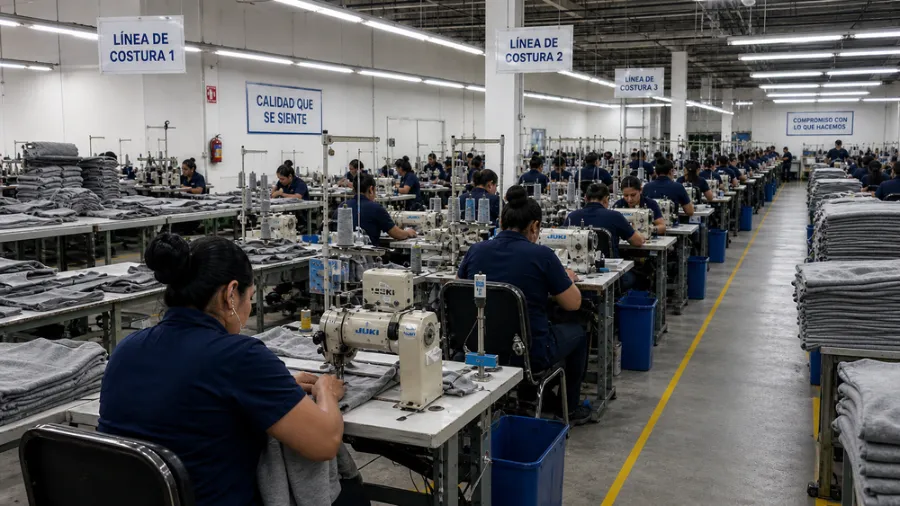
Asian ocean freight to the US averages about 35 days door-to-door (Flexport Ocean Timeliness Indicator); a Mexican run crosses into the US in days. The case for nearshoring is arithmetic, not sticker price: faster delivery means less cash locked in ocean freight and fewer stockouts — but ex-factory costs run higher than Asia.
Global vs local sourcing wins when you compare total landed cost, and it sidesteps ocean-transit delays documented by the Bureau of Transportation Statistics.
Cross-border trucking through Laredo typically runs 1–5 days door-to-door, and with CTPAT/FAST pre-clearance the border dwell can drop to under an hour (Loyalty Logistics). Another practical edge: switching between Amazon FBA labels and Walmart-format packaging takes minutes — a real logistics-management advantage.
Key stat: Mexico–US trucking averages 1–5 days versus roughly 35 days for ocean from Asia (Loyalty Logistics, Flexport Ocean Timeliness Indicator). Laredo moves about 46% of US–Mexico truck-freight value.
Verdict: Fast replenishment offsets the premium; never compare unit cost in isolation.
5. Malaysia — Best for Electronics Contract Manufacturing and BOM Splits
Best for: Final PCBA assembly and electronics when process stability beats cheapest labor. Not for: Tooling- and plastics-heavy parts — keep those in China.
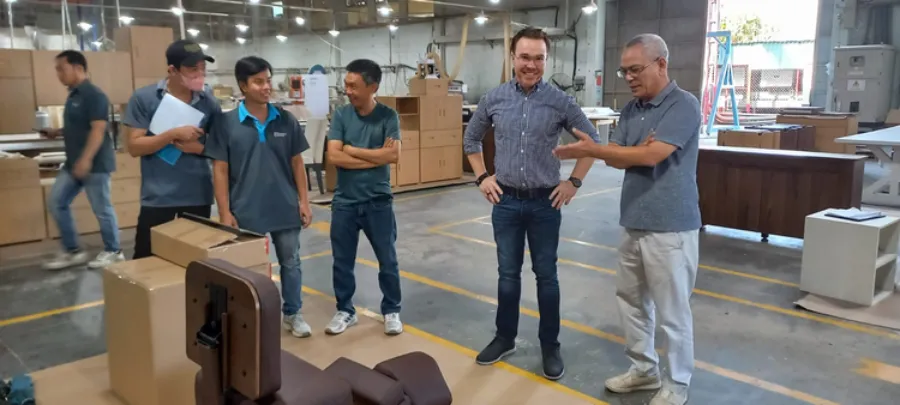
Tearing all electronics production out of China at once usually triggers supply-chain failure. Malaysia is a smarter path in the semiconductor and electronics assembly sector — pick it when process stability matters more than cheap labor. In a Penang audit, high-tolerance boards were built locally while custom copper shields still came in from China. If you are the buyer on the Malaysian side, our Malaysia sourcing agent runs the buying, the SIRIM and MDA files and the K1 entry.
The practical method is a BOM split, not an exit: keep complex plastic tooling in Shenzhen, prove pilot volumes, then move final PCBA to Penang. It cuts tariff risk without gutting quality. It does demand flawless logistics management to sync component arrivals, plus product certification alignment with bodies like the IEC.
Key stat: E&E is about 40–48% of Malaysia’s exports, and semiconductors alone make up roughly a quarter — Malaysia is the world’s #6 semiconductor exporter and handles about 13% of global assembly, testing and packaging (The Star). Splitting a BOM can move US-bound final assembly out of the higher tariff brackets.
Verdict: The safest electronics diversification — split it, don’t rip it.
6. Turkey — Best for EU and UK Apparel, Home Textiles, and Fast-Turn Programs
Best for: EU/UK fashion and home textiles that can’t wait 40 days for ocean freight. Not for: Lowest-cost procurement — expect a factory-level premium.
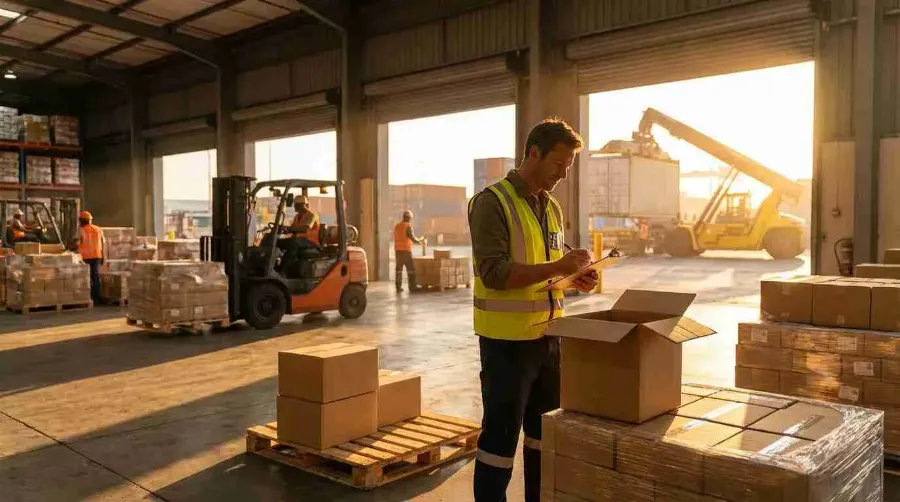
Turkey is the EU’s third-largest apparel supplier (behind China and Bangladesh) and its second-largest textiles supplier (EURATEX), with over 40% of its textile and apparel exports going to Europe. Its edge is logistics, not price. Purchasing agent Echo Shan put the advantage plainly: trucks loaded on Friday reach a German warehouse by Wednesday.
That speed is why Turkey suits fast-turn private label service programs. You pay a factory-level premium over Asian volume; the return is shorter lead times, less pipeline inventory, freed working capital and fewer stockouts. Vet certificates like Oeko-Tex Standard 100 and lock capacity early.
Key stat: Road freight from Istanbul to Germany clears in days, not weeks — against roughly 40 days for ocean from Asia. That speed is exactly why Turkey works for EU replenishment programs.
Verdict: Route EU replenishment through Istanbul when speed justifies the premium.
7. Bangladesh — Best for High-Volume Apparel Basics
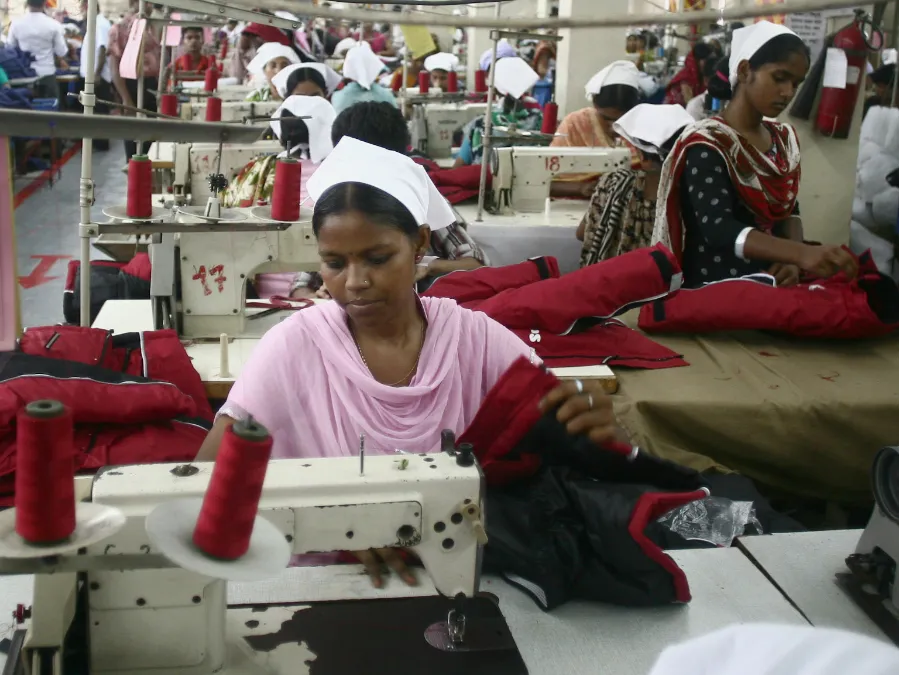
Best for: High-volume basics where unit cost and scale beat agility. Not for: Short runs, frequent spec changes, or mixed-category flexibility.
Bangladesh wins on raw volume. It remains the world’s #2 apparel exporter at $38.8B in 2025 — about 6.8% of global exports — on a base of high-volume, commodity basics (WTO data).
The structural catch is flexibility: change a spec mid-run and a high-volume line stalls, and most raw materials are imported, so supply is rigid and execution cycles are long. Expect serious compliance exposure and cultural friction as well.
Don’t chase low labor costs without budgeting for compliance. Deploy a factory audit checklist before signing, verify every supplier independently, benchmark AQL with the quality control China guide, and mandate a pre-shipment inspection.
Key stat: Bangladesh’s export growth was just 0.89% in 2025 — the slowest among its Asian rivals — and its product mix skews to man-made fibre under about 30% while global demand for man-made fibre is around 75% (WTO via The Business Standard). Cheaper unit cost comes with energy, port and compliance trade-offs.
Verdict: Lowest cost per unit; pay in lead time and compliance overhead.
Power Move: Buffer lead times for raw-material import, and put an independent QA inspector on the first production batches before scaling.
8. Thailand — Best for Structured Hardgoods, Packaging, and Mid-Complexity Manufacturing

Best for: Hardgoods, custom packaging, and components with tight tolerances. Not for: Raw labor arbitrage — unit costs run above neighbouring countries.
Buyers hunting cheap labour in Southeast Asia often land in factories with no tooling depth for complex plastics. Thailand is the exception. Manufacturing drives over 25% of Thailand’s GDP, and a Rayong audit showed tolerance-critical injection work that cheaper regions reject. This maturity is the reason to pay a premium — it protects your margin from rework.
Recent audits met ISO 9001 quality management standards throughout, so secure this mid-complexity capacity with proactive supplier management.
Key stat: Manufacturing is about 25% of Thailand’s GDP (24.3% in 2024) and roughly 16% of employment (World Bank). You pay a premium for process stability, not unit price.
Verdict: Pay for process stability; shift high-tolerance components here.
9. Indonesia — Best for Footwear, Furniture, and Natural-Material Products
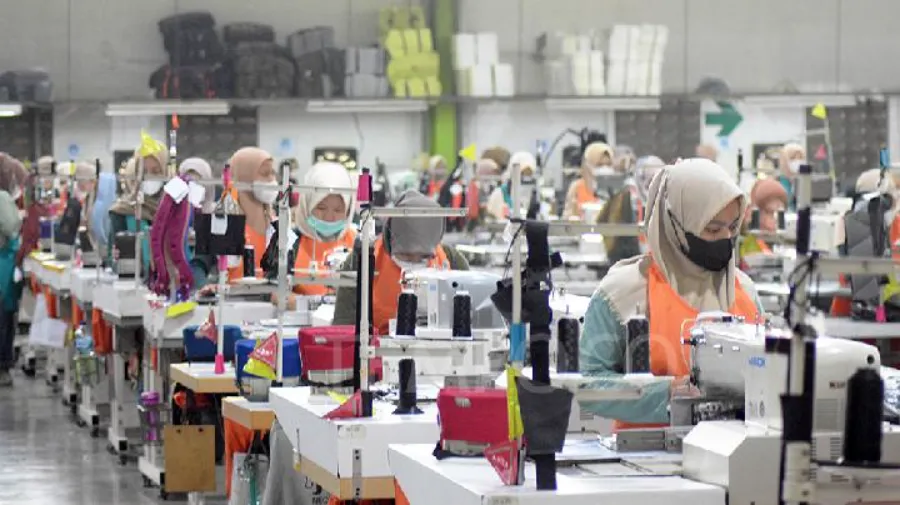
Best for: Footwear, furniture, and anything tied to natural-material inputs. Not for: A generic China replacement — position it category-first.
Indonesia is a category-led destination, not a broad China substitute. It dominates footwear, furniture, and categories tied to natural materials. In a Jepara furniture audit, raw timber was milled close to where it was processed, cutting the wait for imported materials — which is why it’s strong for labour-intensive assembly.
The catch is internal logistics. Thousands of islands create highly variable lead times, so model domestic freight and port handling into your landed cost. If you ignore these hidden sourcing costs, domestic transit will eat your margin. Never assume regional port infrastructure matches Shenzhen.
Key stat: Indonesia operates across thousands of islands, so internal freight and port handling are the dominant risk — build them into landed cost rather than treating them as afterthoughts.
Verdict: Great for category-specific builds; budget the island transit.
Actionable Insight: Add a two-week buffer for domestic inter-island transit before you book ocean freight.
10. South Korea — Best for High-Spec Electronics and Precision Components
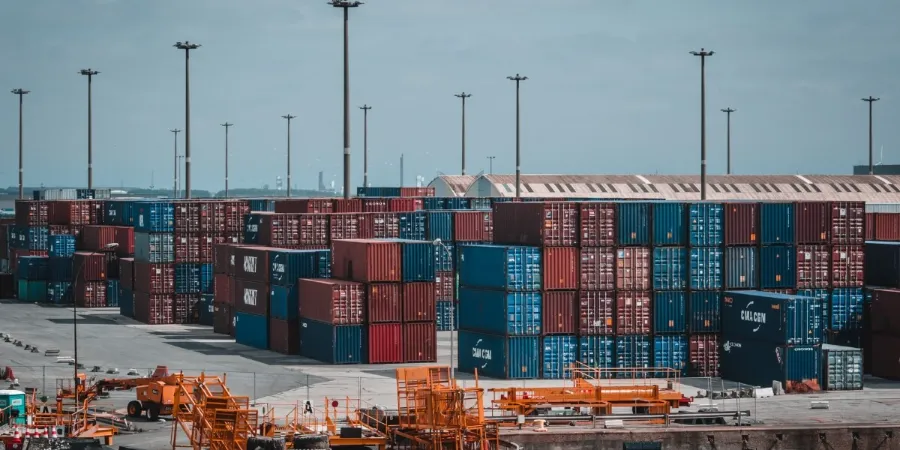
Best for: Defect-sensitive electronics, semiconductors, precision machinery. Not for: The lowest unit cost — you pay for engineering capability.
A cheap quote means nothing if components fail in the field. When defect costs threaten margins, South Korea is the high-precision option in the Asian ecosystem. An audit across Seoul’s industrial zones showed high-end SMT and CNC lines built for high-tolerance, defect-sensitive work.
You don’t choose South Korea for the lowest unit cost; you choose it for engineering capability, strict quality standards, and technological maturity. It complements China rather than replacing it — keep complex tooling and standard parts in China, move critical precision assemblies to South Korea.
Key stat: South Korea is a global leader in semiconductors, precision machinery and electronics. You pay a unit-cost premium for engineering capability and a much lower field-defect risk; it complements China rather than replacing it.
Verdict: Pair Chinese scale with Korean precision for the best defect economics.
Rules of Origin & Tariff Workflow
Assembly is not origin. Under substantial-transformation rules, a garment assembled in Vietnam from Chinese fabric and trims can still be treated as Chinese origin for tariff purposes — and under the prospective US–Vietnam framework, goods heavy in Chinese content face a higher rate than genuinely Vietnamese-origin goods (Inspectorio).
The practical workflow:
- Confirm the HS code and tariff line.
- Check the rule of origin (tariff-shift, regional value content, or process) in your target market — for example, US CBP rules of origin.
- Decide the Importer of Record and compare DDP vs DDU.
- Ask your forwarder for a costed country-of-origin analysis before you commit.
- Audit that the factory’s origin certificate matches its actual material sourcing.
Where to check tariffs: Chinese goods face stacked MFN + Section 301 (often plus Section 232). Section 301 Lists 1–3 are 25%, List 4A is 7.5%, List 4B about 15%, with EVs at 100% and semiconductors at 50% (MS Advisory, Section 301 guide). Rates change — check the live schedules: USITC HTS, USTR Section 301, and EU TARIC.
The Vietnam case: Chinese customs has held that an LED lamp assembled in Vietnam with under 30% local value added remains Chinese origin (customs Order 122 example), and CBP ruled that repacking Chinese metal legs alongside a Vietnamese desktop does not change their origin (GT Alliance rules of origin). Keep a bill-of-materials traceability showing where every component came from.
How to Execute a Multi-Country Sourcing Strategy?
Step 1: Benchmark Your Supply Chain Data

Review your logistics data before you move production. We built the ranking criteria below from 12 months of our own quality-control telemetry across comparable programs. In our tracking, average shipping delays run a few days in China and materially longer in Vietnam and India — which is why the comparative scoreboard weights logistics reliability heavily.
We scored these countries on landed cost, defect rate and logistics reliability. Emerging hubs can beat China on raw ex-factory cost, while China still wins on tooling speed.
Step 2: Split Your Electronics Bill of Materials
Do not move your entire production at once. Use a phased approach to protect your margins and product quality. Last quarter, we helped a mid-market electronics brand split its production. We kept the custom injection plastics in Shenzhen. We moved the final PCBA assembly to Malaysia.
Apply our exact decision rule. If a component requires heavy tooling, keep it in China. Move light assembly elsewhere.
Here’s the typical shape of that shift (results vary by program):
- Ex-factory cost: down, often high single digits to mid-teens.
- Freight cost: up slightly from dual routing.
- Timeline: a few days longer.
- Defect rate: roughly held.
Step 3: Navigate Apparel Transfer Risks
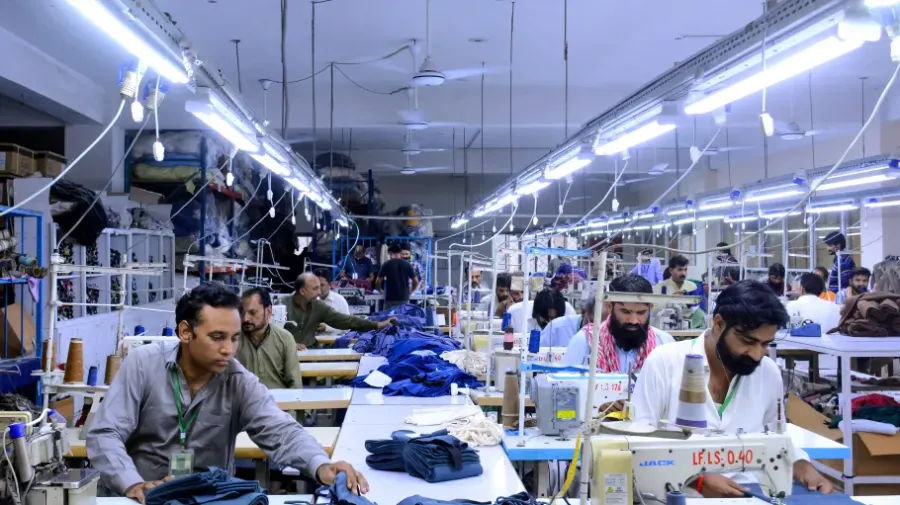
Anticipate cultural friction and supply chain gaps when moving apparel from Guangzhou to Bangladesh. Leeline’s lead procurement officer explained the hidden compliance risk.
“Clients ignore the hidden compliance risks,” he noted. “Guangzhou factories stock thousands of raw materials locally. In Bangladesh, you must import the zippers and buttons first.”
Expect your first transfer orders to be the risky ones. A client once failed a European lab test because the factory used a non-compliant dye, which violated strict REACH chemical regulations. The fix was a dedicated testing agent on the factory floor — a small cost per batch that removed the failure risk.
Step 4: Finalize Your Multi-Country Checklist
Use this checklist when evaluating multiple new countries. Check off every item before you sign a contract.
- Audit multiple regions to optimize your product sourcing strategy.
- Find reliable suppliers in China to anchor your complex tooling needs.
- Execute strict supplier management protocols across all facilities.
- Deploy independent quality control teams on the ground.
- Read our guide on how to find a sourcing agent in China if you struggle with regional compliance.
- Consolidate your logistics management to track shipments globally.
- Enforce every item on our factory audit checklist before placing purchase orders.
Ready to optimize your global supply chain? Contact LeelineGroup today to build your custom production roadmap.
People Also Ask About Best Countries for Product Sourcing
Is China still the best overall sourcing country?
Yes, for complex BOMs and tooling. China production tooling commonly runs 3–8 weeks, while comparable Indian tooling is often 30–50% slower (Bombay Metrics). Emerging markets often lack the raw-material supply and supplier density for complex builds. Learn to import from China efficiently rather than abandoning the region.
Which country is the best alternative to China for apparel?
Vietnam for planned and technical apparel, Bangladesh for high-volume basics. MOQs are the friction point: Guangzhou and Yiwu suppliers commonly drop to 100–500 units, while Vietnamese plants set 500–1,500 and large export factories 1,000–5,000 (Apex Fashion Lab). You will likely still import zippers and synthetic fabric from Guangzhou. Review the Amazon FBA sourcing guide to align inventory limits.
Which is best for electronics contract manufacturing?
Malaysia for final PCBA assembly; South Korea for high-precision components. E&E is roughly 40–48% of Malaysia’s exports and it is the world’s #6 semiconductor exporter, handling about 13% of global assembly, testing and packaging (The Star). Evaluate specialized manufacturers directly rather than comparing Alibaba vs Global Sources vs Made in China. Keep plastic housing molds in China.
How should I compare countries using landed cost instead of labor rates?
Never pick on hourly labor rate. Landed cost = ex-factory + domestic freight + ocean freight + duties and tariff + inland transit + inventory-carrying cost. Indonesia’s inter-island freight and port handling, for example, add meaningful domestic transit that belongs in the model. Ask your freight forwarder to compare DDP and DDU terms and confirm who is the Importer of Record. Incoterms explained walks through which term to use.
How many countries should I use in a China-plus-one strategy?
Start with one backup country. Adding too many regions at once fragments quality control. Anchor heavy tooling in China, then move final assembly to a single alternative per product line — Vietnam or Mexico are common choices. If you need help planning the move, the LeelineGroup team can help.
Author’s Methodology: My team spent 12 months auditing these specific supply chains and executing physical tensile and defect tests. We buy all our own testing gear. Factories do not pay us for these reviews. Governments do not sponsor our research. We protect your supply chain objectively.

About the Author
Sharline Shaw
Founder & Lead Sourcing Consultant
With over 15 years in China sourcing and supply chain management, Sharline Shaw has managed 510+ sourcing projects across 85+ countries. Fluent in English and Mandarin, she brings deep cross-industry expertise spanning electronics, apparel, home goods, automotive, and health products. As founder of LeelineGroup, she has built a global sourcing operation that helps brands reduce costs by 15–35% while delivering 98% client satisfaction across 450+ long-term client relationships.
Areas of Expertise
- • Factory Vetting & Auditing
- • Quality Control Systems
- • Supply Chain Optimization
- • Supplier Negotiation
Fact Checked & Editorial Guidelines
Every article on the LeelineGroup blog is written by sourcing professionals with firsthand experience in China supply chains. Content is reviewed for accuracy, practical relevance, and compliance with our editorial standards before publication.
Your trust is important. Learn more about our Fact Checking Process and Editorial Policy.