Pick your platform by category — and treat every platform as search friction, not verification. Alibaba has the widest supplier pool, best for consumer and private-label discovery; Global Sources is export-focused, best for technical electronics; Made-in-China is industrial, best for equipment and machinery. Choosing the right one saves half your screening time, but the part that decides whether an order succeeds is the off-platform verification you do before you pay — none of the three can do that for you.
This is not about which platform is “better.” It’s about which one saves you more time once you have a real verification workflow. Below we break the three down by mechanism, not by marketing numbers we can’t back up.
The Three Platforms at a Glance
| Dimension (mechanism) | Alibaba | Global Sources | Made-in-China |
|---|---|---|---|
| Best-fit categories | Consumer / private label / multi-category | Technical electronics / compliance | Equipment / industrial / machinery |
| Supplier pool | Widest — but the highest trader share | Small, export-focused | Mid-size, industrial/export |
| Main trust mechanism | Gold / Verified paid membership | Pre-listing verification + HK shows | Assessed / Audited tiers |
| Payment protection | Trade Assurance escrow | Usually T/T or L/C | Secured Trading |
| Offline / trade shows | — | Hong Kong physical shows | — |
| Small orders | More flexible | Usually high MOQ | Mid |
| Repeat / large POs | Fees eat margin | Payment terms vary by supplier | L/C friendly |
| Main pitfall | High screening & audit cost | Higher price, no escrow | Weak consumer coverage |
On scope: this table is mechanism and qualitative judgment, drawn from our hands-on sourcing work in Shenzhen. For objective numbers — scale, MOQ ranges, verification coverage — defer to the platforms’ own published programs (see Data Sources at the end). We don’t publish “our internal audit found X%” figures that nobody can verify; when you need a hard number, check the platform’s verification program rather than trusting a claim.
1. Category fit is the first fight you can win
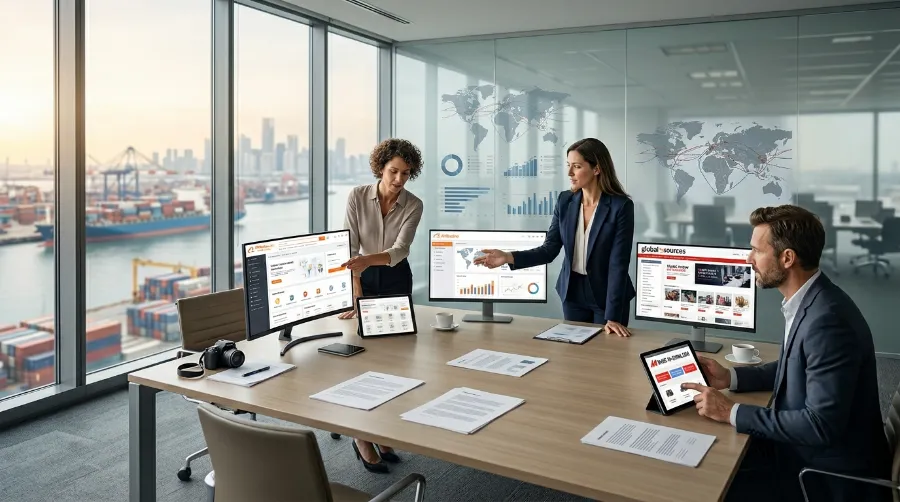
The safest platform is the one with the highest supplier density in your product class. You can’t force a platform to be what it isn’t. Global Sources is the best entry point for technical electronics — export-experienced, fluent in international compliance, and rarely passing off a basement trader as a tech giant. Made-in-China is structurally stronger for heavy industry — factory equipment, industrial buying, and raw materials. Alibaba is the broadest OEM/ODM and private-label discovery engine, great for mixed-category sourcing, but the noisiest: search a category and you’ll see thousands of near-identical listings.
For consumer goods and textiles we almost always start on Alibaba, but we screen much harder. Key move: cross-check the Alibaba factory name on 1688.com. The same company usually quotes lower domestically because the Alibaba listing absorbs English support, export logistics, and platform fees. A big price gap isn’t necessarily bad, but it’s worth one layer of digging (see section 6).
Bottom line: there is no universal “winner” platform — only “right category match + verification done.”
2. Badges are membership, not proof — read the audit report
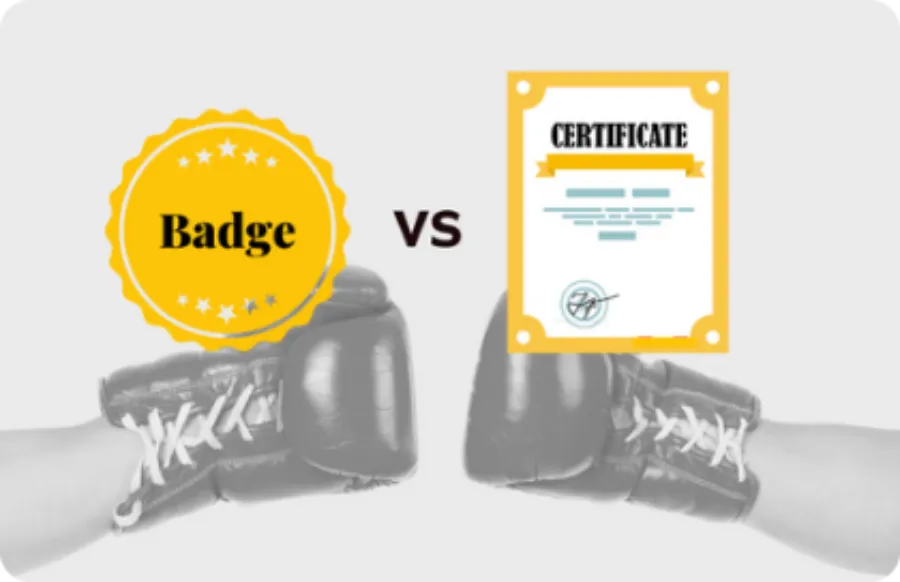
Don’t trust the digital badges. Gold Supplier, Verified Supplier, and Diamond Member are mostly paid membership tiers — they prove a company legally exists, not that it manufactures seriously. A trader can buy a premium membership; a factory can’t buy a clean third-party audit. We see this nearly every time we verify.
To find the truth, download and read the uploaded third-party audit report, not the thumbnail. When you read one, check:
- Agency and date: who audited, when, and is it still within validity.
- Equipment list in the body: does it name specific injection-molding machines, SMT lines, or CNC models and quantities.
- Registered name vs bank beneficiary: they must match exactly; a mismatch is your biggest red flag.
- Floor area and line count: a small room can’t hold ten large CNCs.
- Dedicated QC headcount: if a factory claims strict quality control but lists zero QC staff, walk away.
What each badge actually confirms — here are the three platforms’ verification programs aligned so you can see what you get and what you don’t:
Scope note: this table is a summary of each platform’s published verification program; confirm against the live platform page and the individual report.
| Platform | Badge / tier | What you actually get | What you don’t | What to check in the report |
|---|---|---|---|---|
| Alibaba | Gold Supplier | Company exists + history (paid) | Quality guarantee, manufacturer status | Agency / date / equipment list |
| Alibaba | Verified Supplier | Some include a third-party on-site audit | Not all did an on-site audit | Report body, not a thumbnail |
| Made-in-China | Assessed / Audited | Tiered verification; some tie to the business registry | Product quality guarantee | Who assessed, when, coverage |
| Global Sources | Online profile | Export / compliance capability | Not necessarily on-site verified | Whether they exhibited / show verification record |
For a systematic screening process, see our guide to finding reliable suppliers in China. Badges are a starting point; the audit report PDF is the evidence.
3. Payment protection is only as good as your purchase order

Buyers treat Alibaba Trade Assurance and Made-in-China Secured Trading as magic shields. They aren’t. Global Sources’ built-in transaction layer is clearly weaker. To be fair, platform escrow only works when your paperwork is airtight — protection is equal to how measurable your order document is.
The single most important thing to remember:
- Put measurable specs in the PO, not “good quality.” If you write “high quality” and the factory ships junk, the mediator will likely rule the factory delivered what the contract said.
- Put a bilingual spec sheet into the platform message center / escrow portal as early as possible, so a dispute is judged against your exact tolerances rather than a vague phrase.
- Keep an evidence stack: signed PO, spec sheet, chat logs, timestamped defect photos, and an inspection report on a written AQL plan.
- Don’t miss the inspection window. If you release a shipment without a third-party inspection, protection largely disappears once the goods leave port.
We recommend using a written sampling plan — like ISO 2859-1 AQL — and getting a passing report before you pay the balance. For who bears which shipping risk, get Incoterms in writing before your first payment. Coverage and limits change, so confirm the current terms before you rely on them:
- Alibaba Trade Assurance — coverage, eligibility and exclusions
- Made-in-China Secured Trading — what it covers
- Global Sources supplier verification & trade-show program
Bottom line: Alibaba has the most complete escrow of the three, but only if your PO is legally airtight.
4. Speed to reply is not engineering depth

Fast replies ≠ good engineering. In technical electronics, the fast reply is often a sales rep and the useful one is often an engineer. When we advise clients on electronics sourcing, what matters isn’t “replied in minutes” — it’s whether the supplier can handle BOM, PCB revision control, firmware flashing, and test fixtures, and whether they flag a heat or tolerance risk in your CAD file before you pay for a sample.
The physical reality usually matches the digital one: factories that actually print boards have full SMT lines, incoming QC benches, and rework stations; the “fast” supplier selling from a showroom often subcontracts to a shadow workshop. Technical categories punish poor engineering communication fast. If you’re buying simple commodities, fast communication wins. If you’re buying custom electronics, you need engineers, not cheerleaders.
Bottom line: Global Sources usually does more of the engineering filter for you, at the cost of higher prices and no escrow.
5. The lowest quote is rarely the lowest landed cost

A cheap unit price isn’t a cheap landed cost. To compare fairly you account for ten cost lines: unit price, sample iteration, third-party audit, inspection, consolidation, freight coordination, compliance testing, defect/rework, delay, and your own management time.
The hidden costs we run into most are spec drift — quote low, approve a golden sample, then quietly swap expensive parts for cheaper substitutes on mass production. Plus packaging-noncompliance chargebacks, vessel delays, and unannounced subcontracting. Platforms lower your search friction; they don’t remove your qualification cost. Skipping a small inspection to save a few dollars frequently costs thousands in rework. Run that math on every order.
Key move: never accept a bare unit price. Demand a full BOM so you can see every line item and where a factory might cut corners. Low-complexity repeat orders can use lighter verification; custom, regulated, technical, or high-volume programs warrant an extra layer of local support.
6. Which platform fits which buying scenario
Swap “who wins” for “how your scenario combines.” Here’s the path we’d suggest:
| Your scenario | Start here | Cross-check / harden |
|---|---|---|
| Market test / private-label discovery | Alibaba | Small order + third-party audit |
| Consumer electronics needing compliance | Global Sources | Show / engineer conversation + certificate database check |
| Equipment / industrial parts | Made-in-China | Factory audit + L/C |
| Want an ex-factory price anchor | — | 1688 comparison (don’t pay suppliers directly in RMB from abroad) |
A lower 1688 price doesn’t automatically mean a trading company. The common reasons are four: domestic-spec product (no export requirements), no export certification or tax rebate, no export packaging or QC, and no English support or export logistics. To judge “is this a trader,” don’t just compare prices — check whether the business license scope includes manufacturing, whether they’ll share a factory/line video and an equipment list, and whether the tax ID and corporate bank account match the license. For 1688 with a China-side agent, see our guide to finding a sourcing agent in China.
Pros & Cons of Alibaba vs Global Sources vs Made-in-China
We evaluate on “mechanism + scenario” — whether it lowers your procurement risk and unit cost.
Alibaba
- Broad discovery: gather dozens of quotes quickly; multi-category speed.
- Low starting point: easier to run a small trial batch than the others.
- Escrow: Trade Assurance is a relatively complete layer when the PO has measurable specs.
- Traders: needs harder screening, or hidden costs climb.
- Paperwork is leverage: a vague PO makes disputes hard to win.
- Badge ≠ quality: paid membership and serious manufacturing are different things.
⚠️ Safety First: a badge only proves a company legally exists. One live video walkthrough of the production line before you fund escrow is the cheapest line of defense.
Global Sources
- Technical depth: handles engineering questions; stronger export and compliance docs.
- Compliance-ready: CE / FCC documents are usually on hand.
- Offline verification: Hong Kong shows let you meet suppliers.
- Payment risk: no escrow; usually T/T or L/C.
- Higher price / MOQ: not a fit for small, fast test orders.
- Slower replies: you often wait for an engineer, not a sales rep.
🧠 Expert Take: treat Global Sources as a “directory + shows” tool — real negotiating leverage usually happens offline.
Made-in-China
- Industrial focus: better fit for equipment, machinery, raw materials.
- Audit visibility: tiered verification, some tied to the business registry.
- Tooling escrow: Secured Trading can hold the mold / deposit until after inspection.
- Still needs on-site verification: tiered verification isn’t a substitute for your own or a third-party factory audit.
- Weak consumer coverage: finding general consumer goods is slower.
- Badge ≠ capability: paid tier labels don’t tell you actual capability.
Follow Our 10-step Protocol for Off-platform Verification
We never fund an order on a platform profile alone. This 10-step protocol turns “platform discovery” into a workable purchase.
Step 1: Verify the legal entity name against the business license
Match the English name to the official Chinese registration (business license) exactly.
Step 2: Match the bank beneficiary to the legal entity
Never send money to a personal account or a mismatched trading-company name; the payee must match the license exactly.
Step 3: Read the third-party audit PDF
Don’t look at badges; read the SGS / TÜV / BV report body for agency, date, equipment list, and QC headcount.
Step 4: Confirm factory address and capability
Request a live video walkthrough, or pay for an on-site audit.
Step 5: Approve a golden sample and lock the spec
Produce a revision-controlled spec sheet with measurable tolerances — never “quality” or vague wording.
Step 6: Run independent compliance checks
Verify CE / RoHS / FCC in the official databases (FCC ID, EU NANDO) rather than trusting uploaded images.
Step 7: Place a pilot PO, not a full launch
Run a small batch first to test capacity, process, and communication.
Step 8: Conduct a pre-shipment inspection
Before the final payment, hire an independent inspection against a written AQL / ISO 2859-1 plan — see pre-shipment inspection.
Step 9: Validate packaging, labeling, and booking docs
Master cartons, shipping marks, and paperwork must be flawless before handoff, or you risk port delays.
Step 10: Grade the first shipment
Compare the actual landed cost against the BOM, record lessons, then decide on repeat volume or price negotiation.
How This Page Relates to Our 11-Platform Directory
This page is a mechanism deep-dive on the three big platforms. For a horizontal directory of 11 sites (including 1688, DHgate, Yiwugo and more) and a quick-reference table, see our China wholesale websites guide. The two are complementary: that page gives you the landscape; this page gives you the mechanism.
People Also Ask
1. Is Alibaba cheaper than Made-in-China?
Not categorically. Alibaba’s quote pool contains many traders and lower-spec products, which makes it look cheaper; once you find a real manufacturer on Made-in-China for industrial goods, the unit price can actually be lower. Compare using the same BOM and the same Incoterm.
2. Is it safe to buy directly from Global Sources?
You can, but protection is clearly weaker than Alibaba escrow. For large or regulated orders, use a contract plus a letter of credit, get an AQL / ISO 2859-1 inspection report before payment, and confirm the payee matches the license.
3. Can individuals buy from Made-in-China, or is it only for businesses?
Individuals can register, but that doesn’t mean it suits retail. Made-in-China is oriented toward enterprise procurement, with generally higher MOQs. For a single consumer item or two, a retail channel like AliExpress is a smoother path.
4. What is the main difference between Alibaba and Global Sources?
Breadth vs. precision. Alibaba has a bigger pool and more categories, but demands harder screening; Global Sources has a smaller, export-focused pool with stronger technical depth and compliance documentation, but higher prices, no escrow, and higher MOQs.
5. Will Alibaba Trade Assurance refund me if I get scammed?
Only if your PO states measurable technical specs. The mediator will uphold your exact tolerances when they’re written down (e.g., material and a tear-strength minimum); a vague “good quality” clause rarely wins.
6. 1688 shows a much lower price — is that supplier a trading company?
Not necessarily. Lower 1688 prices commonly come from domestic-spec product, no export certification or tax rebate, and no export packaging or QC. To tell if it’s a trader, check whether the business license scope includes manufacturing and whether they’ll share a factory/line video, an equipment list, and a tax ID and corporate account that match the license.
7. Do Verified / Gold Supplier badges guarantee a real factory?
No. These are mostly paid membership tiers that confirm the company legally exists. To confirm “genuine manufacturing with owned equipment,” you have to read the third-party audit report body, not the badge.
Method, Data Sources & Update Log
Scope / methodology: this page is mechanism and qualitative judgment from our hands-on sourcing work in Shenzhen. Objective figures — scale, MOQ, verification coverage — point to the platforms’ official programs and public standards rather than to our own internal percentages. We don’t publish audit numbers nobody can verify; those tend to damage trust more than an honest “we don’t know” does.
Official verification programs (citable entities):
- Alibaba.com — Trade Assurance and supplier verification
- Made-in-China.com — verified-supplier / assessment program
- Global Sources — supplier verification and trade-show program
- ISO 2859-1 — AQL sampling standard
Last reviewed: 2026-08-31. This page was revised on 2026-08-31: removed unverifiable audit figures and anecdotes, reworked the content around mechanism and scenario paths, added a badge comparison, a 1688 reference, and a payment-protection explainer, and added HowTo and FAQ structured data.
Author / disclosure: written by Sharline Shaw, founder and lead sourcing consultant at LeelineGroup. We receive no kickbacks from any platform; audits and inspections are paid for and carried out independently by our team.
More Sourcing Resources
- Quality control in China
- Product certification
- Supplier management
- Sourcing from China
- How to verify suppliers
- Red flags of Chinese suppliers
If you’re still deciding between Alibaba, Global Sources, and Made-in-China, the safest move is to verify the supplier before you send a single dollar. Platform badges can help you start, but they should never replace off-platform verification, factory audits, and sample checks.
Get a free sourcing plan for your product and let our team run the verification on your shortlist before your next order ships.

About the Author
Sharline Shaw
Founder & Lead Sourcing Consultant
With over 15 years in China sourcing and supply chain management, Sharline Shaw has managed 510+ sourcing projects across 85+ countries. Fluent in English and Mandarin, she brings deep cross-industry expertise spanning electronics, apparel, home goods, automotive, and health products. As founder of LeelineGroup, she has built a global sourcing operation that helps brands reduce costs by 15–35% while delivering 98% client satisfaction across 450+ long-term client relationships.
Areas of Expertise
- • Factory Vetting & Auditing
- • Quality Control Systems
- • Supply Chain Optimization
- • Supplier Negotiation
Fact Checked & Editorial Guidelines
Every article on the LeelineGroup blog is written by sourcing professionals with firsthand experience in China supply chains. Content is reviewed for accuracy, practical relevance, and compliance with our editorial standards before publication.
Your trust is important. Learn more about our Fact Checking Process and Editorial Policy.