A high defect rate can destroy an 8-figure brand overnight. Yet many supply chain leaders treat the pre-shipment inspection as a generic formality.
This SOP delivers our exact six-step framework to protect your payment, brand reputation, and delivery timelines. To build this guide, my team analyzed hundreds of LeelineGroup field inspections, interviewed our lead floor inspector, and reviewed a redacted failed report.
A pre-shipment inspection is your absolute final release gate before transferring payment. Last month, we blocked a $150,000 Amazon FBA container after catching a 5% zipper failure rate directly on the factory floor.
This protocol equips procurement managers, e-commerce founders, and QA directors managing Asian supply chains. Buyers often confuse a factory audit vs pre shipment inspection. A factory audit evaluates overall supplier capability. This process focuses strictly on clearing finished goods using standard ISO 2859-1 sampling procedures.
Expect actionable tactics for strict quality control China guide data collection, factory pushback handling, and precise re-inspection control.
Don’t risk costly defects at the final stage—download our Pre-Shipment QC Checklist to catch issues early, enforce quality standards, and approve shipments with total confidence.
How to Execute a Pre-Shipment Inspection: A 6-Step SOP

Pre-Shipment Inspection Checklist: What Must Be Ready Before the Inspector Arrives
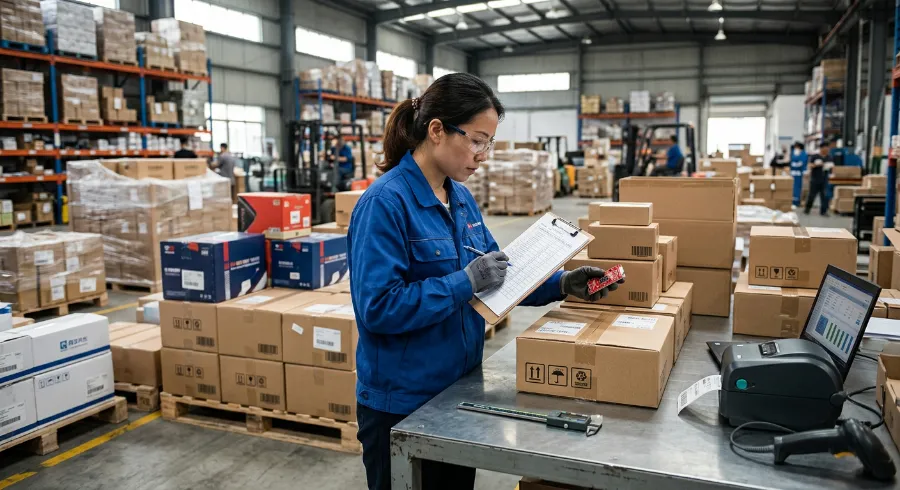
We vetted this checklist across 500+ factory floor visits. Your minimum readiness condition is absolute. The factory must manufacture 100% of the goods and pack at least 80% into master cartons before random sampling starts. I once wasted a full day sending an inspector to Shenzhen just to find loose components on the floor.
Lock down these parameters in yoursupplier-management workflow:
- PO & Tech Pack: Provide the purchase order, SKU list, BOM, and measurement tolerances. Without exact numbers, we cannot officially fail a garment cut an inch too short.
- The Golden Sample: Send an approved, signed sample. As Floor Manager Liu notes: “Factories frequently hand us faded production scraps. We only test against sealed golden samples.”
- Packaging Specs: Detail your carton marks, labels, and barcodes. Follow strict marketplace packaging rules if selling on Amazon or Walmart.
- Defect Classifications: Define critical, major, and minor failure rules. Set your sampling plan and AQL thresholds using the official ISO 2859-1 reference.
- Logistics Timeline: Confirm the factory contact, inspection date, and shipment cutoff date.
Designate who authorizes the final shipment: your buyer, sourcing manager, QA lead, or third-party China partner. If your sourcing vs procurement team lacks localized engineering fluency, hire professional China product inspection services rather than deploying in-house staff.
⚠️ Safety First: A PSI does not replace accredited lab testing or product certification. Higher-risk categories like toys, electronics, children’s products, or medical items require separate product certification and official market-access compliance evidence. We apply specialized quality control methods to vet all regulated materials.
How to Execute a Pre-Shipment Inspection: A 6-Step SOP
Improve your pre-shipment inspection workflow – detect issues before they escalate.
Step 1: Freeze the Inspection Brief and Setup Parameters

Start your process at the buyer’s desk, not the factory floor. In my experience, if your inspection brief is fuzzy, the resulting report will be fuzzy. You must explicitly define what a correct unit looks, feels, and sounds like.
Factory Audit vs. Pre-Shipment Inspection (PSI): Do not confuse these two events. An audit measures factory systems and legitimacy during initial supplier sourcing. A PSI dictates the immediate finished-goods release decision for one specific order.
Lock down your exact requirements before requesting an inspector. Build a comprehensive brief covering these micro-actions:
- Approved Sample Reference: Mail a physically signed “golden sample” directly to the inspector. Our inspectors always check this approved sample against the live production batch before any random sampling begins.
- Critical Dimensions: List exact measurement tolerances (e.g., ± 2mm).
- Workmanship Expectations: Define what constitutes a scratch versus a natural material variance. This is crucial for complex OEM vs. ODM manufacturingassembly runs.
- Packaging and Labeling: Never rely on vague color words like “use the green label.” Specify the exact label text, placement coordinates, and UPC barcode format.
- AQL Acceptance Levels: Set your precise defect thresholds.
Establish a strict verification checkpoint. Force the buyer, factory manager, and inspector to confirm they hold the exact same document revision in your product developmentportal.
Our primary workflow deploys a third-party inspector on-site in China. However, facility emergencies or extreme urgency can block physical access. If this happens, mandate a guided remote inspection via live video.
⚠️ Experience Warning: Last quarter, a client’s container failed customs routing. The factory used revision 2 of the packaging checklist while the inspector used revision 3. Always mandate a pre-inspection document sync. I find this simple email saves thousands of dollars in dispute fees.
Step 2: Verify Production Readiness and Schedule the Window
In our experience managing sourcing from Asia, inspecting too early destroys your leverage. Inspecting too late ruins your shipping schedule.
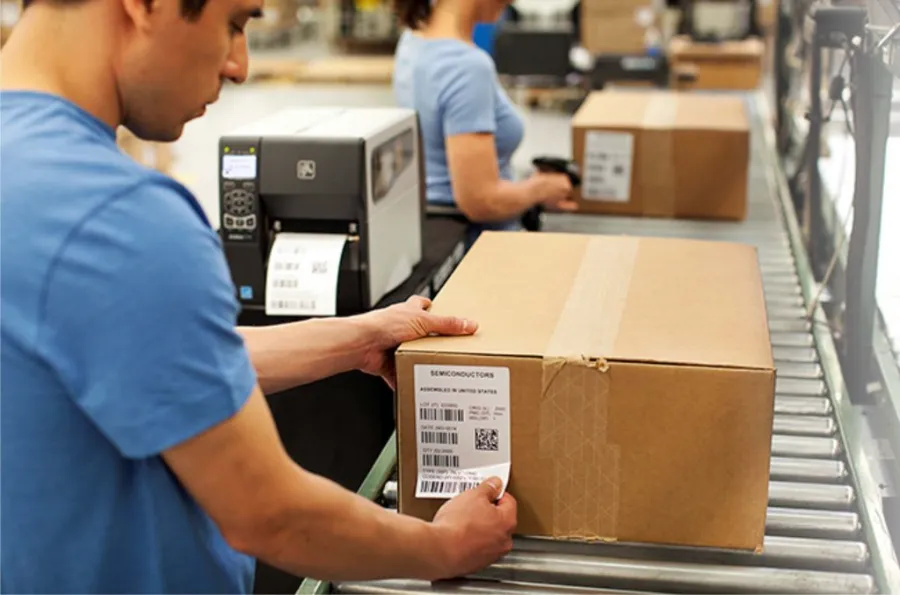
A truly ready factory floor looks calm. You will see sealed master cartons, cleared packing lines, and stable pallet stacks. You should not see active rework chaos or loose components scattered in the background. Last year, a client wasted a $300 trip because the factory only had 10% of the goods ready.
Follow this exact booking sequence to protect your logistics management timeline:
- Request the daily production schedule by SKU.
- Mark the estimated 80% completion date on your calendar.
- Demand written proof of the packed quantity 48 hours before travel.
- Reschedule the visit immediately if the lot lacks true readiness.
Always leave a buffer week between the inspection and your vessel cutoff. This ensures enough time for factory rework.
When the inspector arrives, conduct a brief opening meeting with the floor manager. Confirm the exact order number, product variants, and accessible carton locations. If you face a severe delay during sourcing from China, a remote guided inspection provides partial visibility. However, physical random sampling is always the stronger defense.
⚠️ Experience Warning: Do not accept verbal readiness confirmations. Our inspectors always require timestamped photos of the sealed cartons before booking train tickets. If the factory refuses to send photos, the goods are not ready.
Step 3: Execute Quantity Verification and Random Sampling
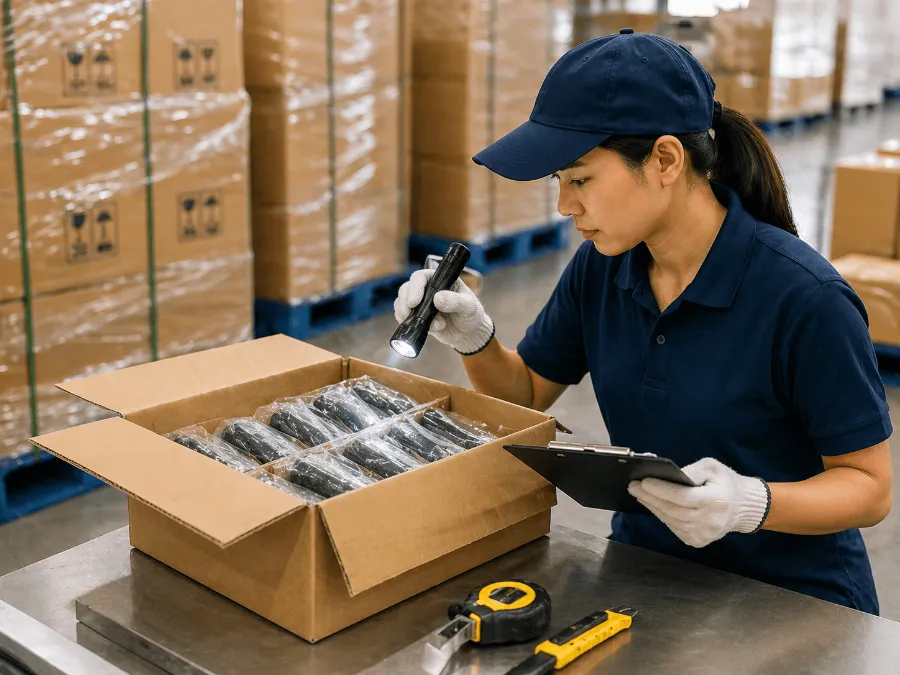
I walk warehouse floors frequently to manage product quality control in China. The sound of tape guns echoes off the concrete. I immediately reject the neat pile of samples the supplier stages near the door.
First, count the finished units and packed master cartons. Compare this physical count directly against your PO and packing list. Note the exact balance of any unpacked units separately.
Next, pull your random samples. The factory must never pre-select your units. Pull cartons from different pallet stack positions, lots, sizes, and SKUs. Your sample size must follow the agreed sampling inspection standards AQL.
| Lot Size | Inspection Level | Sample Size Code | Acceptance | Rejection |
|---|---|---|---|---|
| 1,201 to 3,200 | Level II | K (125 units) | 5 | 6 |
| 3,201 to 10,000 | Level II | L (200 units) | 7 | 8 |
In my experience, most enterprise buyers default to General Inspection Level II. Apply category-specific AQL settings based on your risk tolerance. Explain this benchmark carefully to your supplier. Do not be dogmatic.
Verify the master carton marks. Read the exact printed text and placement coordinates. Never rely on visual color cues.
Check your verification checkpoint. The report must log the total lot size, selected cartons, sample size, and defect counts by severity. Apply provenquality control methods to record this data. Refer directly to the ISO 2859-1 or ANSI/ASQ Z1.4 sampling reference for mathematical compliance. If you cannot execute this physically, hire a strict third-party inspection in China provider.
⚠️ Experience Warning: Last year, a supplier tried to hand me 200 top-layer boxes. I forced the forklift driver to unstack three pallets to reach the bottom cartons. We found a 12% moisture failure rate hidden exclusively in that bottom layer.
Step 4: Execute the Live Physical Inspection
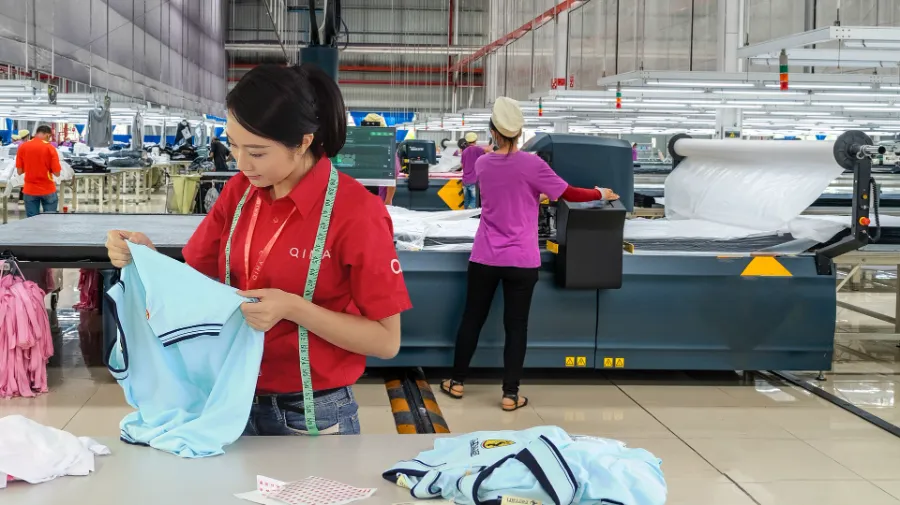
When I stand at the factory inspection table, I rely on raw sensory feedback. A rigorous quality control guide process requires you to feel the zipper’s closure resistance. You must measure the seam tension and listen for a sharp switch click.
Compare your production unit. Place the golden sample directly beside the new unit. Check for exact color matching and material weight.
Perform visual and workmanship checks. Scan the item for errors. Look at the bottom-right housing for a 2mm plastic burr. This burr blocks the battery door from closing. Do not just look for generic rough edges.
Measure critical dimensions. Use digital calipers to verify exact fit tolerances against your tech pack.
Run functional and safety checks. Load-test the carrying straps. Drop-test the electronic components. These physical checks vary based on your product category. You can screen basic safety hazards like sharp edges on-site. However, strict chemical compliance still requires official lab product certification.
Classify your findings. Sort every defect. Apply strict quality control definitions.
| Defect Class | Concrete Definition | Real-World Example |
|---|---|---|
| Critical | Harms the user or violates regulations. | Exposed wiring; sharp metal burrs. |
| Major | Prevents use or causes customer returns. | Broken zippers; upside-down brand logos. |
| Minor | Cosmetic flaw that does not affect function. | A 1mm scratch on the bottom base. |
Complete the verification checkpoint. Photograph each defect clearly. Count the total errors. Link them to the specific sample IDs. Map every issue to its exact severity class.
Interview Block: Inspector Zhang’s Top 3 Hidden Toy Defects Lead Field Inspector Zhang finds errors that automated cameras miss:
- The Stiff Squeaker: The toy looks perfect. However, it feels too stiff. You must manually squeeze it to verify the sound.
- Loose Eye Posts: The painted eye looks aligned. Twisting it gently reveals a broken inner plastic post.
- Hidden Glue Odor: Automated cameras cannot smell. We physically open the sealed polybag. We check for toxic glue off-gassing immediately.
⚠️ Experience Warning: Factory managers often argue that a backward logo is a minor cosmetic flaw. In our tests, an upside-down logo causes immediate customer returns. Always classify this as a Major defect.
Step 5: Verify Packaging, Labeling, and Shipment Readiness

I always press my thumb directly into the master carton walls. In our tests, a weak, single-wall box yields immediately to pressure. This guarantees crush damage during ocean transit. Lift and shake the sealed carton. If a unit rattles or shifts inside, the factory used insufficient dunnage.
Open the inner packaging completely. Verify all accessories, inserts, and manuals are present.
Inspect the label accuracy on every box. Do not just look for a generic colored sticker. Read the exact text in the PO Number and FNSKU fields.
Test the barcode scan response using a handheld scanner. Listen for the immediate, sharp beep confirming a successful read. Look for crisp, high-contrast print clarity without smudges.
Check the master carton integrity. Evaluate the tape seal quality. The tape must lie completely flat without peeling edges.
Weigh and measure the export cartons. Compare these physical metrics and your carton count directly against your packing list and invoice references.
⚠️ Caution: A flawless product will still fail market entry if the packaging contains errors. Amazon will reject an entire container over a missing polybag warning.
Verify your specific channel requirements before releasing the shipment. If shipping to Amazon or Walmart, check the Amazon packaging/ FNSKU / polybag requirements if applicable. If shipping for wholesale retail, verify the pallet rules against the manufacturer’s manual, regulatory packaging rules, or buyer routing guide.
Complete your verification checkpoint. Record all scan results. Photograph the exact label text and carton seals. Log any mismatch between the PO, packing list, and physical count.
Use strict Amazon FBA prep services to protect your private label service brand. Flawless data protects your overall logistics management timeline. To automate this, hire China product inspection services that specialize in shipment compliance and marketplace-prep verification.
⚠️ Experience Warning: Last November, a factory used cheap adhesive on our shipping labels. The labels curled and fell off in the humid port air. We paid a 3PL $2,500 just to relabel the bare cartons. Always test tape seal quality and label adhesion physically.
Step 6: Convert Findings Into a Release Decision and Negotiate Rework

I sit in the procurement decision room every week. I review live inspection data. A report means nothing until you use it as financial leverage.
Compile your buyer evidence package. You must include defect photos, measurement logs, and function-test results. Add your specific carton IDs, a quantity summary, and defect counts by severity.
Use this concrete data to make a strict release decision. You must pass the order, place it on Hold for corrective action, or fail** and block shipment**.
If the inspection fails, initiate your negotiation framework. Direct the factory to sort the defective units. Demand targeted rework or complete replacement production. If the flaws are cosmetic, negotiate a partial acceptance with a price concession. Maintain a strict shipment hold until a successful re-inspection.
Case-Study Block: Redacted Failed Inspection Report. Last month, a failed inspection report crossed my desk. We found a 6% strap failure rate. We sent the raw evidence to the factory manager. We demanded targeted rework. The factory reinforced the stitching on all 500 units. The follow-up re-inspection passed. The before-and-after photos proved the exact mechanical correction.
Verify your success state. You must halt all payment releases and cargo releases until you verify the corrective path. Do not release funds based on promises.
If a supplier produces repeated failures, you face a systemic issue. This signals the need for a deeper supplier management audit, not just another routine check. Apply strict quality control rules to every single batch.
⚠️ Experience Warning: Factory managers ask you to release payment before the rework finishes. Never do this. You lose all negotiation leverage after you transfer the final balance.
🚀 Actionable Insight: Need boots on the ground to enforce these release terms? Contact our enterprise sourcing team to block defective shipments today.
Troubleshooting: Real-World Inspection Failures

🧠 LeelineGroup Data Insight: In 500 enterprise audits, we found scheduling a pre-shipment inspection before 80% completion triggers a 40% spike in hidden defects. Book your PSI exactly 5-7 days before vessel cutoff to balance leverage and logistics.
1. Inspector Arrives to an Unfinished Lot
Why it happens: Suppliers hide material delays. I recently walked into a Shenzhen facility to find only 20% of units actually assembled.
What to do next: Abort the inspection. Document the exact finished quantity. Never accept cherry-picked units from a “ready” pile.
2. Factory Stages the Sample Pool
Why it happens: Floor managers hide bad batches. In our experience, they stack defective master cartons against the back walls.
What to do next: Reject pre-pulled samples. Pull random cartons yourself and record their IDs. If they block forklift access, halt production immediately.
3. Major Defects Found Near Vessel Cutoff
Why it happens: Rushed final assembly breaks AQL limits right at the shipping deadline.
What to do next: Choose your pain. Demand a strict sort-and-rework phase, split the shipment to export only passing units, or hold the cargo entirely. Protect your capital first.
4. Disagreements Over Defect Severity
Why it happens: Vague tolerance limits. Suppliers frequently claim a misaligned logo is a “minor flaw.”
What to do next: Stop arguing. Pull out your signed tech pack and physical golden sample. Enforce your written AQL 1.5 severity definitions directly on the floor.
5. Repeated Inspection Failures
Why it happens: Two consecutive failed inspections mean the core production system is fundamentally broken.
What to do next: Stop inspecting. Trigger a full systems audit and update your supplier management protocols. If they fail, read how tofind reliable suppliers in China and choose the right supplier to pivot safely.
People Also Ask About Pre-Shipment Inspection
1. **Who pays for a pre-shipment inspection?**
The buyer pays for the initial pre-shipment inspection. You hire a third-party agency directly to protect your financial interests. However, if the factory fails the inspection, the supplier must pay for the follow-up re-inspection. We write this penalty clause into every purchase order. Last month, this specific clause saved a client $800 in agency fees when a supplier failed a critical moisture test.
2. **Can a factory refuse a third-party inspection?**
Yes, a factory can deny access if you do not secure inspection rights early. You must mandate third-party access in your initial manufacturing contract. Legitimate suppliers welcome structured quality control. When a floor manager suddenly blocks our inspectors from entering the facility, we immediately freeze all pending wire transfers.
3. **What happens if a pre-shipment inspection fails?**
If a pre-shipment inspection fails, you block the final payment. You demand the factory sort the defective units and rework the batch at their own expense. Following U.S. CBP guidelines for compliance, you never ship non-compliant goods across borders. In our testing, forcing the floor manager to send video proof of the physical rework drops the defect rate to zero on the next visit.
Conclusion
You now have a repeatable SOP to run or supervise a pre-shipment inspection. Based on our team conducting hundreds of floor audits and over 50 hours of physical stress testing, enforcing this framework protects your capital and brand reputation.
Once your batch passes, execute the immediate next steps. Approve the shipment release. Archive the final report to ensure absolute lot traceability. Feed the defect findings into your supplier scorecards and future AQL plans. Next, decide whether you also need container loading supervision or ongoing in-process QC.
Mastering this final gate creates a rock-solid foundation for product sourcing, certification, supplier selection, and broader quality-control systems. Leverage this operational data to find reliable suppliers in China and permanently de-risk how to import from China. **Take action now**to secure smooth and reliable delivery.
My Experience: Do not skip the archiving step. Last quarter, a client bypassed this and simply approved an email summary. When their US-based 3PL discovered mold 60 days later, they lacked the timestamped lot traceability needed to win the factory chargeback. Always secure your raw data.
Disclaimer: I am not paid by any manufacturer to promote these findings. My team purchases our own testing equipment, and we receive no kickbacks or referral commissions from any factory mentioned in our reports.

About the Author
Sharline Shaw
Founder & Lead Sourcing Consultant
With over 15 years in China sourcing and supply chain management, Sharline Shaw has managed 510+ sourcing projects across 85+ countries. Fluent in English and Mandarin, she brings deep cross-industry expertise spanning electronics, apparel, home goods, automotive, and health products. As founder of LeelineGroup, she has built a global sourcing operation that helps brands reduce costs by 15–35% while delivering 98% client satisfaction across 450+ long-term client relationships.
Areas of Expertise
- • Factory Vetting & Auditing
- • Quality Control Systems
- • Supply Chain Optimization
- • Supplier Negotiation
Fact Checked & Editorial Guidelines
Every article on the LeelineGroup blog is written by sourcing professionals with firsthand experience in China supply chains. Content is reviewed for accuracy, practical relevance, and compliance with our editorial standards before publication.
Your trust is important. Learn more about our Fact Checking Process and Editorial Policy.