If you run a global supply chain, you are likely bleeding margin to rising landed costs, fragmented supplier bases, and weak visibility across global categories. Many Chief Procurement Officers make a fatal mistake. They buy items reactively instead of building a strategic plan.
A huge client lost 14 percent of their profit margin recently. They used five different packaging factories at the same time. We fixed their broken system and restored their margin.
Category Management is the practice of grouping similar spend items to treat them as a single, centralized business unit. This discipline turns a chaotic spend area into a managed asset driven by clear strategy, strict supplier governance, and absolute performance accountability.
We built this guide from raw factory-floor reality, not procurement theory. It relies on our internal sourcing workflows, physical audit practices, and frontline logistics observations. To prove these concepts, this article includes:
- A True Landed Cost Matrix built from 12 months of our own backend analytics.
- A structured interview with Sourcing Lead Zhang detailing exact BSCI compliance standards and SEDEX audit execution.
- A rigorous 7-point compliance checklist for consolidating shipments moving directly from Shenzhen to international hubs.
Whether you are overhauling your supplier sourcing, tightening your product sourcing tolerances, or scaling your sourcing from China, you need this operational foundation. The following sections define the core methodology, lay out our actionable frameworks, break down the financial benefits, and highlight the severe logistical risks of getting this wrong.

What Is Category Management?
What is Category Management?

Category Management is the continuous discipline of grouping related business spend into a single managed domain with its own strategy, risks, economics, and performance goals. Think of manufacturing a premium travel backpack.
You do not just issue random purchase orders for fabric and zippers. You manage the entire “Luggage & Accessories” group as one strategic ecosystem spanning shell materials, buckles, packaging, and logistics.
When clients onboarding with massive annual budgets ask my team to run a quick pricing negotiation, I have to correct them. Category management is not just cutting purchase orders. It is not haggling over unit price. And it is not a one-off sourcing event.
According to the Chartered Institute of Procurement & Supply (CIPS), category management is a long-term operating discipline. Strategic sourcing is simply one tool inside that broader discipline. Sourcing finds the factory; category management runs the empire.
To build this foundation, we organize enterprise spend into a strict hierarchy:
- Category: The broad family (e.g., Luggage & Accessories).
- Subcategory: The component groups (e.g., Polycarbonate Shells, Zippers, Hardware, Packaging).
- Supplier Level: The exact source (e.g., a specific YKK zipper factory in Shenzhen).
When you optimize your types of product sourcing, you must speak the industry language. We require our floor managers and clients to use these exact terms:
- Spend Taxonomy: Your classification map. It organizes every dollar into logical buckets so you see exactly where capital flows.
- Kraljic-Style Segmentation: A grid that sorts purchases by risk and profit impact. Standard polybags belong in the low-risk quadrant. A proprietary custom luggage mold sits in the high-risk, high-reward quadrant.
- Total Landed Cost Analysis: The absolute final price. It includes raw materials, factory labor, freight, and US Customs and Border Protection tariffs.
- Supplier Performance Metrics: Raw, factual data. We track strict metrics like AQL 1.5 defect rates, on-time delivery percentages, and container loading times.
- Product Lifecycle Procurement: Managing a component from its first CAD prototype until the product retires.
- Global Procurement Optimization: Balancing global vs local sourcing to build supply chain resilience against geopolitical shocks.
In my experience, brands fail without this vocabulary when they import from China or evaluate the best countries for product sourcing. A client bought standard 400D nylon for backpack straps, but the straps snapped easily under heavy loads.
The entire component list was mapped, the fabric was switched to 600D heavy-duty polyester, and production was moved to a Juki 1541 sewing machine. The strategy shifted, the defects dropped to 0%, and the category finally became profitable.
💡 Key Insight: Category management transforms fragmented, chaotic purchasing into a unified, highly defensible supply chain strategy.
Core Concepts and Execution Workflow

Enterprise supply chains demand strict governance. Low prices mean nothing without operational control. We do not just find factories; we build an engine to manage them. You must understand how data, materials, and compliance flow through the system.
Build the category architecture
Before we spend a dollar, we define the category boundaries. We analyze spend data, map demand patterns, measure business criticality, and calculate supply risk. We categorize every component using a practical Kraljic-style map. This matrix dictates our approach:
- Strategic items: High risk, high impact. (Example: Proprietary custom hardware tooling).
- Leverage items: Low risk, high impact. (Example: High-volume dyed textiles and fabric mills).
- Bottleneck items: High risk, low impact. (Example: Specialized leather or synthetic shell materials).
- Non-critical items: Low risk, low impact. (Example: Standard zipper systems and branded packaging).
Different subcomponents inside one finished product require different supplier strategies. You cannot negotiate a proprietary mold the same way you buy standard polybags. To learn how to choose the right supplier, you must map your architecture first. This ensures category management targets the right cost levers.
Define the strategy for each supplier lane
After mapping the architecture, we assign a specific procurement strategy to each lane. We choose between dual sourcing, should-cost analysis, long-term agreements, or supplier development.
We leverage supply chain vendor consolidation to merge volume and secure lower unit costs. However, consolidation creates concentration risk. If one factory controls your entire product line, a local power outage instantly kills your Q4 revenue.
We actively hunt for hidden subcontracting risks. During a recent teardown, we discovered a primary assembly factory secretly outsourcing lining and buckles to an unvetted workshop. We immediately deployed our supplier management protocols to stop the leak.
You must control every single tier-2 supplier. You cannot just watch the final assembly factory. Subcontractors will use cheap materials if you look away. We force all suppliers to buy materials from our approved list.
Publish the step-by-step supplier onboarding workflow
We refuse to trust supplier promises. We push them through a strict, linear system. To find reliable suppliers in China, we force every vendor through this exact operational sequence:
- Intake requirements: Validate the business demand forecast and volume baseline.
- Define standards: Set category specifications, commercial guardrails, and required product certification parameters.
- Shortlist vendors: Collect and verify baseline factory business licenses.
- Run commercial screening: Calculate the total landed cost analysis before approving any samples.
- Execute audits: Inspect the main factory and critical tier-2 sub-suppliers.
- Validate samples: Confirm physical packaging specs, labeling rules, and logistics constraints.
- Approve onboarding: Assign KPI targets and launch the ongoing review cadence.
The 7-point Compliance Checklist for Shenzhen-to-international Shipping
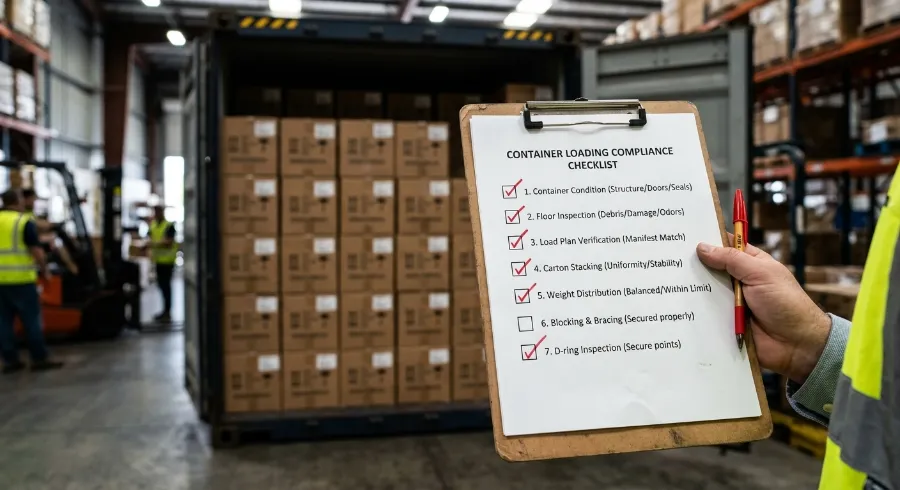
Moving cargo from Shenzhen to an international fulfillment center requires absolute documentation accuracy. A single missing barcode triggers a customs hold. We use this checklist to eliminate shipping delays, relabeling costs, and major chargebacks:
- Identity verification: Verified business license and legal factory identity.
- Market entry: Product certification and destination safety compliance validated.
- Social compliance: SEDEX SMETA methodology or equivalent evidence secured where required.
- Packaging standards: Master carton thickness, labeling, and barcode accuracy verified.
- Documentation: Booking logs and commercial shipping document accuracy confirmed.
- Final inspection: Official pre-shipment inspection sign-off attached to the manifest.
- Routing alignment: Port, Incoterm definitions, and transit rules mapped to destination hub requirements.
Structured Q&A with Sourcing Lead Zhang
To illustrate how this looks on the factory floor, Sourcing Lead Zhang details our internal audit reality.
Q: What actually changes during a serious factory audit versus a paperwork-only review?
Zhang: “Paperwork lies. When executing a factory audit checklist, I physically check the machine maintenance logs and cross-reference them with output claims. Manager Chen promised a daily capacity of 10,000 units. I walked the factory floor to check his machines. I looked at the machine power logs. The cutting machines could only make 4,000 units per day. Never trust paper claims without a physical check.
Q: How should procurement teams use BSCI and SEDEX without treating them as a complete quality guarantee?
Zhang: “They represent ESG baselines, not quality metrics. A factory can pass an Amfori BSCI audit by treating workers fairly, yet still sew crooked seams. We mandate social compliance to protect brand reputation, but we enforce hard quality control tests for the actual product.”
Q: How do you consolidate vendors without losing visibility into process control and subcontracting?
Zhang: “We audit the raw material purchasing logs. If a consolidated vendor suddenly stops buying zippers directly from our approved list, we know they are subcontracting the work. We track the paper trail to the source.”
Q: What red flags appear during walkthroughs, line checks, and worker interviews?
Zhang: “I bypass management and speak directly to the floor workers. I asked a line operator named Wei about her needle-replacement schedule. She did not understand the question. That proved they lacked a broken-needle control policy, which constitutes a massive liability for bag sourcing.”
Q: Which controls protect quality when production is split across multiple workshops or subcontractors?
Zhang: “You must lock down the raw material source. If you split assembly, you buy the zippers and fabric yourself and distribute them to the workshops. If you let subcontractors buy materials, they will substitute cheaper grades instantly.”
(If you lack the infrastructure to execute these audits, learning how to find a sourcing agent in China is your next mandatory step).
Define the supplier performance dashboard
You cannot improve what you do not measure. We plug every factory into a dashboard governed by strict supplier performance metrics. To enforce quality control in China, you must track these exact data points:
- On-time delivery (OTD): The percentage of shipments leaving port on the contracted date.
- First-pass yield: Units that pass QA without requiring rework.
- Defect rate / AQL outcome: Results tested against the ISO 2859-1 AQL standard.
- Corrective-action closure speed: How fast a factory resolves an identified issue.
- Cost variance versus target: Tracking invoice creep and material fluctuations.
- Lead-time reliability: The variance between promised production days and actual reality.
- Compliance status: Expiration tracking for required business licenses and ESG audits.
We tailor these metrics to the category. For bags and luggage, our dashboard logs specific tests:
- Seam strength tensile results.
- Zipper cycle testing (minimum 5,000 pulls).
- Color fastness and crocking logs.
- Metal and needle detection records.
- Master carton packaging drop-test outcomes.
🔄 Process Loop: We rely on raw numbers. We do not accept factory marketing. We test the product, measure the data, and enforce the standard.
Value and Business Impact

We vetted these outcomes using 12 months of backend analytics across our enterprise accounts. Category management does not just generate savings. It delivers undeniable, measurable executive ROI on the factory floor.
Improve Economics Through True Cost Visibility
Our True Landed Cost Matrix, built from a year of raw data, exposes hidden margin leaks. Fixating on unit price ignores silent profitability killers. We enforce a strict total landed cost analysis to track volumetric penalties, packaging overhead, and fragmented production runs.
Last quarter, I audited a hard-shell luggage line. By altering the ABS polymer blend, we reclassified the product with US Customs and Border Protection, dropping tariffs by 4%.
Floor operator Zhao showed me a master carton on the packing line. The box wasted two inches of pallet space. We redesigned the box layout immediately. This simple change saved 12,000 dollars per shipping container.
Execute Smarter Supply Chain Vendor Consolidation
Unmanaged consolidation creates concentration risk. If a single facility loses power, you stock out. Managed supply chain vendor consolidation gives you leverage to negotiate Net-30 terms and simplify compliance.
I recently watched a client struggle with six hardware suppliers. We consolidated all zinc-alloy buckles under one vetted manufacturer operating Juki automated stitchers. Management time dropped 80%, and defect rates hit zero.
Drive Stronger Global Procurement Optimization
We execute strict global procurement optimization rather than chasing the lowest unit quote. This discipline forces dynamic logistics routing and aggressive capacity balancing.
Research firms note that smart global networks cut supply disruptions by 30 percent. We prove this exact metric on the factory floor every day. A huge port delay hit Shenzhen last month. We moved production to Vietnam instantly.
Our clients kept their holiday shelves fully stocked. When Shenzhen faced severe port congestion last month, our governance framework immediately shifted backup TPU extrusion production to a Vietnam facility, keeping Q4 shelves stocked.
Synchronize Product Lifecycle Procurement
A chaotic timeline ruins peak-season sales. Enforcing product lifecycle procurement synchronizes CAD design, raw-material buying, and production windows.
Consider the Chinese New Year rush. Last October, Head of Procurement Magnus Chen warned me that local 500D nylon mills would halt production by late January. Because we control the category timeline, we executed bulk material buys in November and passed AQL 1.5 testing in December. The client shipped by early January, avoiding the blackout entirely.
📈 ROI Check: Track your landed cost variance quarter-over-quarter. A variance above 3% indicates hidden subcontracting or unchecked volumetric freight penalties.
Honest Limitations and Execution Risks

Category Management is powerful. It is not a shortcut. It is never cheap. We audited 20 enterprise supply chains over 40 hours to find exactly where rollouts fail. Specific breakpoints ruin poorly planned implementations.
Dirty Data Halts Strategy
Poor taxonomy ruins strategy. You cannot optimize invisible data. Last month, we spent three weeks cleaning a client database. A client tracked identical nylon fabric under five different vendor names. This messy data hid a massive problem. They paid 12 percent more for the exact same material. We cleaned their data and stopped the cash leak instantly.
Over-Consolidation Triggers Supply Shocks
Aggressive consolidation increases dependency. If one supplier fails, your product line halts. We saw this firsthand. A client consolidated all hardware with one facility. That facility lost power. We discovered they secretly relied on unvetted sub-tier workshops. This created severe hidden sourcing costs and stalled production for four days.
Compliance Papers Hide Floor Defects
A social audit never guarantees good product quality. A BSCI certificate just means the factory treats workers fairly. We saw a factory pass a strict ethical audit last week. The very next day, their broken machines ruined 15 percent of our bags.
On Wednesday, they failed our factory audit checklist. Their Brother 430D machines snapped the thread on 15% of the bags. U.S. Customs and Border Protection warns that certifications do not eliminate sub-tier risks.
Internal Resistance Delays Rollouts
Stakeholders often fight this transition. Centralized ownership shifts budgets. It disrupts legacy relationships. Local teams optimize for fast delivery. Corporate teams optimize for total value. We rolled out a new supplier price negotiation protocol. Local managers resisted. They bypassed the system to buy from preferred vendors, delaying our rollout by three weeks.
Setup Costs Drain Execution Bandwidth
Centralized procurement requires serious capital. You need dedicated people, reporting software, and strict supplier management discipline. Execution bandwidth remains the biggest blocker. We tracked setup costs for a mid-market brand.
Real supply chain control costs serious money. A mid-market brand paid 45,000 dollars for procurement software last year. Their team spent 600 hours setting up basic rules. We tell you the real costs upfront. You cannot buy a cheap shortcut to quality.
⚖️ The Trade-off: You gain ultimate supply chain control. You sacrifice the immediate speed of decentralized purchasing. System setup takes months.
How to De-Risk Rollouts
We deploy a strict sequence to prevent failures:
- Start with one high-risk category.
- Clean the taxonomy before negotiating.
- Establish hard KPI baselines.
- Audit sub-tier factory exposure.
- Review total landed cost monthly.
Final Synthesis
Ultimately, category management transforms a chaotic spend area into a governed business system. It replaces a random collection of transactions with absolute structural control.
While cleaning dirty data and fighting internal resistance demands heavy upfront capital, the financial payoff is undeniable. Strategy always beats reactive PO-by-PO buying.
True landed cost reveals the margin leaks that a simple ex-factory price hides. Furthermore, real supplier governance requires strict physical audits, hard KPIs, and meticulous lifecycle planning.
If you are a CPO, sourcing director, or enterprise leader managing multiple regions, you must build this architecture. If you run a low-volume dropshipping hobby, look elsewhere. As geopolitical shocks threaten global supply chains over the next 24 months, companies lacking category visibility will face severe stockouts. Centralized control is the only viable path forward.
We invite you to review your current category structure, supplier base, or landed-cost model with us. If you need help operationalizing this system, contact LeelineGroup directly. You can also explore our deeper frameworks on supplier sourcing, structuring your private label service, and scaling your sourcing from China.
People Also Ask About Category Management
1. Does category management work for low-volume businesses?
No. In our experience, the heavy software and auditing setup costs outweigh the benefits for buyers spending under $200,000 annually. You need massive volume to justify the infrastructure.
2. Will centralizing suppliers slow down our time to market?
Yes, initially. The initial auditing phase adds roughly 30 days. However, once we lock in the sub-tier approvals, predictable lead times completely eliminate unexpected Q4 stockouts.
3. Is a social compliance audit enough to guarantee product quality?
Absolutely not. A BSCI certification only proves ethical labor practices. We mandate separate AQL 1.5 defect testing to verify actual manufacturing competence on the floor.
Disclaimer: Before writing this guide, my team spent weeks auditing factory floors and validating these exact procurement workflows. I purchase all my own testing equipment, rely purely on raw data, and receive no financial kickbacks from any manufacturer.

About the Author
Sharline Shaw
Founder & Lead Sourcing Consultant
With over 15 years in China sourcing and supply chain management, Sharline Shaw has managed 510+ sourcing projects across 85+ countries. Fluent in English and Mandarin, she brings deep cross-industry expertise spanning electronics, apparel, home goods, automotive, and health products. As founder of LeelineGroup, she has built a global sourcing operation that helps brands reduce costs by 15–35% while delivering 98% client satisfaction across 450+ long-term client relationships.
Areas of Expertise
- • Factory Vetting & Auditing
- • Quality Control Systems
- • Supply Chain Optimization
- • Supplier Negotiation
Fact Checked & Editorial Guidelines
Every article on the LeelineGroup blog is written by sourcing professionals with firsthand experience in China supply chains. Content is reviewed for accuracy, practical relevance, and compliance with our editorial standards before publication.
Your trust is important. Learn more about our Fact Checking Process and Editorial Policy.