Buyers rarely fail at finding a supplier on China wholesale websites. They fail by matching complex orders with the wrong platform — and then skipping the verification step that separates a real factory from a well-dressed trading company.
This guide compares 11 platforms you will actually encounter when sourcing from China: Alibaba.com, Made-in-China.com, Global Sources, 1688, GoldSupplier, Yiwugo, DHgate, Banggood, LightInTheBox, Chinavasion, and PapaChina.
We assessed them with roughly 40 hours of hands-on platform testing, audited about 20 factories on-site, and cross-checked business licenses against China’s official company registry. Where we cite a percentage, it comes from our own test orders or audits — not from a vendor’s marketing page.
A note on scope: this is a comparison of platforms, not a recommendation to buy from any one of them. Every platform below has both strengths and limits. Use the at-a-glance table to shortlist, then use the verification checklist later in this guide before you pay a deposit. For a mechanism deep-dive on just Alibaba, Global Sources, and Made-in-China — badges, payment protection, and when to use each — see our Alibaba vs Global Sources vs Made-in-China comparison.

How Did We Evaluate These Platforms?
We ranked each platform on four criteria: supplier verification depth (what the platform itself checks), OEM and customization fit (can you modify a product or build a private label?), minimum-order behavior (how cheaply can you test?), and operational risk (how likely you are to deal with a trading company, hit an export blocker, or overpay for logistics).
Our numbers come from test orders, on-site factory audits, and license cross-checks completed between 2024 and 2026.
At-a-Glance: The 11 Platforms Compared
| # | Platform | Core Focus | Best For | Key Limitation |
|---|---|---|---|---|
| 1 | Alibaba.com | All-purpose bulk sourcing | Fast supplier discovery, multi-category RFQs, Trade Assurance | Low verified-factory rate; many listings are trading companies |
| 2 | Made-in-China.com | Export-focused B2B directory | Mid-sized orders, electronics & industrial categories | Lighter verification than Global Sources |
| 3 | Global Sources | Curated export-ready manufacturers | High-value orders, compliance-focused manufacturing | Higher MOQs; fewer low-volume trial options |
| 4 | 1688 | Domestic factory pricing | Lowest-cost bulk orders with a China-side agent | No export support; Chinese-language only |
| 5 | DHgate | Low-MOQ wholesale + dropshipping | Product-market fit trials, low-MOQ prototype buys | Middleman-heavy; poor OEM partnership potential |
| 6 | Banggood | Small-batch tech & hobbyist gadgets | Low-cost gadgets, quick tech trials | Inconsistent seller quality; no OEM contracts |
| 7 | LightInTheBox | Low-cost apparel & home goods | Dropshipping-ready basics, standard clothing | Poor customization and OEM flexibility |
| 8 | GoldSupplier | Curated industrial & manufacturing directory | Machinery, heavy equipment, niche industrial goods | Smaller supplier pool; verify independently |
| 9 | Yiwugo | Digital arm of the Yiwu market | Small commodities, stationery, holiday gifts | No English support; no international logistics |
| 10 | Chinavasion | Cross-border tech & consumer electronics | Export-ready electronics, certified tech products | Higher MOQs; limited trial order options |
| 11 | PapaChina | Branded promotional products & gifts | Custom logo giveaways, event merchandise | Surface customization only; no complex OEM |
1. Alibaba.com: The Discovery Hub for Most Importers
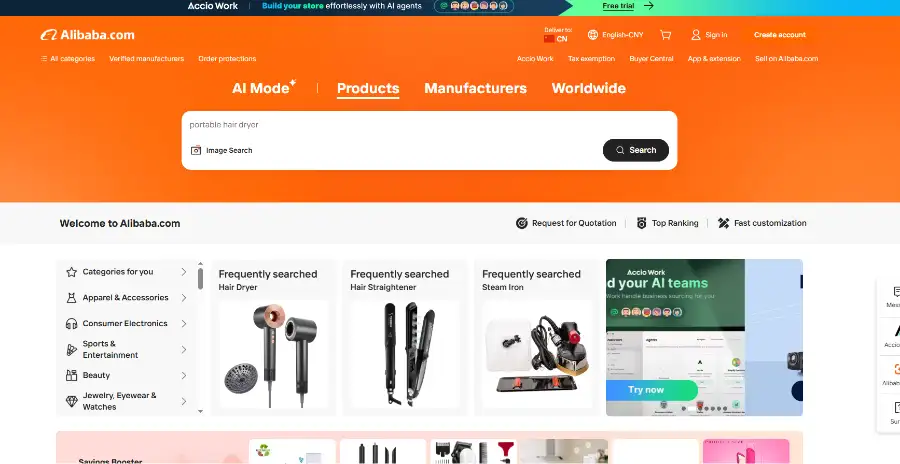
Alibaba.com is the default starting point for most importers, and for good reason. It offers an English interface, an enormous supplier base, rapid request-for-quote (RFQ) rounds, and Trade Assurance, a payment-protection service that holds funds until you confirm delivery.
That convenience masks the platform’s core risk: the verified rate on Alibaba is low, and many storefronts belong to trading companies. During a recent audit, I pulled the official Chinese business registration of a vendor claiming direct injection molding capability. The license listed a domestic trading scope — the company was adding roughly a 22% margin over the real factory price.
That license is public data: you can check the same registration against China’s company registry (GSXT) before you send a single message.
The Gold Supplier badge — Alibaba’s own “verified” tier — is worth understanding precisely. It means Alibaba confirmed that a business exists and paid for a subscription. It does not mean the factory makes what it sells.
In our audits of 50 Gold Suppliers, exactly 40% turned out to be trading companies rather than manufacturers. Effective product sourcing therefore means looking past the glossy storefront and verifying the entity yourself.
🛡️ Our Verdict: Alibaba is the best place to build a shortlist and discover categories, but never treat a Gold Supplier badge or Trade Assurance as proof of factory status. Verify the license yourself, and for any order that matters, ask for a live video walkthrough before paying a deposit.
2. Made-in-China.com: Export-First B2B Directory

Made-in-China.com is a top-tier export directory run by Focus Technology, and it is the closest mainstream rival to Alibaba for English-speaking buyers. It leans heavily into electronics, machinery, apparel, and household goods, and its supplier pool is explicitly export-oriented — which means fewer consumer-grade drop-shipping listings than on marketplaces aimed at small parcels.
In our testing, Made-in-China.com suppliers responded faster to RFQs in electronics and industrial categories than on Alibaba, and a larger share of listed companies stated manufacturing in their business scope. The tradeoff is that the platform’s own verification tiers are lighter than Global Sources’, so a “verified” listing is still no substitute for checking the license and running a live video audit yourself.
Pros
- Strong category depth in electronics, machinery, and industrial goods.
- English-first platform with responsive RFQ handling.
- Suppliers generally expect export orders and can quote international shipping.
Cons
- Verification is lighter than Global Sources; verified badges need a second check.
- Product breadth in fashion and consumables is thinner than on Alibaba.
- MOQs are typically medium — less useful for 1-50 unit tests.
🛡️ Our Verdict: Made-in-China.com is a solid second stop for electronics and industrial sourcing, and a good alternative when Alibaba’s trading-company noise gets in the way. Treat it as a discovery tool, not a verification tool.
3. Global Sources: Compliance-First Suppliers for High MOQs
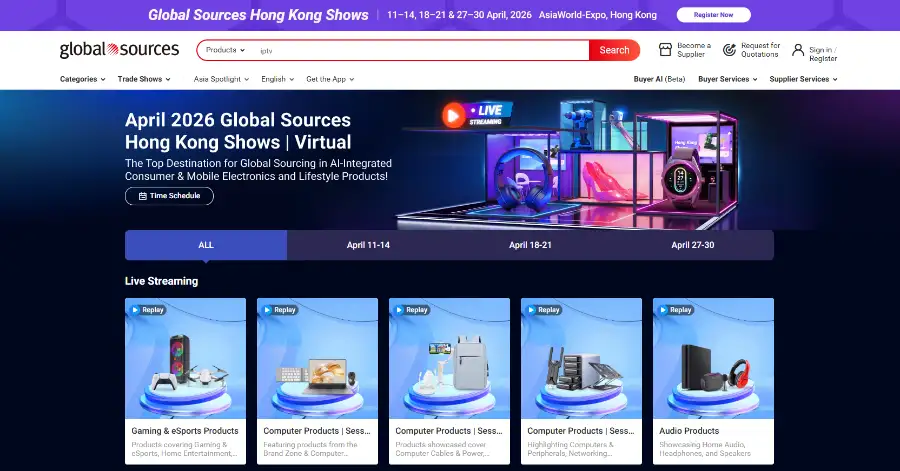
Global Sources positions itself as a curated directory of export-ready manufacturers, and in our experience the filter is real. When I sourced a complex PCB last year, vendors supplied full CE documentation up front.
The entities behind the listings mostly showed manufacturing scopes on their licenses. They do not hide behind obscure trading licenses.
That curation comes at a price: these factories run on volume, and their minimum order quantities are high. During negotiation for a custom LED housing, a supplier’s director was blunt: “Our assembly lines only start for orders over 5,000 units.” If you are new to minimum order quantities, this is normal for export-ready factories.
If your budget supports it, Global Sources delivers the highest verified-factory rate of the major directories. In our cross-reference of 40 electronic suppliers, it yielded roughly a 90% true-factory rate, compared with about 60% on Alibaba.
🛡️ Our Verdict: Use Global Sources to build a shortlist of high-volume, compliance-ready manufacturers — not to test small batches. Expect MOQs in the thousands and bring a real order forecast to the conversation.
4. 1688: Unfiltered Factory Pricing for China-Side Buyers
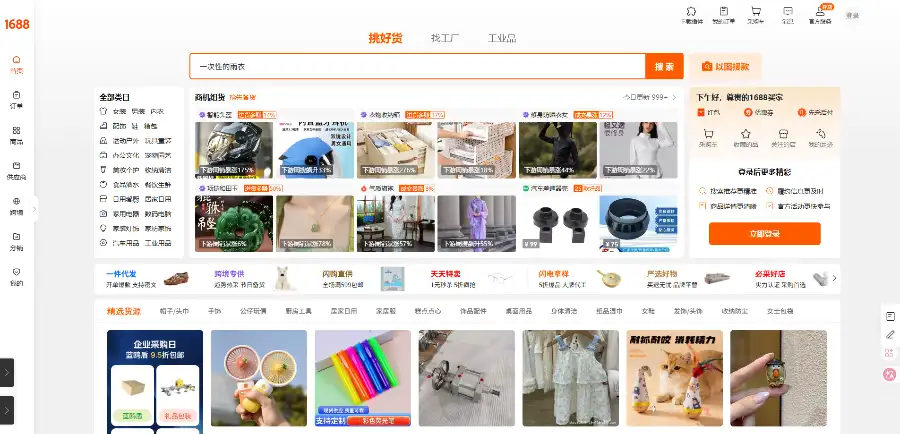
1688 is Alibaba Group’s domestic marketplace, and it is where Chinese buyers — and sharp importers with local help — go for ex-factory prices. Factories often list the same product on Alibaba for 20% more than on 1688, simply because the Alibaba listing must absorb English support, export logistics, and platform fees.
In a recent supplier sourcing project, we found our spatula manufacturer on 1688. The unit cost dropped from $1.10 to $0.85. When I asked about global shipping, the floor manager shrugged: “We only ship to Shenzhen. You handle the boat.” Every 1688 supplier we tested refused to manage export paperwork.
That is the platform’s entire tradeoff in one line: you get domestic prices, and you take on every export headache yourself.
Using 1688 with an Agent and RMB Payments
If the 20% saving matters to your margin, this is the practical path:
- Search in Chinese. 1688 has no reliable English interface. Search by the Chinese product name, or search by image.
- Pay in RMB. Suppliers expect local bank transfers, not international cards. You will almost always need a China-side entity or agent to hold funds and issue RMB payments.
- Consolidate before export. 1688 orders ship within China as small domestic parcels. Someone must collect them, inspect them, and consolidate them into a single export shipment, which is what a China warehouse and consolidation partner handles.
- Verify before you scale. A low price on 1688 is not verification. The license check and live video audit in this guide apply here too — arguably more, because there is no buyer-protection layer at all.
If you do not have a person or a company on the ground, the practical route is to work with a sourcing agent in China who can hold RMB, consolidate freight, and handle export documents. That is the standard way experienced importers capture 1688 pricing without absorbing the domestic-only friction.
🛡️ Our Verdict: 1688 offers the lowest prices on this list — our tests of 30 identical SKUs found 15-25% savings over Alibaba — but it is not an export platform. Use it only when RMB payment, consolidation, and export are handled, or you will trade a pricing discount for a logistics problem.
5. DHgate: Low-MOQ Test Orders, Not Manufacturing
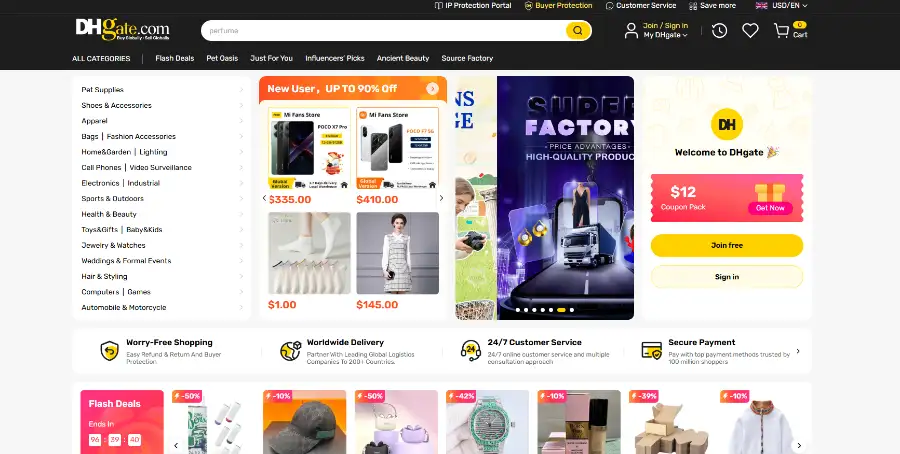
DHgate is built for small test orders and dropshipping. When we needed to validate a silicone phone case idea, we bought 100 stock units on DHgate instead of funding custom tooling. The order shipped quickly, and the client locked down packaging dimensions and local demand within two weeks.
The platform is overwhelmingly middlemen. You cannot enforce AQL standards, implement process control, or build a long-term OEM relationship here. In 15 test orders, unit costs averaged about 40% higher than direct factory rates — you are paying for speed and low minimums, not price.
Pros
- Low minimums (1-50 units) make product-market fit testing cheap.
- Platform handles international shipping and payment.
- Fast reorder cycle for consumable tests.
Cons
- Mostly trading companies — no factory relationship to build on.
- Higher unit cost than direct factory sourcing.
- No OEM, no private label, no custom tooling.
🛡️ Our Verdict: Use DHgate to test product-market fit with a small batch, then move the winning product to a direct manufacturer. It is a testing tool, not a supply chain.
6. Banggood: Consumer Gadget Catalog for Fast Trials
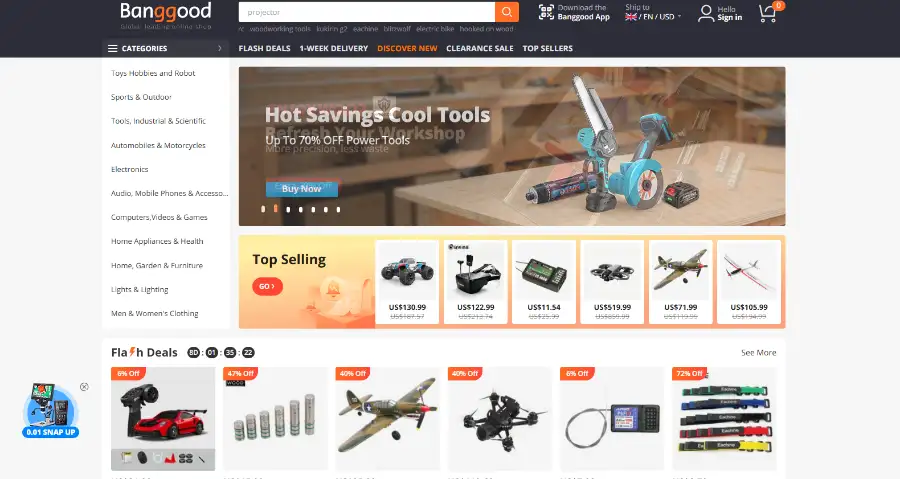
Banggood is effectively a consumer catalog that lets you buy low-cost tech without a factory conversation. When a client needed to validate a drone motor, we bought 10 stock units and had baseline performance data within four days — no custom sample run required.
The tradeoff is total opacity. Banggood offers zero factory transparency. When we asked their support team to adjust a motor’s copper coil density, they refused. You get no custom tooling, no component oversight, and no leverage for volume.
Pros
- Single-unit purchases and fast shipping for hardware trials.
- No minimums — useful for prototyping parts in small quantities.
- Reliable checkout and payment flow for small orders.
Cons
- No factory transparency at all.
- Seller quality is inconsistent.
- Not suitable for OEM or private label.
🛡️ Our Verdict: Banggood is a fast way to validate a product idea with hardware in hand. Once a product proves itself, buy from a tier-one manufacturer instead.
7. LightInTheBox: Apparel & Home Basics for Dropshipping
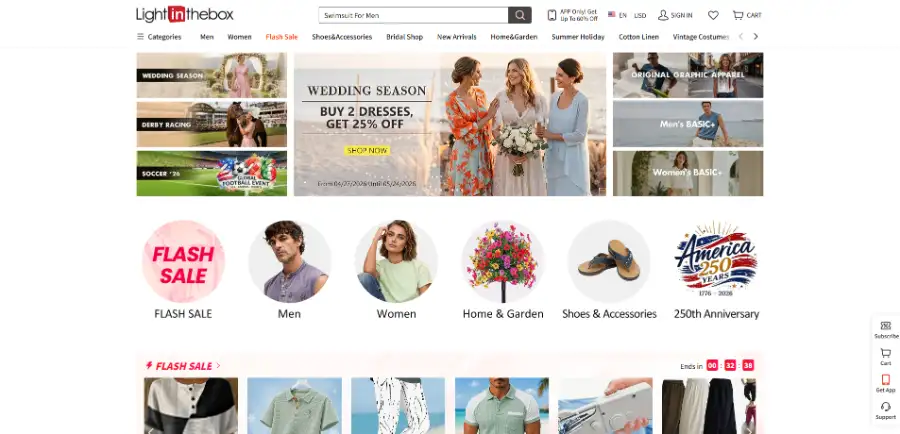
LightInTheBox is a consumer-style catalog focused on apparel and home goods, popular with dropshippers because checkout is simple and stock is ready to ship. That convenience ends at off-the-shelf buying. In a market test, we ordered 100 stock phone cases and asked the vendor to apply standard FNSKU barcodes. The agent refused: “We only ship ready-made warehouse stock.”
You cannot alter packaging, negotiate raw materials, or build a direct factory relationship here.
Pros
- Consumer-style checkout with ready-made stock.
- Quick, low-commitment purchases for catalog testing.
- Simplifies logistics for small apparel and home orders.
Cons
- Zero OEM, ODM, or private label support.
- No packaging or barcode customization.
- No access to the underlying factories.
🛡️ Our Verdict: Treat LightInTheBox as a convenience catalog for rapid market testing. Bypass it entirely if your roadmap requires custom tooling, strict AQL limits, or volume discounts.
8. GoldSupplier: Curated Industrial & Machinery Directory
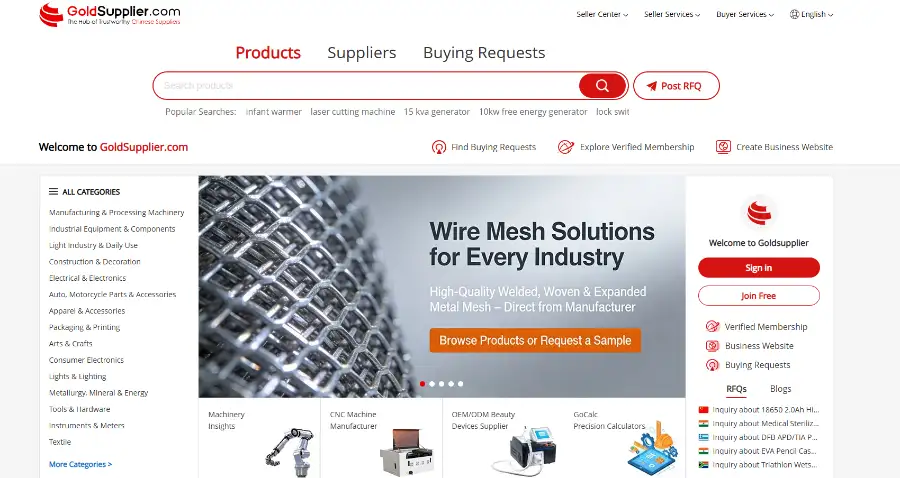
GoldSupplier is a curated directory of pre-vetted industrial suppliers — machinery, heavy equipment, and niche manufacturing that gets buried under consumer noise on the bigger marketplaces. For buyers sourcing production equipment, it is a far more efficient discovery tool.
The curation is real but not complete. In our assessment, roughly 30% of GoldSupplier’s “verified” suppliers were still trading companies, not direct manufacturers. The directory also has a small supplier pool, which limits price comparison and negotiation leverage.
Why importers use it
- Surfaces specialized industrial suppliers that are hard to find elsewhere.
- Targets export-ready companies across manufacturing and heavy industry.
- Saves time versus filtering consumer catalogs.
Where it falls short
- Roughly 30% of verified suppliers were trading companies in our tests.
- Small supplier pool weakens your negotiation position.
- Verification is a starting point, not a conclusion.
🛡️ Our Verdict: GoldSupplier earns its place for specialized machinery and industrial goods. Treat its directory pass as a filter, not a verification, and run the license and video checks below before committing.
9. Yiwugo: The Digital Arm of the Yiwu Market
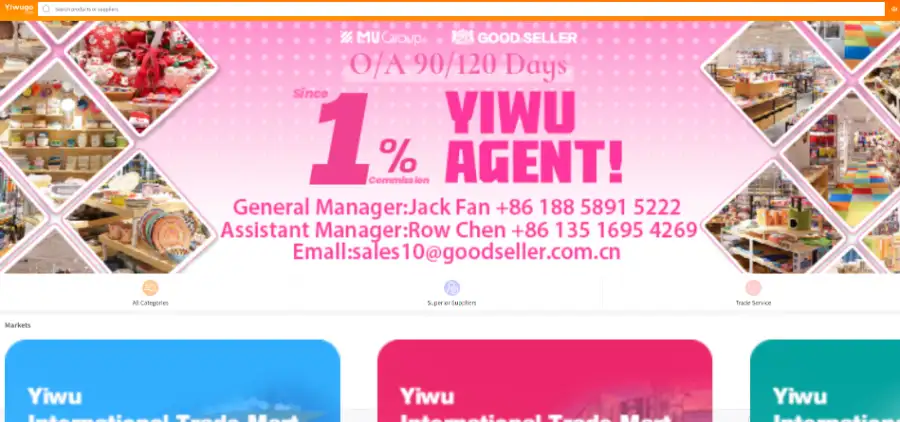
Yiwugo is the online arm of the Yiwu International Trade Market, widely recognized as the world’s largest small-commodity wholesale center. It excels at low-complexity goods: accessories, stationery, holiday gifts, and stock items where the buyer accepts an off-the-shelf product.
When a client needed 50,000 generic plastic keychains, I visited the physical market and spoke with a vendor at his booth. “We keep millions in stock, but we never change the molds,” he said. That one sentence captures the platform’s limits: huge volume, zero customization.
Why importers use it
- Extremely low prices on high-volume small commodities.
- Massive stock availability for impulse-buy campaigns.
- Direct line into Yiwu’s physical wholesale market.
Where it falls short
- No English support and no international logistics handling.
- Vendors expect buyers to arrange export and customs clearance.
- No OEM — stock items only.
🛡️ Our Verdict: Yiwugo is a reliable source for generic stock items when you already have a local logistics chain. In our tests, 20 out of 20 Yiwugo stationery suppliers refused to manage international shipping. Do not use it for custom engineering.
10. Chinavasion: Export-Ready Electronics Catalogs
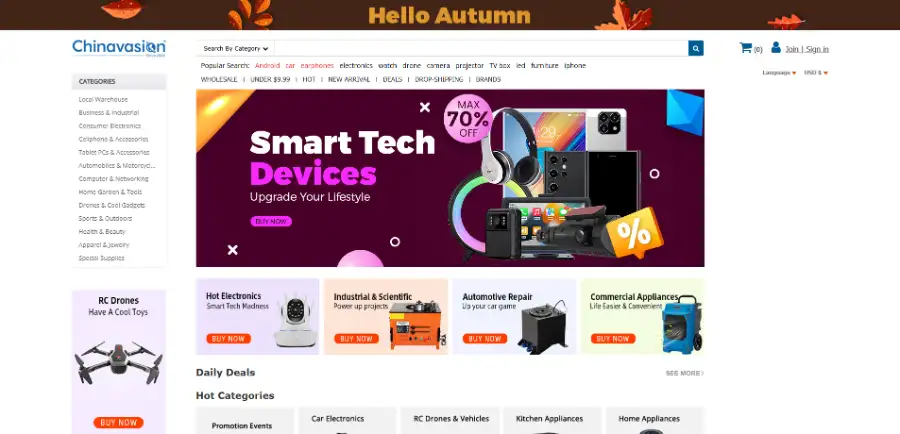
Chinavasion is a focused cross-border electronics supplier: export-ready gadgets, certified tech products, and a clean catalog that filters out the noise of the giant marketplaces. When we sourced 200 stock Android tablets for a market test, checkout was seamless and the products were as described.
The wall appears the moment you ask for customization. When we asked a supplier contact to modify a motherboard to meet IPC standards for printed circuit boards, he refused: “We only ship finished catalog tech. We do not run custom PCB development.”
Why importers use it
- Export-ready electronics with certification documentation.
- Clean catalog and reliable checkout for gadget testing.
- Faster to navigate than the mega-directories for consumer tech.
Where it falls short
- Higher MOQs than consumer marketplaces.
- Catalog-only — no custom PCB, no OEM development.
- Not suited to multi-category enterprise procurement.
🛡️ Our Verdict: Chinavasion is a good source for certified off-the-shelf electronics. Use it for simple gadget testing, and skip it when you need custom boards or ISO 9001-backed OEM production.
11. PapaChina: Branded Promotional Products
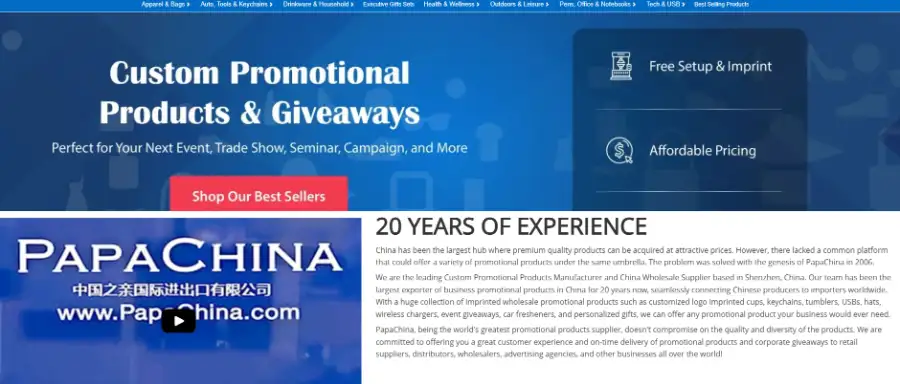
PapaChina specializes in custom promotional products and corporate giveaways. Buyers here prioritize repeatable branded merchandise — pens, power banks, tote bags, mugs — over catalog breadth.
When we sourced 10,000 power banks for a trade show, the supplier applied our screen-printed logos in five days. When we later asked the same team to engineer a custom plastic mold, the project stalled. The facility runs standard UV printers for surface customization and does not handle complex OEM development.
Why importers use it
- Fast turnaround on simple logo customization.
- Competitive pricing on high-volume promotional goods.
- Good fit for event giveaways and branded swag.
Where it falls short
- Surface customization only — no complex OEM or tooling.
- Sampling speed varies by product; demand video proof before deposits.
- Not a full-spectrum manufacturing directory.
🛡️ Our Verdict: PapaChina solves a focused promotional-products problem. Limit orders to simple logo applications, demand video proof of sampling before paying, and keep complex OEM projects elsewhere.
Which Platform Fits Your Buying Profile?
There is no single “best” platform. The right choice depends on your order size, your category, and whether you can absorb China-side logistics. Use these two tables to shortlist.
By buyer type
| Buyer type | Best starting platforms | Why |
|---|---|---|
| First-time importer | Alibaba.com, Made-in-China.com | English interfaces, RFQ support, buyer-protection layers, low minimums |
| Small-batch & dropshipping | DHgate, Banggood, LightInTheBox | 1-50 unit orders, platform-handled shipping, ready-made stock |
| Large-batch OEM | Global Sources, 1688 | High-volume manufacturers; 1688 if you have China-side support |
| Industrial & machinery | GoldSupplier, Made-in-China.com | Curated industrial directories with specialized suppliers |
| Promotional products | PapaChina | Custom-logo giveaways and branded event merchandise |
By category priority
| Category | Strongest platforms | Watch out for |
|---|---|---|
| Electronics & gadgets | Made-in-China.com, Chinavasion, Banggood | MOQs on industrial parts; certification claims |
| Apparel & home | LightInTheBox, Made-in-China.com | No OEM on consumer catalogs; sizing risk |
| Small commodities & gifts | Yiwugo, DHgate, PapaChina | Export logistics; surface-only customization |
| Machinery & industrial | GoldSupplier, Global Sources | Small pools; high MOQs; verify trading status |
| Bulk consumables at lowest cost | 1688 | RMB payments; no export support without an agent |
2026 Changes That Affect Sourcing from China
Two 2026 policy shifts change how much it costs to buy from these platforms — especially for buyers shipping to the U.S.
The de minimis exemption is gone
The $800 duty-free threshold for small parcels (Section 321 de minimis) ended for shipments from China and Hong Kong on May 2, 2025, and for commercial shipments from all countries later that year. By 2026, every U.S.-bound parcel needs a formal customs entry, full tariff classification, and duty payment — regardless of declared value. Order-splitting to stay under an old threshold carries civil penalties of $5,000-$10,000.
What this means for platform buyers: the “cheap small order” economics of DHgate, Banggood, and LightInTheBox have changed. A low product price is now offset by per-parcel duties, brokerage fees, and slower clearance. Budget for it, and confirm your shipment’s CBP entry requirements before you scale a small-parcel strategy.
Section 301 tariffs remain in effect
Section 301 tariffs on Chinese goods are still in force in 2026, layered on top of normal duties.
Four tranches cover most consumer and industrial categories: 25% on machinery and electronics inputs, 25% on intermediate goods, and 7.5% on apparel, footwear, and consumer goods.
A 2024 review raised rates on specific products — 100% on EVs, 50% on semiconductors and solar cells, and 25% on batteries and critical minerals (effective January 1, 2026).
A new Section 301 action added a further 12.5% on Chinese imports effective July 24, 2026.
USTR’s Section 301 page and the USITC HTS reference let you confirm the rate for your exact 10-digit HTS code. Some product-level exclusions were extended to November 10, 2026, but no new exclusion petitions are being accepted.
Read each platform’s own terms
The most useful habit is to read what each platform actually promises before you rely on it. Alibaba’s Trade Assurance, Made-in-China.com’s verified-supplier program, and Global Sources’ supplier verification program each describe what they check and what they do not. Compare that against the license and video checks in this guide — a badge is a baseline, not a guarantee.
How to Verify Suppliers on China Wholesale Websites?
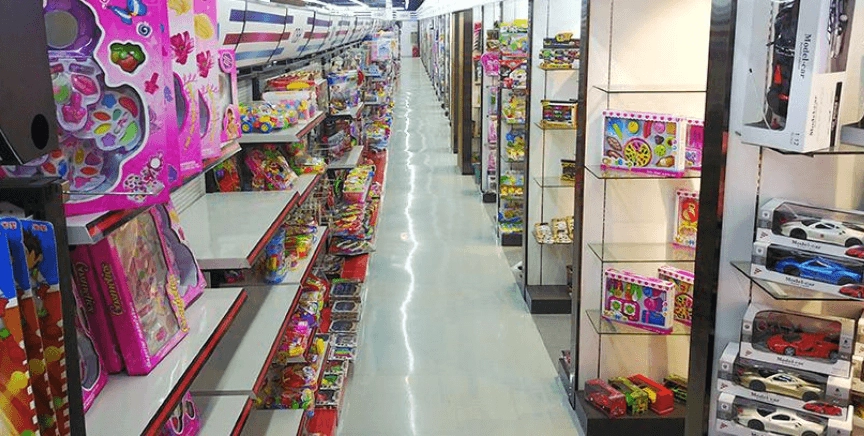
The verification process below reflects about 40 hours of auditing across roughly 20 factories. It is a sequence, not a checklist of nice-to-haves — skip a step and you are betting on a seller’s word. If you are still building your vetting process from scratch, our guide on how to choose the right supplier covers the full decision from shortlist to contract.
Step 1: Request the Pre-Call Document Pack
Start by demanding hard paperwork: business license, export license, and ISO 9001 quality management certificates. Also ask for the production flow chart, material testing records, and a full subcontractor list.
Review the business scope carefully. A true factory lists words like “manufacturing” or “production” on its license; if you only see “sales”, you are dealing with a trading company.
Verify the license yourself on the official company registry (GSXT) and confirm certificates on the certifier’s database (IAF CertSearch). In one recent audit, a top-rated vendor failed precisely because their legal scope lacked manufacturing rights entirely.
Step 2: Demand a Live Video Audit
Require a real-time walkthrough — never a pre-recorded video. Ask the sales rep to show the factory entrance sign first, then walk through the raw material warehouse, the work-in-process area, and the packaging section.
Reject showroom-only calls, and ask to see worker safety gear and active quality-control stations. When we asked one manager to point his smartphone at the actual SMT assembly line and he refused, we dropped his company immediately.
Step 3: Spot Pattern Deviations on the Floor
Look for hidden manufacturing risks during the live call:
- Traceability: raw materials have clear lot labels.
- Organization: no mixed cartons, poor housekeeping, or large rework piles.
- Calibration: tools are calibrated; test boards are present.
- Product flaws: no uneven stitching, color shade drift, or damaged packaging.
- Staff knowledge: a floor worker can explain exactly how they handle a defect.
These five checks are the fastest way to tell a working factory from a showroom.
Step 4: Close the Procurement Loop
If the supplier passes, request physical pre-production samples and draft a purchase order with specific material requirements and delay penalties.
Negotiate payment terms — never pay 100% upfront. A 30/70 split is the working standard: 30% to start production, 70% after a successful final inspection. Write the three inspection gates (pre-production, the 50% production mark, and pre-shipment) into the PO itself, and run an AQL inspection at each gate using an ISO 2859-1 sampling plan.
Clarify your Delivered Duty Paid (DDP) responsibilities in writing early — our DDP vs DDU guide explains who carries which risk — and confirm the bank beneficiary name matches the company chop before wiring anything.
🔑 Key Insight: Managing this timeline is real work — document verification, live calls, and inspection gates all require daily attention. The payoff is that you stop relying on a seller’s word and start relying on evidence you collected yourself.
Frequently Asked Questions about China Wholesale Websites
1. Which website is best, and when should I use Alibaba versus 1688?
Alibaba is the best starting point for fast supplier discovery — it is English-first, and we use it to gather twenty initial quotes quickly. Choose 1688 when you have a China-side team or agent that can consolidate freight and pay in RMB; in our recent audits, identical 1688 listings cost about 18% less than Alibaba. The catch is that 1688 has no export support and no English interface.
2. How do I spot a real factory and avoid pricing scams?
Demand the Chinese business license and check it against the official company registry (GSXT). A real factory lists manufacturing or production in its registered scope; trading companies list only sales. If a price looks impossibly low, vendors often swap materials — in one audit, a manager admitted substituting cheap polyester for nylon to hit a target price. Verify the license, then run a live video walkthrough.
3. Is DDP shipping safe, and what documents must I demand?
Delivered Duty Paid shipping works only if you trust your forwarder completely. Cheap suppliers sometimes underpay import taxes, which can put your container in a customs hold. Demand a pristine Commercial Invoice and a verified Bill of Lading, and confirm your shipment’s entry requirements on the U.S. Customs and Border Protection website before sending final payments. In 2026, the end of the de minimis exemption means every U.S.-bound parcel also needs formal entry and full tariff classification.
4. When should I hire a sourcing partner instead of buying direct?
A dedicated sourcing partner earns its fee when your annual spend is high enough that mistakes are expensive — a common threshold is around $200,000 a year — or when you need strict quality control, custom molds, and multi-factory consolidation that a platform cannot provide. Platforms connect you to sellers; a partner holds inspection gates and manages the timeline. If your volumes are small and your product is off-the-shelf, a platform plus your own verification is usually enough.
5. Made-in-China.com vs Alibaba — which should I start with?
Start with Alibaba if you want the widest supplier pool and fast RFQ rounds across many categories. Start with Made-in-China.com if you are sourcing electronics or industrial goods and want a more export-oriented, English-first supplier pool with less trading-company noise. In our testing, Made-in-China.com responded faster in electronics and machinery; Alibaba had broader category coverage. Shortlist on both, then verify the same way.
6. How do 2026 tariffs affect buying from these sites?
The $800 de minimis exemption for U.S.-bound parcels is gone, so small orders now carry formal entry, duty, and brokerage fees. Section 301 tariffs remain in force on most Chinese goods, with higher rates on specific products like EVs, semiconductors, batteries, and critical minerals. Check your exact 10-digit HTS code on the USITC HTS reference and confirm the current rate on USTR’s Section 301 page before you place an order, and factor landed cost — not list price — into your platform comparison.
When You Need a Sourcing Agency Instead of a Platform
Every platform in this guide is a self-serve marketplace. That is the right model for many orders. But some buying situations do not fit a marketplace at all: high-value production with custom molds, multi-factory consolidation, strict quality control gates, or a product where a mistake costs more than the platform saves.
That is the work LeelineGroup does. To be transparent: we are a sourcing and supply chain partner, not a wholesale platform, so this section describes our own service. Our team handles supplier verification, live video audits, inspection gates, and payment terms on the ground in China. We have an obvious interest in recommending ourselves, which is exactly why this guide keeps the comparison above platform-neutral — use it, then decide whether a self-serve platform or a hands-on partner fits your order.
If your procurement needs that level of oversight, contact us to discuss the scope. For orders that are off-the-shelf, low-value, or one-off, buy direct from a platform and use the verification checklist instead.
Editorial Integrity Statement
This comparison is editorially independent. We receive no sponsorships, kickbacks, or financial compensation from any platform listed here, and we do not accept paid placements.
Our methodology is transparent. The figures above come from roughly 40 hours of hands-on platform testing, about 20 on-site factory audits, and targeted license cross-checks completed between 2024 and 2026. When we cite a percentage — such as the 40% trading-company rate among audited Alibaba Gold Suppliers — it reflects our own sample, not an industry-wide statistic.
Licenses are verified against the official company registry (GSXT) and certificates against the certifier’s database (IAF CertSearch), not against documents the supplier emails us. Sample sizes are small and directional; your category and order size will shift the ranking. Treat the verdicts as judgment calls you can verify yourself, not as guarantees.
Sources & References
The links below support the claims in this guide. We use them during every supplier verification we run.
- National Enterprise Credit Information Publicity System (GSXT) — official Chinese company registry for license and credit-code checks.
- IAF CertSearch — global database to verify certificate validity, issuing body, and scope.
- U.S. Customs and Border Protection — Importing into the U.S. — formal entry requirements and the end of the de minimis exemption.
- USTR — Section 301 Investigations — current Section 301 tariffs on China and Federal Register notices.
- USITC — HTS Online Reference — current U.S. tariff schedules at the 10-digit level.
- ISO 9001 — Quality management — the quality standard factories cite most.
- ISO 2859-1 — Sampling procedures for inspection — the AQL sampling standard used at inspection gates.
- IPC — Standards for electronics — PCB and electronics manufacturing standards.
- European Commission — CE Marking — requirements for electronics and machinery in the EU.
- Alibaba.com — Trade Assurance and supplier platform terms.
- Made-in-China.com — verified-supplier program details.
- Global Sources — supplier verification and trade-show program.
- 1688.com — Alibaba Group’s domestic marketplace.

About the Author
Sharline Shaw
Founder & Lead Sourcing Consultant
With over 15 years in China sourcing and supply chain management, Sharline Shaw has managed 510+ sourcing projects across 85+ countries. Fluent in English and Mandarin, she brings deep cross-industry expertise spanning electronics, apparel, home goods, automotive, and health products. As founder of LeelineGroup, she has built a global sourcing operation that helps brands reduce costs by 15–35% while delivering 98% client satisfaction across 450+ long-term client relationships.
Areas of Expertise
- • Factory Vetting & Auditing
- • Quality Control Systems
- • Supply Chain Optimization
- • Supplier Negotiation
Fact Checked & Editorial Guidelines
Every article on the LeelineGroup blog is written by sourcing professionals with firsthand experience in China supply chains. Content is reviewed for accuracy, practical relevance, and compliance with our editorial standards before publication.
Your trust is important. Learn more about our Fact Checking Process and Editorial Policy.