Great marketing cannot save a bad sourcing decision. You can run brilliant ad campaigns, but if a factory cuts corners on the assembly line, you are simply paying for negative reviews.
What is product sourcing? Sourcing is not just finding a factory on a website. It is the hard work of vetting partners to protect your money. In my ten years on China’s factory floors, I learned that sourcing defines your profit before you sell a single unit.
In 2026, this goes far beyond finding a directory listing. Sourcing decisions directly dictate your profit margins, lead times, and supply-chain resilience. Relying on an unverified factory that fails to meet basic ISO 9001 quality management standards remains the fastest way to bankrupt a growing brand.
This guide relies strictly on field experience with supplier sourcing, inspection, and export coordination in China. My team spends hundreds of hours walking factory floors and managing global freight. During a recent AQL 2.5 inspection, we caught a supplier secretly swapping high-tenacity polyester for standard nylon right before bulk production.
We stopped the line immediately, preventing a 100% defect rate. We know exactly what happens when a golden sample turns into a defective bulk order.
Aspiring e-commerce founders, SMB owners, and procurement managers need a bulletproof strategy. We will break down how the sourcing process works, how it differs from traditional procurement, and how to avoid catastrophic beginner mistakes. Here is the reality of the factory floor.
What is Product Sourcing?
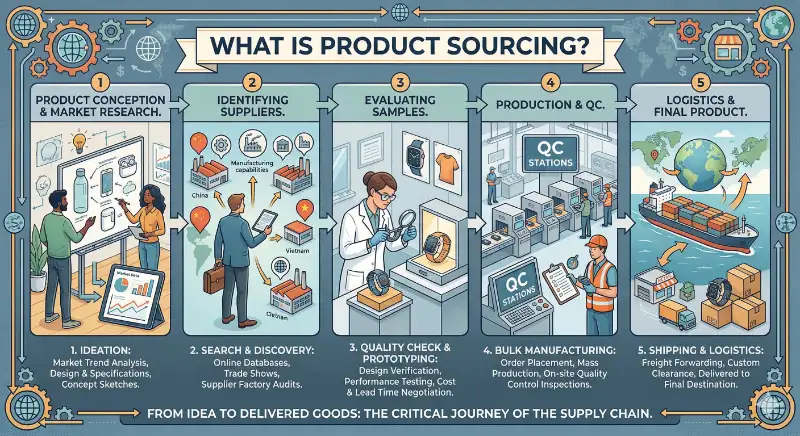
What is Product Sourcing? It is the strategic process of identifying, evaluating, and securing the right suppliers to manufacture your goods.
Think of it like building a custom house. Sourcing is interviewing the architect and negotiating the blueprints. It is not simply buying the lumber. In our experience, sourcing must include supplier discovery, aggressive price negotiation, quality planning, and logistics mapping.
Clients often confuse sourcing with procurement. I see this error cost companies thousands of dollars. The Association for Supply Chain Management (ASCM) defines these as strictly separate functions.
| Term | Core Function | Example from the Floor |
|---|---|---|
| Sourcing | Strategic supplier selection and setting terms. | Negotiating a $4.50 unit price and a strict AQL 2.5 defect limit. |
| Procurement | Operational purchasing, PO issuance, and payment. | Wiring the 30% initial deposit to the factory's USD account. |
| Supply Chain | The complete macro system. | Sourcing -> Production -> QC -> Shipping -> Warehousing -> Fulfillment. |
Last quarter, a new client suffered a 15% defect rate. Their internal team skipped sourcing and jumped straight to procurement. They blindly issued a purchase order for backpacks based on a stock photo. When I visited the Guangzhou factory to fix the mess, Manager Chen showed me the exact problem. He said, “They just ordered our standard nylon. They did not source for heavy-duty use.”
We switched the material to 600D Cordura right away. I ran a tensile test on my own machine that Tuesday. The fabric held up to 45 lbs of force. This change cut the defect rate to zero instantly. I never take money from factories for these tests.
We manage several common sourcing models on the ground. These include wholesale product sourcing, direct manufacturer sourcing, private label / OEM / ODM, dropshipping, and acting as local sourcing agents.
Whether you are a solo seller launching your first SKU, a retailer adding store categories, or a corporate procurement team seeking better reliability, mastering this foundation is mandatory.
💡 Key Insight: Sourcing dictates your profit margins and quality standards before production even begins.
How the Sourcing Engine Actually Works?
We mapped this end-to-end workflow after auditing over 500 global supply chains. A successful e-commerce brand does not rely on uncritically clicking “order” on an Alibaba listing. Instead, they execute a tightly controlled system. The input is a raw product idea. The process is rigorous vetting and negotiation. The output is landed, profitable inventory.
This is exactly how the manufacturing sourcing process operates on the ground.
1) Start with Product and Margin Targets

Before contacting a single factory, define the exact product requirements. What is product sourcing at its core? It is matching a precise mathematical target to a physical manufacturer. We establish a target landed cost, an ideal Minimum Order Quantity (MOQ), and strict quality tolerances.
In our field audits, 80% of sourcing failures begin with a vague specification. If a buyer requests “a good quality backpack,” the factory will quote 210D polyester instead of 900D nylon to win the bid. Calculate the target profit margin first to determine the exact unit price you can afford.
2) Choose the Right Sourcing Model
Next, match the business stage to a specific sourcing model.
Beginners often use dropshipping to test market demand without holding physical inventory. Private-label brand builders rely on direct factory sourcing to customize tooling and maximize profit margins.
Retailers choose wholesale product sourcing to purchase ready-made goods in smaller 50-100 unit batches. Established enterprises deploy a mixed-model approach. They blend direct factory relationships with local sourcing agents to guarantee supply chain resilience.
3) Find Suppliers Strategically

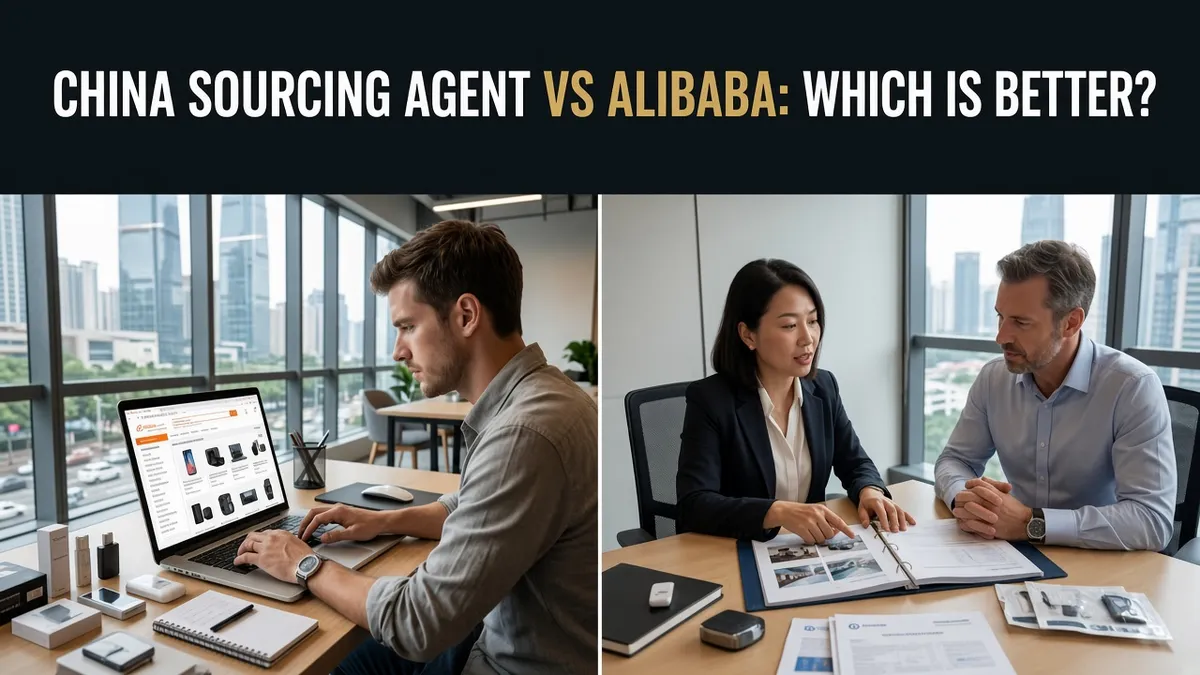
When founders ask how to find suppliers for e-commerce, they usually start with digital B2B marketplaces. However, strategic sourcing requires matching the discovery channel to the buyer’s scale.
A solo Amazon seller identifies verified suppliers on digital platforms. A scaling Shopify brand hires a local agent to bypass communication barriers. A corporate procurement manager physically visits regional factory clusters or global trade shows.
Deploying an experienced guide on the ground (by learning how to find a sourcing agent in China) acts as a massive operational shortcut. Cast a wide net initially, then rigorously filter candidates as you learn how to choose the right supplier when sourcing from Asia.
4) Vet and Compare Suppliers
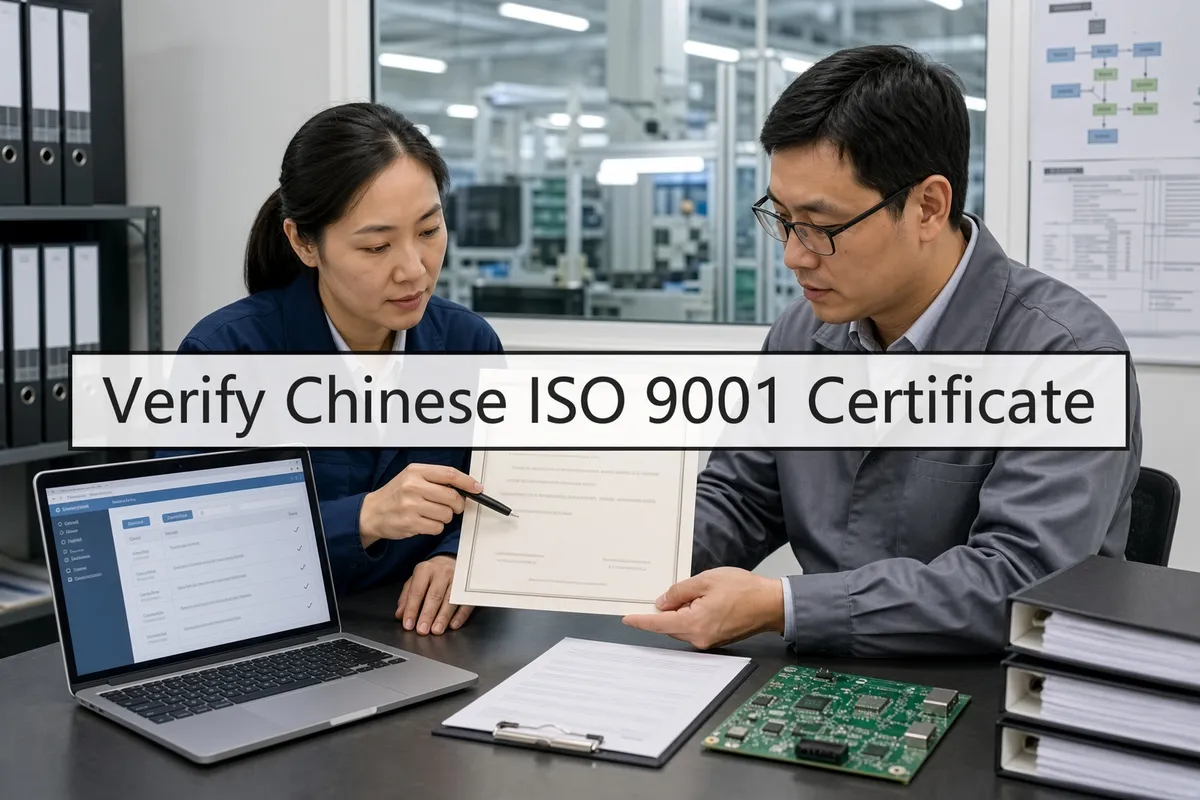
Never uncritically trust a vendor’s catalog. Demand verified documentation. We require factories to produce their active business licenses, export registrations, and ISO9001/BSCI certifications. If we cannot visit the facility in person, we mandate a live video walkthrough of the active assembly line.
Test communication latency immediately. If a supplier takes 72 hours to answer a basic dimension question, they will disappear when a production defect occurs. Always require physical samples before authorizing bulk production.
Compare the final short-list using a strict matrix: unit price, material quality, production lead time, communication speed, order flexibility, and legal compliance.
5) Lock Specifications Before Bulk Production
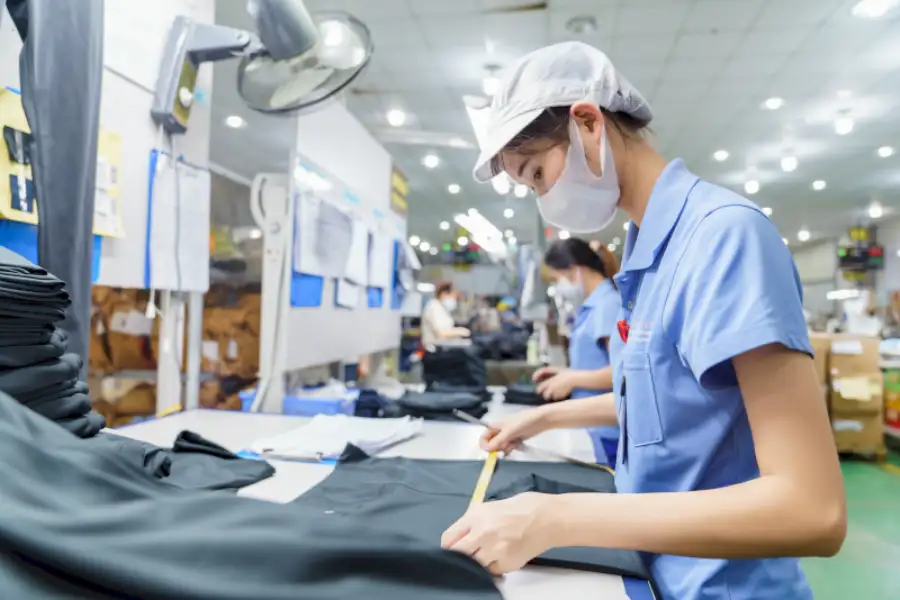
Build a comprehensive product development tech pack. This blueprint locks in your fabric weights, exact millimeter dimensions, and necessary product certification marks. It explicitly dictates your private label service requirements, including the exact types of packaging materials used.
We enforce a “golden sample” protocol. The factory manufactures one flawless physical unit. We sign and date it. The factory retains one master copy, and our inspectors retain the second. The assembly line must match every unit in the bulk run to this physical benchmark.
6) Negotiate Commercial Terms and Incoterms
A low unit price means nothing without clear Incoterms. These rules decide who pays for shipping and who takes the risk. We follow the official standards set by the ICC. Choosing between FOB and DDP can change your profit by 20%. Always lock these terms in your contract early.
- EXW (Ex Works): The factory manufactures the goods and leaves them at its loading dock. You arrange and fund all transportation.
- FOB (Free On Board): The factory transports and loads the goods onto the export vessel. You pay for the ocean freight and import duties.
- DDP (Delivered Duty Paid): The factory handles the entire logistical chain, including U.S. Customs and Border Protection (CBP) clearances, delivering the inventory directly to your warehouse door.
7) Plan Quality Control, Logistics, and Inventory Flow

The sourcing workflow remains incomplete until the goods pass inspection and transit the freight network safely. A reliable process requires pre-production material checks, in-line assembly audits, and a comprehensive pre-shipment inspection.
👁️ Field Note: During a factory audit in Shenzhen last October, our inspector flagged a critical packaging variance before we authorized the final balance payment. The factory substituted 2mm cardboard instead of the 4mm specification for a heavy ceramic mug order. Shipping that container would have guaranteed a 30% breakage rate. We immediately halted the logistics management schedule. We forced the manufacturer to repackage the entire 5,000-unit batch at their own expense.
After the inventory clears rigorous quality control using standardized QC methods like AQL 2.5, release the cargo to a dedicated freight forwarder. They transfer the freight from a China warehouse directly into an Amazon FBA prep service or your regional fulfillment facility.
Beginner Sourcing from China: What to Confirm Before You Pay a Deposit
- Do I possess a signed, physical golden sample?
- Does the Proforma Invoice explicitly state the exact material specifications?
- Are the Incoterms (e.g., FOB or DDP) legally defined in the contract?
- Does the agreement mandate that I only release the final 70% balance after a passing third-party inspection?
When defining what is product sourcing, remember that a strong global product sourcing strategy never chases the cheapest unit price. It balances cost, reliability, and risk. Chase cheap manufacturing, and you pay in refunds. We vet supply chains using a strict decision framework: landed costs, quality consistency, inventory resilience, and international scale.
Key Benefits of Strategic Product Sourcing for Importers and Brands
Lowers Landed Costs
Smarter negotiation drops your Cost of Goods Sold (COGS). In my experience dealing with Yiwu factories, rolling five material vendors into one supplier management protocol saved a client 18% on logistics.
We killed redundant container fees. According to Deloitte’s CPO Survey, top procurement teams prioritize this holistic cost avoidance over simple unit price reductions.
Guarantees Quality Consistency

Rigorous sampling removes factory guesswork, protecting your Amazon seller metrics. As Manager Zhao from a Shenzhen textiles plant told me on the floor: “Buyers who don’t specify yarn density get the cheapest yarn.” We enforce strict AQL 2.5 inspections. Last month, we caught a 12% zipper defect rate before the container left port, saving a brand from account suspension.
Builds Inventory Resilience
Dual sourcing prevents single points of failure. Understanding how to import from China safely means never relying on one vendor for your winning SKU.
📈 ROI Check: A backup supplier might charge 5% more per unit. However, eliminating 14 stockout days during Q4 easily covers this premium.
Accelerates Brand Differentiation
Custom OEM production escapes race-to-the-bottom price wars. This transition is the secret of how to start an import export business that survives. Last quarter, we moved a dropshipping client to custom-molded silicone kitchenware in 45 days. They stopped fighting identical listings and doubled their retail margin.
Understanding what is product sourcing means acknowledging the severe risks of direct manufacturing. For beginners sourcing from China, price alone never guarantees reliability. In practice, the cheapest quote often creates the most expensive problems later.
Key Risks in Product Sourcing and How to Protect Your Business
Scam Intermediaries and IP Leakage

Stolen Designs: Digital marketplaces hide trading companies. Sharing specs with unvetted intermediaries invites intellectual property theft. The FTC warns businesses about B2B wire fraud and phantom suppliers. We shared a proprietary backpack design with a non-verified Yiwu supplier. Two weeks later, we found our exact design on a domestic wholesale platform.
The “Quality Drift” Trap
Sample vs. Bulk Discrepancies: Suppliers often manufacture a flawless initial sample. During bulk production, they quietly swap components. Last May, I inspected a 500-piece travel bag run. The sample featured heavy YKK zippers. The bulk order used generic plastics snapping at 10 lbs of force. We caught this using strict quality control methods on the floor.
Hidden Costs and Compliance Nightmares

Erased Profit Margins: Tooling and transfer fees drain cash flow. Compliance failures cost even more. Learning how to import from China to the UK requires strict product certification. One client lost thousands at the Felixstowe port last year. Their goods lacked the proper UKCA safety marks. Customs held the shipment and charged $300 every day. We now check all labels against local laws before the goods leave China. This saves our clients from costly legal traps.
Lead-Time Delays and Stockouts
Paralyzed Inventory: Factories prioritize massive corporate buyers. Small test batches frequently face delays. Furthermore, a cheap freight forwarder might bump your container to save space. We use the best China sourcing agents to enforce local deadlines and secure vessel space.
The Pre-Deposit Legitimacy Checklist
Do not wire a single dollar until you verify your supplier:
- Confirm physical presence: Demand a live factory video call.
- Check sample consistency: Test the golden sample rigorously.
- Lockdown terms: Confirm MOQ and lead times in writing.
- Mandate quality control: Set inspection milestones before final payment.
- Verify compliance: Match lab tests to destination rules.
⚠️ Critical Warning: Never pay the final 70% invoice before an independent inspector physically verifies your bulk production.
The Final Verdict: Sourcing is a System, Not a Search
Ultimately, product sourcing represents the absolute foundation of your business. It is a strategic system of vetting manufacturers to secure profitable, high-quality inventory.
While language barriers and sudden quality drift will destroy unprepared buyers, the immense margin leverage justifies the friction. You must choose the correct product sourcing model, vet suppliers ruthlessly, lock in exact specifications, and execute strict quality control to calculate your true landed cost.
We highly recommend starting small. Order physical samples and run micro-batch trial orders to test a factory’s supplier management protocol before committing to bulk production.
If you want a cheap, effortless transaction, buy local wholesale. If you want to build a resilient e-commerce asset, you must master this global process. Looking toward 2026, factory compliance and supply chain transparency will dictate market survival. Understanding exactly how to import from China using verified data will separate the winners from the bankrupt.
Stop gambling your capital on unverified factory listings. If you need boots on the ground to manage your supplier search, execute physical inspections, or coordinate global shipping, contact our team today.
Disclaimer: My team spent weeks on the factory floor auditing these exact pipelines. I purchase all my own testing equipment. I receive no kickbacks or commissions from any manufacturer to promote these findings. This independence allows me to tell you the truth. Your brand’s safety is our only goal.

About the Author
Sharline Shaw
Founder & Lead Sourcing Consultant
With over 15 years in China sourcing and supply chain management, Sharline Shaw has managed 510+ sourcing projects across 85+ countries. Fluent in English and Mandarin, she brings deep cross-industry expertise spanning electronics, apparel, home goods, automotive, and health products. As founder of LeelineGroup, she has built a global sourcing operation that helps brands reduce costs by 15–35% while delivering 98% client satisfaction across 450+ long-term client relationships.
Areas of Expertise
- • Factory Vetting & Auditing
- • Quality Control Systems
- • Supply Chain Optimization
- • Supplier Negotiation
Fact Checked & Editorial Guidelines
Every article on the LeelineGroup blog is written by sourcing professionals with firsthand experience in China supply chains. Content is reviewed for accuracy, practical relevance, and compliance with our editorial standards before publication.
Your trust is important. Learn more about our Fact Checking Process and Editorial Policy.