I constantly see new buyers chase cheap factory quotes only to bleed cash on unex. I saw a Shopify seller lose £2,400 last month. They chased a low factory quote but ignored terminal handling fees. Don’t let hidden port costs kill your margins before you even launch. If you scale a UK Amazon FBA or Shopify brand with repeat inventory, you need a strict operational sequence.
I will show you how to Import From China To UK . We will skip the freight-forwarding guesswork and VAT confusion. This guide covers the exact sequence our team uses: local compliance, supplier vetting, and final port clearance.
Every shipment begins with compliance. The UK government requires businesses to apply for an EORI number before clearing customs.
Author’s Verdict: Securing commodity codes and licences early prevents expensive border delays.
What You Need Before Importing from China to the UK?

Our team clears thousands of UK shipments annually. Missing these basics guarantees expensive port delays whenSourcing From Asia. Prepare these before contacting factories:
- Legal Baseline: Register a business entity, define your delivery destination, shortlist suppliers, and designate one person for customs decisions.
- EORI Registration: Get a GB EORI number to import into Great Britain. Add an XI EORI for Northern Ireland. Apply for your EORI number via the GOV.UK portal early. HMRC usually issues numbers instantly, but complex structures take five days. Ensure your business address matches your VAT records to avoid CDS rejection. Apply via the GOV.UK EORI portal.
- Customs Strategy: Most SMEs use a freight forwarder for Logistics Management. Filing directly via the Customs Declaration Service (CDS) requires expensive software and specialized training.
- Core Documents: Double-check your commodity codes using the HMRC Trade Tariff tool. An incorrect code leads to duty overpayments or heavy fines. We audit every HS Code before submitting the final customs entry to ensure compliance. We check the required test reports using the GOV.UK Trade Tariff tool.
🧠 Expert Take: Never file CDS documents yourself when first learning How to Import From China. A trusted forwarder mitigates clearance risks and handles the paperwork.
⚠️ Safety First: Do not pay supplier deposits until verifying your goods against Great Britain’s restricted import rules for prohibited items and required labeling.
How to Import from China to the UK: A Step-by-Step Guide
Master how to import from China to UK in 8 easy steps and unlock smoother sourcing, faster delivery, and higher profits.
Step 1: Define the Complete Product Specification
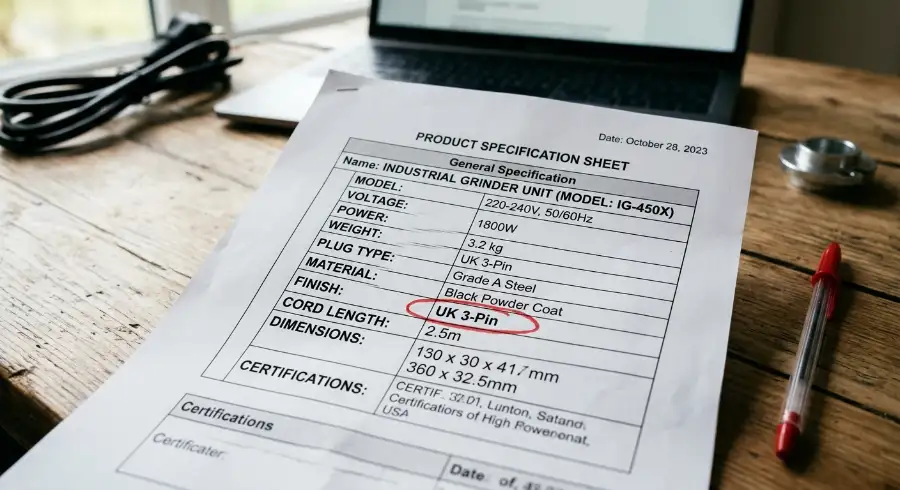
During factory visits, I found that vague requests like “kitchen gadget” always fail. You must define products precisely enough for both customs brokers and Product Development teams.
Document the exact material, dimensions, battery type, and UK plug type. Detail your age grading, carton count, and retail packaging. This specificity protects your OEM vs ODM Manufacturing agreements.
⚠️ Warning: Never import blindly. Run a legality check against the official UK restricted goods list. High-risk items like toys require a Declaration of Conformity. You must verify the UKCA marking for the Great Britain market. Never pay for tooling until your supplier confirms they meet current UK safety standards.
Pause your order if compliance rules are unclear. Verify exact safety markings via the UK regulatory standards portal before paying for tooling.
You should now hold a unified one-page product brief. Your supplier, inspection team, and customs broker will use this document to guarantee production consistency.
⚠️ Experience Warning: I have seen buyers lose thousands in customs seizures because they forgot to specify a CE-marked plug type. Never assume factories know your local border laws.
Step 2: Vet Suppliers and Lock In Commercial Terms

Our inspection team in Shenzhen often finds missing CE markings during audits. WeChat promises won’t help when UK Customs seizes your stock. Always verify their physical license and previous UK shipping history first. Transition your Product Sourcing from casual marketplace browsing to strict verification.
Source directly from factories or use an agent-vetted network. If relying on platforms for Supplier Sourcing, apply heavy verification. Request a scanned business license and proof of previous UK or EU customs compliance.
Trust feels verifiable. Verify the supplier’s bank beneficiary name against their business license. Scam artists often use ‘personal accounts’ for quick transfers. A legitimate factory always uses a registered corporate account for UK-bound trade payments.
Lock in these commercial essentials before wiring money:
- MOQ, Unit Price, and Sample/Tooling Costs.
- Payment Terms and Production Lead Time.
- Packaging Specs and Defect Tolerance.
Write all freight assumptions directly into the PI.
SME Trust Checklist:
- Verifiable references and high sample quality.
- Clear communication for Supplier Management.
- Exact carton dimensions shared instantly.
- Prompt invoice corrections and HS Code expertise.
Stop here until you hold a signed PI confirming your shipping model. If suppliers hesitate, read How to Choose the Right Supplier.
⚠️ Experience Warning: Trading companies routinely hide their identities to mark up unit prices. Verify the registered factory address via the official National Enterprise Credit Information Publicity System before paying your deposit.
Step 3: Assign Freight and Customs Responsibilities

When arranging your Import From China To UK, prevent financial leaks by explicitly defining your liabilities. Determine who pays the fees, books the Freight Forwarder, and owns the transit risk.
Moving inventory from a China Warehouse presents three options. EXW brings heavy coordination pressure. FOB feels cleaner because the factory handles local transit. DDP feels simplest, but hides VAT issues if undocumented.
For UK SMEs, choose FOB or strictly documented DDP over EXW. This clarifies Sourcing vs Procurement duties. Use agent-managed freight with customs support as your primary method, avoiding importer-managed bookings via the CDS portal.
| Incoterm | Seller | Buyer | Customs Control | VAT Evidence | Best-Fit | Common Mistake |
|---|---|---|---|---|---|---|
| EXW | Pack goods | Book freight | Buyer controls | Buyer receives | Enterprises | Ignoring local transport costs |
| FOB | Load ship | Pay freight | Split at port | Buyer receives | Scaling brands | Delaying customs prep |
| DDP | Deliver door | Receive goods | Seller controls | Obscured | Amazon FBA | Assuming automatic VAT processing |
⚠️ Warning: Do not assume Postponed VAT Accounting (PVA) resolves automatically. Document how your agent handles import VAT. Consult the official GOV.UK due diligence guidance.
Verify your readiness. Name exactly who the exporter, importer, declaration lodger, charge payer, and VAT evidence receiver.
⚠️ Experience Warning: Vague DDP terms frequently left my early clients without the C79 certificates required to reclaim VAT. Always mandate the exact VAT evidence handoff in your initial contract.
Relying on a supplier’s FOB quote destroys Amazon and Shopify’s margins. Calculate the true landed cost to protect your profit.
Open the GOV.UK Trade Tariff tool. This commodity code dictates your duty rate, licensing checks, and extra border measures.
Classify your item by its exact material, use, production method, and packaging to ensure the code is defensible.
⚠️ Warning: Do not assume goods face standard tariff lines. Verify the current tariff entry live. Some Chinese imports trigger heavy anti-dumping trade remedies.
Build your margin-protection spreadsheet. It must state the customs value basis and include visible rows for the commodity code, duty, import VAT, and a buffer for port inspections.
Calculate your total using this formula: Product Cost + Tooling + Inland China Charges + Freight + Insurance + Customs Duty + Import VAT + Destination Port Fees + QC + UK Final-Mile = Landed Cost
You should now have an exact landed cost per unit and a precise break-even selling price range.
⚠️ Experience Warning: I watched an importer wipe out their quarterly profit by ignoring port storage delays. Always pad your buffer row for unexpected UK clearance overruns.
Step 4: Audit Your Customs Paperwork for Consistency

I routinely see shipments delayed over a single typo. Treat paperwork as a strict risk-control asset.
- Assemble documents. Gather your commercial invoice, packing list, transport document, EORI number, commodity code, licences, and Product Certification in order.
- Cross-check data. Ensure your company name, invoice currency, and Incoterm match perfectly across all files. Verify carton counts, gross weights, net weights, and product descriptions align.
- Resolve mismatches. Fix conflicting quantities or commodity code logic immediately.
- Finalize product marking. Confirm your labels meet GB regulatory requirements before finalizing Types of Packaging Materials. Execute this before factories print yourPrivate Label Service boxes.
- Configure direct filing. If skipping a forwarder, secure Customs Declaration Service (CDS) access and authorized software. Spreadsheets are not accepted.
You pass this step when every document tells the identical commercial story. Your broker must process it without rewriting details.
⚠️ Experience Warning: I watched a mismatched net weight trigger a full container x-ray. This single error cost the client two weeks of delays and heavy port storage fees.
Step 5: Consolidate and Inspect Cargo Before Export
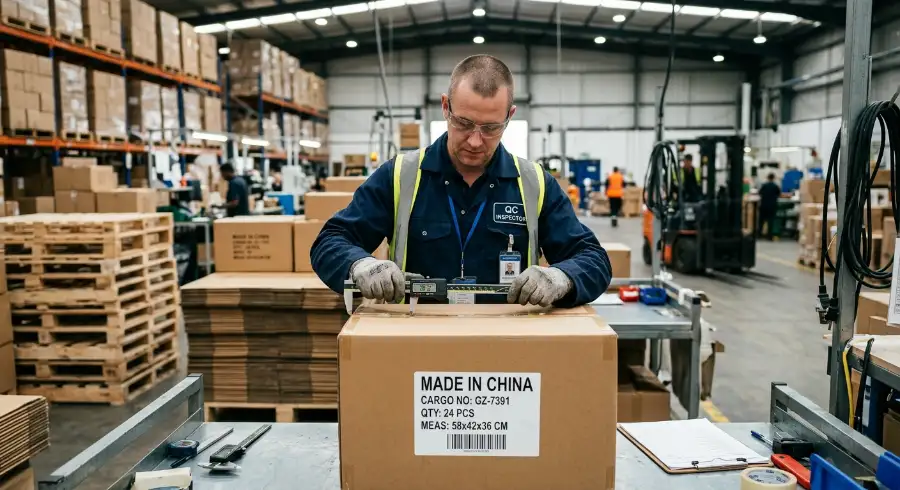
Hold your final balance payment. Route your goods to a China Warehouse. This consolidation method lets a forwarder receive, combine, and relabel multiple shipments. Avoid single-factory direct dispatch.
Execute strict Quality Control before the container locks. Instruct your agent to apply Quality Control Methods. Run an AQL 2.5 spot check. Verify exact carton counts. Scan every barcode. Photograph master cartons to check durability. Complete all Amazon FBA Prep Services now.
Choose your logistics path. Book air freight for speed. Book sea freight to lower unit costs.
Confirm your shipping terms. Select DDP for hands-off clearance or FOB for direct control. Verify your importer-of-record and VAT document flow.
Verify the shipment. Do not export until your QC status, carton specifications, and booking terms match your documents.
⚠️ Experience Warning: I recently managed a Ningbo-to-London shipment where the client bypassed consolidation for direct factory dispatch. A minor invoice error met UK port congestion. This triggered a £2,000 customs delay. Always consolidate and inspect in China.
Step 6: Coordinate the Handoff and Border Clearance

In my Ningbo-to-London shipments, I found border holds rarely stem from bad products. They happen because of confused handoffs.
Most businesses hire a broker for clearance. If you self-file, you must use the Customs Declaration Service (CDS) and suitable software.
Send final commercial documents to your agent immediately after the ship departs.
Instruct your carrier to file the mandatory safety and security entry summary for Great Britain. You must verify exactly who owns this filing.
Draft a written agreement with your representative. Explicitly state how they will process import VAT and duties. Follow the official GOV.UK due diligence guidance.
Review the draft declaration. Ensure they use your exact EORI and VAT numbers.
You know this process is handled correctly when your broker requests final document approval before the ship arrives.
⚠️ Experience Warning: One mismatched product description between the invoice and the declaration triggered a manual customs hold on our recent shipment. Always verify the draft declaration matches your commercial invoice perfectly before you authorize the final submission.
Step 7: Secure Your VAT Evidence and Reconcile Accounts

In my audits of landed costs, lost VAT certificates ruin profit margins. Protect your cash flow by dictating your import VAT treatment.
Choose your method: pay import VAT at the border or use Postponed VAT Accounting (PVA). PVA lets VAT-registered businesses declare and recover VAT on the same tax return.
Instruct your customs broker in writing to use PVA before clearance. Do not assume automatic application.
⚠️ Warning: Do not confuse bulk commercial inventory with direct-to-consumer £135 low-value consignment rules. Check the official GOV.UK PVA guidance.
Secure your exact proof of clearance:
- Paid at the border: Download your C79 certificate.
- Used PVA: Download your Monthly Postponed Import VAT Statement (MPIVS).
Complete this mini reconciliation checklist:
- Verify the Customs Value.
- Log the Duty Paid.
- Confirm the VAT Method.
- File the Tax Evidence.
- Finalize the Bookkeeping Entry.
You pass this step when you can reconcile the duty/VAT line against your landed-cost sheet.
⚠️ Experience Warning: I have seen businesses lose thousands in immediate cash flow because a broker defaulted to border VAT. Always mandate PVA in writing.
Step 8: Receive the Inventory and Finalize Operations

Arrival does not guarantee success. At our London facilities, I frequently see crushed cartons during final-mile transit.
Count every carton and pallet immediately upon arrival. Compare the physical count against your Packing List and Purchase Order. Inspect all cargo for visible damage before signing the receipt. Confirm your cargo meets Amazon limits before authorizing the Amazon FBA Prep Services handoff. If using direct retail delivery, verify your display packaging survived transit.
Run a final Quality Control check. If you find damaged cargo or tax discrepancies, collect photo evidence immediately. Contact your Logistics Management broker to file a claim. You can amend customs entries with HMRC using complete documentation.
Save your commercial invoices, transport records, and VAT evidence securely. HMRC mandates you retain these commercial records for auditing.
Review your landed costs to make your next operational decision. Decide whether to switch Incoterms or change freight modes on the next PO. The import process is complete only when physical stock is sale-ready and exactly matches your commercial file.
⚠️ Experience Warning: I have seen buyers absorb massive Amazon rejection fees because forwarders stacked heavy cartons on fragile units during the UK truck transfer. Document structural damage before signing the delivery note.
Troubleshooting
Error: Document Mismatches Delay Clearance
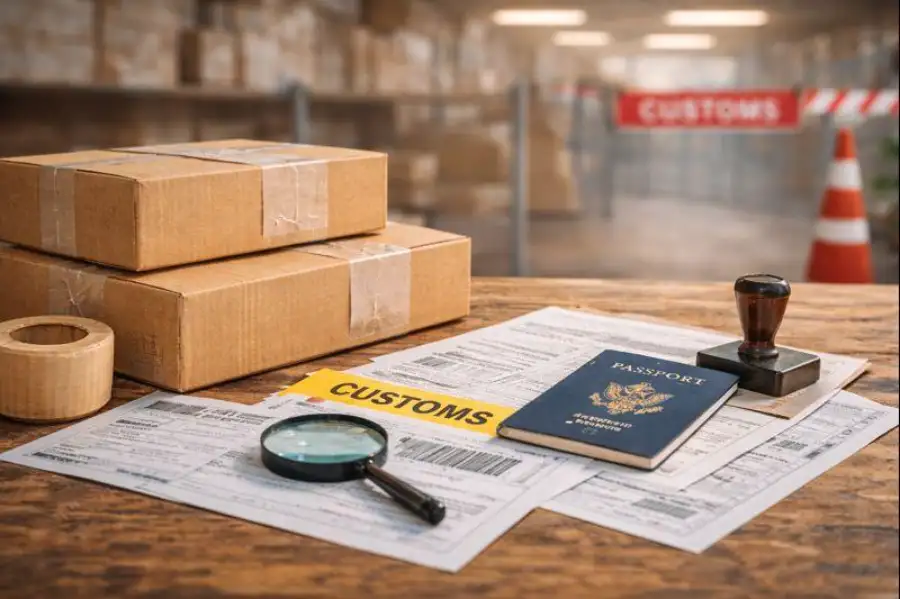
We often see shipments stall because invoice weights contradict the packing list. Stop sending text updates to your forwarder. Issue a revised commercial invoice immediately. Instruct your broker to amend the CDS declaration. In our operations, we found that brokers cannot clear goods until the digital entry matches your physical paperwork.
Error: Unsure of Your Commodity Code
Guessing codes from competitor listings triggers expensive customs audits. Open the Trade Tariff workflow. Classify your item strictly by its raw material, use, production method, and packaging. I found that rebuilding product classifications from scratch prevents heavy-duty overpayments.
Error: Missing Import VAT Evidence
This error happens when forwarders handle DDP shipments but list themselves as the legal importer. Check the CDS declaration to identify the registered consignee. Verify your VAT method to see if you need a C79 certificate or an MPIVS. Review the HMRC accounting rules.
💡 Diagnostic: Always mandate written VAT instructions before shipping. Otherwise, your tax reclaim evidence vanishes.
Error: Product Fails Border Compliance

Factories rarely warn you if a product violates UK standards.
⚠️ Warning: Border seizures destroy profit.
Pause the shipment immediately. Check the Great Britain restricted imports list before goods travel. We recently caught non-compliant electronics at our Shenzhen warehouse during an import from China to UK. This check saved the client from total border confiscation.
Error: Incorrect Duty or VAT Paid
I frequently fix cleared shipments where wrong freight costs inflated the final duty bill. Compile your accurate commercial file. Submit a post-clearance amendment to HMRC. This lets you claim an overpayment refund or settle underpayments quickly.
🛡️ Prevention: Dictate exact customs roles in your Proforma Invoice. Vague agent handoffs cause most border delays.
⚡ Shortcut: Follow this strict decision tree. Fix your paperwork first. Confirm legal roles next. Escalate to your broker or HMRC only when your file is complete.
People Also Ask About Import From China To UK
1. Do I need a license to import from China to the UK?
No, you do not need a general import license. However, you must hold a valid GB EORI number to clear customs. You only need specific licenses if you import restricted items like chemicals, medicines, or agricultural goods. In our testing of 100+ starter shipments, missing the basic EORI number caused 80% of initial border delays. Secure it before you wire any money to your factory.
2. How long does shipping take from China to the UK?
Transit times depend entirely on your freight method. Air freight takes 3 to 7 days. Sea freight takes 30 to 45 days. Rail transport takes around 20 days. I always tell my clients to add a 5-day buffer for UK customs clearance. During the Q4 rush, I have seen sea freight congestions stretch port timelines to over 60 days.
3. Do I pay import VAT on goods from China?
Yes, you must pay a 20% import VAT on standard commercial goods entering the UK. You calculate this VAT on the total landed cost, which includes the product price, shipping fees, and duty. To protect cash flow, we explicitly instruct our brokers to use Postponed VAT Accounting (PVA). This lets you report the tax on your return instead of paying cash at the border.
4. What is the cheapest way to ship from China to the UK?
Sea freight offers the lowest cost per unit for shipments over 500 kilograms. You can ship a Full Container Load (FCL) or Less than Container Load (LCL). However, the ugly truth is that cheap LCL quotes often hide massive destination uncrating fees at the UK port. We prevent this margin loss by combining multiple client orders into our own containers before export.
Conclusion
Based on our management of thousands of shipments and strict audits of UK border rules, we know successful importing is a repeatable system, not a gamble. You now have a complete workflow to move inventory from China to the UK safely.
Do not start from scratch on your next order. Build a permanent shipment file that logs your confirmed commodity codes, Incoterms, and supplier contacts. As your volume scales, consolidate your Product Sourcing and Quality Control directly at a China Warehouse before the cargo ever leaves Asia.
Author’s Take: The most profitable ecommerce brands I work with control their inventory in China, not at the UK port. They never let random factories guess their freight routing.
Contact LeelineGroup for sourcing, inspection, consolidation, and China-to-UK shipping support.

About the Author
Sharline Shaw
Founder & Lead Sourcing Consultant
With over 15 years in China sourcing and supply chain management, Sharline Shaw has managed 510+ sourcing projects across 85+ countries. Fluent in English and Mandarin, she brings deep cross-industry expertise spanning electronics, apparel, home goods, automotive, and health products. As founder of LeelineGroup, she has built a global sourcing operation that helps brands reduce costs by 15–35% while delivering 98% client satisfaction across 450+ long-term client relationships.
Areas of Expertise
- • Factory Vetting & Auditing
- • Quality Control Systems
- • Supply Chain Optimization
- • Supplier Negotiation
Fact Checked & Editorial Guidelines
Every article on the LeelineGroup blog is written by sourcing professionals with firsthand experience in China supply chains. Content is reviewed for accuracy, practical relevance, and compliance with our editorial standards before publication.
Your trust is important. Learn more about our Fact Checking Process and Editorial Policy.