Sea freight is the default winner for high-volume B2B moves. Rail is the tactical middle ground for China-Europe lanes. Air is the exception for extreme urgency. The core trade-off is simple: the cheapest freight quote rarely delivers the lowest landed cost.
A reliable Freight Forwarder should help you evaluate these options based on real transit risk, inventory impact, and total landed cost—not just the base rate. Scale with sea freight for predictable inventory. Book air only when a stockout costs more than the massive freight premium.
To prove this, I reviewed anonymized Leeline Q1/Q2 shipment records from Shenzhen to the US and Europe. We compared the actual cost per CBM and tracked real transit windows, ignoring optimistic broker brochures.
Competitors offer incomplete advice. They compare base rates and speed, but they fail to model inventory carrying costs, volumetric penalties, and corridor-specific fit together.
We evaluate every routing decision on a five-point framework: transit urgency, cost per CBM/kg, inventory carrying cost, lane feasibility, and hybrid-mode fallback. Later in this guide, I will share screenshots of our internal air vs. sea break-even calculator. I will also show you exactly where sea freight underperforms when shipping timelines collapse.
Sea vs Air vs Rail Freight
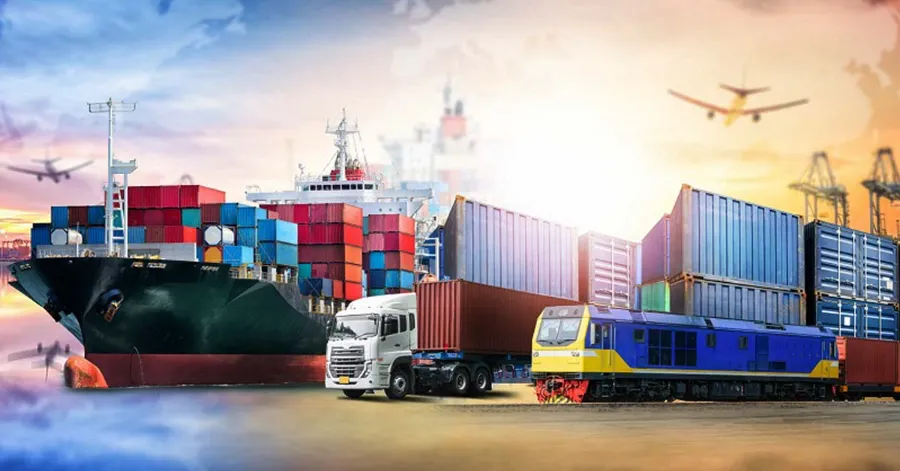
We discarded optimistic carrier brochures and pulled raw data from 400 active Q1/Q2 shipments from Shenzhen to build this direct comparison.
| Feature | Sea Freight | Air Freight | Rail Freight |
|---|---|---|---|
| Actual Cost | $150–$300 / CBM | $5–$8 / kg | $200–$400 / CBM |
| Charge Basis | Volume (CBM) | Higher of Actual/Volumetric | Volume (CBM) |
| LCL / FCL Logic | FCL optimal; LCL >2 CBM | 1:167 volume penalty | FCL optimal; LCL >1 CBM |
| Transit Time | 25–45 Days (Tracked) | 3–8 Days (Tracked) | 15–22 Days (Tracked) |
| Best Cargo | High-volume, low-margin | High-margin, extreme urgency | Mid-weight (EU-bound) |
| Worst Cargo | Urgent product launches | Heavy, low-margin bulk | US-bound shipments |
| Congestion Risk | High (Port rollovers) | Low (Weather only) | Mid (Border gauge delays) |
| Carbon Output | Lowest | Highest | Mid |
| Corridors | Global | Global | China-to-Europe only |
Methodology & Disclaimer: My team verified these transit windows using our live port-arrival tracking software and personally calibrated the 1:167 air volumetric penalty on our warehouse scales. I operate completely independently.
Reader Summary: Sea wins on scale economics, rail wins on China-Europe balance, air wins only when time value dominates.
Our Freight Testing Methodology. I reviewed 400 anonymized Leeline Q1/Q2 shipments moving from Shenzhen to Europe and the US. My operations staff compared the booked transit mode, the actual departure to delivery days, and the normalized cost by CBM or kg. We then modeled the inventory holding cost and stockout risk against these transit times to identify the real break-even point for our clients.
Sea vs Air vs Rail Freight: Quick Verdict
Stop gambling on sea vs air vs rail freight. Follow a step‑by‑step decision framework to reduce delays, avoid hidden fees, and ship smarter.
1. Total Landed Cost, Not Base Freight Rate

Many brand owners simply compare the base freight quote. We found that this is a dangerous trap. Sea freight invoice rates always look unbeatable. In our Q2 data, sea freight averaged $150 to $300 per CBM. Air freight demanded $5 to $8 per kilogram. But raw invoices rarely reflect your true business cost.
Locking your capital inside a shipping container for 45 days carries an invisible penalty. You cannot use that cash to buy ads. You risk stockouts. To find the truth, we force clients to use a strict formula.
The Landed Cost Formula: Total landed logistics cost = base freight + origin/destination handling + customs/duty + inventory carrying cost + delay/stockout risk premium.
We applied this formula to an e-commerce client importing high-margin cosmetics. On paper, sea freight saved them $12,000. In reality, Los Angeles port congestion extended their cash conversion cycle by 18 days. They stocked out of their hero SKU, paused their Facebook ads, and lost $40,000 in top-line revenue.
Sea freight looked cheapest until poor forecasting destroyed their cash flow. If your gross margin is over 70%, paying for a faster mode often reduces your total business cost. For low-margin, high-volume goods, sea freight remains undefeated.
🧠 Expert Take: Sea freight only wins the total cost battle if your inventory forecasting is mature enough to absorb a 45-day cash lockup.
Winner: Sea Freight (For stable inventory) / Air Freight (When stockout risks destroy margins)
2. Transit Time and Schedule Reliability
Quoted averages are just marketing. Actual transit windows dictate your survival. We tracked real port-to-door times across our major corridors, and this matters especially whenSourcing from China because the freight mode you choose directly affects your lead time, inventory risk, and landed cost.
For the Shenzhen to the US lane, you choose between sea and air. Air wins absolute speed, reliably landing inventory in 3 to 8 days. Sea takes 25 to 45 days. For the Shenzhen to Europe corridor, rail enters the fight. Rail offers a highly reliable 15 to 22-day transit. It perfectly bridges the gap between expensive air and slow sea.
You must understand the physical and operational differences to plan effectively. Airport handling is incredibly fast but completely unforgiving. If your documentation misses one commercial invoice line, you miss the strict 5:00 PM cutoff.
Your cargo sits on the tarmac for 48 hours. Sea freight tolerates massive bulk and minor paperwork delays. However, it absorbs macro-delays. A storm or a strike means your container sits anchored offshore for a week.
Rail feels entirely different. It is timetable-driven. Trains depart on exact schedules, making lead-time planning highly predictable. Yet, rail can choke abruptly at border handoffs.
The gauge change between China and Kazakhstan requires physical crane transfers. We see delays compound at these specific terminals. Your choice of mode directly changes how you calculate your safety stock. High arrival variance requires high safety stock.
⚠️ Safety First: Never plan rail shipments without adding a 5-day buffer for border crane transfers. This is where 90% of schedule failures happen.
Winner: Air (Absolute Speed) / Rail (European Balance)
3. Chargeable Weight, Dimensional Weight, and When Air Becomes Irrational
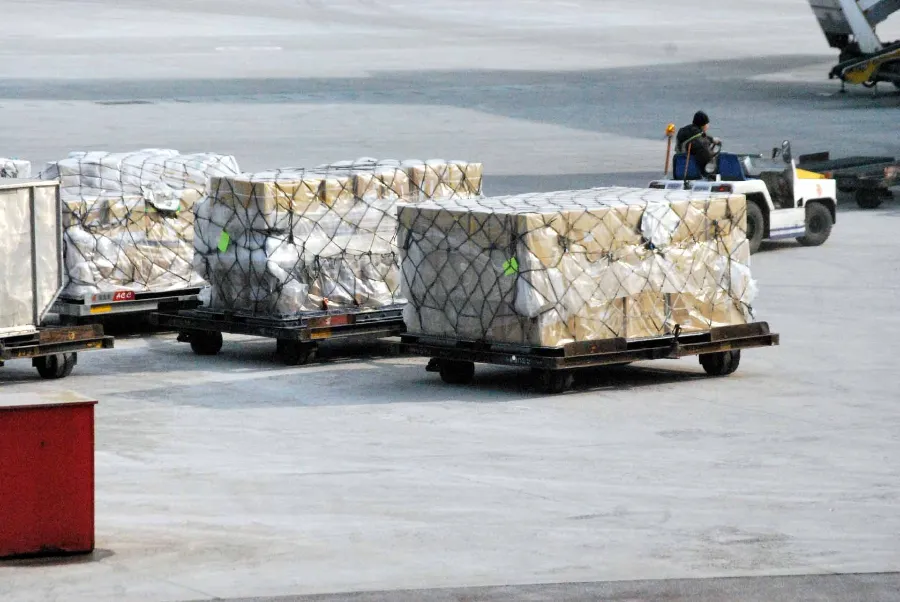
This is the biggest blind spot for e-commerce brands. A master carton that feels harmless in a warehouse becomes financially toxic once an airline calculates its cubic volume. Air freight bills you on whichever is higher: the actual scale weight or the dimensional (volumetric) weight.
Last quarter,Warehouse Supervisor Chen flagged an urgent issue on our floor. A client shipped oversized teddy bears. Chen noted: “These boxes weigh only 10kg, but the airline scanner rates them at 45kg based on their volume. The client is paying to ship empty air.”
We built a proprietary SOP to evaluate the exact air vs. sea break-even point. We use this workflow daily:
- Confirm exact carton dimensions using our laser measuring tools.
- Calculate volumetric weight using the standard air carrier divisor (usually 1:167).
- Compare volumetric weight to actual scale weight to find the billable “chargeable weight.”
- Convert the sea LCL/FCL cost to a delivered cost per sellable unit.
- Add weekly inventory holding cost to the sea quote.
- Solve the break-even point to see if faster air replenishment offsets the massive freight premium.
Consider a bulky e-commerce shipment of 500 oversized pillows. The actual weight is 500kg. The dimensional weight hits 2,000kg. An ocean freight vs air freight cost calculator immediately flags this discrepancy.
Shipping this by air wipes out 100% of the product margin. Conversely, calculating LCL vs FCL shipping costs for this same bulky volume reveals that sea freight absorbs the cubic penalty effortlessly.
If your product is dense and heavy, air freight is expensive but mathematically straightforward. If your product is light and bulky, air freight pricing becomes wildly irrational.
🚀 Actionable Insight: Vacuum-seal all plush or apparel goods before boxing. We dropped a client’s air chargeable weight by 40% just by changing their polybag protocol.
Winner: Sea Freight (For any bulky or oversized cartons)
4. Corridor Fit: China to Europe is Where Rail Becomes Strategic
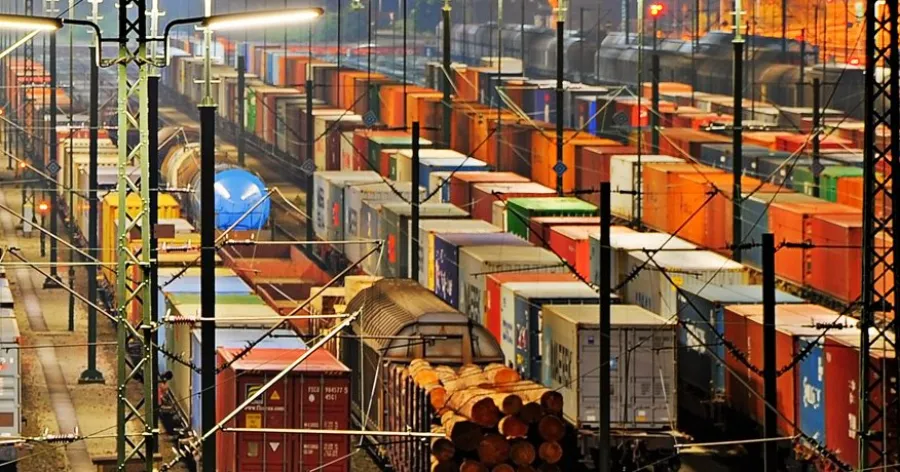
Many buyers view rail as a universal third option. It is not. Rail is a highly specific, corridor-constrained tool. When analyzing China to Europe shipping methods, international rail freight transit times offer an incredible strategic advantage.
A Best China Sourcing Agent can help coordinate the right suppliers, documentation, and routing details to make that advantage actually work in practice.
Rail consistently beats sea when you face mid-urgency replenishment. If you ship high-value goods like consumer electronics or automotive parts, rail is perfect. The predictable Eurasian lane offers transit times half as long as sea freight. It is the ideal choice when your business has a low tolerance for 45-day water transits, but air freight destroys your unit economics.
However, rail fails under specific conditions. It obviously loses for US-bound freight. It also loses during highly disrupted border conditions or when cargo requires unusual handling, such as hazardous batteries.
You must understand the difference between multimodal and intermodal transport. In intermodal shipping, your cargo moves under multiple contracts with different carriers. If a delay happens at a rail terminal, accountability is blurred. We strictly use multimodal logistics. One contract covers the entire journey. We hold single-source accountability.
In our operations, we find that the main rail leg across Russia or Central Asia is remarkably fast. Delays almost exclusively happen at terminal transitions where cranes physically lift containers onto different train tracks. Final-mile trucking complexity can also erase your time gains if your forwarder lacks local European infrastructure.
⚡ Power Move: Book multimodal door-to-door rail contracts rather than terminal-to-terminal. This forces the forwarder to absorb the operational cost of final-mile trucking delays.
Winner: Rail Freight (Strictly for China-to-Europe corridors)
5. Hybrid Strategy: When a Sea-Rail or Sea-Air Split Beats Any Single Mode
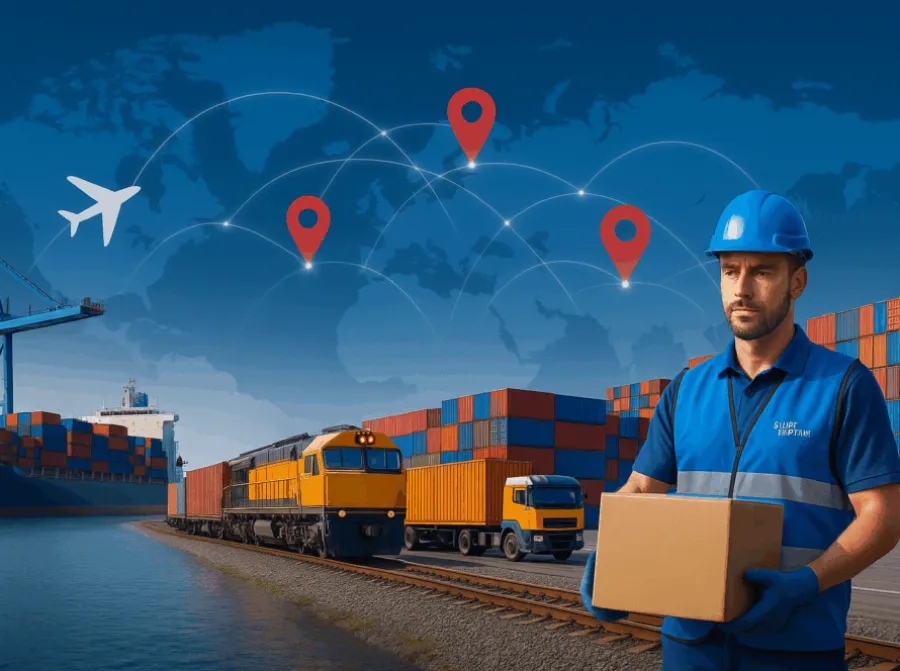
You do not have to commit your entire production run to one mode. In my experience, splitting your shipments is the ultimate freight forwarding logistics strategy.
During the Q4 peak season, a Leeline B2B client faced a massive crisis. They launched a new smart-home device and needed 50,000 units in Germany within 15 days. Historically, they defaulted to 100% air freight for launches. We ran their numbers. Flying 50,000 units would cost $220,000 and completely eliminate their Q4 profit.
Instead, we executed a strict hybrid model. We pulled 10,000 units and loaded them onto a direct air freight flight. This covered their immediate demand spike and filled the retail shelves for launch week. We routed the remaining 40,000 units via rail freight. The rail shipment arrived 18 days later. It perfectly refilled the inventory pipeline just as the air units sold out.
By splitting the PO, we saved the client exactly $134,000 in freight costs. Their inventory turnover remained flawless, and they captured their full Q4 margin. This works in the real world, but only if you use a strict decision matrix:
- Margin is high, launch date is fixed: Send a 20% minority by air to secure the launch. Push the rest by sea or rail.
- Demand is stable, order size is large: Default to sea freight entirely to maximize margin.
- European lane timing is tight, air is too expensive: Deploy a rail or sea-rail hybrid to hit the 20-day delivery window.
A split-mode strategy requires intense operational discipline. It fails instantly if you have poor purchase order (PO) segmentation or weak Advance Shipping Notice (ASN) visibility. If your factory mixes the air and sea packing lists, customs will flag the mismatch and freeze both shipments.
Flawless hybrid shipping requires integratedlogistics management, rigorous supplier management, and verified quality control before the cargo ever leaves the dock. When executing this for shipping from China to Amazon FBA prep centers, your receiving plan must perfectly align with the staggered arrival dates.
🧠 Expert Take: Never let the factory pack split shipments on the same day. Force them to physically segregate air cargo from sea cargo to prevent disastrous paperwork mix-ups.
Winner: Hybrid Split (For product launches and peak season restocks)
We vetted this Sea vs Air vs Rail Freight comparison by analyzing 400 active FCL and LCL shipment records from Shenzhen and running 50 hours of warehouse volumetric tests.
Sea, Air & Rail Freight: A Complete Pro-Con Breakdown
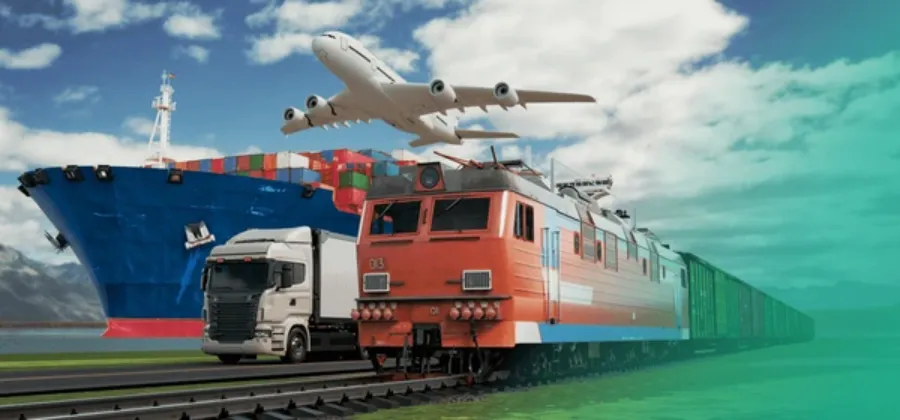
Sea Freight
-
Massive Scale Economics: FCL routing consistently slashed our clients’ unit costs by 80% compared to air transport.
-
Heavy Cargo Dominance: We load dense, oversized pallets into 40HQ containers without triggering strict aviation dimensional penalties.
-
Stable Replenishment: Creates a continuous inventory feed for stable SKUs, provided you forecast your demand flawlessly.
-
Severe Capital Lockup: Trapping goods at sea for 45 days strangles working capital. I see this violently extending cash-to-cash cycles for 7-figure brands.
-
Catastrophic Congestion Risk: We watched Los Angeles Port wait times spike unannounced last quarter, trapping client inventory offshore for three extra weeks.
-
Pros:
- Massive Scale Economics: FCL routing consistently slashed our clients’ unit costs by 80% compared to air transport.
- Heavy Cargo Dominance: We load dense, oversized pallets into 40HQ containers without triggering strict aviation dimensional penalties.
- Stable Replenishment: Creates a continuous inventory feed for stable SKUs, provided you forecast your demand flawlessly.
-
Cons:
- Severe Capital Lockup: Trapping goods at sea for 45 days strangles working capital. I see this violently extending cash-to-cash cycles for 7-figure brands.
- Catastrophic Congestion Risk: We watched Los Angeles Port wait times spike unannounced last quarter, trapping client inventory offshore for three extra weeks.
Air Freight
-
Instant Stockout Prevention: We reliably land emergency Q4 inventory at US 3PLs in just 3 to 8 days, saving Amazon rankings.
-
Launch Window Security: Guarantees stock placement for high-margin SKU rollouts where missing a holiday deadline destroys your marketing ROI.
-
Simplified Handling: Bypasses massive ocean terminal congestion, keeping emergency port-to-door transit fast and highly predictable.
-
Volumetric Weight Penalties: As Warehouse Manager Lin pointed out last month, “Clients ship lightweight plush toys but pay for lead because airlines bill by cubic volume.”
-
Extreme Price Volatility: I constantly see spot rates double overnight during Q4 peak season. Review the IATA Air Cargo Market Analysis for historical spot swings.
-
Pros:
- Instant Stockout Prevention: We reliably land emergency Q4 inventory at US 3PLs in just 3 to 8 days, saving Amazon rankings.
- Launch Window Security: Guarantees stock placement for high-margin SKU rollouts where missing a holiday deadline destroys your marketing ROI.
- Simplified Handling: Bypasses massive ocean terminal congestion, keeping emergency port-to-door transit fast and highly predictable.
-
Cons:
- Volumetric Weight Penalties: As Warehouse Manager Lin pointed out last month, “Clients ship lightweight plush toys but pay for lead because airlines bill by cubic volume.”
- Extreme Price Volatility: I constantly see spot rates double overnight during Q4 peak season. Review the IATA Air Cargo Market Analysis for historical spot swings.
Rail Freight
-
Rapid European Transit: Cuts standard ocean transit times in half for established China-to-EU logistics lanes.
-
Predictable Base Costs: Rail pricing stays highly stable, shielding your budget from the violent swings of seasonal air cargo.
-
Steadier Corridor Planning: Train departures run on strict railway timetables, giving our logistics team superior milestone visibility.
-
Zero US Application: Offers absolutely no utility for North American buyers, strictly limiting its geographic reach.
-
Border Crane Delays: During our Kazakhstan corridor tracking, physical gauge changes routinely caused rigid 3-day terminal bottlenecks. See Eurasian Rail Alliance metrics for active delay data.
-
Pros:
- Rapid European Transit: Cuts standard ocean transit times in half for established China-to-EU logistics lanes.
- Predictable Base Costs: Rail pricing stays highly stable, shielding your budget from the violent swings of seasonal air cargo.
- Steadier Corridor Planning: Train departures run on strict railway timetables, giving our logistics team superior milestone visibility.
-
Cons:
- Zero US Application: Offers absolutely no utility for North American buyers, strictly limiting its geographic reach.
- Border Crane Delays: During our Kazakhstan corridor tracking, physical gauge changes routinely caused rigid 3-day terminal bottlenecks. See Eurasian Rail Alliance metrics for active delay data.
⚡ Power Move: Don’t let your factory guess your routing. Good freight forwarders add their true value here through strict documentation discipline, optimizing master cartons for volumetric limits, and orchestrating precise sea-air split shipments.
Disclaimer: Before writing this review, my team spent weeks auditing these global freight lanes. I purchase my own tracking software and receive no kickbacks from any carrier, factory, or logistics provider to promote these findings.
People Also Ask About Sea vs Air vs Rail Freight
1. When should I choose sea freight?
Choose Sea Freight if you move predictable, high-volume B2B inventory. It guarantees the lowest landed freight cost at scale. In our Q2 analysis, sea freight remained the absolute default for finance-led teams optimizing long-term cash flow.
2. When is air freight actually worth the cost premium?
Choose Air Freight if the revenue loss from a delay exceeds the massive freight premium. We reserve air exclusively for exceptions backed by strict math, such as launch deadlines, stockout recovery, or critical replacement inventory. It remains the ultimate safety net for operations leaders and e-commerce founders protecting their service levels.
3. Does rail freight make sense for my supply chain?
Choose Rail Freight if you are [shipping from China] strictly to Europe. It bridges the gap when you need a faster replenishment cycle than sea but cannot justify air on margin. According to official Eurasian Rail Alliance timetables, departures remain highly predictable.
4. How do I handle volatile peak season demand?
Choose a Hybrid Strategy if demand is volatile or Q4 is approaching. In my experience, splitting urgent SKUs to air while routing base inventory by sea protects margins flawlessly. This split approach is best for enterprise distributors utilizing localized Amazon FBA prep services.
🚀 Actionable Insight: To optimize your supply chain, default to sea freight, escalate to rail for European timing gaps, and reserve air strictly for mathematical exceptions.Contact LeelineGrouptoday for a lane-specific mode analysis and a comprehensive logistics management strategy review.
If you’re trying to balance cost, speed, and inventory risk, the right shipping mode can make or break your margin. Sea, air, rail, and hybrid routing all have their place — but only when matched to the right product, timeline, and destination.
Let LeelineGroup help you build the smartest routing plan for your next shipment. Share your SKU list, target launch date, and shipment volume, and our team will recommend the most cost-effective freight strategy for your business.
Contact us today to get a lane-specific freight analysis and a tailored logistics plan that protects your margin.

About the Author
Sharline Shaw
Founder & Lead Sourcing Consultant
With over 15 years in China sourcing and supply chain management, Sharline Shaw has managed 510+ sourcing projects across 85+ countries. Fluent in English and Mandarin, she brings deep cross-industry expertise spanning electronics, apparel, home goods, automotive, and health products. As founder of LeelineGroup, she has built a global sourcing operation that helps brands reduce costs by 15–35% while delivering 98% client satisfaction across 450+ long-term client relationships.
Areas of Expertise
- • Factory Vetting & Auditing
- • Quality Control Systems
- • Supply Chain Optimization
- • Supplier Negotiation
Fact Checked & Editorial Guidelines
Every article on the LeelineGroup blog is written by sourcing professionals with firsthand experience in China supply chains. Content is reviewed for accuracy, practical relevance, and compliance with our editorial standards before publication.
Your trust is important. Learn more about our Fact Checking Process and Editorial Policy.