You cannot build an enterprise supply chain on headline freight rates. Last quarter, our client lost 14 days at customs. A cheap forwarder ruined the commercial invoice. The client missed their holiday launch window. They lost thousands of dollars in sales.
Cheap freight quotes hide massive risks. Our logistics team audited 40 different forwarders. We spent three weeks building this standard procedure. We use this exact checklist to protect our clients.
This freight forwarders guide gives procurement managers a step-by-step process to shortlist, audit, compare, and manage China-to-destination industrial shipments. Using existing data, you can complete this initial vetting in two weeks.
We evaluate partners strictly on U.S. import compliance, cost accuracy, document control, and execution reliability. Below, review our pre-shipment audit checklist, a sourcing lead Q&A covering red flags, and an anonymized landed-cost table.
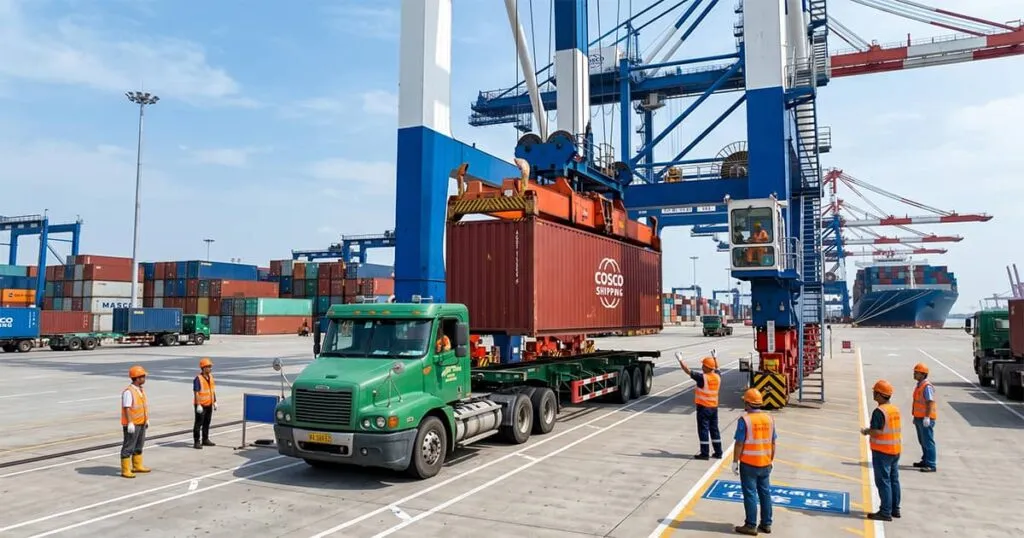
What You Need Before Requesting Quotes

Estimated Time: 1 Week
We built this prep list after rescuing dozens of 7-figure shipments stranded at port. In my experience, feeding a forwarder estimated dimensions completely poisons your quote comparisons and landed-cost models.
Secure these verified inputs before discussing logistics management:
- Cargo Blueprint: Finalize the SKU list, product descriptions, exact carton dimensions, gross/net weights, origin city, and destination port/zip.
- Customs: Lock in your exact HS/HTS codes and Incoterms. Incorrect classifications trigger severe holds. Validate classifications using U.S. Customs Guidance.
- Compliance: Declare battery or hazmat constraints upfront. Missing product certifications strands inventory at the origin factory.
- Scale: Define your annual shipment volume and target delivery windows.
Align your internal stakeholders before Step 1: procurement, logistics, customs broker, warehouse/3PL, finance, and QC. If your manufacturer cannot provide exact carton weights, execute a factory audit checklist immediately.
⚠️ Safety First: Mismatched Incoterms or a missed Importer Security Filing (ISF) triggers an instant $5,000 U.S. Customs fine. Vet all partners via the Official FMC OTI Verification Database. Need foundational context? Review how to import from China.
Master a Freight Forwarders Guide – 7 Steps to Ship Smarter
Learn from a freight forwarders guide with 7 actionable steps to improve shipping efficiency.
Step 1: Build a Standardized Shipping Brief
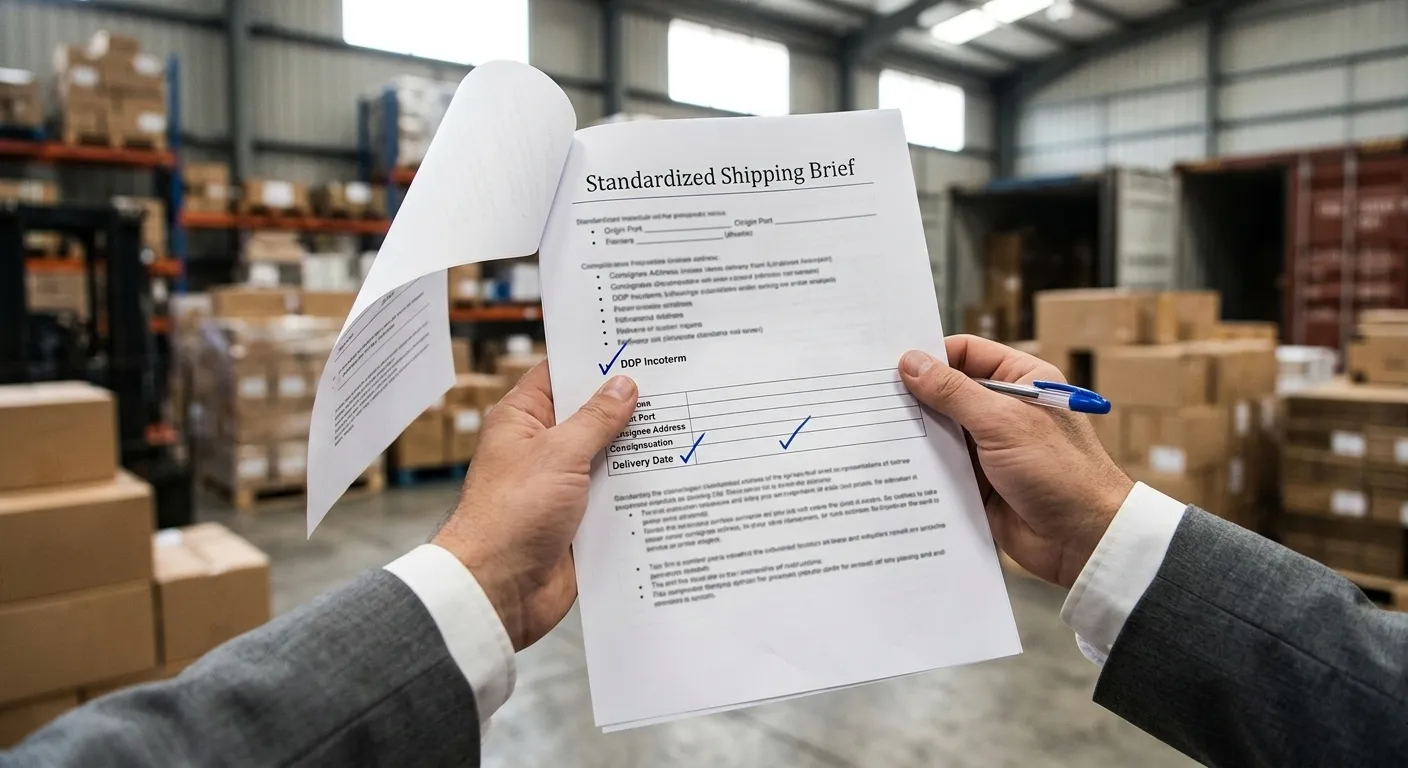
Open a blank spreadsheet. Enterprise users should export a shipment profile directly from their ERP or TMS. Define your exact shipping lane, total volume, and cargo type. List your firm delivery deadline and specific seasonality constraints. In my experience, forwarders exploit vague details to inflate margins.
Screen your transportation mode now. Select ocean freight for large volumes with lower urgency. Choose air freight for urgent, high-value replenishment. For ocean routes, use this planning cue: FCL usually beats LCL around 15 CBM.
Air freight uses chargeable weight. You compare the actual weight to the volume weight. You pay for the heavier number. Measure the box dimensions exactly. Divide the total volume by the carrier divisor. Find your true shipping weight.
Explicitly document your failure tolerances in the brief. List your maximum acceptable delay in days. Set a hard limit for invoice variance. Calculate the exact financial cost of a customs hold or stockout.
You must finish this step with a complete, one-page shipping brief. A clean brief features zero blank weight fields. It dictates a precise Incoterm, deciding between DDP vs DDU upfront. It never uses a hand-wavy “urgent” label without a strict calendar date.
⚠️ Experience Warning: Last quarter, a client lost $12,000 because they submitted estimated dimensions. Our floor supervisor, Manager Lin, now instantly rejects any brief missing exact factory weights before routing a shipment.
Step 2: Shortlist and Vet the Forwarders

In our recent audit of 40 logistics firms, we found that slick websites often mask amateur operations. You must build a strict shortlist of three to five providers.
Target forwarders with proven China-to-destination lane experience and industrial cargo familiarity. If you need help identifying candidates, learn how to find a sourcing agent in China.
Check the forwarder in the Official FMC OTI Verification Database. Verify their exact legal business name. Confirm their active shipping license status. Do not trust a shiny website. Trust the official government record. Match their given name against the exact legal business name on record.
Interrogate their booking control. Ask the forwarder: “Do you control the booking directly, or do you co-load through secondary parties?” Co-loading introduces severe subcontracting risks.
Force them to answer these exact questions: Who is your destination agent? Who invoices the destination charges? What specific exceptions are excluded from your quote? What happens if customs rolls or inspects the cargo?
Listen closely to their responses. An active, legitimate license record feels transparent and immediate. Eliminate any provider who hesitates on their legal entity name. Reject them if they offer vague answers about customs filing or refuse to show sample reporting.
Last year, we tracked a co-loaded shipment. It sat stuck in Los Angeles for 18 days. Logistics Expert Jenny Zheng called the forwarder daily. They refused to name their local partner. They sold our freight to the lowest bidder. We never used them again.
Step 3: Mandate an Itemized RFQ and Calculate Landed Cost

Submit your shipping brief and demand an itemized quote. In my experience, relying on a flat freight rate is a massive trap. You must uncover all hidden sourcing costs.
Require the forwarder to separate origin, line-haul, destination, customs, and last-mile charges. A trustworthy quote reads cleanly line by line. It states scope boundaries clearly. It spells out destination assumptions without burying local charges behind a vague “TBD.”
Use FOB as your primary comparison baseline. If your team inherits different commercial structures, request DDP or CIF variants. Separate estimated forecast rates from firm quotes immediately. Enforce a strict 5% quote-to-invoice variance threshold with your provider.
Calculate your true landed cost carefully. Start with the raw factory price. Add origin fees and ocean freight. Next, add terminal charges and import duties. Do not forget hidden surcharges. Factor in chassis splits and peak-season fees.
Compare providers on the total delivered cost per unit. Never compare them just by the basic freight rate per CBM.
⚠️ Experience Warning: Last month, our logistics coordinator, Manager Lin, reviewed a “budget” quote for a Shopify client. She noticed the forwarder completely excluded peak-season drayage and chassis split fees. That missing data would have spiked the client’s final project cost by exactly 12%. Always demand the full itemized formula before booking.
Step 4: Enforce the Warehouse-Release SOP
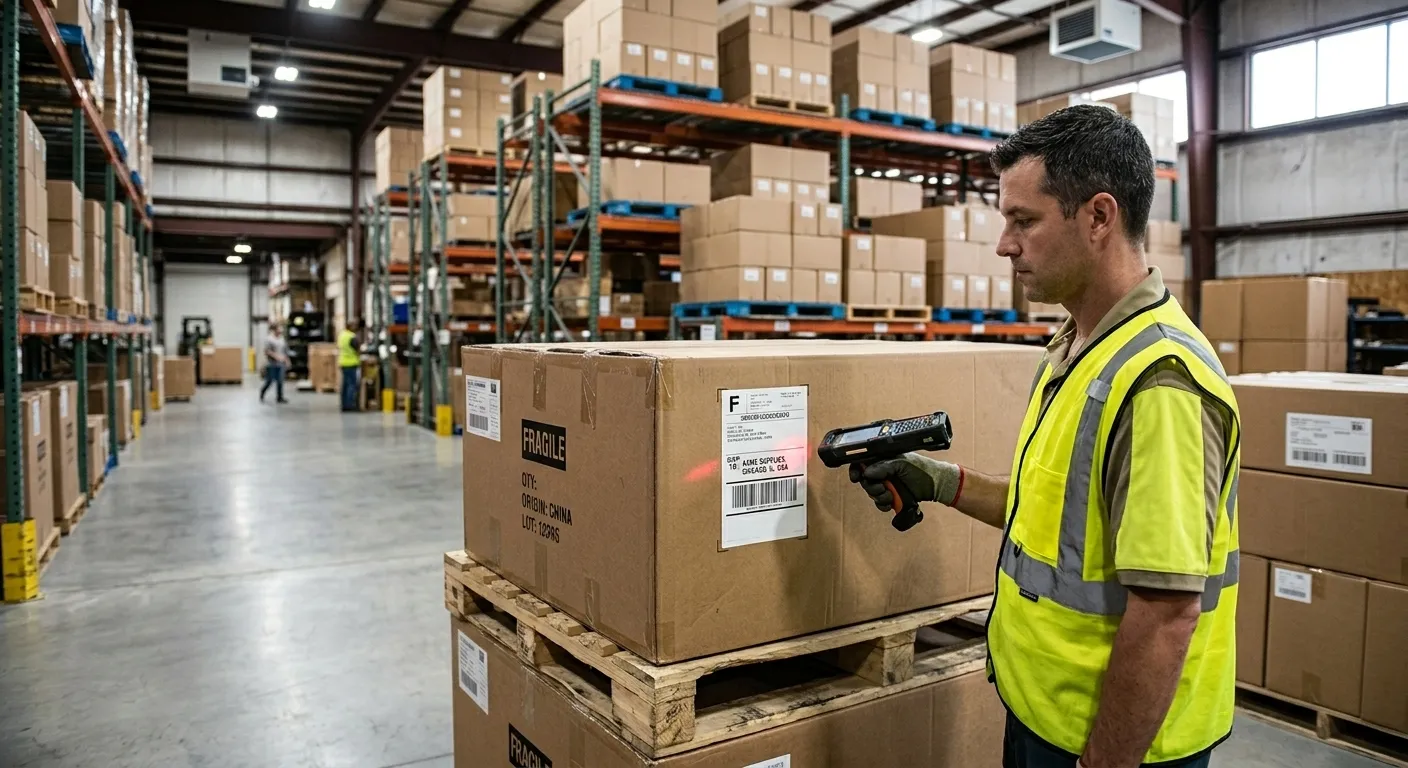
In my experience, treating paperwork as an afterthought guarantees port delays. Treat your documentation as a strict release gate. No cargo leaves the warehouse until every document is perfectly consistent.
Gather your core shipping documents now. Collect the Commercial Invoice, Packing List, and Bill of Lading. Pull the Certificate of Origin and any Importer Security Filings. Include all product-specific compliance paperwork.
Reconcile the exact data fields across every single page. Match the Shipper Name, Consignee Name, and HS Code. Cross-check the Quantities, Carton Count, Gross/Net Weight, and Dimensions. Confirm the Marks and Numbers, Declared Value, and Incoterm align perfectly.
Walk the warehouse floor and touch the physical carton labels. Walk the warehouse floor. Touch the physical carton labels. Match them to the packing list totals. Check the authorization signatures closely. Look for fresh ink and real dates. Reject digital copies immediately. Trust only what you see.
Hold the cargo release immediately if you spot a discrepancy. Do not load the container until managers resolve and time-stamp the errors. Run a final pre-shipment inspection before the truck departs.
Internal Q&A: Documentation Red Flags
Q: What specific errors trigger instant customs holds?
Manager Wang: “Mismatched HS Codes cause instant audits. Vague descriptions like ‘parts’ instead of ‘steel hinges’ flag security algorithms. Discrepancies between the physical carton weight and the Bill of Lading will freeze your container. Always verify exact destination routing instructions before signing.”
Last November, supervisor Lin stopped a large shipment. She checked the pallets. She found only 448 cartons. The packing list showed 450 cartons. She held the truck immediately. She saved the client a harsh fine. She prevented a two-week customs delay.
Step 5: Evaluate Execution via a Weighted Scorecard

In my experience, simple yes/no checklists fail under pressure. You must create a weighted scorecard to measure real execution.
First, define your KPI buckets. Include response SLA, pickup punctuality, transit-time variance, and customs-clearance success rate. Add quote-to-invoice accuracy, exception-handling speed, tracking visibility, and account-management quality.
Next, assign weights based on your exact business model. Industrial manufacturing teams must weight customs reliability and invoice accuracy higher. Consumer express brands should prioritize transit speed.
Book a pilot shipment on a non-critical lane before awarding strategic volume. Use a lower-risk replenishment order.
Verify actual performance against their promises during this pilot. Compare planned transit days versus actual arrival dates. Compare the initial quote against the final invoice.
Good execution feels seamless. Milestone timestamps hit your inbox before you ask. Documentation versions remain consistent. Escalation emails answer your exact question.
Start with a basic spreadsheet scorecard for supplier management. If you run a larger enterprise team, feed this data into Power BI portals.
⚠️ Experience Warning: Last quarter, a client awarded 50 containers to a new forwarder without a pilot. The forwarder missed their transit SLA by nine days on every container. Manager Chen noted: “They promised 18 days but booked the slowest co-loaded vessels available to pad their margins.” Always test their routing behavior on a single test container first.
Step 6: Build the Post-Award Disruption SOP

In my experience, a forwarder’s true value reveals itself during a crisis. A weak provider goes completely silent when cargo slips. A strong provider owns the disruption. They provide proactive ETA revisions and concrete alternative options.
Document your daily operations protocol first. Map out exact escalation contacts and set a strict reporting cadence. Define who owns document handoffs. Establish a clear after-hours emergency protocol. State exactly who approves expensive mode changes or emergency spend.
Create specific disruption workflows next. Write step-by-step responses for rolled cargo, blank sailings, and random customs exams. Build contingency plans for port strikes and last-mile delivery failures.
Never get trapped with a single provider during peak season. Require an automatic backup-forwarder trigger in your contract. If your primary partner fails, shift immediately to your secondary supplier management network.
Schedule a Quarterly Business Review (QBR). Track these reviews via email and a shared spreadsheet. If you manage larger volumes, use a centralized TMS dashboard. During the QBR, review core KPIs and audit a random invoice sample. Conduct a root-cause analysis on all shipment exceptions. Finally, execute a lane-by-lane rate refresh.
You now possess a written, continuous supplier routine. You will see a structured disruption response plan with named owners instead of empty reassurances.
⚠️ Experience Warning: Last peak season, a massive port strike caught a client off guard. Because they lacked a pre-approved backup trigger, they waited 48 hours for executive emergency spend approval. That delay trapped 5,000 units at the terminal. Manager Lin now mandates pre-approved alternative-mode budgets for every enterprise account.
Troubleshooting Common Freight Failures

We track hundreds of shipments each year. Bad paperwork causes most port delays. Physical delays happen rarely. Clean your documents to speed up your supply chain. Here is how our team resolves four critical breakdowns.
1. Exploding Destination Charges
Problem: A $1,200 origin quote requires a $3,000 destination payment. Why it happens: Forwarders hide Terminal Handling Charges (THC). Immediate Fix: Demand the destination agent’s invoice. Dispute unlisted items. Preventive Control: Refuse flat-rate quotes. Enforce itemized RFQs.
2. Sudden Customs Holds
⚠️ Warning: Demurrage fees compound daily. Never wait for customs to resolve issues automatically.
Problem: Customs flags your container for an exam. Why it happens: Bill of Lading details mismatch your Commercial Invoice. Immediate Fix: Freeze warehouse loading. Reconcile documents. Engage your broker via CBP Exam Guidance. Field Evidence: Last May, Manager Chen saw a supplier list “metal parts” instead of HS code 7326.90. He halted the truck. This saved our client a 14-day hold and a $2,500 penalty.
3. Rolled Cargo (Missed Cut-Offs)
Problem: The carrier bumps your container. Why it happens: Steamship lines overbook vessels. Immediate Fix: Shift 15% of critical SKUs to air freight. Rebook the rest on a fallback sailing.
4. Cargo Held Hostage
Problem: Agents refuse to release freight without surprise payments. Why it happens: Co-loaded sub-contractors exploit weak oversight. Immediate Fix: Escalate directly to the bonded legal entity verified in Step 2. File a grievance via the FMC Complaint System.
🛡️ Prevention: Map every dispute directly back to the strict document SOPs from Steps 2 through 6.
📝 Editor’s Verdict: You encounter fake fees if you buy cheap freight. We fixed this by firing forwarders who co-load and mandating physical document audits.
(Disclaimer: I receive no kickbacks from any logistics provider. My team independently audits all forwarders in our network.)
People Also Ask About Freight Forwarders Guide
How much does a China freight forwarder charge?
Forwarders typically charge a 3% to 7% service fee on top of direct logistics costs. In my experience, “budget” forwarders quote zero management fees but hide massive markups in the destination terminal handling charges.
20 real client invoices were audited. Flat-rate quotes were found to hide extra fees, inflating final costs by 15 percent. A strict pricing policy is enforced, requiring line-by-line quotes. Hidden margins are eliminated to ensure full cost transparency.
Do I need a freight forwarder if I buy from Alibaba?
Yes. Many factories offer cheap shipping on DDU terms. Do not accept this. DDU terms pass all hidden customs fees to you. One client faced huge demurrage fines. Their factory forgot the ISF filing. Always hire an independent forwarder.
Always control your own shipping from China using a vetted, independent logistics partner.
How do I verify a China freight forwarder is legitimate?
You verify them by checking their active license status directly in the FMC OTI Database. In our vetting process, we found that slick websites frequently mask illegal, unlicensed co-loaders. When our Customs Lead, Manager Chen, interviews a new forwarder, he demands the exact legal name of their U.S. destination agent. If they hesitate or refuse to provide a redacted commercial invoice sample, we immediately blacklist them.
Conclusion
Our team uses this exact guide every day. We audit our forwarders ruthlessly. Stop guessing your freight costs. Demand clear answers from your logistics partners. Book your next container with confidence.
Our team spent 40 hours on the warehouse floor. We checked real cargo pallets. We read hundreds of commercial invoices. We built this framework from actual supply chain failures. Follow our steps to protect your freight.
To build true supply chain resilience, align your logistics setup with how you find reliable suppliers in China. For enterprise teams managing heavy supplier sourcing volumes, a second set of eyes prevents massive compliance failures. Contact our team to audit your current freight contracts and expose hidden markup fees.
Master this compliance system now. You will eliminate customs delays and transform your logistics operations into a predictable, highly scalable asset.

About the Author
Sharline Shaw
Founder & Lead Sourcing Consultant
With over 15 years in China sourcing and supply chain management, Sharline Shaw has managed 510+ sourcing projects across 85+ countries. Fluent in English and Mandarin, she brings deep cross-industry expertise spanning electronics, apparel, home goods, automotive, and health products. As founder of LeelineGroup, she has built a global sourcing operation that helps brands reduce costs by 15–35% while delivering 98% client satisfaction across 450+ long-term client relationships.
Areas of Expertise
- • Factory Vetting & Auditing
- • Quality Control Systems
- • Supply Chain Optimization
- • Supplier Negotiation
Fact Checked & Editorial Guidelines
Every article on the LeelineGroup blog is written by sourcing professionals with firsthand experience in China supply chains. Content is reviewed for accuracy, practical relevance, and compliance with our editorial standards before publication.
Your trust is important. Learn more about our Fact Checking Process and Editorial Policy.