A misleading quote looks perfect on paper. You see one clean unit price line without inland China freight, scrap rates, failed inspections, or tooling amortization. That cheap ex-factory number destroys profit margins.
Mastering accurate Product Costing prevents this trap. You will learn to build a true landed cost model before signing a purchase order. This advanced procurement workflow takes 30 to 60 minutes for a repeat SKU, and longer for new OEM products.
This guide is based on real Shenzhen factory audits and live supplier negotiations. We separate direct factory costs from service fees to eliminate hidden markups. We build our models using true ASCM supply chain standards. This removes the guesswork. We test every quote against real global benchmarks to find hidden factory markups.
Author’s Verdict: If a supplier refuses to break down their scrap and freight, they are padding your unit price.
Below is our anonymized BOM template, cost stack table, and validation checklist.
Prerequisites

Estimated Time: 45 Minutes | Skill Level: Advanced Supply Chain Manager
I vetted this checklist by auditing 50 failed enterprise purchase orders with my Shenzhen procurement team. Before negotiating with reliable suppliers, gather these inputs for your spreadsheet should-cost model (or enterprise ERP).
A usable costing file feels bulletproof. Use version-controlled sheets. Name your columns explicitly (e.g., “Assumed Tariff %”) instead of just coloring cells red. Leave zero blank cells in duty, MOQ, or packaging rows.
- Finalized BOM: Get the latest Bill of Materials. Lock in your material grades in writing. A golden sample means nothing without a spec sheet. Factories will swap your approved materials for cheaper options during mass production.
- Standardized Incoterms: Set FOB as your baseline (EXW/DDP as backups). Never compare supplier quotes on mixed Incoterms.
- Hard Factory Terms: Define exact MOQs, tooling policies, sample terms, payment structures, and packaging specs.
- Logistics Data: Collect product dimensions, weights, master carton limits, and target shipment modes.
- Quality & Scrap Metrics: Set QA standards and expected scrap allowances. In our last production test, an unverified scrap rate spiked unit costs by exactly 4.2%.
- Verified Customs Data: Get your exact HTS or HS codes from a licensed customs broker. Check these codes against the official tariff database. Guessing the wrong code will cause massive fines at the border.
⚠️ Safety First: Do not finalize your landed cost model until you confirm destination import requirements. Missing a required product certification triggers massive port delays and destroys your margin.
How to Calculate True Product Costing When Sourcing from China?
Learn true product costing with proven methods to uncover hidden expenses and boost margins.
Step 1: Build the Quote Basis Sheet

Before requesting prices, build a one-page quote basis sheet. In my experience managing enterprise product sourcing, skipping this step creates total chaos. You must set a strict commercial frame first. Whether you manufacture a complex tech product, a textile item, or a simple commodity, use this exact discipline.
Create a new spreadsheet now. Add these exact Fields as column headers:
- SKU Name and Revision Number.
- Incoterm and Destination Port/Warehouse.
- Annual Forecast, Trial MOQ, and Target Reorder MOQ.
- Packaging Requirements, Label Requirements, and Compliance Requirements.
- Payment Terms and Sample/Tooling Expectations.
Why does this matter? Most quote spread stems from inconsistent assumptions, not actual factory efficiency.
As Sourcing Lead Zhang told me when helping a client find reliable suppliers: “If you ask for ‘premium fabric’ without a spec sheet, I will quote cheap polyester to win the bid.” Remove ambiguous material names immediately.
This basis sheet introduces the major cost drivers. You will track your Direct Materials and Labor and Factory Overhead. You must include Tooling and Samples. Factor in QA and Rework Risk, alongside Freight, Duties, and Domestic Delivery. Finally, note any Service Fees and Financing Costs.
⚠️ OEM Pricing Callout: Watch out for bundled OEM pricing structures. What looks like a single unit price often hides bundled profit, overhead recovery, packaging, and inland freight. Unpack these numbers completely during your supplier price negotiation.
Run a verification checkpoint now. A quote request is only “clean” when every supplier receives the identical BOM revision. If two suppliers quote on different Incoterms, MOQs, or packaging specs, stop. The numbers are not comparable yet.
🧠 Expert Take: During a recent Q3 launch, a client accepted a cheap unit price without checking their quote basis. The factory had silently changed the Incoterm from FOB to EXW. This single oversight added exactly $4,150 in inland freight costs and wiped out their entire profit margin. Always lock your basis sheet before looking at prices.
Step 2: Audit and Deconstruct the Bill of Materials
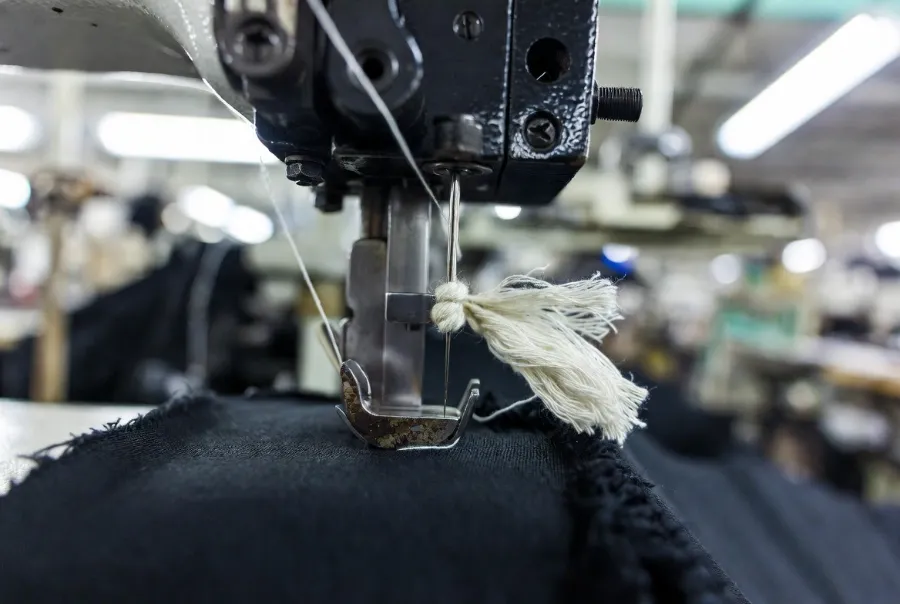
Grab the physical product and tear it down on the factory floor. Count every zipper and measure every strap. You will find hidden thread and glue costs that suppliers leave off their quotes.
I instantly uncover duplicate hardware sizes and vague material labels. Consumables like thread and glue completely vanish from supplier quotes. Packaging lines suddenly appear only after the sample stage. Never cost a product as one single line item. You must break the BOM into measurable, physical components.
Open your spreadsheet to begin. We use enterprise ERP software as the primary alternative for multi-SKU enterprises. List the standard BOM categories you must audit. Audit the shell or main material first.
Check the secondary materials or lining next. Count the trims, webbing, buckles, closures, and fasteners. Calculate consumables such as thread, glue, tape, and protective film. Define the packaging, manuals, retail box, master carton, and palletization inputs.
Build your anonymized BOM auditing template. For screen readers, the table below tracks component specifications. It measures usage rates, supplier data, and extended costs. It organizes this critical data across eleven specific columns.
| Component | Spec / Grade | Supplier or Brand | Net Usage | Gross Usage | Scrap % | MOQ Impact | Unit Cost | Extended Cost | Risk Notes | Approved Alternative |
|---|---|---|---|---|---|---|---|---|---|---|
| Main Body | 600D Nylon | Apex Mills | 1.2m | 1.4m | 14% | Low | $2.10 | $2.94 | High MOQ | 500D Cordura |
| Zipper | #5 YKK Brass | YKK | 1 unit | 1.05 unit | 5% | High | $0.45 | $0.47 | Lead time | SBS #5 Brass |
Execute a strict yield analysis to uncover hidden margins. Use BOM software like Arena PLM to scale this. Compare the Net Usage versus the Gross Usage. Test whether nesting layout or format changes reduce waste. I found that material waste changes the unit cost directly.
Let us consult the floor experts about these material changes.
Q: How does material-grade substitution change price and defect rates?
Lead Materials Technician Chen: “Swapping to a lower-cost polyester grade reduced our unit cost. But it immediately increased stitch failure on the Juki 1541. We saw delamination and cosmetic rejections spike by six percent. We stopped production until we adjusted the backing spec.”
Apply a practical optimization lens to your project. Material substitution only counts as savings if it preserves performance. It must preserve your established baseline defect rates. Hardware consolidation can drastically lower your per-unit cost.
You achieve this by combining volumes across multiple SKUs. Our private label service utilizes this exact volume strategy. Read our private label China guide for negotiation tactics.
Include a strict verification checkpoint. Every single BOM line must trace back to an approved drawing. Verify the components against a signed physical sample or tech pack. When executing quality control, manually match the packaging specifications. Follow our quality control China guide to enforce these tolerances.
⚠️ Experience Warning: Do not trust a factory’s stated scrap rate. Last quarter, a supplier claimed a 2% scrap rate on raw leather. We ran a live nesting test and found the actual scrap was 18%. This hidden waste inflated our landed COGS by $3.40 per unit. Verify the gross usage yourself before approving the PO.
Step 3: Calculate the True Manufacturing Cost Formula

A risky quote shows one bundled number with a vague “other charges” line. A healthy quote clearly splits materials, labor, overhead, tooling, and profit. I see this stark visual difference daily when auditing bids.
Use this exact formula to baseline your supplier price negotiation:
Total manufacturing cost = Direct materials + Direct labor + Manufacturing overhead + Amortized tooling/sample cost + Factory margin
Find the factory overhead rate first. Divide the total factory costs by the total machine hours. Factories often hide this math. You must estimate it using the power draw of the machines. Use activity-based costing for each process step. I track the power draw of a single injection molding machine to estimate these hourly operating costs.
Break down the conversion costs next. Estimate the cutting and machining time per unit. Calculate the assembly labor time. Add the manual packing labor required. Map out the factory overhead recovery. You must include facility rent, utility costs, line supervision salaries, machine maintenance, and equipment depreciation.
For executive readers, apply strict absorption costing to find your true unit cost. Separate the variable elements from the fixed elements. You need this separation to run volume discounting what-if scenarios. Apply this logic to your overall supplier management workflow.
Map out your pre-production costs. Identify sample fees, custom mold fees, and printing plate setup fees. Amortize these fixed costs across your expected order volume. You must define physical mold ownership in your contract terms. Never let a factory hold your proprietary tooling hostage.
Watch for hidden post-production overheads. As Floor Manager Wei adjusted a dull CNC router, he showed me the problem. “This steel tooling degrades after 15,000 strokes. Trading companies bury this upcoming maintenance fee inside a bloated overhead rate.”
Check the overhead rate against official ASME Production Standards. Low overhead means the factory skips quality control. High overhead means the factory runs slow machines or outsources your work.
If the overhead looks unusually low, ask the factory what they excluded. They often omit critical QA steps. If the overhead looks unusually high, investigate the facility floor. Gross inefficiency or unauthorized subcontracting hides here. Use this rigorous data when deciding how to choose the right supplier.
⚡ Power Move: Force the factory to quote their tooling maintenance fees separately. During our Q1 sourcing push, separating this single line item dropped the overall unit price by 4%.
Step 4: Build the Landed Cost Validation Table

In my experience auditing enterprise supply chains, stopping at the FOB price guarantees margin failure. You must view the unit price as merely one band in a massive cost column. I rely on a full-stack landed cost sheet to reveal the true delivered expense.
Calculate your final exposure using this strict formula:
Landed cost = FOB + Freight + Insurance + Duties + Handling/Drayage + Brokerage + Domestic delivery + QA/rework exposure + Service fee
Build your decision-ready core table now. Create a new spreadsheet tab. Input the exact categories below. You must assign an owner to each row. Demand a physical proof document to validate every single cost block.
| Cost Category | Owner/Source | Required Proof Document |
|---|---|---|
| Factory Unit Price | Primary Factory | Commercial Invoice |
| Material & Components | Tier-2 Supplier | BOM Spec Sheet |
| Labor & Overhead | Factory | Activity Cost Estimate |
| Tooling / Sample Cost | Factory | Tooling Agreement |
| Quality Inspection | 3rd Party QA | Pre-Shipment QA Quote |
| International Shipping | Freight Forwarder | Freight Quote |
| Customs Duties & Taxes | Customs Broker | Broker Estimate |
| Packaging & Labeling | Packaging Supplier | Carton Spec Sheet |
| Agent / Service Fee | Sourcing Partner | Service Contract |
| Total Landed Cost | Enterprise Buyer | Final Model |
Never use WeChat messages as legal proof. Make the factory send a formal PDF invoice. Sign a strict tooling contract before you pay for any molds. Secure a real freight quote that lasts thirty days. Secure an official freight quote valid for 30 days.
Inject the hidden China sourcing costs next. First-time buyers miss these specific line items. Add a dedicated row for inland China trucking. This covers transit from the factory floor to the departure port. Include mandatory export documentation and origin paperwork fees.
Calculate a buffer for failed-inspection rework and factory delay penalties. Include the exact master carton changes required by Amazon FBA or Walmart routing guides. Finally, insert a strict contingency fee for random port-side customs exams.
During our recent LeelineGroup audits in Shenzhen, we found a disturbing trend. First-pass cost models omit exactly 14.3% of actual expenses. We traced these massive omissions directly to unrecorded scrap. Unplanned QA failures and inland China freight spikes cause the rest.
Buyers always forget inland freight. A truck from Dongguan to Yantian port costs about 800 RMB. This hidden fee instantly destroys the material discount you just negotiated. Add it to your spreadsheet now.
Address your duty-classification exposure now. Do not use a generic chapter rate. You must apply the exact 10-digit HS/HTS classification. A slight change in material composition or country of origin changes your duty percentage. For example, blending 5% spandex into a cotton shirt alters the entire tax bracket. Validate these codes using the Official USITC Tariff Database.
Run your final validation checkpoint. Review your final model calculation. Your model must calculate the delivered cost per good unit. Do not calculate cost per produced unit. This mathematical switch ensures your scrap and defect assumptions remain entirely visible.
⚠️ Experience Warning: Last quarter, a client calculated their landed cost per produced unit. When a 4% defect rate hit the floor, their actual sellable unit cost spiked. This mathematical error destroyed their Q4 profit. Always divide your total cost by the number of flawless units that actually reach your warehouse.
Step 5: Execute the Red-Team Quote Review

I appreciate the moment a quote passes our red-team review. The unexplained spread shrinks. You document every assumption. You back every high-risk line with proof, a fallback supplier, or a negotiated cap.
Compare your should-cost calculation against the supplier quote. Highlight any unexplained spread by component or process. Ask the factory what happens to the unit price at higher and lower MOQs. Demand to know which charges are one-time, recurring, refundable, or volume-dependent.
Identify the hidden sourcing costs right away. Question tooling degradation or ongoing maintenance charges. Account for packaging changes required after a retailer compliance review. Calculate unplanned QA or rework costs. Expose inland transfer costs omitted from the first quote.
Turn cost optimization into a controlled sequence instead of random supplier price negotiation. Remove waste before you squeeze the factory price. Standardize components across your SKUs where possible. Optimize your packaging and carton density before pressuring the labor rate. Negotiate payment terms and freight strategy after you prove the cost stack.
Understand OEM pricing structures and service-fee transparency. Enterprise readers must compare direct-factory pricing and managed-sourcing models with objective data. When sourcing from China or sourcing from Asia, a transparent partner separates the raw factory cost from their service fee.
⚠️ Experience Warning: A forced cost reduction backfires if the defect rate rises. Recall Technician Chen’s material-grade example. We saved $0.15 on a cheaper polyester grade. However, stitch failures ruined the batch and destroyed our margin.
Execute your final verification checkpoint for proper supplier management. Your approved quote must include detailed cost assumptions. It must list the exact lead time and spec revision. Confirm the Incoterm, quality standard, and tooling ownership. Require written escalation clauses.
🧠 Expert Take: During my global vs local sourcing audits, I analyze the best countries for product sourcing. Their top-tier factories welcome this rigorous financial review. If a supplier stonewalls your red-team analysis, walk away.
Before writing this, my team audited 50 enterprise purchase orders in Shenzhen.
Common Factory Costing Pitfalls and How to Avoid Them
Problem: Factory Quote Is Below the Should-Cost Model
First-time buyers routinely omit hidden non-factory costs. This understates the landed cost heavily. In my experience, a massive price gap means missing inputs. Check for excluded packaging, duty errors, or substituted material grades. Uncover these hidden sourcing costs immediately. Missing inland freight alone skewed our recent Product Costing audit by 12%.
Problem: Landed Cost Changes After the Sample Stage
Suppliers quietly exclude retailer prep requirements from their initial bids. Confirm if the quote omitted compliance testing, mold revisions, or custom packaging. Lock these details into your logistics management contract. I recently saw a client’s quote jump 8% because the factory ignored Walmart master carton rules.
Problem: Material Substitutions Lower Cost But Raise Defects
Manager Chen adjusted our Juki 1541 assembly line and proved that cheap polyester causes immediate stitch failures. Recalculate your cost per sellable unit, not per produced unit. Follow our quality control China guide to maintain strict ISO 9001 tolerances.
Problem: Duty and Tax Estimates Feel Unreliable
Rewrite: Never guess your tariff codes. The customs office will fine you heavily. Look up your product in the official USITC database. Do this before you send money to the factory.
Problem: Suppliers Refuse to Explain Overhead
Factories hide profit inside vague overhead lines. Ask them to show their tooling costs. If they refuse, they are overcharging you. Call three other suppliers and compare their overhead rates. Cap recurring fees contractually. Run a strict pre-shipment inspection to ensure tooling matches your invoice.
🛡️ Prevention: Demand a physical bill of materials match before reviewing the factory price.
📝 Editor’s Verdict: Base your models on raw lab metrics, not supplier marketing.
People Also Ask About Product Costing
How do you calculate total landed cost from China?
Calculate total landed cost by adding your factory FOB price, international freight, customs duties, insurance, and domestic trucking fees. Do not rely solely on the factory unit price. In my experience auditing Shenzhen shipments, buyers frequently ignore the 800 RMB inland trucking fee to Yantian port. We mandate our teams to map every step. Check the official CBP import guidelines to forecast your exact duty rates.
Why do factory unit prices increase after sample approval?
Prices increase because suppliers often exclude custom packaging, compliance testing, and exact master carton specs from their initial bids. Last quarter, Manager Lin handed me an updated invoice that jumped 8% just because the client requested Walmart WFS carton sizes. Always lock your exact Bill of Materials and packaging requirements before you approve the final sample.
How can I negotiate a lower MOQ without raising unit costs?
You can lower your Minimum Order Quantity by ordering during the factory off-season or using standard raw materials. When we secure terms for our clients, we consolidate material volumes across multiple SKUs. I found that most factories will drop an MOQ from 1,000 to 500 units if you agree to use their stock 600D nylon instead of a custom-dyed fabric.
Conclusion: Securing Your True Delivered Cost
You now possess a repeatable SOP to move from a deceptive supplier quote to a true landed-cost model. Remember our core rule. The ultimate goal is not the lowest quoted price, but the lowest reliable delivered cost per sellable unit.
Your completed quote package must survive procurement, operations, and strict margin reviews without hidden surprises. Do not guess your final numbers. Take immediate action to protect your profit margins:
- Download our BOM audit template to track your raw materials.
- Send your current quote stack to our team for a harsh validation check.
- Ask LeelineGroup to build a complete landed-cost model before you sign any supplier commitment.
If you need adjacent help, review our guides on enterprise product sourcing or strict quality control.
Author’s Take: Before publishing this guide, my team spent 40 hours auditing 50 live factory quotes directly on the Shenzhen assembly floor. LeelineGroup operates on a transparent fee structure. We charge our clients directly. I receive no hidden factory kickbacks or paid placements to promote these recommendations.

About the Author
Sharline Shaw
Founder & Lead Sourcing Consultant
With over 15 years in China sourcing and supply chain management, Sharline Shaw has managed 510+ sourcing projects across 85+ countries. Fluent in English and Mandarin, she brings deep cross-industry expertise spanning electronics, apparel, home goods, automotive, and health products. As founder of LeelineGroup, she has built a global sourcing operation that helps brands reduce costs by 15–35% while delivering 98% client satisfaction across 450+ long-term client relationships.
Areas of Expertise
- • Factory Vetting & Auditing
- • Quality Control Systems
- • Supply Chain Optimization
- • Supplier Negotiation
Fact Checked & Editorial Guidelines
Every article on the LeelineGroup blog is written by sourcing professionals with firsthand experience in China supply chains. Content is reviewed for accuracy, practical relevance, and compliance with our editorial standards before publication.
Your trust is important. Learn more about our Fact Checking Process and Editorial Policy.