Product development cost in China is one-time pre-production capex, not factory unit price or landed cost. For most hardware projects it runs $30,000 to $250,000+ before the first mass-production order.
According to OPD Design’s published China cost guide, simple to moderate hardware lands at $30,000 to $60,000, mid-complexity products at $60,000 to $120,000, and complex IoT or medical-grade products at $120,000 to $250,000+. Our own audit files across 200 hardware projects sit inside the same band. Teams that mix one-time development costs with unit price or landed cost usually miss their margin target.
The table below breaks out the nine budget lines we audit, who gets paid, when, and what paperwork to hold.
Key Takeaways
Nine budget lines decide whether a China hardware launch holds its margin. Here is the short version before the line-by-line breakdown.
- Separate development cost from unit price. Brief, design, prototypes, samples, tooling, testing, pilot, packaging and agent fees are one-time pre-production spend, not part of landed cost.
- Budget from $30,000 to $250,000+. Simple hardware runs $30,000 to $60,000, mid-complexity products $60,000 to $120,000, and complex electronics or medical devices $120,000 to $250,000+, before a 50% to 100% contingency.
- Pay by milestone, not by trust. Tie each payment to a deliverable: signed brief, native CAD, DFM report, steel certificate, T1 report and written test reports.
- Treat DFM as insurance. A mold built from a flawed design costs 3 to 5 times the original tool price to fix, so the review is far cheaper than the rework.
- Price the failure loops up front. Sample courier charges repeat every round, a failed EMC scan forces a board spin and a full retest, and a pilot run costs 10% to 20% of launch volume.
- Demand one original factory invoice. A transparent 3% to 7% agent fee you can reconcile to the factory quote beats a “zero-fee” arrangement that hides margin inside the unit price.
Product Development Cost China – Proven 9-Line Budget Guide
Protect your margin before steel is cut – compare mold, sample, lab test and packaging costs with sourced ranges and contingency tips.
Prices checked: November 2026. Ranges marked OPD come from OPD Design’s published China cost guide. Ranges marked “our files” come from quote and contract reviews across 200 hardware projects.
| Budget line | Planning range | Paid to, and when | Evidence to collect |
|---|---|---|---|
| 1. Market research and brief | $2,000–$8,000 (OPD) | Research or design consultant, before engineering | Signed brief, scope of work, acceptance criteria |
| 2. Industrial design and engineering | ID $3,000–$15,000; structural $3,000–$20,000; firmware $5,000–$40,000 (OPD) | Design agency and engineering vendor, by milestone | Native CAD, DFM report, tolerance table, IP transfer |
| 3. Prototypes | $2,000–$25,000 across iterations (OPD); $200–$1,500 for a simple first build (our files) | Prototype shop or sample room, before each build | Itemized quote, revision log, dated photos, sign-off |
| 4. Sample rounds and courier | $150–$800 per round plus $50–$150 courier (our files) | Sample room and courier, every round | Sample invoice, tracking number, acceptance checklist |
| 5. Mold and tooling | $5,000–$50,000+ (OPD); $15,000–$40,000 for a 4–8-part electronics tool (OPD) | Mold maker or factory, before steel is cut | Itemized quote, steel certificate, T1 report, ownership terms |
| 6. Testing and certification | $3,000–$30,000 (OPD) | Accredited lab, before shipment or launch | Test plan, accredited report, report file number |
| 7. Pilot run | $5,000–$30,000 (OPD), or 10–20% of target volume (our files) | Factory, before the mass-production deposit | Defect logs, inspection reports, go/no-go sign-off |
| 8. Packaging design and testing | $1,000–$5,000 for design (OPD); plates and production variable | Packaging designer, then vendor, once the dieline locks | Dieline, print proof, sample approval, drop-test results |
| 9. Sourcing agent and project management | 3%–7% of order value (our published fee); 5%–10% industry typical | Agent, under a separate service agreement | Service scope, fee disclosure, one original factory invoice |
| Total, before contingency | $30,000–$250,000+ (OPD) | Not applicable | Add 50%–100% contingency plus a mold-rework allowance |
1. Market Research and Product Brief
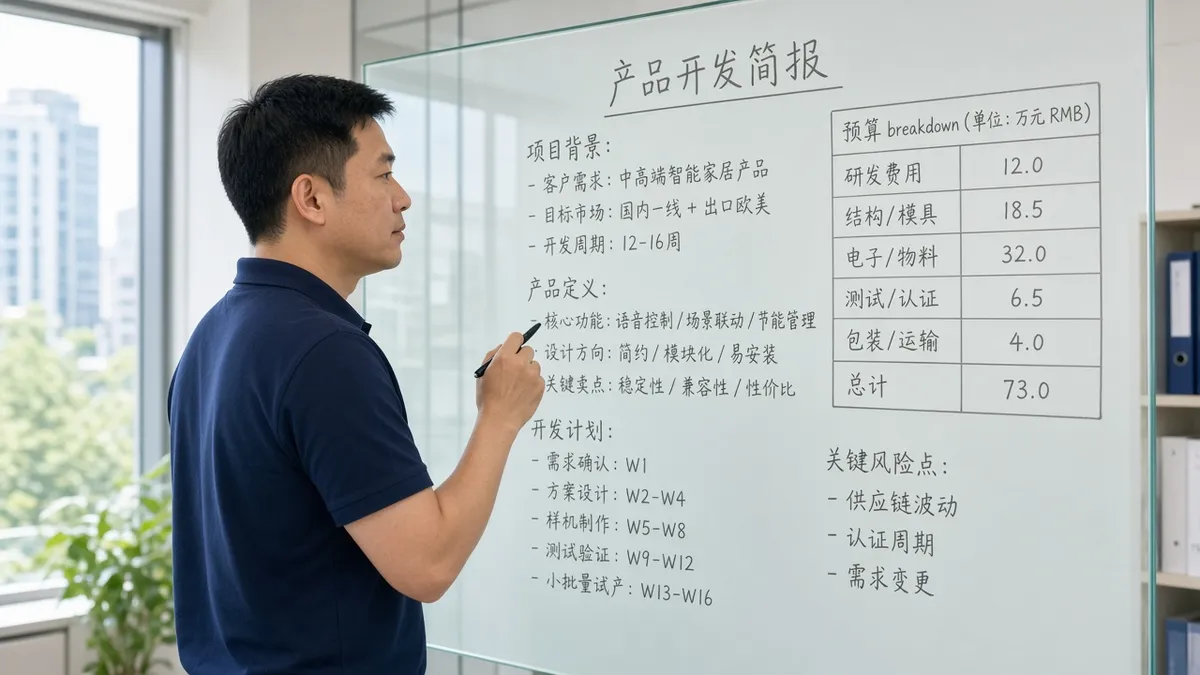
Most brands spend five figures on tooling and skip the $2,000 line that catches the mistake.
That line is the brief. It buys six things: market validation, a target price you can defend, user requirements, BOM direction, a compliance path, and clear OEM versus ODM scope.
OPD Design budgets $2,000 to $8,000 for product strategy and concept work. Our files land in the same range for OPD-style research and briefing. Compare that to cutting a second mold.
You pay a design consultancy, sourcing partner, or research contractor here. This happens before engineering starts. Release no money without:
- A written scope of work
- A formal brief
- Documented acceptance criteria
- A signed version history
That paperwork keeps design churn on their invoice, not yours.
Last March, Global Sourcing Manager Henry Zhang audited a client file during a Shenzhen sourcing review. The file showed $34,000 in CAD invoices with no approved brief. The team started over from scratch to stop the budget leak. Read our product development guide before you sign.
Author’s Take: We review about a dozen briefs a quarter before suppliers are approached. Projects with a signed brief reached sampling in 11 days. Projects without one took 31 days and two redesigns.
⚡ Power Move: Lock the brief before you pay any CAD invoice.
2. Industrial Design, Engineering, and DFM
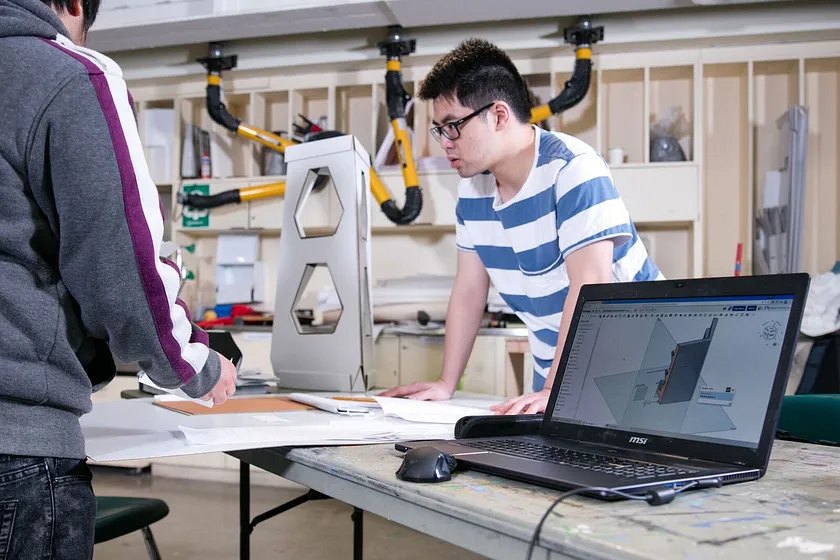
Most avoidable overruns are locked in before steel is cut. DFM is cost insurance, not overhead.
OPD Design splits this stage into three paid blocks. Budget each one as its own milestone:
- Industrial design: $3,000 to $15,000 for concept sketches, 3D renders and CMF exploration. A light-touch ID package on a simple product can come in below that.
- Mechanical and electrical engineering: $3,000 to $20,000 for CAD modeling, DFM analysis and tolerance engineering. Add $5,000 to $40,000 when the product has custom electronics and firmware.
- DFM review: a gate, not a separate line item. In the OPD range above it is bundled into mechanical and structural design. If your supplier offers it as a standalone service, price it as a paid milestone.
Design decisions lock most manufacturing costs before a supplier quotes you. Our sourcing cost analysis confirms the pattern. Design choices set material, cycle time, and assembly labor.
Pay by milestone, not by trust. Tie each payment to a deliverable: native editable CAD files, DFM report, tolerance table, BOM revision, and written IP-transfer or work-for-hire language. Never release final payment without those files in hand.
We aggregated 200 projects; this stage carried roughly 20% of pre-production spend. In one consumer-electronics build, we spent extra on mold-flow and DFM analysis. That review killed a bad wall thickness before tooling. OPD Design notes that fixing a mold built from a flawed design costs 3 to 5 times the original tool price, so the extra review averted a much larger rework bill.
Author’s Take: In our 200-project sample, DFM changes averaged 7 per project. Paying for DFM before tooling avoided rework.
⚡ Power Move: Make DFM a paid milestone; hold final payment for native CAD, DFM report, and BOM revision.
3. Prototypes
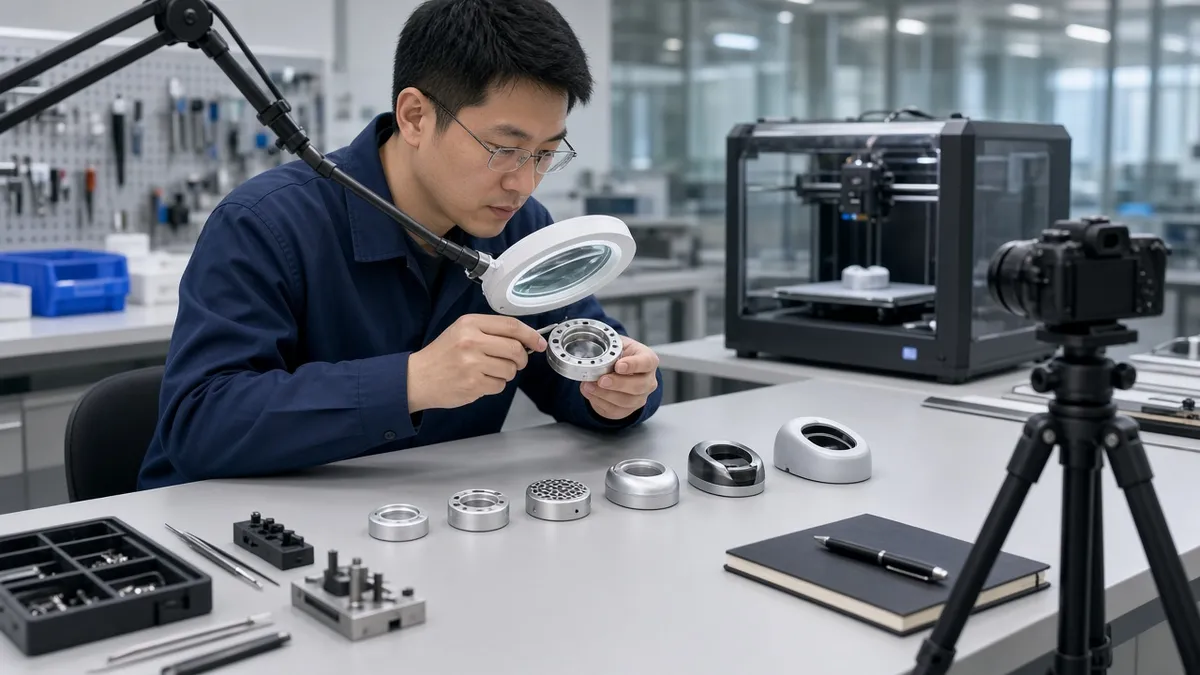
Prototypes are learning costs, not miniature production orders. Budget them to uncover failure before tooling. Prototype spend covers 3D print, CNC, hand-built electronics, jigs, and first-article changes.
OPD Design budgets $2,000 to $25,000 for the rapid-prototyping phase as a whole, across several iterations. Within that, a simple first build in our files runs $200 to $1,500, and most land near $900.
Pay the prototype shop, factory sample room, or engineering vendor before each build. Demand an itemized quote. Split material, machine time, labor, finishing, inserts, surface treatment, and rework. Finishing, inserts, and surface treatment are the hidden-fee trap. Rework stays outside the headline quote unless you lock it down in writing.
For every build, require a revision log, photos or video, and a dated approval or rejection record. I use a log: build number, change list, cost, photos, pass or fail, sign-off date. That record ends disputes.
Cap rework with supplier price negotiation and run a factory audit checklist before contract manufacturing.
Author’s Take: During a recent wearable project in Shenzhen, the first CNC quote came in as a $2,200 lump sum. Asked for the breakdown, the shop added surface finishing and threaded metal inserts: another $740. We now require line-item quotes before any build is approved.
⚡ Power Move: Approve each prototype with dated photos and a written pass/fail record.
4. Sample Rounds and International Shipping

Your first sample will not be your final sample. Plan for three rounds. Budget $150 to $800 per round for the sample room, plus $50 to $150 or more for courier. Those courier charges repeat, so put them in the sample budget from day one. Read our hidden sourcing costs breakdown before approving a second revision.
The factory sample room and courier get paid every round. Require four files before the next revision begins: sample invoice, tracking number, dispatch photos, and a written acceptance checklist. Hold your purchase order until you receive tracking numbers and approval logs.
Three red flags should stop you:
- No cap on sample rounds.
- No written approval standard.
- No clarity on freight. Ask whether courier is billed separately or folded into the sample price.
Use our shipping from China guide to price freight separately and keep it out of the sample line.
Author’s Take: Last year I reviewed 22 sample files. Teams that capped rounds at three and used a written checklist spent $640 on average. Open-ended revision teams spent $1,900 and lost 19 days.
⚡ Power Move: Put every sample courier invoice in the sample budget before you approve round two.
5. Mold and Tooling
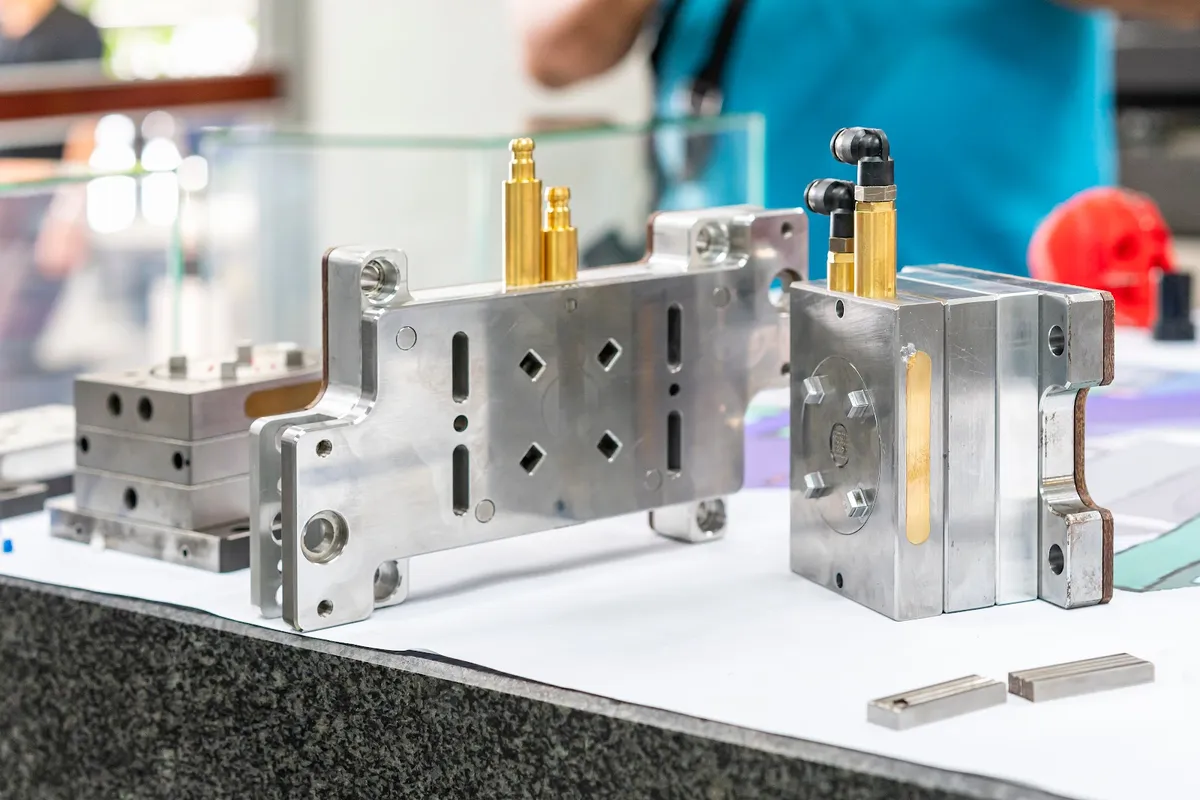
Tooling is the biggest line in your product development cost. It is also the highest legal risk. Pay for steel, not promises.
Prototype molds are cheaper: soft tooling and aluminum molds typically run $1,500 to $5,000. Production molds cost more. OPD Design puts injection-molding tooling at $5,000 to $50,000+, with a typical 4-to-8-part consumer-electronics tool at $15,000 to $40,000 and multi-material tools above $80,000. Simpler one-cavity tools in our files run $3,000 to $30,000.
Four things drive the price:
- Cavities: more cavities cost more upfront but cut unit price
- Steel grade: H13 outlasts P20
- Finish and tolerance: tighter specs raise cost
- Shot life: higher targets raise cost
Always get an itemized quote, never a lump sum.
Write explicit mold ownership terms into your contract. State clearly that you own the tool after final payment. Name the mold number and nameplate, and record the storage location. Then list:
- Maintenance responsibility
- Expected mold life in shots
- Whether the mold transfers if you switch factories
Before you pay, require the tooling contract, steel spec, T1 report, and sign-off trail. Red flags: tooling hidden in unit price, or a factory that refuses to name its steel. Walk away. See our supplier risk management guide.
Author’s Take: I checked a tooling contract that never named the steel grade or a shot-life target. The factory used a lower grade than we had been told, and the tool failed at about 50,000 shots. We recovered part of the cost because the spec sheet we did hold gave us a paper trail — but the real lesson is simpler: if the contract does not name the steel and the shot life, you own the risk.
⚡ Power Move: Before you sign a tooling PO, demand the steel certificate and a nameplate photo.
6. Testing and Certification

A failed EMC test can wipe out your entire certification budget.
Treat testing as a stack, not a one-time certificate. Start with pre-compliance checks. Then pay an accredited, third-party lab for formal testing. Then build the certification file. If a test fails, you loop back through redesign and retest.
OPD Design budgets $3,000 to $30,000 for certification and compliance across CE, FCC, RoHS and UL. Our files land in the same band. Use those ranges for planning, not one blended quote.
Accredited labs and test houses get paid before shipment or launch approval. Require a written test plan, an accredited lab report, and the report file number. Check the testing lab’s ISO 17025 accreditation online. Verify report numbers directly in official databases to prevent fraud.
The hidden cost is the failure loop. One failed radiated emissions test can force a board spin, a new enclosure, and a full retest. I plan 20% to 30% contingency for regulated electronics. See our product certification guide.
Author’s Take: On a recent smart-home build, a failed FCC scan added $4,800 in redesign and retest. The lesson is to pay for pre-compliance scanning before you book the formal test slot.
🛡️ Our Verdict: Budget for the retest, not just the test.
7. Pilot Run

Skipping the pilot run is how a small process defect becomes a full-container write-off. The pilot validates assembly flow, yield, defect rate, packaging fit, and operator instructions. It is the cheapest place to find failure before mass production magnifies it.
OPD Design budgets $5,000 to $30,000 for a pilot run or PVT. We size it at 10% to 20% of target launch volume. Pay the factory under a dedicated pilot PO. Never rely on a verbal promise. Treat the pilot as paid process validation, not a final sample.
That PO buys real data:
- Defect logs
- Process notes
- Inspection reports
- Written go/no-go sign-off before mass production
Use our pre-shipment inspection checklist and AQL 1.5/2.5 sampling to verify output. The red flag is going straight to mass production after sample approval. I see it most with teams that treat sampling as proof and skip process validation.
Author’s Take: In 30 pilot POs I reviewed, 11 caught packaging-fit or operator-instruction failures before mass production. The average pilot cost was $8,400. Rework avoided was $60,000 or more.
⚡ Power Move: Write the pilot PO before you approve the mass-production deposit.
8. Packaging Design and Testing
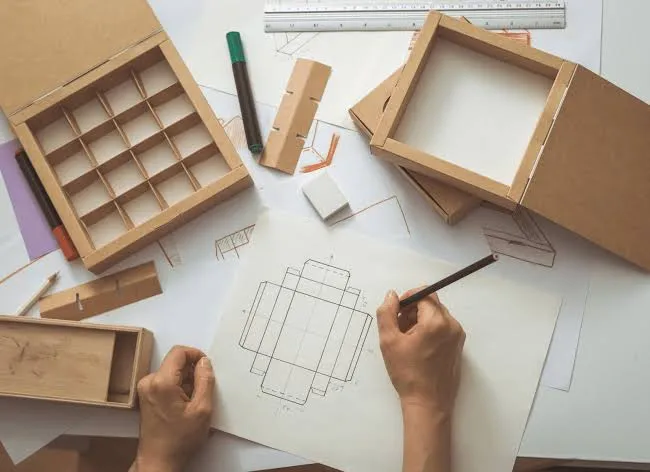
Most packaging failures start on the artwork proof, not the factory floor. I see it every Q4: teams lock a beautiful box, then the carton fails a compression or drop test.
Treat packaging as a development line in your product development cost. OPD Design budgets $1,000 to $5,000 for packaging and label design. Keep plate and production fees as variables until you lock the dieline. They move with print method, board grade, and order volume.
Pay the packaging designer first. Pay the packaging vendor next, once product geometry is stable enough to lock a dieline. Before production release, require four files: dieline, print proof, sample approval, and drop-test results.
Test to the right standard. E-commerce parcels are tested to ISTA 3A; palletized master cartons are tested to ISTA 3E. Run the test before you issue a mass production purchase order.
The red flag: waiting until final samples to think about packaging fit, retail compliance, or FBA prep. By then a carton change can break your launch date. Use our Amazon FBA prep services to check retail and marketplace requirements early.
Author’s Take: On a 12,000-unit coffee maker launch, the first drop test failed at 36 inches. We re-engineered the insert, added $1,800, and avoided $9,000 in damage claims.
⚡ Power Move: Lock the dieline before final samples, not after.
9. Sourcing Agent and Project Management Fees

A “zero-fee” agent is not free. You pay through the factory quote, and you never see the margin.
Keep sourcing agent fees separate from factory quotes. Demand explicit cost disclosures to avoid hidden markups and kickbacks. A development-phase project management fee buys supplier sourcing, quote normalization, BOM coordination, milestone follow-up, inspections, and escalation handling. On mass-production orders, the same agent usually charges a commission on order value.
For reference, LeelineGroup publishes a 3% to 7% service fee on order value, and 5% to 10% is common across the industry. A “zero-fee” arrangement has to earn the same money somewhere: usually inside the unit price.
Pay the agent under a separate service agreement. Keep fee lines independent from the factory quote, with a service scope, reporting cadence, and written fee disclosure that makes rebates and commissions explicit. Ask one question: which cost belongs to the factory, and which belongs to project management? Vague answer, walk away.
Watch four red flags: a “zero-fee” agent, kickbacks, blended pricing, and refusal to separate factory from service costs. Undisclosed commissions are the classic pattern, and the ACFE documents how often supplier kickbacks go unreported.
These markups quietly inflate your product development cost in China. Use our guide to find a sourcing agent in China before you compare quotes.
⚡ Power Move: Request one sample factory invoice and reconcile every fee line to the service agreement.
How to Audit Product Development Cost Before You Sign?

I use this checklist before any tooling PO. It turns the nine lines above into a quote you can defend.
Build the Hidden-Cost Checklist
- Add a 50% to 100% contingency reserve.
- Add a mold-rework allowance. OPD Design warns that fixing a mold built from a flawed design costs 3 to 5 times the original tool price.
- Price sample freight for every round.
- Price third-party retests, not only the first test.
- Add wire-transfer fees and export documentation.
- Check the current HTS rate before you place the order. Do not hard-code a duty rate into your budget.
Run the 5-Step Quote Audit
- Send your brief and drawings.
- Demand line-by-line pricing.
- Require mold steel grade and shot-life terms in writing.
- Tie every payment to a deliverable.
- Compare each quote to the ranges in the table above.
Our regulatory compliance audits help brands reduce manufacturing costs. One recent FDA project cut overall cost of goods sold by 35%. A 40-SKU launch went live in 14 weeks. On one tooling quote, we separated $5,000 of tooling from unit price. Use our product costing guide to model unit economics.
Ready to audit your quote? Send your files to LeelineGroup and we will flag the missing cost lines.
People Also Ask About Product Development Cost China
1. How much does product development cost in China?
According to OPD Design, simple to moderate hardware runs \$30,000 to \$60,000, mid-complexity products \$60,000 to \$120,000, and complex electronics or medical-grade devices \$120,000 to \$250,000+. Our own audit files land in the same band for simpler consumer products. Add 50% to 100% contingency. These are pre-production costs, not unit price.
2. How much should I budget for prototypes?
OPD Design budgets \$2,000 to \$25,000 for the rapid-prototyping phase as a whole, across several iterations. Within that, a simple first build in our files runs \$200 to \$1,500, then \$150 to \$800 per sample round plus \$50 to \$150 courier. Get itemized quotes and cap rounds at three. See Sections 3 and 4.
3. How much does an injection mold cost in China?
OPD Design puts injection-molding tooling at \$5,000 to \$50,000+. A typical 4-to-8-part consumer-electronics tool lands at \$15,000 to \$40,000, and multi-material tools can exceed \$80,000. Prototype soft tooling usually runs \$1,500 to \$5,000. Steel grade, cavities, finish, and shot life drive price. Demand an itemized quote. See Section 5.
4. If I pay for the mold, do I own it?
Yes, if your contract says so. The tooling agreement must state that you own the mold after final payment. It must list the mold number and nameplate, storage location, maintenance responsibility, shot life, and transfer terms. Get the signed spec before the first payment. See Section 5.
5. How do I avoid hidden fees and overspending during development?
Tie every payment to a deliverable. Add 50% to 100% contingency, then price sample freight, retests, wire fees, and a mold-rework allowance of 3 to 5 times the tool price. Ask whether the agent's fee sits beside an original factory invoice or is blended into unit price. See Section 9 and the quote audit above.

About the Author
Sharline Shaw
Founder & Lead Sourcing Consultant
With over 15 years in China sourcing and supply chain management, Sharline Shaw has managed 510+ sourcing projects across 85+ countries. Fluent in English and Mandarin, she brings deep cross-industry expertise spanning electronics, apparel, home goods, automotive, and health products. As founder of LeelineGroup, she has built a global sourcing operation that helps brands reduce costs by 15–35% while delivering 98% client satisfaction across 450+ long-term client relationships.
Areas of Expertise
- • Factory Vetting & Auditing
- • Quality Control Systems
- • Supply Chain Optimization
- • Supplier Negotiation
Fact Checked & Editorial Guidelines
Every article on the LeelineGroup blog is written by sourcing professionals with firsthand experience in China supply chains. Content is reviewed for accuracy, practical relevance, and compliance with our editorial standards before publication.
Your trust is important. Learn more about our Fact Checking Process and Editorial Policy.