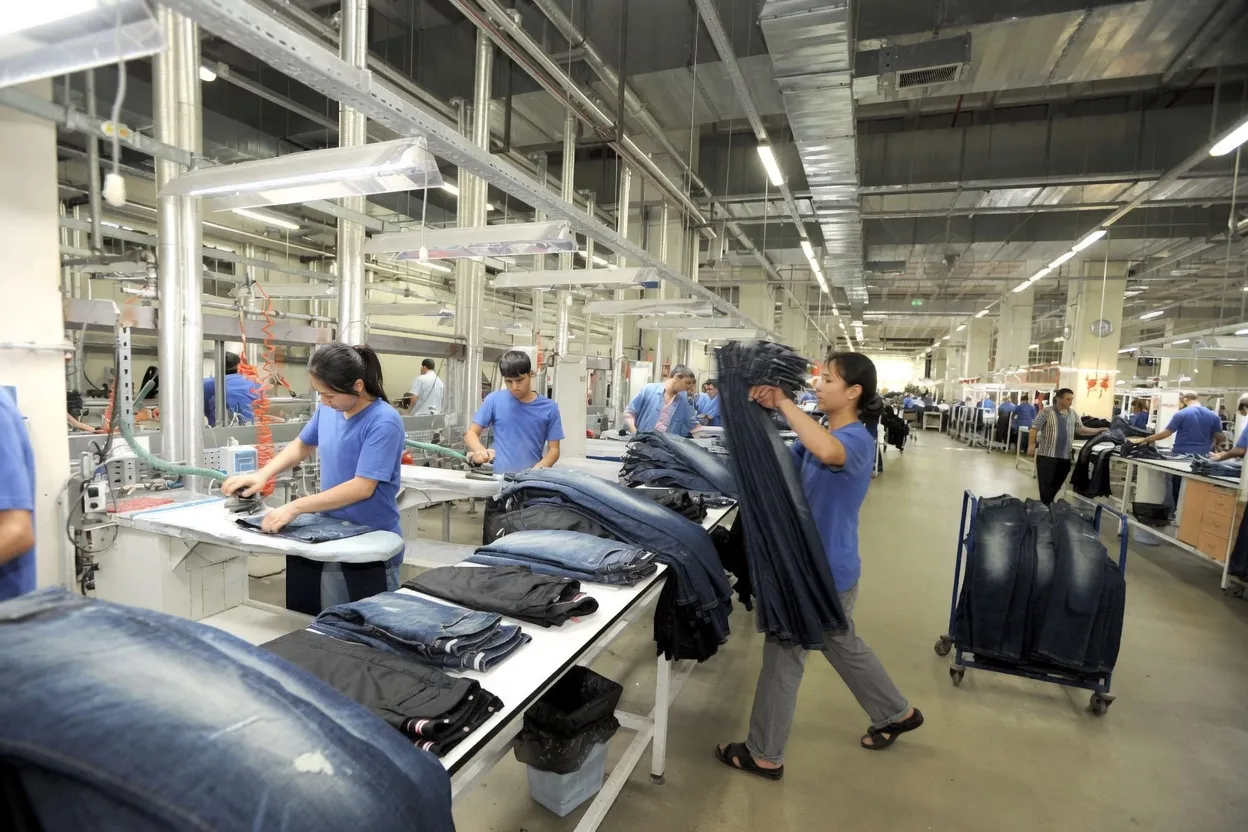
Double-handled inventory is the hidden tax on FBA replenishment. Every extra US 3PL touch adds handling cost, days in transit, and another point where a carton can be opened, relabeled, or lost between scans.
To ship directly from China to Amazon FBA, your factory or China hub sends goods straight to the fulfillment centers Amazon assigns. Your company, or a customs broker you appoint, is the importer of record and owns the paperwork, the duty, and the tax position.
This 7-step SOP covers the whole chain — Seller Central planning, factory pickup, FBA prep, origin consolidation, freight, customs, and Amazon receiving — and it is written for experienced operators running recurring replenishment, not one-off parcels.
Use it when your SKUs are stable and your compliance file is clean. If Amazon is splitting shipments aggressively, if restock limits are moving, or if certificates are still open, route through AWD or a US 3PL buffer while you fix the input. Read the timing honestly as well: an air lane can close end to end in a couple of weeks, while an ocean lane runs into months once prep and Amazon check-in are counted.
Key Takeaways
Direct-to-FBA works when one workflow owns the shipment from the first Seller Central screen to Amazon receiving. These are the six controls that decide whether the shipment lands or fails.
- Confirm the importer of record before you book freight. Amazon is not the IOR: your company or an appointed broker must be able to post a bond and receive customs notices, and duties have to be prepaid because Amazon refuses any inbound shipment that arrives collect.
- Build the shipment in Send to Amazon before anything moves. Amazon assigns destination fulfillment centers at this step, so pickup, labels, and consolidation all follow from the split decision you accept here.
- Normalize every PO and carton manifest at origin. Mixed SKUs are cheap to fix in a China hub and expensive to fix inside a US fulfillment center, and a rebuilt carton invalidates labels that were printed on the first pass.
- Scan FNSKU labels at the bench, before each carton is sealed. Sample five units per carton on every carton, and scan unit by unit any carton that was rebuilt after the label file was printed.
- Sort lanes by shipment ID and FC code in text, and add the filings the lane needs. Colored tape alone causes rebuilds, and ocean or EU lanes still need ISF 10+2, ISPM-15 wood packaging, and an EORI with a GPSR responsible person.
- Reconcile receiving against delivered counts, not delivery status. “Delivered” is not “received”: keep PODs, carton photos, and label records so a short check-in can be claimed at carton and unit level.
Prerequisites

Prep: 3 to 5 hours of desk work per shipment. This is planning and document time only. It excludes production, transit, and Amazon check-in.
- Seller Central with Send to Amazon access. Sub-users must be granted the role before they can build a shipment, so request it ahead of your first booking.
- ASIN/SKU map covering FNSKU, unit dimensions, and case-pack quantities. Wrong case packs trigger paid re-binning.
- Supplier ship-from address, plus measured carton dimensions and weights. Suppliers routinely overstate carton sizes. That skews the shipment data Amazon uses for placement and fees, and it breaks label templates when the generated label no longer matches the real carton.
- Compliance files, HTS codes, and target marketplace. See product certification and our guide to compliance risk management.
- Document inputs: commercial invoice draft, packing list, PO reference, product descriptions, and one written valuation logic. See how to import from China.
Amazon is not the importer of record and not your prep team. You or your customs broker own the paperwork and the duty, and Amazon requires duties and taxes to be prepaid — an inbound shipment that arrives collect is refused.
EU only: secure an EORI number and VAT registration before booking. Product rules differ by member state, and the General Product Safety Regulation (GPSR) requires an EU-based responsible person named on the listing and on the product.
Declared values: state true product value on every customs form. Low values risk fines, holds, and seizure, and they also break the valuation logic your broker files. Batteries, children’s products, and other regulated categories need test reports before booking, not after.
How to Ship Directly from China to Amazon FBA: Step by Step
Who is the importer of record? What happens if Amazon splits your fulfillment centers? The seven steps below answer both, in the order the work actually happens.
Step 1: Build the Shipment in Send to Amazon
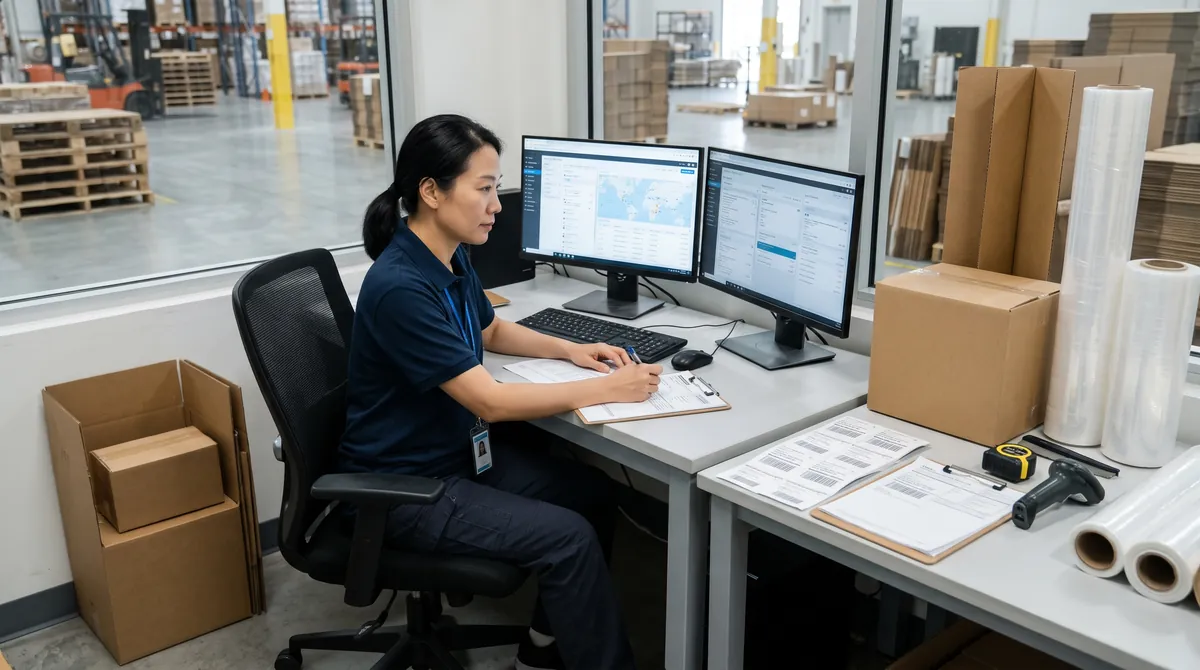
Open Seller Central on desktop and locate Send to Amazon (under Inventory, then FBA — menu names move between releases). Select the listing, set Ship from to your China factory or consolidation hub, confirm packing details and case packs, then choose a placement option and generate the shipment structure.
This step comes first because Amazon assigns destination fulfillment centers here. Pickup, labels, and consolidation all follow from that output, and one shipment can land in several FCs.
You have three ways to handle it: accept the optimized placement Amazon proposes, pay the inbound placement service fee for a reduced split, or divert inventory to AWD or a 3PL buffer when the split becomes unmanageable. The fee itself is published on Amazon’s pricing page; compare it against sorting labor and lost days, not against zero.
Before labels go to the factory or prep center, reconcile shipment IDs, FC codes, the carton plan, and unit counts. One shipment rarely means one label: each carton carries its own label for its assigned FC, and the shipment-level summary is separate. If the carton plan changes after labels are printed, the whole set has to be regenerated.
See our Amazon FBA sourcing guide for origin prep.
⚠️ Experience Warning: The cheapest placement option is not automatically the cheapest landed cost. A reduced-split fee that looks small per unit can be overtaken by destination sorting labor and a missed delivery window. Compare the landed cost of each option before you accept it.
— Martin Lee, Senior Logistician
Step 2: Stage Factory Pickup
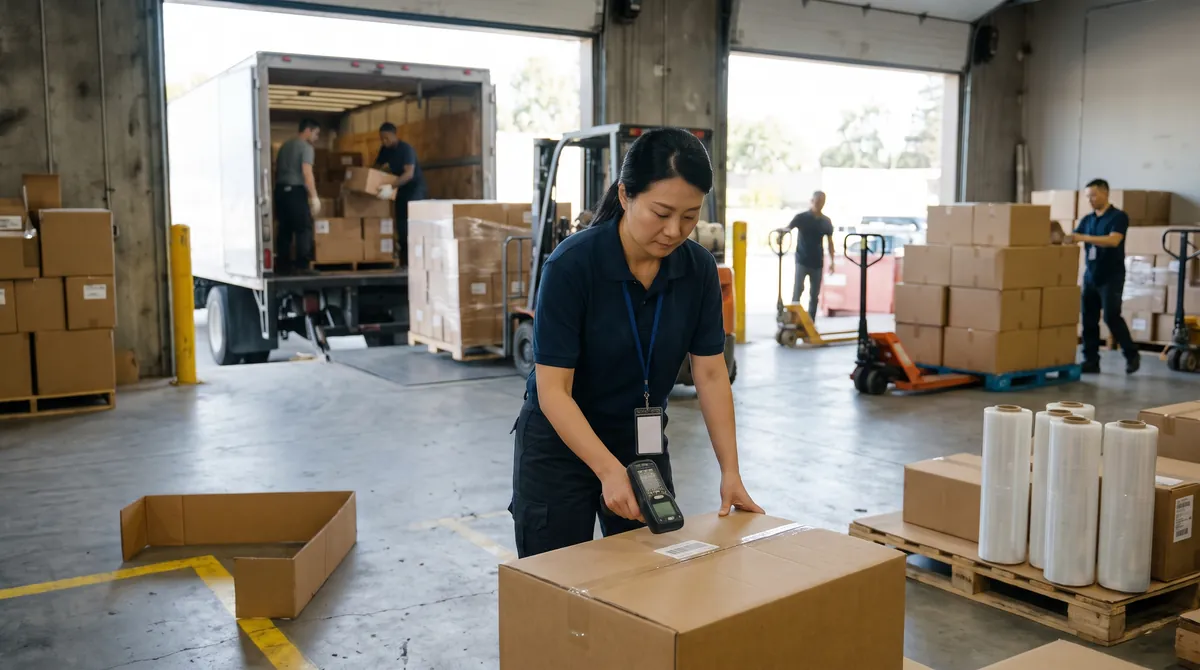
Once the shipment plan is approved, switch to physical execution. Dock congestion usually starts with paperwork, not trucks: we have watched two factories hold a loading bay for the better part of an hour because their carton labels did not match the shipment plan.
Call each factory’s shipping manager and confirm four data points in writing: cargo-ready date, finished-goods quantity, ship-from address, and pickup window. Log all four in the shared shipment tracker so every party reads the same numbers.
For multiple suppliers, normalize every PO and carton manifest before the truck arrives. Mixed-SKU confusion travels downstream fast, and it is far cheaper to fix at origin than inside a US fulfillment center.
Our origin coordinators schedule managed pickups from the Guangdong and Hubei manufacturing clusters: the truck collects from each factory and routes cargo to the correct prep or consolidation hub instead of driving straight to export.
At pickup, check carton count, outer-carton condition, master-carton markings, seal integrity, and that each carton sits on the correct shipment lane. Every carton is scanned against the shipment reference as it loads, and the dispatcher calls the count out loud so the trailer and the paperwork agree.
Verification: the pickup receipt, carton count, and shipment reference must match the plan created in Amazon. If any of the three disagree, hold the truck.
Supplier drop-off to a China prep center works for a single factory. Managed pickup gives tighter control for multi-factory consolidation and time-sensitive replenishment. Single-factory direct loading sends the truck straight to port; multi-factory cargo routes to a hub first.
Step 3: Run the Pre-Shipment Inspection and FBA Prep Check
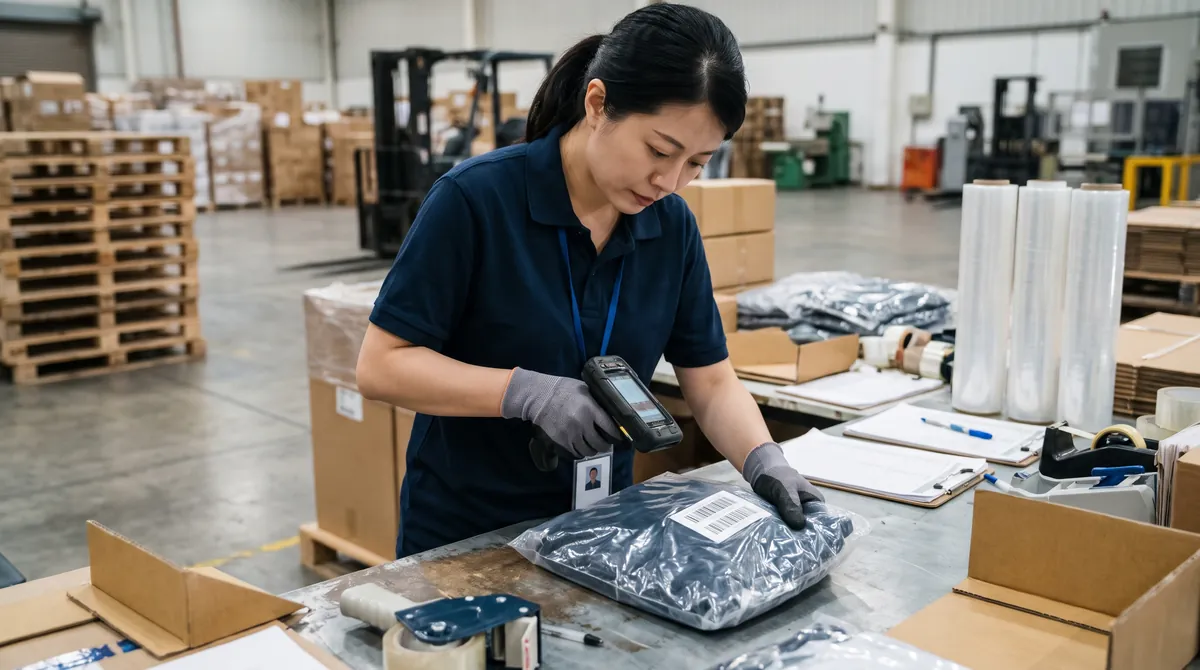
This is where shipments fail. Open random boxes at the prep bench before sealing. Apply AQL 1.5 for major defects and AQL 4.0 for minor ones (see the AQL inspection standard for the sampling logic), test electronics for power, check seams on apparel, and count every unit against the packing list before anything is sealed.
Then run the FBA checks. Look for scratches, dents, and contamination. Verify FNSKU placement: each sellable unit needs a scannable FNSKU on flat packaging, never across a polybag seam or a carton crease.
Then scan. Our rule is simple: scan a random sample of five units from every carton before it is sealed, and scan unit by unit any carton that was rebuilt after labels were printed — a rebuilt carton can invalidate labels that were perfectly fine on the first pass.
Confirm the polybag is sealed and undamaged, and add a suffocation warning when the bag opening is five inches or larger; FBA packaging requirements cover the bagging and label rules in full.
Verify set labels if the product is a bundle, and check outer-carton labels: every master carton needs the correct box label, and reused cartons must have the old labels removed. Check that nothing rattles or shifts inside the carton, and re-test one compressed or polybagged unit to confirm it still scans.
Standard cartons must stay within Amazon’s weight and size limits — typically 50 lb and 25 inches on any side for the US — and any exception needs a handling label. This is the same discipline as our pre-shipment inspection protocol, applied to FBA packaging.
Verification: the random barcode scan passes, carton labels match shipment IDs, and carton dimensions and weights match the packing data in Amazon. If your supplier is genuinely experienced at FBA prep, they can prep at source; otherwise move prep to a China-side prep center where the bench scan is actually performed.
⚠️ Experience Warning: On one audit, FNSKU labels had been applied across the polybag seam. A large share of the units in that carton failed the scan. We caught it at the bench, reprinted that carton’s labels, and made the sailing — because the check happens before sealing, not at the Amazon dock.
Step 4: Consolidate and Sort Cargo at the Origin Hub
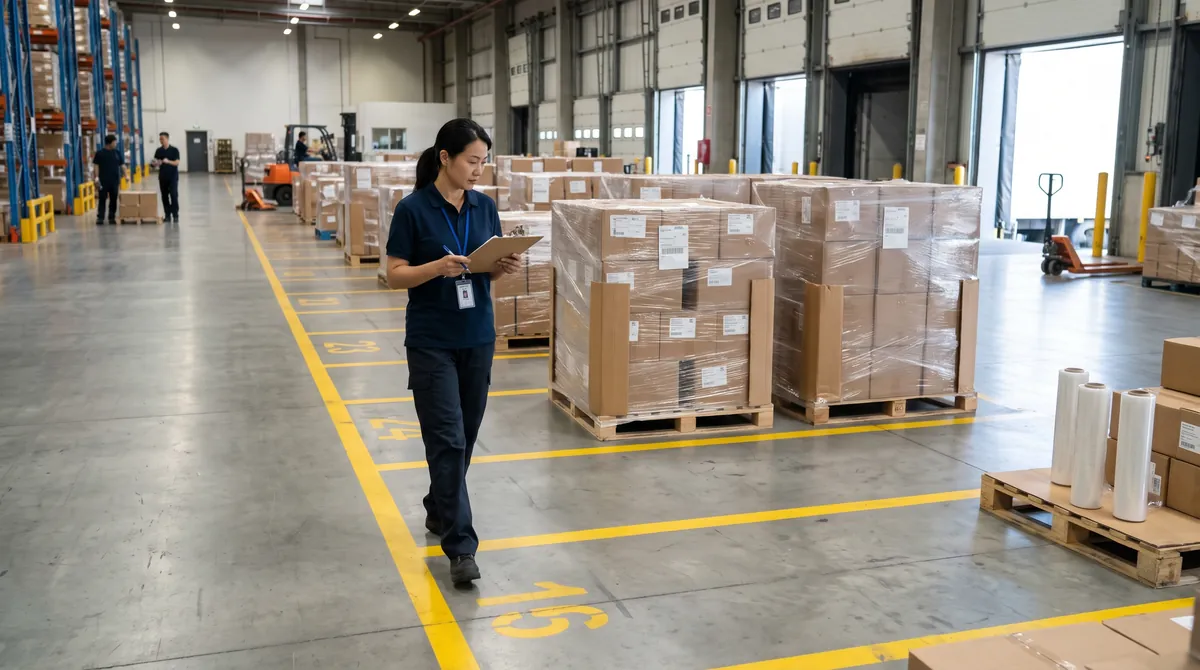
The truck reaches the Guangdong or Hubei staging point, and the real work starts. Smart consolidation beats cheap freight, because sorting is cheap at origin and expensive at the port or inside a US fulfillment center.
Sort every box by shipment ID, FC code, shipping mode, and readiness, and update the shared sheet and the physical lanes at the same time. Print clear text on every lane card — shipment ID and FC code. Never sort on colored tape alone.
Check pallet wrap before it leaves: loose wrap lets cartons shift in transit, and stacks no longer line up on arrival. Build each pallet to Amazon FBA pallet requirements for height, weight, and overhang. Swap out soft or bulging cartons before loading; a bulging carton crushes under the boxes stacked on top of it, and rebuilding the lot downstream costs days.
Photograph every lane and log the carton count plus a lane-specific summary. Clients approve from those files, and the same files settle claims later.
Verification: each outbound lane needs a clean carton count, the correct FC code, a shipment reference, and an assigned linehaul mode. If any lane fails, hold the export booking.
Bypass consolidation entirely for a single factory feeding a single FC on a stable lane — send the truck straight to port. Review the wider flow in our logistics management guide, and use Amazon FBA prep services when you need a controlled bench rather than a supplier’s spare table.
Step 5: Choose and Book the Freight Mode
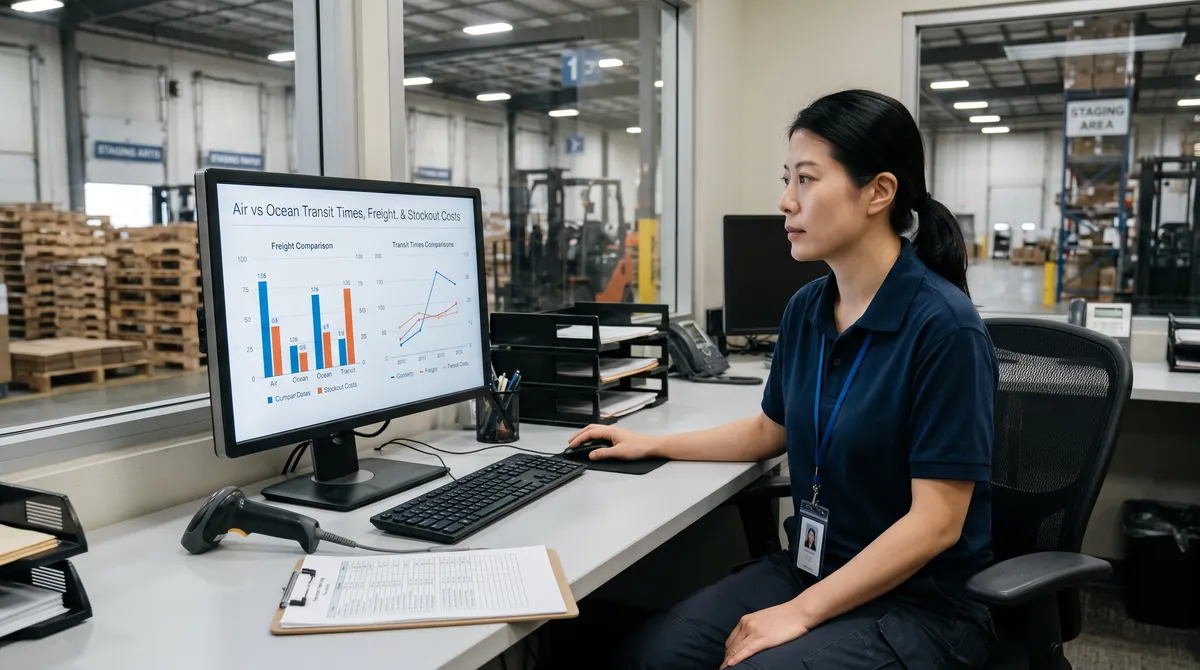
Once cargo is consolidated and export-ready, book freight. Compare sea, air, and rail freight on three inputs: urgency, shipment density and volume, and margin sensitivity.
- Express (3–5 days): urgent small batches.
- Air freight (5–10 days): mid-size restocks where margin absorbs the cost.
- Sea LCL (25–35 days): flexible, low-density shipments.
- Sea FCL (20–30 days): high volume.
- DDP door-to-door: the forwarder handles it all — confirm in writing who is the importer of record.
Add prep and Amazon check-in and the end-to-end picture changes: an air lane can close in roughly two to three weeks, while an ocean lane needs five to seven. A single “two to four weeks” rule of thumb only holds for air.
For DDP, demand a written quote breakdown: pickup, China-side handling, export charges, main freight, customs brokerage, duty and tax treatment, and final-mile delivery to FBA.
Confirm who is the importer of record, who owns the bond, and what happens if the broker’s valuation is questioned. Amazon refuses any inbound shipment that arrives with freight or duty collect, so direct FBA has to be structured as duties-paid — see DDP vs DDU for how the two terms divide the risk.
Amazon also runs its own freight programs, Amazon Global Logistics (AGL) and Amazon SEND, which you can compare against independent freight forwarders on the same terms. Watch the naming: Send to Amazon is the Seller Central workflow that builds the shipment, not a freight service. AGL and SEND are the freight products.
Verification: a confirmed booking with transit milestones, plus an all-in rate sheet with exclusions spelled out. Quotes that omit destination terminal fees or fuel surcharges are not comparable to all-in quotes.
Booking timing matters more than rate shopping. Both air and ocean cut-offs are unforgiving, and a missed cut-off costs a week of restock, not a day.
Step 6: Prepare the Customs Packet and Lock Import Responsibility
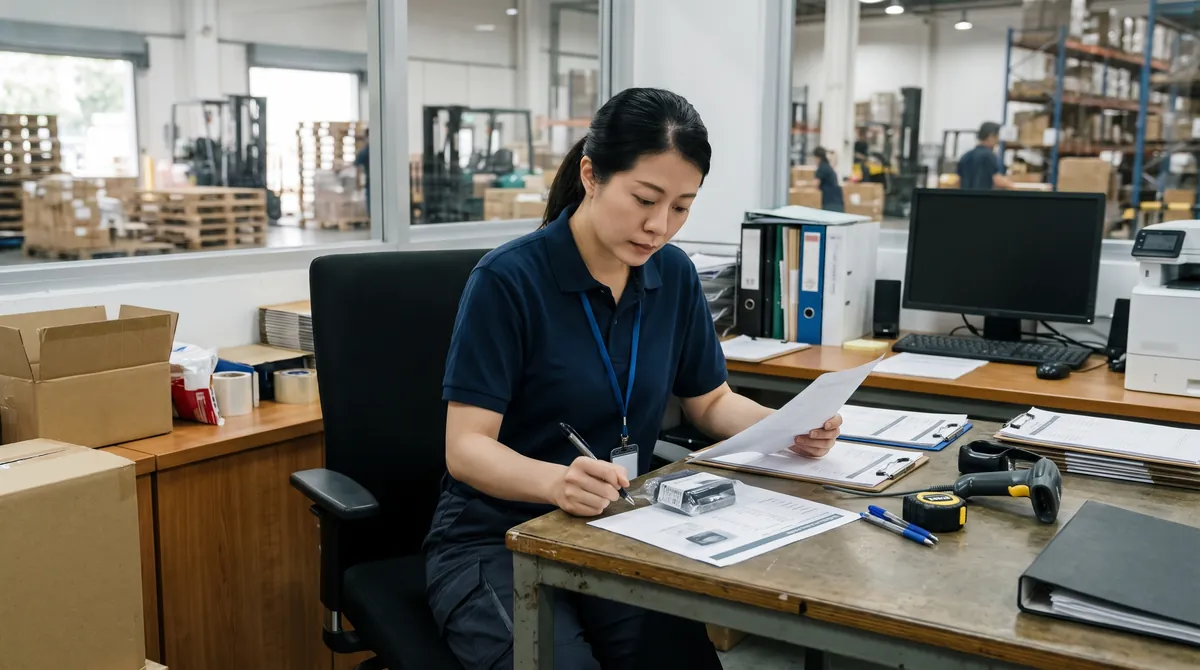
Customs files fail before cargo reaches port. Open the packet the way a broker does: commercial invoice, packing list, bill of lading or airway bill, shipment references, broker instructions, bond or power of attorney where required, and category certificates. Keep shipment ID, PO, SKU family, quantity, and declared value consistent across every file.
Amazon is not the importer of record. The seller, or an appointed customs broker, owns clearance and the duty and tax position. Under US rules the importer of record must be a party that can post a bond and receive customs notices, which is why some overseas forwarders cannot act as importer for a foreign seller — CBP’s Form 5106 page covers how importer identity is registered.
Match item names, HS codes, values, and counts across every document. A vague invoice description can hold an air shipment at customs while the broker stops the file.
US ocean freight adds two requirements that air freight does not. ISF 10+2 must be filed 24 hours before loading at the foreign port, and late or inaccurate filings carry penalties that start in the thousands of dollars — CBP’s ISF page sets out the rule.
Separately, wood packaging such as pallets, crates, and dunnage must meet ISPM-15: heat-treated or fumigated and stamped with the IPPC mark. APHIS explains what inspectors look for on its wood packaging material page.
EU lanes need an EORI number and VAT registration, plus product-specific compliance. Under the General Product Safety Regulation (GPSR), most consumer products need an EU-based responsible person whose name and contact details appear on the product or its packaging.
Keep one source of truth for valuation. Do not let a supplier rewrite invoice logic at the last minute, and confirm who receives duty notices before cargo lands.
Verification: customs release or a broker clearance notice in hand before you release the final FBA delivery. Do not close the lane on a verbal clearance.
⚠️ Experience Warning: A shipment once sat waiting on a missing power of attorney while the broker had a complete file and nothing to file it with. Check bond, POA, and duty-notice recipients before booking, not after the freight is booked.
Step 7: Track Delivery and Reconcile Receiving
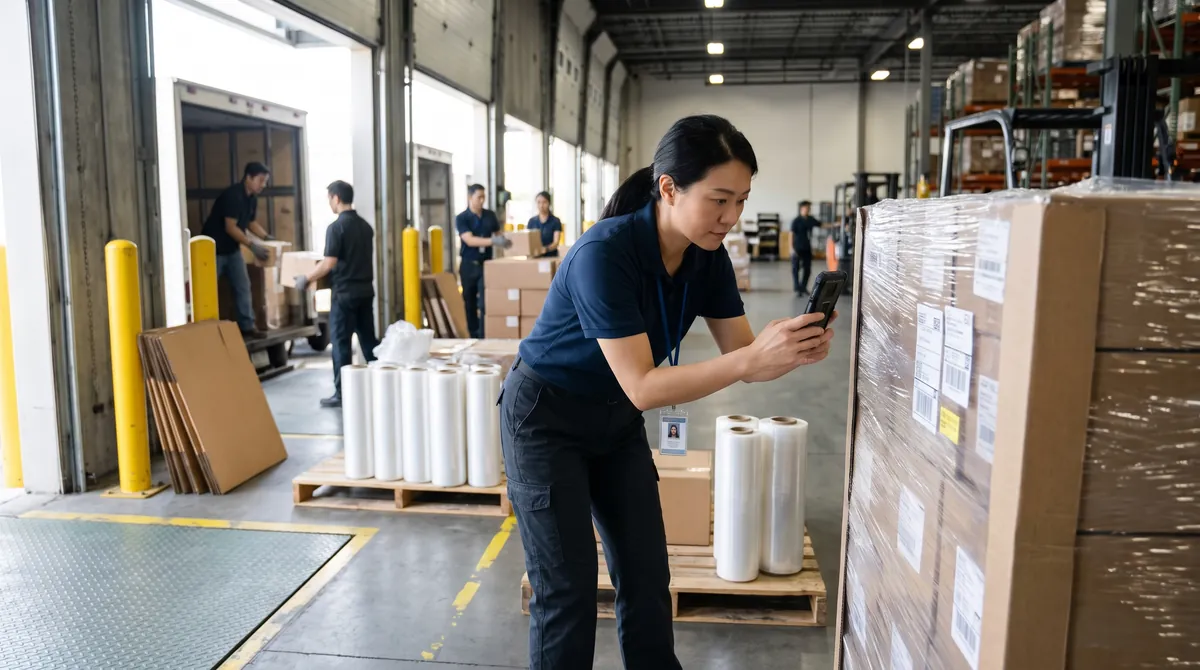
Lock the last-mile mode and the delivery appointment before the truck leaves on the final leg. SPD (small parcel delivery) suits parcel-style lanes under 50 lb per carton; LTL and FTL handle larger moves. Where Amazon requires an appointment, book it in Carrier Central and confirm the slot before dispatch — a truck without a confirmed appointment is turned away at the gate.
Then track the milestones in your shared tracker: departed origin, export cleared, import cleared, out for delivery, delivered, checked in, receiving complete, and shipment closed. Do not stop at “delivered.”
Keep an evidence pack on file: carton photos, box-label PDFs, delivery receipt, proof of delivery (POD), carrier references, and count confirmation. Missing PODs are the most common reason a legitimate claim fails.
Delivered is not received. Amazon can take days to check in inventory, and a claim is only as strong as the origin-to-final-handoff proof behind it. If restock limits change or Amazon rejects the inbound plan, do not improvise at the gate. Fall back to AWD or a 3PL buffer, and plan that fallback before you book freight.
Verification: the shipment status closes correctly, and received counts reconcile against delivered carton and unit counts. If they differ, open a claim immediately with the evidence pack in hand.
Troubleshooting
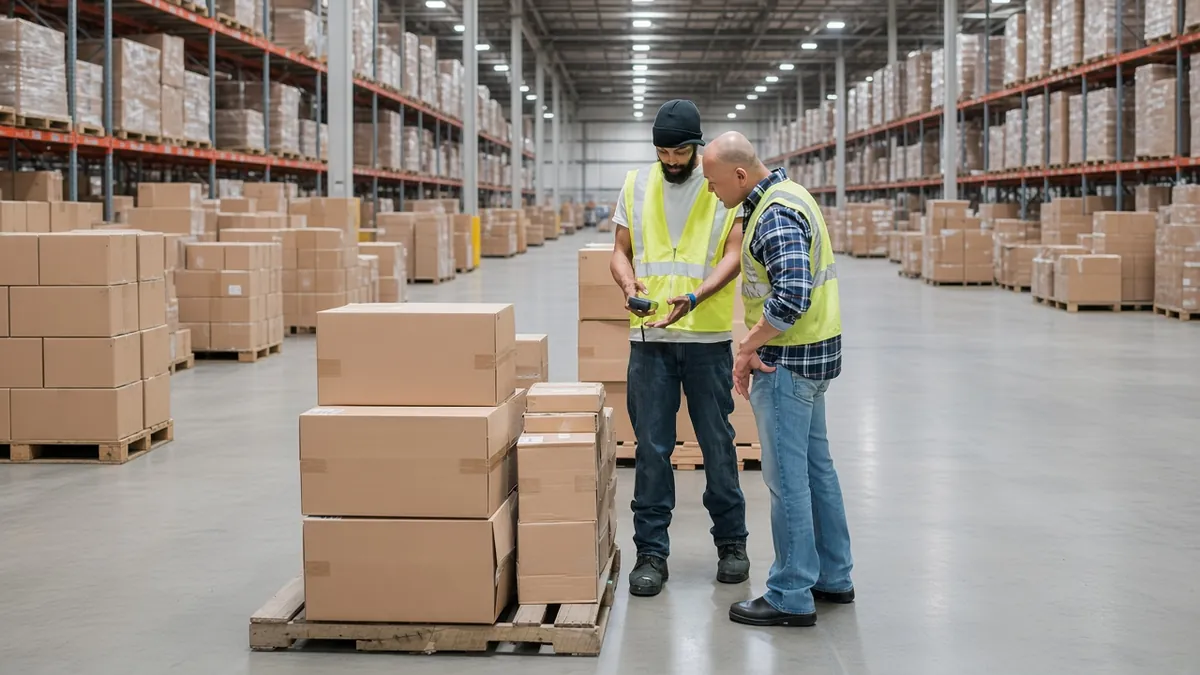
Across the China-to-FBA shipments we handle, one failure dominates: missing or unreadable FNSKU and box labels. It is a prep-control failure, not a carrier problem. One bad label can reject an entire carton.
Missing or unreadable FNSKU/box labels
Problem: Labels fail scan at origin or at Amazon check-in.
Why it happens: Rushed prep, supplier-applied labels with no scan test, or cartons rebuilt after the label file was printed.
Fastest fix: Hold the export and rescan every lane until the beep is clean. Reprint labels against Amazon’s FBA barcode requirements and document the corrected carton map before release.
Customs hold: valuation or invoice mismatch
Problem: The broker stops the file on value or description.
Why it happens: The supplier edits the commercial invoice late, valuation logic is inconsistent across documents, or HS codes are too vague to match the cargo.
Fastest fix: Issue corrected commercial documents through the broker immediately, align declared value to the PO and invoice record, and freeze unauthorized document changes at source.
Delivered to Amazon but not fully received
Problem: Check-in shows short, or entire cartons are missing.
Why it happens: Split-lane count mismatch, delivery to the wrong FC, receiving lag, or cartons lost between handoff and check-in.
Fastest fix: Open reconciliation with the POD, signed delivery receipt, origin carton photos, and label records. Compare delivered against received at carton and unit level before escalating.
If Amazon has split your routing, never postpone the consolidation decision to the US side. Lock FC splits before export, because every day of delay moves the problem closer to a warehouse that will not fix it for you.
People Also Ask About Shipping Directly from China to Amazon FBA
1. Can I ship directly from China to Amazon FBA without a US 3PL?
Yes. Factory output can go straight to the fulfillment centers Amazon assigns. Direct lanes cut touches and days when labels, customs, and prep are clean.
You still own import responsibility or appoint a broker, and you still need origin prep for FNSKU and carton checks. A China prep center is usually the cheapest place to do that work.
2. Do I need an ISF filing for direct-to-FBA sea freight?
Yes, for ocean freight into the United States. ISF 10+2 must be filed 24 hours before the goods are loaded at the foreign port, and late or inaccurate filings carry penalties. Air freight does not require ISF. Your forwarder or broker normally files it, but confirm in writing who is responsible and who receives any ISF query.
3. What causes the most direct-to-FBA failures?
Label and customs errors. Missing or unscannable FNSKU labels are caught at prep; vague invoice descriptions are caught at brokerage. Either one can hold an entire file. Scan every rebuilt carton after bagging, and match invoice language to the product, SKU family, quantity, and declared value before the truck leaves.
4. How long does direct China-to-FBA shipping take?
It depends on mode. Express takes days, air freight a little longer, and sea LCL or FCL takes weeks of sailing time, with Amazon check-in adding more after delivery. Build the plan from mode plus prep plus check-in, not from a single round number, and book sea freight well ahead of the cargo-ready date.
5. Who is the importer of record for FBA shipments from China?
You, or a customs broker you appoint. Amazon is not the importer of record and will not clear goods for you. The importer must be able to post a bond and receive customs notices, which is why some overseas forwarders cannot act as importer for a foreign seller. For EU lanes, the equivalent setup starts with an EORI number and VAT registration.
6. What if Amazon splits my shipment across fulfillment centers?
Lock the split at origin, not in the US. Sort cartons by shipment ID, FC code, and delivery mode inside the China hub, and use text lane cards rather than color tape. If the split becomes unmanageable, divert part of the inventory to AWD or a 3PL buffer instead of improvising at destination.
Conclusion
You can ship directly from China to Amazon FBA with fewer touches and fewer surprises, but only when one workflow controls planning, origin staging, prep, consolidation, freight, customs, and receiving. Use a written checklist per lane, run the workflow on one shipment first, and widen it across SKUs once the label, document, and receiving steps hold without supervision.
If you want a faster route, request a direct-to-FBA routing plan, audit, or consultation at LeelineGroup contact.
Disclosure: LeelineGroup provides the sourcing, prep, consolidation, and freight services described in this guide, so we have a commercial interest in it. No carrier or freight vendor paid for placement, and the process above is how we run our own shipments.
Last reviewed: November 2026.

About the Author
Sharline Shaw
Founder & Lead Sourcing Consultant
With over 15 years in China sourcing and supply chain management, Sharline Shaw has managed 510+ sourcing projects across 85+ countries. Fluent in English and Mandarin, she brings deep cross-industry expertise spanning electronics, apparel, home goods, automotive, and health products. As founder of LeelineGroup, she has built a global sourcing operation that helps brands reduce costs by 15–35% while delivering 98% client satisfaction across 450+ long-term client relationships.
Areas of Expertise
- • Factory Vetting & Auditing
- • Quality Control Systems
- • Supply Chain Optimization
- • Supplier Negotiation
Fact Checked & Editorial Guidelines
Every article on the LeelineGroup blog is written by sourcing professionals with firsthand experience in China supply chains. Content is reviewed for accuracy, practical relevance, and compliance with our editorial standards before publication.
Your trust is important. Learn more about our Fact Checking Process and Editorial Policy.