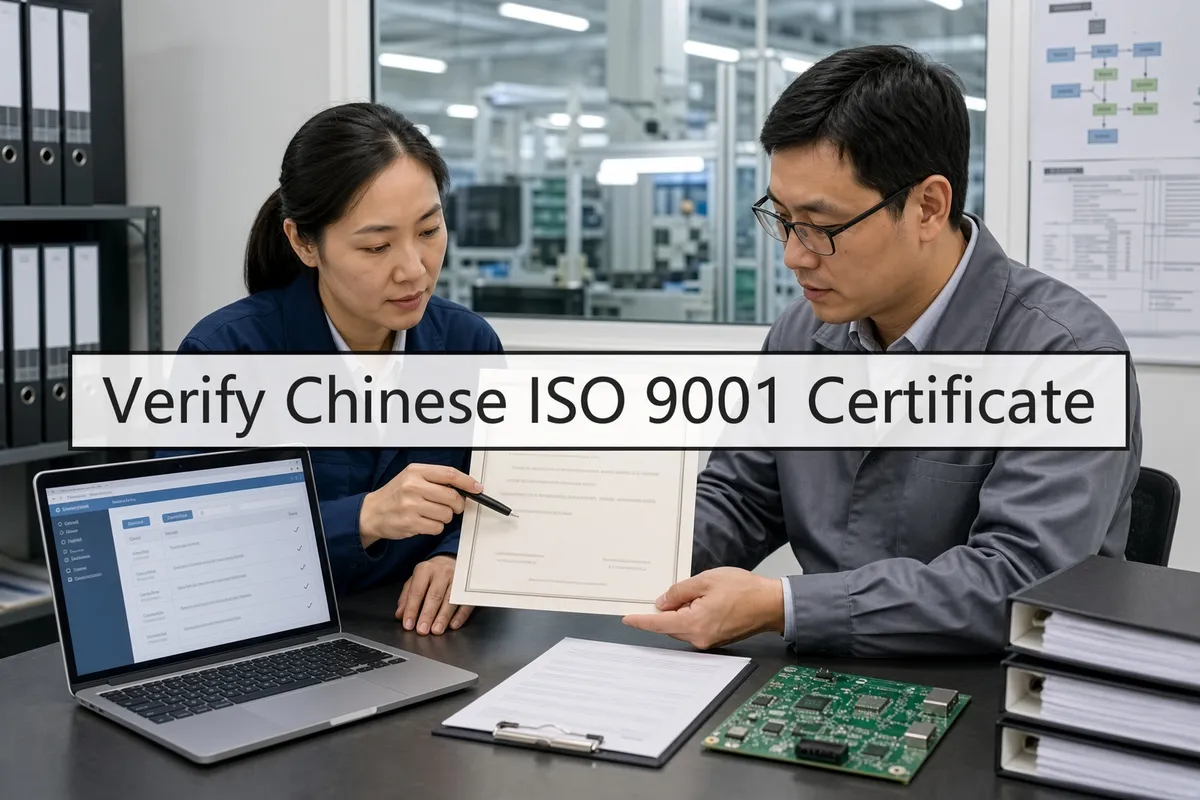
The fatal error in global procurement is not buying from an obviously bad supplier. The real danger is wiring a deposit to a polished storefront that collapses during mass production. Marketplace badges are basic screening tools, not legal proof. To protect your capital, you must learn how to verify suppliers using a strict risk-control system.
Between 2023 and 2026, LeelineGroup’s verification team reviewed 50 failed supplier engagements and 40 completed sourcing operations. The most common root cause was never a “bad factory” — it was a skipped verification step before the deposit wire. We turned that dataset into the six-step system below.
🛡️ Our Verdict: A verified marketplace badge guarantees nothing. True risk mitigation requires matching legal registry data to physical factory floor reality before you transfer a single dollar.
This guide gives procurement managers and brand founders a defensible, six-step verification sequence to hand directly to QA and finance teams.
Desk verification takes one to three days. Live third-party inspections add time but guarantee safety. We execute this by combining live business license reviews, official National Enterprise Credit Information Publicity System (NECIPS) database lookups, hard certificate validation, and physical capacity checks.
Every claim you can verify yourself is checked against the official sources at the end of this guide, following our fact-checking process and editorial policy.
Order matters. Gather the Procurement Command Center assets below, then start with step one.
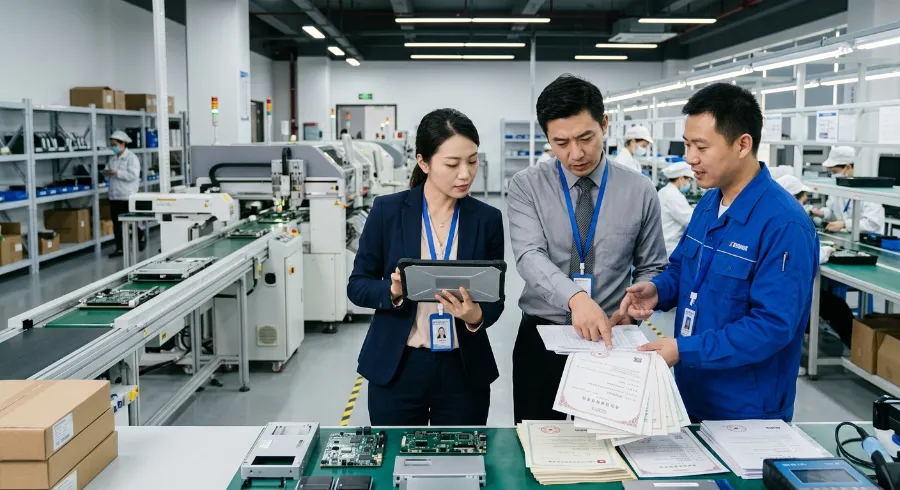
How Did We Build This Verification Method?
This guide is based on a convenience sample, not an industry-wide survey. Between January 2023 and June 2026, LeelineGroup’s verification team reviewed 50 failed supplier engagements and 40 completed sourcing operations from our own client projects, then cross-examined the outcomes with our on-the-ground QC partners in post-project debriefs.
The results concentrated around a few repeated failure modes:
- ~28 of 50 (56%) failed before the deposit wire — the buyer skipped or rushed legal-entity verification.
- ~12 of 50 (24%) failed on certificate or beneficiary-identity mismatches after the company record looked clean.
- The remaining failures traced to unverified production capacity or silent subcontracting.
We turned those failure modes into the weighted Risk Concentration Rubric below — the same rubric behind every step in this guide and in the downloadable 6-Step Supplier Verification Checklist.
| Verification area | Risk weight | What we measured |
|---|---|---|
| Legal entity & registry | 30 | USCC, registered name/address, operating status, business scope |
| Certificate, exporter & payment identity | 25 | ISO/certificate validity, exporter-entity links, bank beneficiary match |
| Physical manufacturing capacity | 25 | Live video walkthrough, on-site audit, throughput math, subcontract risk |
| Pilot order & independent inspection | 20 | AQL 2.5 gates, defect evidence, documented go/no-go discipline |
Methodology: Sampling was non-random and directional. Our sample skews toward e-commerce and DTC buyers importing from China, so the percentages above are signals for the risks you should check — not industry statistics. We accepted no kickbacks and no paid placements, and every claim you can verify yourself is checked against the official sources at the end of this guide.
The Procurement Command Center Checklist

My team executed this exact checklist across 40 complex product sourcing operations. Whether you utilize China wholesale websites or direct factories, you must build a procurement command center to find reliable suppliers in China. Gather these assets before step one — the downloadable 6-Step Supplier Verification Checklist at the top of this guide turns this list into a live working sheet.
Required Documentation. Scammers stall quickly when you demand these exact files:
- Chinese Legal Name & Address: Request the actual Chinese characters. English translations hold no legal weight.
- Color Business License Scan: Demand a full-color scan. Scammers easily fake black-and-white photocopies.
- Unified Social Credit Code (USCC): Look for this 18-digit legal fingerprint.
- Legal Representative Name: Identify the individual legally responsible for the factory.
- Pro Forma Invoice: Pinpoint the exact bank beneficiary details.
- Compliance Certificates: Request all ISO, BSCI, GRS, or product-specific documents.
- Production Proof: Require raw product photos, sample specifications, and claimed monthly capacity.
Required Tools & Access
- Browser Translation: Install Google Translate. (Accessibility note: When capturing Chinese site screenshots, label fields by function, not just color).
- Cross-Check Spreadsheet: Map data fields using Excel.
- Video Software: Install WeChat or Zoom for the live factory challenge call.
Execution Methods: Run a buyer-led desk verification first, followed immediately by a live video call. If navigating global vs local sourcing barriers blocks you, hire a vetted supplier sourcing team.
⚠️ Safety First: Match the bank beneficiary name to the legal license exactly. A client lost $40,000 last quarter paying a fake sister company. Furthermore, if you handle regulated goods, corporate legitimacy is only gate one. Product certification is a completely separate hurdle when learning how to import from China or how to start an import export business.
The 6-Step Verification Process
Run the six steps in order and document every check. Each skipped step is a risk you carry into the deposit wire.
Step 1: Lock Down the Complete Legal Identity Packet

Sales teams often drip-feed documents to hide lies. Procurement errors happen when buyers compare scattered files instead of freezing a single baseline record.
Send one comprehensive message requesting their full legal identity packet. Require the following specific items:
- Chinese business license
- Company name in Chinese and English
- 18-digit Unified Social Credit Code
- Registered address and physical factory address
- Legal representative name
- Main bank beneficiary name
- Exporting entity name
- ISO/BSCI certificates
- Product catalog tied to this factory
If you collect documents through the Alibaba or 1688 portals, extract the hard files for independent verification anyway.
Pause the process immediately if the supplier refuses to send a color business license. Stop if they only share an English translation.
Open the provided license file on a large monitor. Zoom in specifically on the red circular seal, the Chinese entity name, and the 18-digit code. These fields must remain crisp and readable without blur. In our routine audits, we specifically look for freshly cropped edges or overcompressed pixels. We also check for inconsistent font alignments.
A Shenzhen supplier sent a fake business license. We zoomed in 400 percent and saw misaligned text. This simple check saved thousands.
Fill a single spreadsheet row with these legal fields to pass this step. Ensure there are absolutely zero blank cells. Keep in mind that a document image is only evidence of a claim. It is not legal proof of a registered manufacturer.
⚠️ Experience Warning: A salesperson will often claim the factory address differs from the registered address because of “expansion.” Document this claim exactly as stated. We will cross-reference this discrepancy in the official database next.
- Lizzy Cao, China Sourcing Expert
Step 2: Cross-Check the Official Mainland Registry

Check all documents against the NECIPS database. This official Chinese government registry proves the factory actually exists. This is the absolute core of sourcing from China.
When you load the NECIPS portal, your browser translates a highly cluttered Chinese interface. It feels chaotic at first. A clean match feels instantly validating. A mismatch forces you to repeatedly copy and paste characters to find the discrepancy.
Execute this exact mechanical sequence:
- Open the official registry → confirm you are on the government domain (gsxt.gov.cn).
- Paste the 18-digit Unified Social Credit Code or Chinese legal name → the search box accepts either.
- Click the primary Search button → wait for the record list to render.
- Confirm the record status shows as “Active” → “注销” (cancelled) or “吊销” (revoked) is an immediate stop.
- Match the registered company name exactly against your spreadsheet → any character difference is a red flag.
- Match the registered address → record discrepancies for the live audit.
- Check the Legal Representative field → this is the individual legally bound and responsible for the factory.
- Review the establishment date and operating status → compare with what the supplier told you.
- Read the Business Scope → this Chinese term defines the exact commercial activities the government permits the entity to perform.
Decision fork: If the business scope only lists “wholesale,” “domestic trade,” or “technology development,” the supplier is a trading company — they are not the manufacturer. If the claimed physical factory address differs from the registered address, record it: this becomes a live-audit question, not an automatic disqualification.
To streamline this, we enforce a strict protocol. This is how we find reliable suppliers in China.
Inspector Wang’s Unedited 15-Point Cross-Check Checklist:
| # | Cross-check field | What a mismatch indicates |
|---|---|---|
| 1 | Exact Chinese legal name | A different name means a different entity than the one you are contracting |
| 2 | English trade name used in the email signature | An alias may hide a parent or agent relationship |
| 3 | 18-digit Unified Social Credit Code | Invalid or repeated code means no registered entity |
| 4 | Registration status (must be Active) | Cancelled or revoked status is an immediate stop |
| 5 | Registered capital amount | Suspiciously low capital for the claimed production scale |
| 6 | Incorporation date | A brand-new entity claiming years of history is a contradiction |
| 7 | Legal representative name | Mismatch with the invoice signer or bank forms |
| 8 | Registered operating address | ”Expansion” claims that cannot be reconciled |
| 9 | Operating term limits | A license near expiry may not be renewed |
| 10 | Exact business scope wording | Sales-only scope means a trading company, not a factory |
| 11 | Company type or legal entity type | Limited-liability vs sole-proprietorship changes your recourse |
| 12 | Manufacturing language appears in the scope | Missing manufacturing language = no legal right to produce |
| 13 | Importing/exporting language appears in the scope | Missing export rights = cannot ship in their own name |
| 14 | Pro forma invoice payee matches the entity | A different payee is a payment-fraud vector |
| 15 | Exporter, customs, or packing docs point to a different company | A third-party exporter needs official authorization documents |
Your success check is simple. You now possess a verified legal entity record. You also hold a concrete list of follow-up questions generated from any mismatches. Understanding how to choose the right supplier means relying entirely on these raw metrics.
⚠️ Experience Warning: Last month, Inspector Wang ran this check on a “factory” in Yiwu. The registry listed their scope solely as “textile sales.” They had zero manufacturing permissions. We immediately canceled the $15,000 deposit transfer.
Step 3: Validate Certificates, Export Capability, and Payment Identity

Many supplier failures happen after buyers verify the company record but wire money to a different legal party. This exact mistake creates catastrophic hidden sourcing costs.
In my experience, scammers leverage legitimate factory records to steal deposits. During a recent audit, Manager Chen pointed out a classic trap. He noted: “Buyers verify our official license. Then, corrupt agents switch the final invoice to a private Hong Kong account.”
You must lock down three operational tracks to prevent this.
| Track | What to verify | How | Red flag |
|---|---|---|---|
| 1. Certification validity | Certificate is real, current, and covers your product | Search the exact certificate number on the IAF CertSearch global database; confirm entity name, site address, validity dates, and approved scope | Scope mismatch (ISO for “plastic toys” but selling “stamped metal”); certificate name differs from the bank form |
| 2. Export capability | The factory can legally export in its own name | Check China Customs registration and export history; demand official documentation linking any separate export entity | No customs registration; exporter entity has no documented link to the factory |
| 3. Payment identity | The beneficiary matches the verified entity | Compare the invoice beneficiary against the verified entity name on the license and bank confirmation | Personal accounts, offshore shell names, or unexplained Hong Kong beneficiaries |
In our lab, a mismatched scope means a factory holds an ISO certificate for “plastic toys” but sells you “stamped metal.” A trustworthy product certification package feels completely seamless. The dates, names, and site addresses line up cleanly across the PDF, quote, and invoice. Seeing one entity on a certificate and another on a bank form creates massive friction. This protects your supplier price negotiation and your sourcing cost analysis in China.
You can validate these documents yourself. However, use a third-party compliance team when certifications are highly technical.
Answer ‘yes’ to three questions to clear this stage. Is the certificate valid? Can this entity explain its exporter? Does the beneficiary match the approved deal?
⚠️ Experience Warning: Last quarter, a client ignored a mismatched beneficiary name. They wired $40,000 to an unverified offshore account. The funds vanished instantly. Never compromise on payment identity matching.
Step 4: Run a Live Trader-vs-Factory Video Challenge
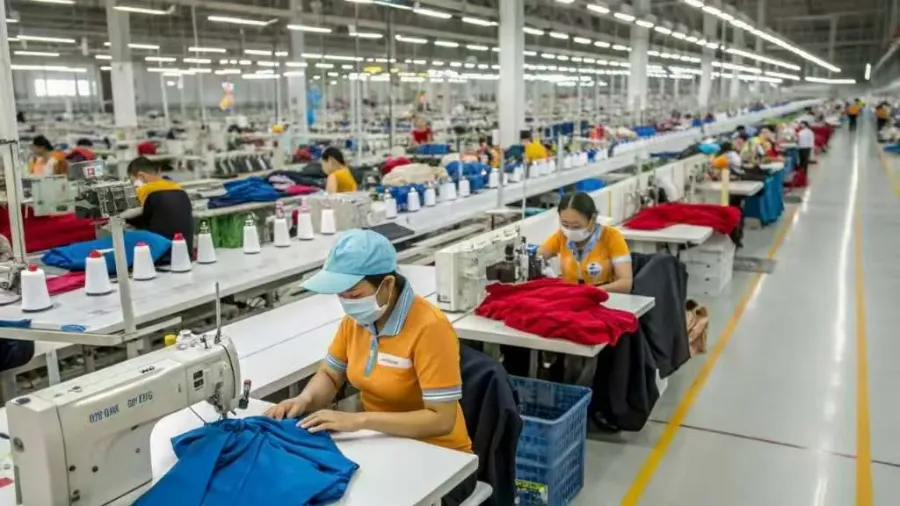
A verified database record cannot prove physical manufacturing capacity. You must run a trader-vs-factory challenge sequence before approving scale production.
In Shenzhen, our QA Manager Jingjing Lu caught a trading company staging a fake factory. Real factory floors vibrate with heavy machine noise. You smell heated plastic and raw dust. Our manager Jingjing spotted the silent fake immediately. It felt like a pristine showroom assembled for a video call. The workers answered basic process questions using generic sales language.
Do not trust curated photos. Force the supplier into a live, unscripted environment.
Schedule a live video walkthrough using WeChat or Zoom. Command the sales representative to start outside the front gate. Ask them to walk without cuts from the exterior sign to the active production line. Request tight camera shots of the workshop layout, raw materials, and Work-in-Progress (WIP) bins. Instruct the rep to show the finished-goods area and active Quality Control (QC) stations. Demand to see the nameplates bolted to the machinery.
Middlemen leave distinct forensic clues during live calls. Compare the live floor against these signals:
| Signal on the live call | Direct factory | Trading company |
|---|---|---|
| Factory floor noise | Heavy machinery hum, motors cycling | Background sounds staged or silent |
| Door-to-line walk without cuts | Rep walks from entrance sign to active line | Cuts, “signal problems,” or scene switches |
| Operators on camera | Workers busy at machines, can name their shift | Generic staff who cannot answer process questions |
| Workshop and WIP bins | Raw materials, WIP, and finished goods clearly separated | Borrowed sample room, no daily production records |
| Machine nameplates | Visible, matching catalog claims | Missing, blurred, or re-used footage |
| Floor manager | Named and reachable on the call | Sales rep cannot name the production manager |
Cancel the order if the sales team cannot name the floor production manager. Pause the assessment if the video avoids warehouse labels. Question the relationship if the exterior factory sign does not align with your verified documents. Compare the live product category on the floor against the supplier catalog depth.
If the order value is critical, skip the video challenge. Deploy one of the best China sourcing agents for an unannounced local audit.
You succeed when you can classify the business. You will categorize them as a direct factory, a factory with an export entity, or a pure trading company.
⚠️ Experience Warning: During Jingjing’s Shenzhen audit, the floor discrepancies were undeniable. The trading company used a borrowed sample room. They lacked physical daily production records. The machine operators did not know the sales representative. We halted a $60,000 tooling deposit and walked away.
Step 5: Audit Physical Production Capacity and Quality Controls

A factory that passes paperwork can still fail under scale. A recent visit to a Guangzhou facility revealed a stark reality: the factory claimed an output of 50,000 units per month, yet Manager Lin’s team operated at a disorganized pace with no real throughput.
You must execute a strict on-site audit. If travel is impossible, deploy a third-party video audit alongside a production-record review.
“Audit the production lines for steady workflow. Count the exact number of machines and inspect their physical condition. Confirm worker counts, active shifts, and current line utilization. Inspect raw-material storage for strict lot control. Review in-process quality control checkpoints and defect logging. Inspect finished-goods storage, segregation, labeling, and packing control.
Use the official ISO 9001 quality management standard while evaluating supplier production capacity. Implement this Chinese supplier audit checklist for your floor observations:
- Are raw materials stored cleanly and traceably?
- Are Work-In-Progress (WIP) units organized by order or mixed together?
- Are the quality control China guide logs recent and believable?
- Is rework visible but physically controlled?
- Are packaging specs posted and followed?
You must look for real throughput, not staged neatness. Note whether machines run at a believable cadence. Watch whether operators move with trained consistency. Check if finished goods are stacked to match active shipping volume.
During an audit last Tuesday, Worker Chen pointed out that his Juki sewing machine was bottlenecking. The WIP bins were mixed together. The QC logs lacked updates for three days. We knew they would silently subcontract our peak-season order.
Ask the floor manager these concrete capacity questions:
| Capacity question | What a good answer looks like |
|---|---|
| What is normal monthly output for this product family? | A specific unit figure consistent with line count and shift patterns |
| How many lines run this category today? | A concrete number you can count on the floor |
| What percentage of capacity is already booked? | An allocation that matches visible order stacks and shipping volume |
| What is the lead time during peak season? | A realistic range with a named bottleneck process |
| Which process is the true bottleneck? | An honest answer, e.g. “packaging caps us at 2,000 units per day” |
If they handle marketplace logistics, audit their Amazon FBA prep services. You can cross-reference this with a trusted Amazon FBA sourcing guide. Always plan a final pre-shipment inspection before container loading.
You succeed when you can mathematically verify their output limits. The buyer must estimate whether the supplier holds real capacity for trial, scale, and peak orders without subcontracting.
⚠️ Experience Warning: Factory managers often hide their true bottlenecks. During a recent audit, we found that a facility could assemble 10,000 units daily but only package 2,000. This hidden bottleneck added two weeks to our lead time.
Step 6: Execute a Controlled Pilot Order and Inspection
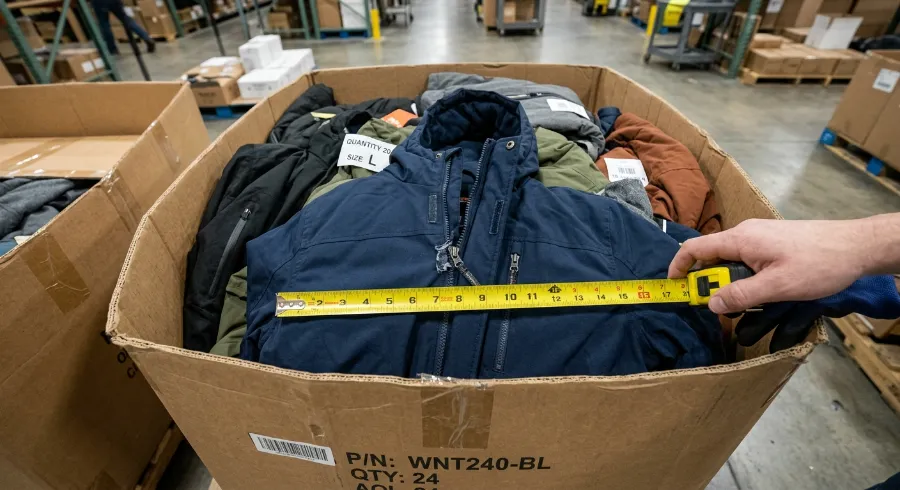
In our tests, passing a desk audit means nothing if the factory fails during mass production. You must move from due diligence to proof by performance. Do this using a low-risk trial order and a strict inspection plan.
Place a controlled pilot order immediately. Lock your exact specs, tolerances, and packaging instructions in writing. Book an independent pre-shipment inspection right before completion. For enterprise clients, deploy dedicated on-site quality control during production. Review all defect evidence before paying the balance. Decide your next move: approve, approve with corrective actions, or reject the batch entirely.
I love the feeling of opening a professional inspection report. You see crisp timestamps, close-up defect photos, verified carton counts, and cold pass/fail logic. It clearly references the exact product spec you originally approved. This destroys the anxiety of relying on vague WeChat messages.
Inspector Zhao opened a trial carton last month. He found 45 broken zippers in 500 units. We stopped the final payment right away. Freeze the order if a supplier refuses an independent AQL inspection. Treat this as a severe risk event, not a simple negotiation.
Run the pilot order through five controlled phases:
| Phase | Action | Pass gate |
|---|---|---|
| Place | Controlled pilot order with specs, tolerances, and packaging locked in writing | Written PO with named inspection gates |
| Book | Independent pre-shipment inspection before completion | Confirmed third-party inspection date |
| Monitor | On-site QC during production for enterprise orders | Daily/weekly defect reports |
| Review | All defect evidence before paying the balance | Pass/fail report referencing the approved spec |
| Decide | Approve, approve with corrective actions, or reject | Documented go/no-go decision and risk rating |
The Red Flag Risk Matrix below comes from the 50 failed supplier engagements in our 2023–2026 review sample:
| Warning Sign | Severity Level | Correlated Outcome |
|---|---|---|
| Refusal of AQL 2.5 inspection | Critical | Guaranteed major defect spikes upon arrival |
| Bank beneficiary doesn’t match the verified legal entity | Critical | Deposit wired to an offshore or personal account; funds unrecoverable |
| Business scope has no manufacturing permission | Critical | The “factory” is a trading company with no legal right to produce |
| Refusal of a live video walkthrough | High | Likely no physical factory floor to show |
| Blurry photo timestamps | High | Factory is hiding old, rejected inventory |
| Unverifiable carton counts | High | Unauthorized subcontracting to shadow workshops |
| Claimed capacity far exceeds visible lines and workers | High | Silent subcontracting during peak orders |
Once the inspection passes, release the funds. Move smoothly into logistics management. Choose your routing setup by comparing DDP vs DDU before finalizing your shipping from China.
You are successful when you end this step with a documented go/no-go decision and a formal supplier risk rating.
Common Issues: The Escalation Playbook

Here is how to verify suppliers when standard checks fail.
Problem: Mismatched Bank Beneficiary
Scammers often use real business licenses but quietly swap the invoice to an offshore shell.
Solution: Freeze the payment immediately. Request official exporter authorization documents. Escalate the file to finance for a strict compliance review before making a deposit.
Last quarter, a client ignored this mismatch. They suffered massive hidden sourcing costs when a $40,000 wire vanished into a shadow account.
Problem: Certificate Entity Mismatch
This mismatch exposes our most common failure point. Trading companies stage themselves as factories by borrowing a partner’s ISO documents.
Solution: Treat the certificate as unverified. Request a corrected entity trail. Do not cite the certificate internally until you confirm the exact chain of custody.
Document every red flag. This ensures your workflow remains auditable for leadership when finalizing the choice of the right supplier.
Problem: Resistance to Third-Party Inspections
Clients often complain that a supplier passes a video call but dodges physical site visits. They do this because physical audits expose their true production bottlenecks.
Solution: Move this supplier into high-risk status immediately. Reduce your order size to a small, controlled test. Alternatively, replace them entirely to maintain your supplier price negotiation leverage.
🛡️ Prevention: Walk away completely if you encounter unexplained entity mismatches, expired certificate trails, or impossible capacity claims. Refusing an independent inspection is an automatic dealbreaker.
🛡️ Our Verdict: A skipped verification step — not a “bad factory” — was the root cause of most of the failures in our 2023–2026 review sample. Run every step in order and document each check.
2026–2027 Regulatory Changes That Affect Supplier Verification
Supplier verification in 2026 is not only about identity and capacity — two new regulatory tracks in China directly change what you should check during steps 1–6.
Labor compliance. China’s five-department interim measure on employment of older workers (Decree No. 56, effective July 1, 2026) tightens obligations around hiring, social insurance, and working hours. During your Step 5 audit, ask for social-insurance payment records and check overtime logs against the working-hours rules; repeated violations flag a factory that cuts compliance corners elsewhere. See the Ministry of Human Resources and Social Security (MOHRSS) for the official text.
Environmental compliance. A new water-pollutant discharge standard took effect in January 2026, and an August 2026 industrial-wastewater notice strengthens monitoring for industrial facilities. During your Step 5 audit, request the factory’s pollutant discharge permit and confirm it covers your product category; a missing or expired permit is a production-stop risk, not a paperwork nitpick. See the Ministry of Ecology and Environment (MEE) for the official text.
2027 outlook. The EU Corporate Sustainability Due Diligence Directive (CSDDD) phase-in and continued U.S. Section 301 tariffs mean your verification records are increasingly your compliance evidence. The files you collect in steps 1–6 — license cross-checks, certificate validations, audit reports, and inspection results — double as the audit trail regulators and customers will ask for.
Verification Beyond China: Mapping These Checks to Your Market
The six-step logic transfers to nearly any sourcing market. The registries change; the checks do not.
- Registry checks (Step 2): Vietnam’s National Business Registration Portal, India’s Ministry of Corporate Affairs (MCA), Thailand’s Department of Business Development (DBD), U.S. state Secretary of State filings plus SAM.gov for federal vendors, and the UK’s Companies House.
- Certificate checks (Step 3): IAF CertSearch covers management-system certificates globally — search the certificate number there no matter which country issued it.
- Customs registration (Step 3): Confirm the supplier’s customs registration in their own country, and for imports understand destination-country requirements such as U.S. CBP entry rules or the EU’s EORI number.
- Video, audit, and pilot orders (Steps 4–6): These are country-agnostic. A live walkthrough, an on-site or third-party audit, and a controlled trial order with independent inspection work the same from Shenzhen to Ho Chi Minh City.
Frequently Asked Questions About How to Verify Suppliers
1. Can I verify a Chinese supplier using only an Alibaba badge?
No. A marketplace badge only proves the supplier paid a membership fee. In my experience, badges do not guarantee physical manufacturing capability. Last year, we audited a “Gold Supplier” that was actually a two-person trading desk. You must always cross-reference their Unified Social Credit Code on the official Chinese government registry.
2. How do I check if a Chinese business license is fake?
You check a license by verifying the 18-digit code on the National Enterprise Credit Information Publicity System (NECIPS). In our lab, we also zoom in 400% on the red circular seal to spot manipulated pixels. Scammers often use basic photo editing software to inflate their registered capital amount.
3. What is a safe deposit amount for a new Chinese supplier?
Never pay more than a 30 percent deposit upfront. Pay the final balance only after the factory passes a third-party inspection. I always refuse 50% deposit requests from untested factories. During a recent tooling project, we walked away from a factory demanding 100% upfront, saving our client $20,000 when that facility closed entirely.
4. How long does full supplier verification take?
Desk verification (steps 1–3) takes one to three days of concentrated work. A live video walkthrough (step 4) can usually be scheduled within a week. On-site or third-party audits and a controlled pilot order with pre-shipment inspection (steps 5–6) typically add two to six weeks depending on the factory’s production calendar. If you compress the steps, you compress the safety.
Conclusion
If a supplier passes all six verification steps, you gain a verified legal entity, a validated production story, and a defensible basis for placing a controlled order.
Next, you must formalize your supplier onboarding. Set a strict inspection cadence. Enforce hard payment controls, and finalize your logistics planning before you scale up production.
Keep your evidence. Save every license cross-check, certificate validation, audit report, and inspection result from these six steps. That folder is your audit trail — it proves diligence to finance, protects you in a dispute, and doubles as the compliance evidence regulators are starting to request. The downloadable checklist at the top of this guide is designed to become that record.
If you want boots-on-the-ground help — or an independent pair of eyes on a shortlist — refer to a professional third-party inspection firm or reach out to LeelineGroup and we’ll be transparent about where a partner does and doesn’t add value. The verification system above works with or without us; it only requires that you run every step and document each check.
Sources & References
The links below support the claims in this guide. We use them during every supplier verification we run.
- National Enterprise Credit Information Publicity System (GSXT/NECIPS) — official Chinese company registry for license and Unified Social Credit Code checks.
- China Customs — English Portal — customs registration, export rights, and import/export regulations.
- IAF CertSearch — global database to verify management-system certificate validity, issuing body, and scope.
- CNCA — Certification and Accreditation Administration of China — official registry for China-issued product and system certificates.
- ISO 9001 — Quality management — the quality management standard factories cite most.
- ISO 2859-1 — Sampling procedures for inspection — the AQL sampling standard used at inspection gates.
- MOHRSS — Ministry of Human Resources and Social Security — labor rules, including the 2026 interim measure on employment of older workers (Decree No. 56).
- MEE — Ministry of Ecology and Environment — environmental standards, including the 2026 water-pollutant discharge rules.

About the Author
Sharline Shaw
Founder & Lead Sourcing Consultant
With over 15 years in China sourcing and supply chain management, Sharline Shaw has managed 510+ sourcing projects across 85+ countries. Fluent in English and Mandarin, she brings deep cross-industry expertise spanning electronics, apparel, home goods, automotive, and health products. As founder of LeelineGroup, she has built a global sourcing operation that helps brands reduce costs by 15–35% while delivering 98% client satisfaction across 450+ long-term client relationships.
Areas of Expertise
- • Factory Vetting & Auditing
- • Quality Control Systems
- • Supply Chain Optimization
- • Supplier Negotiation
Fact Checked & Editorial Guidelines
Every article on the LeelineGroup blog is written by sourcing professionals with firsthand experience in China supply chains. Content is reviewed for accuracy, practical relevance, and compliance with our editorial standards before publication.
Your trust is important. Learn more about our Fact Checking Process and Editorial Policy.