Factory QC and third-party inspection are two different controls, and serious importers use both, layered by risk. Factory QC is the in-house team catching problems as units run down the line. Third-party inspection is a sampling gate on the finished lot that releases the balance payment. Neither layer alone covers a shipment, and picking one by default is how importers end up paying for the same defects twice.
The word “third-party” gets used loosely, so pin the roles down first:
- Factory QC (first-party). The plant’s own inspectors. Paid by the factory, reporting to the plant manager, and measured on shipping targets.
- Buyer or agent inspection (second-party). Inspectors working for you or for the sourcing partner you hired. LeelineGroup’s field team sits here: we inspect on the buyer’s behalf, and we are a party to the transaction, not a neutral bystander.
- Independent inspection body (third-party in the strict sense). SGS, QIMA, Bureau Veritas and similar firms with no commercial interest in your order, issuing reports and certificates their own brand stands behind.
LeelineGroup sources and inspects, so we do not pretend to be an accredited certification body. When a client needs a strict third-party report or an accredited lab certificate, we commission an independent body that reports only to the buyer. We accept no fees or kickbacks from factories, and every inspection we run is buyer-side by design.
The wedge between the layers is independence at the release gate. Internal QC answers to the people paid on output. A buyer-side or independent inspector answers to the importer holding the balance. The sampling, evidence and enforcement differences below all flow from that one line of accountability.

Here is how the two layers compare on the dimensions that decide a release:
| Feature | Factory QC | Third-Party Inspection |
|---|---|---|
| Reporting line | Plant manager | Buyer, agent or independent body |
| Main objective | Process control; early defect containment | Shipment release; AQL accept/reject threshold |
| Sampling | Internal checks; process capability (Cpk) where the plant tracks it | Random ISO 2859-1 / ANSI/ASQ Z1.4 pulls; general inspection level II; sample size set by lot |
| Defect limits | Internal SOP plus buyer-approved spec | Separate AQL values for critical, major and minor defects |
| Checkpoint depth | In-line; daily drift detection | Pre-shipment final random inspection |
| Evidence | Self-reported pass sheet; thin audit trail | Photo/video; defect class; sample size; timestamp |
| Cost | Low marginal; embedded overhead | ~$300-$600/man-day plus travel |
| Speed | Immediate; no booking | 1-3 days lead time; peak slots tight |
| Best fit | Daily control; mature supplier; repeat order | New supplier; high-compliance SKU; payment gate |
| Failure mode | Conflict of interest; missed concealed defects | Snapshot only; misses drift; not chemical or regulatory lab testing |
Scope note: a visual pre-shipment inspection is not chemical or regulatory lab testing. RoHS, REACH, CE, FDA and Prop 65 conformity checks require an accredited laboratory — see Lab Testing vs Factory Testing and Product Certification.
Key Takeaways
The short version, based on the mechanisms and failure modes covered below:
- Use both layers, sized to risk. Factory QC catches drift during production; an independent pre-shipment inspection releases the balance, and most importers need both.
- Check who signs the release. Factory QC reports to the plant manager and is paid on output, so its pass sheet is early warning, not release evidence.
- Define AQL per defect class. Critical, major and minor defects each carry their own AQL value in the PO, and general inspection level II sets the sample size from the lot size.
- Inspect after 100% production, before carton sealing. A late booking turns the release gate into a shipping delay and can force emergency freight.
- Match the gate to the supplier and the SKU. New suppliers, high-value goods and retail-channel orders justify a mandatory third-party gate; low-risk repeat lots can run on factory QC plus periodic independent checks.
- Keep lab testing separate. Visual pre-shipment inspection cannot verify RoHS, REACH, CE, FDA or Prop 65 conformity; those need an accredited laboratory running certified chemical methods.
Main Differences of Third-Party Inspection vs Factory QC
The five differences below are the ones that change a release decision. Field observations in this section are qualitative patterns from buyer-side inspections. They illustrate the mechanism; they are not published survey statistics, and results vary by product, process and supplier.
1. Independence and conflict of interest

What changes: Factory QC reports to the plant manager and shares the plant’s shipping deadline. That pressure shows up as tolerance drift and thin documentation. We regularly see pass sheets with no sample count, no defect grading and no timestamped photos. When those three items are missing, a “passed” note is an opinion, not evidence.
Independence matters because it removes the incentive to sign a clean sheet. I ask who signs the release and who holds the payment. The answer exposes the supplier internal QC conflict of interest faster than any policy document.
Who wins: Third-party inspection at the release gate. Factory QC still owns daily process control.
Why it matters commercially: A conflicted pass decision moves risk downstream — to your warehouse, your retailer, your customer and your chargeback file. Independence is what makes the pass sheet usable evidence if a dispute reaches a lawyer.
Winner: Third-party inspection.
2. Sampling validity: factory-selected samples vs AQL Level II random pulls
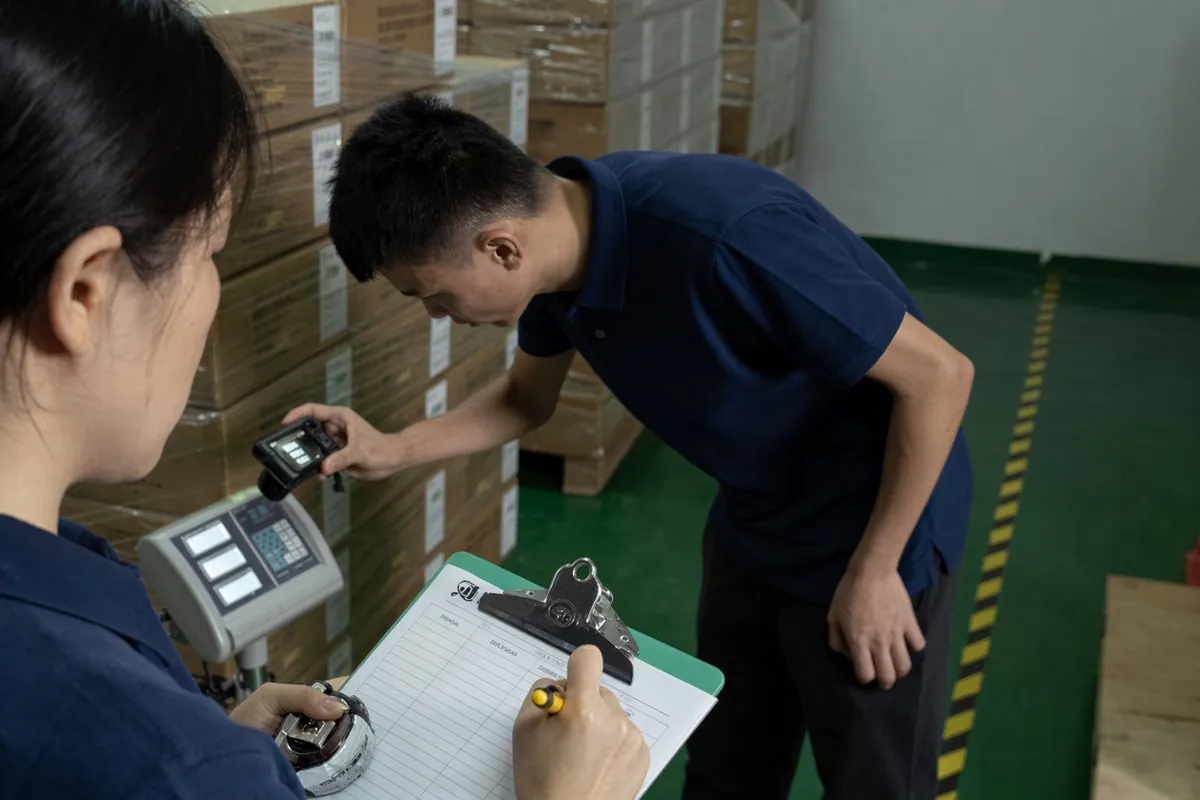
What changes: Factory QC often checks convenience samples near the line. Third-party inspection uses buyer-controlled random pulls. I instruct the inspector to pull from sealed cartons across top, middle and bottom stacks.
The inspector cuts the seal, pulls units, opens inner cartons, scans barcodes and reconciles counts against the packing list. If the packing list says 12 cartons but the stack shows 11, that mismatch is a finding before a single unit is opened.
The arithmetic is the point. For a 5,000-unit lot at general inspection level II, one normal sample is 200 units. AQL limits are set per defect class — critical, major and minor each carry their own value, agreed in the PO. As one example only, a major-defect AQL of 1.5 on that 200-unit sample accepts at 7 defectives and rejects at 8. Under the switching rules in ISO 2859-1 / ANSI/ASQ Z1.4, the sampling level can tighten or relax based on recent lot history.
Who wins: Third-party inspection. Random pulls from the full lot are statistically defensible; factory-selected samples are not.
Why it matters commercially: Convenience sampling hides stack-level variation, and one bad carton layer can become a container-level problem. A documented accept/reject threshold is something you can put in front of a supplier and hold them to.
Winner: Third-party inspection.
3. Defect coverage depth: what third-party inspectors catch that factory QC often misses
What changes: Factory sign-offs tend to under-report concealed cosmetic issues and structural weld defects compared with independent AQL Level II pulls. In our audits the gap has been consistent, though the size varies by product and process — we do not publish a blended ratio, because one would mislead across categories.
What outside inspectors do differently is technique. Raking light at an angle exposes hairline paint cracks that look clean in ambient light. Manual flex and load tests on joints expose weak welds that pass a visual check. Defects get photographed with a timestamp, classified by severity, and tied to a sample size, so the report is decision-grade evidence rather than a note.

Who wins: Third-party inspection on release-grade defect detection. Factory QC remains useful for catching drift during production.
Why it matters commercially: Concealed defects are the expensive ones. They clear the factory line, clear the dock and surface after the customer opens the box. A one-line “passed” note cannot settle a claim.
Red flags in a report: blurry photos, no sample size, no defect classification, no timestamps, no measurement data. A real report shows measurements, defect photos, severity grading, barcode scans, packaging verification and carton markings. Related controls: Quality Control China Guide, Factory Audit Checklist.
Winner: Third-party inspection.
4. Cost-benefit: per-inspection fees vs hidden landed-cost damage
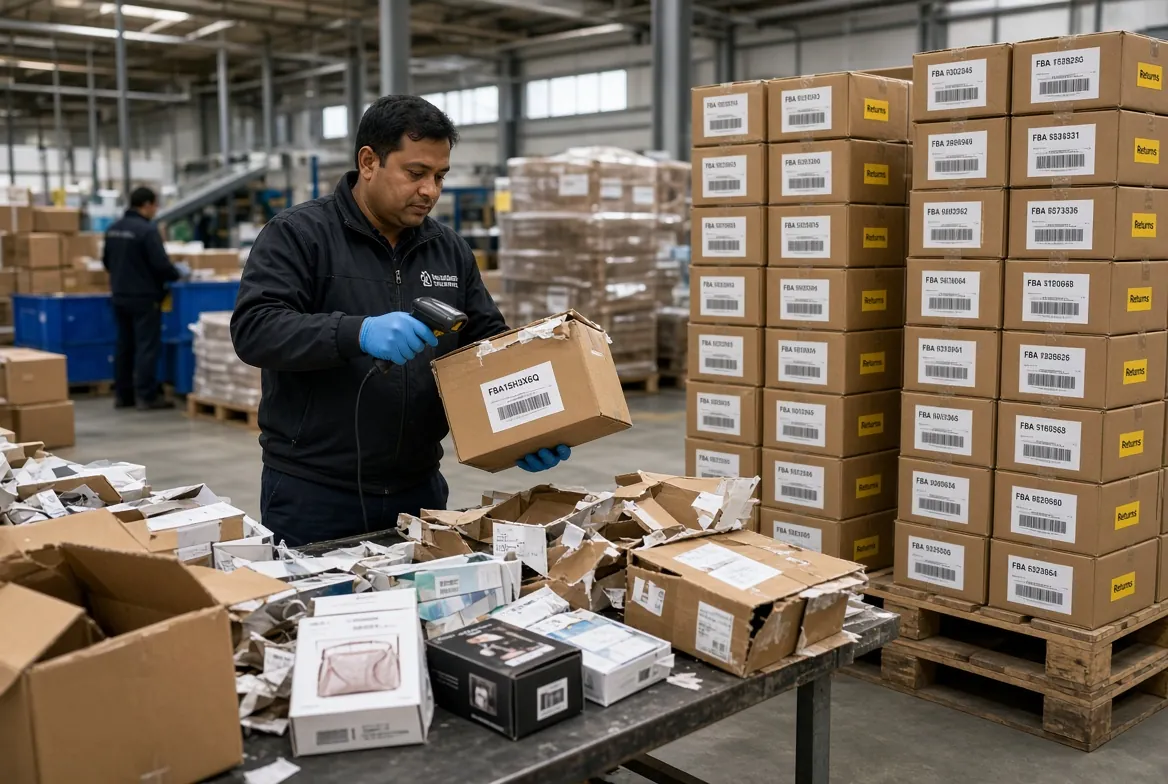
What changes: A third-party inspection costs roughly $300-$600 per man-day plus travel, depending on location and scope, and it needs booking. Peak slots fill early, so a late booking turns a release gate into a shipping delay. Factory QC is cheaper per check because the cost sits inside the order.
The economics flip when you price the failure mode. Illustration, not a survey result: a $600 dock inspection that stops a batch which would otherwise trigger $10,000 in returns, relabelling and re-shipping pays for itself many times over. Warehouse per-hour checking, overseas relabelling and emergency air freight all stack on the failed side of the ledger. The exact numbers depend on your product and channel — run them against your own defect history rather than assuming them.
Who wins: Third-party inspection on risk-adjusted landed cost for new suppliers, high-compliance SKUs and payment gates. Factory QC wins on direct cost and speed for low-risk repeat lots.
Why it matters commercially: Put re-inspection cost in the PO or quality agreement. If a lot fails because of supplier-caused defects, the supplier pays for the re-inspection. That clause changes behaviour before the first bad carton.
🚀 Actionable Insight: Schedule inspection after 100% production and before carton sealing. Late booking turns a release gate into a shipping delay.
Kadin Lee · Inspector & Factory Auditor
Winner: Third-party inspection for high-risk POs; factory QC for low-risk repeat orders.
5. Enforcement power: reports that trigger action vs reports that only reassure

What changes: A factory QC pass report rarely settles a dispute; it reassures. An independent report can justify a hold, a rework demand or a re-inspection, and it gives you a document to point at when money is on the line. The difference is not the stamp — it is who can act on the finding.
In practice the release decision comes down to a short checklist we run on every hold: sample integrity, measurement confirmation, appearance grading, function test, and packaging and carton verification. If any gate fails, the lot does not ship.
Who wins: Third-party inspection. It gives enforcement power: hold the container, demand corrective action, and document the decision.
Why it matters commercially: Enforcement needs a legal layer. Write clear payment holdback clauses into the purchase contract. Both parties sign and seal two identical golden production samples. Hold the final thirty percent balance until the third-party report is clean. Never release payment on unverified factory pass notes.
Winner: Third-party inspection.
Pros & Cons of Third-Party Inspection vs Factory QC
Factory QC
- Pros:
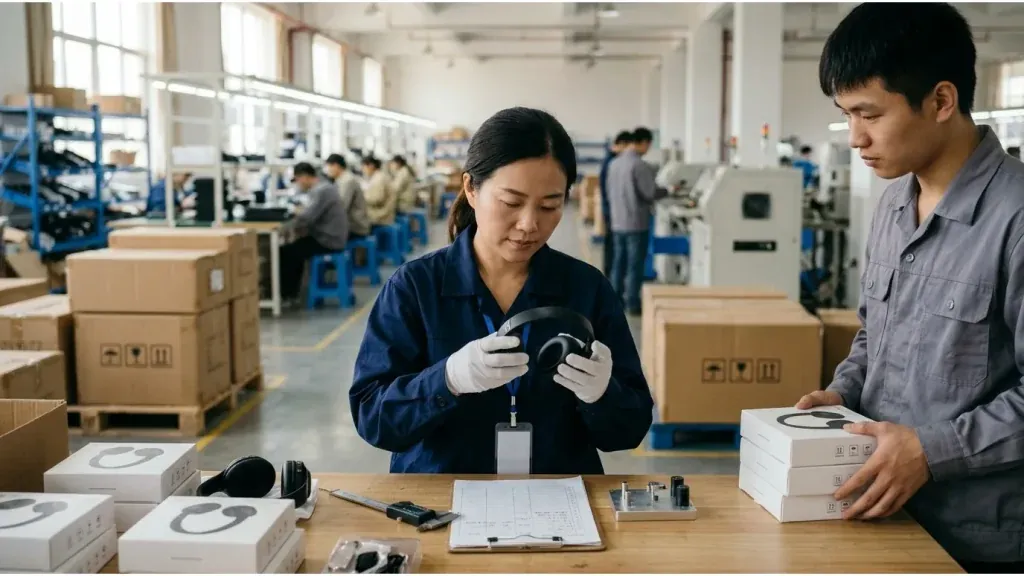
- Continuous line visibility: factory inspectors catch broken stitches and tool drift while the line is running, and stop the conveyor before a whole run is defective.
- Faster containment: defects are contained at the source, minutes rather than days after they appear.
- Lower marginal cost: the cost sits inside the order, which makes routine monitoring cheap for repeat lots — cheap, not free.
- Cons:
- Conflict of interest: the team reports to the plant manager, and shipment deadlines create tolerance drift.
- Weaker release independence: the pass sheet reassures, but the team paid on output is also the team signing the release.
- Thinner documentation: sample counts, defect grading and timestamped photo logs are often missing, which makes the sheet hard to defend in a dispute.
🧠 Expert Take: Factory QC is strongest as a process brake, not a final verdict. Treat its pass sheet as an early warning, never as the release gate.
Third-Party Inspection
- Pros:
- Independent verdict: the inspector reports to the buyer, not the plant, which makes the release decision usable before payment.
- Stronger AQL discipline: random AQL Level II pulls from sealed cartons give a documented accept or reject number.
- Decision-grade evidence: timestamped photos, defect classes, sample sizes and measurements justify hold, rework or release.
- Cons:
- Booked later in the cycle: peak slots fill fast, and a late booking becomes a shipping delay.
- Cannot inspect quality into a broken process: a final inspection cannot fix unstable welding, weak finish control or a rushed line.
- Reactive at the end: a failed PSI can trigger sorting, rework, re-inspection and emergency freight. And it can pass the wrong thing if the approved spec or golden sample is wrong.
🚀 Actionable Insight: Book PSI after 100% production but before carton sealing, and pair it with factory in-line checks so the final gate catches defects, not process drift.
Best-fit synthesis: Factory QC is best at daily process control and fast containment; third-party inspection is best at an independent release decision when the evidence must survive a supplier dispute.
The Verdict: Match the Gate to Risk, Not Vendor Comfort
New supplier or first production run: use both. Factory QC runs inline during the build, and an outside Pre-Shipment Inspection is the mandatory release gate. You have no process history, so you buy independence — and you verify the supplier before the first PO.
High-value or safety/compliance SKU: use both, plus accredited lab testing. A visual inspection cannot verify chemical limits under EU REACH or California Prop 65. A handheld XRF scanner screens heavy metals on finished plastic surfaces in seconds, but screening is not testing — valid conformity requires certified methods and wet chemical digestion at an accredited laboratory. Pair physical lot inspections with certified lab reports.
Amazon, Walmart or retail-channel importer: use both. Enforce ISTA 1A or 3A package drop testing on full shipping cartons, and have master carton labels checked with an optical barcode verifier. Retail chains fine vendors for unreadable GS1 barcodes and crushed boxes, and catching packaging damage at a Chinese port is far cheaper than paying chargebacks later.
Mature supplier with stable capability: factory QC can carry more weight, provided the supplier has a documented quality system, a clean defect history, and passes periodic independent audits. Vet that history through Supplier Management and our Supplier Comparison Framework.
Low-value, simple, repeat SKU: reduce the third-party cadence, but do not eliminate it. Quarterly or milestone checks keep the supplier honest.
A working threshold for reducing audit frequency: this is our internal recommendation, not an ISO requirement. Start from a certified quality management system (ISO 9001 as a reference), ask for process capability data on the core dimensions (for example Cpk at or above 1.33 where the supplier tracks it), review several consecutive production runs with zero critical functional defects, and require transparent traceability. Even then, keep quarterly or milestone-based independent checks.
Your four-step rollout:
- Lock the golden sample and technical file.
- Write AQL limits and re-inspection remedies into the PO and quality agreement.
- Keep factory QC inline during production.
- Use third-party inspection strictly as the shipment-release gate.
Who pays for failure: the supplier. Rework and re-inspection sit on their side of the agreed terms.
⚡ Power Move: Deduct re-inspection costs directly from the final supplier invoice after a failed audit, and add a clause covering warehouse storage during a quality hold. Factories assign their best line workers when the penalty is financial.
Start with your supplier tier, not your budget. Contact our team to map the right control set to your next PO.
FAQ: Third-Party Inspection vs Factory QC
1. Is factory QC enough to release a shipment?
Only for low-risk repeat lots from a proven supplier. Factory QC is a process brake, but the same team paid on output signs its own pass sheet, so it is a weak release gate for new suppliers, high-value SKUs or first production runs. Use it inline, and add an independent pre-shipment inspection before the balance is released.
2. What is AQL Level II?
AQL Level II is general inspection level II from ISO 2859-1 / ANSI/ASQ Z1.4, the sampling standard used for most pre-shipment inspections. The lot size sets the sample size, and each defect class — critical, major, minor — carries its own AQL value agreed in the PO. For example, a 5,000-unit lot at level II gives a sample of 200 units.
3. Does pre-shipment inspection replace lab testing?
No. A visual and functional PSI samples finished goods for workmanship and function; it does not test chemical composition or regulatory conformity. RoHS, REACH, CE, FDA and Prop 65 checks need an accredited laboratory running certified methods. A handheld XRF only screens for heavy metals and cannot issue a valid conformity certificate.
4. Who pays for re-inspection when a lot fails?
The supplier, when the defects are supplier-caused — provided the PO or quality agreement says so. Put a re-inspection clause and a payment holdback in writing, keep the final balance unpaid or in escrow until the report is clean, and deduct re-inspection and storage costs from the supplier invoice after a failed audit.
LeelineGroup is a sourcing partner, not an accredited certification body. When we inspect, we inspect for the buyer, and for strict third-party reports or lab certificates we commission accredited independent bodies that report only to the buyer. We accept no advertising fees or kickbacks from factories, and every recommendation here is based on field inspection practice rather than vendor relationships.
Information verified: November 2026.

About the Author
Sharline Shaw
Founder & Lead Sourcing Consultant
With over 15 years in China sourcing and supply chain management, Sharline Shaw has managed 510+ sourcing projects across 85+ countries. Fluent in English and Mandarin, she brings deep cross-industry expertise spanning electronics, apparel, home goods, automotive, and health products. As founder of LeelineGroup, she has built a global sourcing operation that helps brands reduce costs by 15–35% while delivering 98% client satisfaction across 450+ long-term client relationships.
Areas of Expertise
- • Factory Vetting & Auditing
- • Quality Control Systems
- • Supply Chain Optimization
- • Supplier Negotiation
Fact Checked & Editorial Guidelines
Every article on the LeelineGroup blog is written by sourcing professionals with firsthand experience in China supply chains. Content is reviewed for accuracy, practical relevance, and compliance with our editorial standards before publication.
Your trust is important. Learn more about our Fact Checking Process and Editorial Policy.