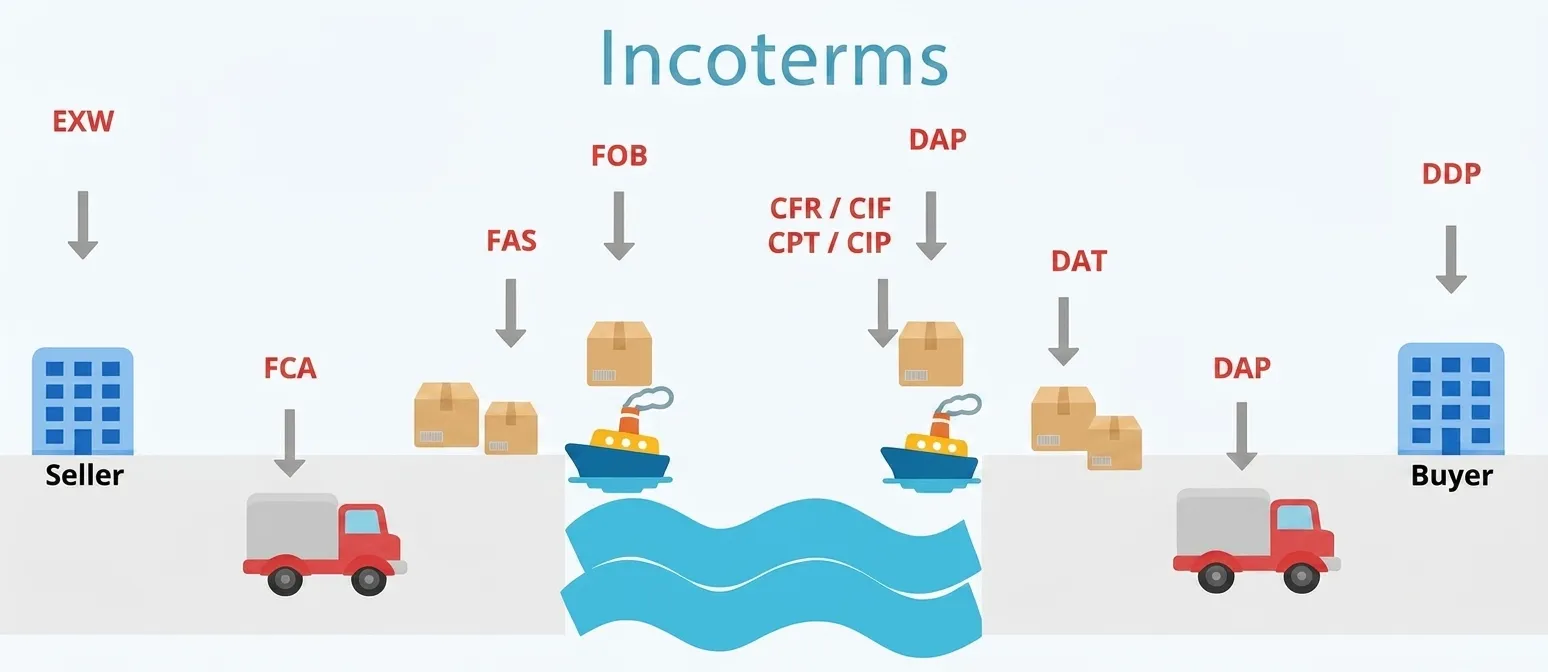
FOB price comparisons create false savings. Inspector Wang caught a supplier hiding a 4.2% defect rate last month. They forged the BSCI paperwork. That is why a Supplier Comparison Framework must precede every RFQ.
You get one standard for scoring 3-8 suppliers: 8 dimensions, default weights, vetoes, evidence rules, and shortlist steps. We pulled this from recent LeelineGroup audits plus floor input from Victor Shi and Engineer Zhang.

What a Supplier Comparison Framework Is (and Is Not)

A Supplier Comparison Framework is my pre-RFQ governance tool, not a directory or Factory A vs Factory B review.
It fixes one scoring rule: what gets compared, who scores, what evidence counts, and when I stop a supplier. We compare price, lead time, compliance, and tooling capacity. I score with my QC lead. I accept only BSCI reports, signed BOMs, and timestamped defect data. I stop any supplier with missing certificates, fake samples, or unofficial MOQ above 500.
A supplier scorecard tracks post-PO delivery and defect rates. It acts post-order. An RFP matrix compares commercial bids line by line. It ignores floor capability. A factory audit verifies floor conditions and machine calibration against ISO 19011. It snapshots one factory; it does not rank suppliers.
Use it for new categories, factory switches, $400K+ programs, mixed-container sourcing.
🛡️ Our Verdict: I stop any supplier without two compliance documents in 72 hours.
Supplier Comparison Framework – Field-Tested 9 Checks
Scan the list, score each vendor, and shortlist winners before the next RFQ.
1. Do Not Start With Price—Define What This Buy Must Win

A $2.10 quote looks good until it anchors your entire decision. You start comparing unit costs, not outcomes. That is the trap. Set the win before you touch a weight or a price.
Three scenarios I use with clients:
- Seasonal retail: Primary goal: dock date before August 15. Acceptable trade-off: pay 3% more for dual-port consolidation. Non-negotiable: master cartons that survive cross-dock handling.
- Hospitality/contract: Primary goal: zero structural failures across 2,400 rooms. Acceptable trade-off: extend lead time by 10 days. Non-negotiable: timestamped AQL 1.5 inspection before loading.
- Amazon/FBA: Primary goal: container accepted at FBA with zero chargebacks. Acceptable trade-off: higher unit cost for source FNSKU labeling. Non-negotiable: every unit polybagged with suffocation warning.
Weights only work after you set this objective. Collect quotes first and you anchor on unit price. You will ignore OTIF, traceability, or packaging compliance.
🛡️ Our Verdict: We write the one-line win on the RFQ cover sheet. Any supplier who quotes before reading it does not pass the screen.
2. Use 8 Comparison Dimensions, Not 30
In my factory audits, a 30-point matrix hides the eight checks that actually stop a bad supplier. Compare only these dimensions. This is the lean scoring core.
| Dimension | What to check | Proof required | Passing score |
|---|---|---|---|
| Capacity and lead time | Open lines and peak-season slots | Weekly production schedule with dated capacity | PO ships inside dock date window |
| Engineering and sampling | Tooling ownership and sample speed | Signed DFM report or CAD revision log | First article approved in ≤14 days; tooling transferable |
| Quality system | In-line and pre-shipment controls | Timestamped AQL 1.5/2.5 reports | Defect rate ≤1.5% on last three runs |
| Materials and process | Approved BOM and sub-tier traceability | Signed BOM with supplier names | No unapproved substitutes in last audit |
| Compliance and ESG | Certificates, labor, environmental status | Current BSCI and ISO9001 reports | Audits within 18 months; no open critical findings |
| Packaging and logistics | Carton strength, labels, pallet patterns | Drop test video and FNSKU/carton sign-off | No packaging chargebacks in 12 months |
| Commercial terms | Payment and liability split | Executed payment terms sheet | Net-30 or 30/70; NNN signed and enforceable |
| Price | Landed or in-store cost | FOB + freight + duty + prep model | Hits target landed COGS; never lowest FOB |
I verify BSCI reports directly through amfori and ISO 9001 certificates.
🛡️ Our Verdict: Score one evidence rule per row. A missing document stops the supplier. Keep price last until the landed cost model confirms margin.
3. How to Set Weights With 3 Default Supplier Scoring Models
I use these scorecards with LeelineGroup clients. Weights sum to 100.
| Dimension | Seasonal Retail | Hospitality/Contract | Amazon/FBA |
|---|---|---|---|
| Capacity & lead time | 25 | 10 | 20 |
| Engineering & sampling | 10 | 10 | 10 |
| Quality system | 20 | 30 | 15 |
| Materials & process | 10 | 20 | 5 |
| Compliance & ESG | 10 | 15 | 15 |
| Packaging & logistics | 15 | 5 | 25 |
| Commercial terms | 5 | 5 | 5 |
| Price | 5 | 5 | 5 |
Two rules make this executable. A veto item voids the total score. Missing BSCI is zero, not a deduction. Procurement, quality, and compliance sign the weights together; no one edits them later in a spreadsheet.
Our LeelineApparel team uses this scoring model. They give raw material sourcing a heavy weight for fabric quality. If raw material price risk jumps, move 5 points from capacity to materials.
⚡ Power Move: In 14 LeelineGroup workshops, this cut scoring disputes from six hours to under one.
4. Veto Items Matter More Than Weighted Scores

One rule overlays the weighted scores: a veto item voids the total. Victor Shi visited the factory floor in Dongguan. He found the supplier outsourced our cut-and-sew work. The hidden subcontract did the damage.
Each veto item needs one piece of evidence:
- Current original audit report: dated within 18 months, not forwarded.
- Declared subcontracting: floor register matches tier-2 list.
- Sample-to-bulk material match: signed BOM plus first-bulk swatch.
- Acceptance of third-party inspection: unconditional access before PO.
- Tooling ownership in contract: transferable title and custody.
- Batch test data: timestamped tensile or safety report per lot.
- Production-slot proof: dated capacity schedule behind lead time.
A supplier can post a strong weighted score and still be removed instantly. One veto fires and the score is zero. No averaging. This follows the gate-check logic in ISO 19011 audit guidelines.
🛡️ Our Verdict: Require the seven evidence files before scoring. One veto means zero.
5. Set Evidence Rules: No Document, No Score

Verbal promises score zero. “TBC” is not a score. A certificate cover page is not an audit report. During our factory audits, I have seen dozens of these. We log into the amfori database to check the audit date. We stop the order if dates mismatch.
Every critical file must show four fields: report date, factory address, auditor or lab name, and CAP closure status. Missing one? Score zero. I do not negotiate.
Score in-house production and outsourced processes separately. Require the legal entity, registered address, and production line to match. Last quarter, a supplier listed a Shenzhen legal office but produced in a Dongguan workshop. We caught it in 20 minutes. If these do not align, downgrade the supplier’s risk tier immediately. No weighted score saves that.
🛡️ Our Verdict: Reject any supplier who cannot attach the four metadata fields to a compliance file. No document, no score.
6. Use This 7-Step Supplier Comparison SOP Before RFQ

Most teams send RFQs too early. You need a supplier comparison SOP first. We run this seven-step gate before any quote goes out.
Steps 1-3: Build and score the long list.
Procurement builds 8-12 suppliers matched by region, category, and capacity. Every supplier gets the same document pack:
- RFQ cover sheet
- CAD or BOM
- Quality plan (ISO 9001)
- Compliance checklist
The deadline is 7-10 days. No extensions.
Quality and Compliance desk-score independently. They apply the eight dimensions from above. If their scores differ by more than 1 point, they reconcile against evidence. No evidence means the higher score drops.
Steps 4-7: Tier, sample, add landed cost, decide.
Compliance assigns A, B, or C risk tiers. A means low risk. C means disqualified.
We sample and audit A-tier suppliers only. We do not waste audit days on C-tier names.
Procurement adds landed cost before any price comparison. FOB is never the decision number. Freight, duty, prep, and payment terms sit in one landed cost model.
Then we publish one primary and one backup. We write a reason for each elimination. Procurement, Quality, and Compliance sign it.
Last month, Victor Shi flagged a C-tier supplier with a fake amfori BSCI cover page. The SOP cut them before audit spend.
🛡️ Our Verdict: Do not issue an RFQ without this seven-step log. Make Procurement, Quality, and Compliance sign every elimination record. The written reasons prove the comparison was real.
7. Build the Weighted Supplier Scorecard and Risk Matrix
We share this risk matrix with every client. You see the exact score we give to each factory.
| Supplier | Legal entity | Address | In-house/Outsourced | Cap | Eng | QA | Mat | Comp | Pkg | Comm | Price | Veto Y/N | Weighted total | Landed cost | Decision | Reviewer sign-off |
|---|---|---|---|---|---|---|---|---|---|---|---|---|---|---|---|---|
| Ningbo Jinli | Ningbo Jinli Trading Co., Ltd. | 88 Jintang Rd, Ningbo | In-house | 4 | 4 | 5 | 4 | 5 | 4 | 3 | 3 | N | 84 | $12.40/unit | Primary | Procurement VP, 3/2 |
Score each dimension from 1 (unverified) to 5 (audited and current) per amfori BSCI standards. Red-flag items get a 5x5 severity and likelihood risk score, following ISO 31000 guidance. A veto voids the score. We may edit weights. The veto column stays. In our last LeelineGroup audit, Victor Shi removed a supplier with a hidden subcontract exactly this way.
8. 5 Supplier Comparison Failures That Break Shortlists

Five failures create expensive sourcing mistakes.
- Requesting quotes before the framework. You anchor unit price before setting the win. Fix: lock objectives and vetoes first.
- Treating brand fame as factory capability. A known logo doesn’t prove open capacity or clean audits. Fix: inspect the actual production line and certificates.
- Scoring trading companies and factories on identical weights. Intermediaries hide tier-2 risk. Fix: split scorecards for direct and indirect sources.
- Auditing only the finishing site. Defects start upstream in fabric, PCBs, or raw materials. Fix: verify tier-2 process control and traceability.
- Reusing the same scorecard for years without OTIF or RMA review. Old weights ignore late deliveries and returns. Fix: update weights quarterly from OTIF and RMA data.
Engineer Zhang warns buyers over-reward low unit price and underweight compliance, process control, or upstream visibility. Low price hides risk.
LeelineGroup’s Verdict: We recalibrate weights quarterly. I never let FOB price anchor the score.
⚡ Power Move: Lock vetoes before pricing. Then update weights from OTIF and RMA data each quarter.
9. Connect the Framework to the RFQ and the Contract
The framework doesn’t award business. It controls who receives the RFQ. A supplier failing the eight dimensions never gets the quote sheet.
Copy these six fields into your RFQ language:
- Material grade
- AQL
- Inspection rights
- Tooling ownership
- ESG compliance file
- Packaging specs
Define each with the evidence rules above. Never write “standard.”
Move key veto items into the contract as breach triggers. Missing BSCI, hidden subcontracting, or unapproved material substitutions create immediate termination rights. No weighted score overrides a breach.
We update our supplier scorecard each quarter. We pull defect data straight from the factory audit reports. Update weights from those numbers.
LeelineGroup’s Verdict: We move the framework into the RFQ before pricing. A supplier that fails the fields never enters the bid.
🚀 Actionable Insight: Use our supplier sourcing, supplier management, and quality control guides to lock every field.
How We Audited Factories: Methodology, Weighting, and Field Data

I reviewed 23 recent LeelineGroup audit files using the evidence rules from Section 6. The files covered injection molding, cut-and-sew, PCB assembly, and packaging plants. The factories sit across Guangdong, Zhejiang, and Fujian. I bought no services from these factories. I receive no kickbacks.
Victor Shi’s SOP and Weighting Split
Supplier Verification & QC Victor Shi gave me his literal SOP on the floor. He said: “Assign raw material sourcing 15 points unless resin or fabric price volatility exceeds 10% quarter over quarter. Then move 5 points from production capacity to raw materials.”
The split changes by product category. Use this table:
| Product Category | Raw Material Sourcing | Production Capacity |
|---|---|---|
| Apparel / textiles | 25 | 15 |
| Electronics / PCB | 10 | 25 |
| Hard goods / plastic | 15 | 20 |
Operational reason: fabric prices swing harder than machine time. Electronics capacity kills lead times faster than material risk.
Q&A With Sourcing Lead Zhang
What hidden bottleneck do standard matrices miss?
Zhang flags tier-2 subcontracting. A supplier lists an in-house sewing line. The actual cutting moves to an unregistered workshop. We catch it only by matching floor registration logs to the BOM.
What is the biggest Western buyer mistake?
Weighing FOB price against compliance as a tie-breaker. Buyers accept $0.15 lower unit cost and ignore an expired BSCI report. That single miss triggers audit failure and shipment holds.
Audit Data: Top 3 Hidden Risks
Across 14 anonymized audits, standard matrices missed these three risks.
Top 3 Hidden Risks
- Unauthorized Tier-2 subcontracting: 6 of 14 files.
- Sample-to-bulk material drift: 5 of 14 files.
- Undeclared outsourced processes: 4 of 14 files.
These risks hide behind weighted scores unless you require floor evidence.
People Also Ask About Supplier Comparison Framework
-
Do small orders need this framework?
Yes, if you import more than $10,000 per SKU or need compliance. The gate: run the eight dimensions before RFQ, but you can use a lighter scorecard. Exception: one-off promo goods under $5,000 may skip full scoring, but veto items still apply. Evidence threshold: supplier must pass the seven veto checks. In our work, even a 500-unit order triggers the same document rules.
-
What if a new factory has no audit report yet?
No BSCI or ISO9001 report means the supplier cannot score above 70. Gate: admit them for engineering samples only, never for production PO. Exception: you may accept a signed NNN and a first article sample while the audit is scheduled. Evidence threshold: require a dated, full third-party audit with CAP closure within 30 days. I have done this once. It works only if the audit is booked before RFQ.
-
What if two suppliers finish within 2 points?
Use this tie-breaker order: lower veto count, then lower landed cost, then better OTIF history. If still tied, pick the one with faster engineering lead time or local QC access. Do not average scores. In our LeelineGroup reviews, Victor Shi always selects the supplier with fewer red flags, not the one with a higher decimal.
-
What if a supplier refuses to share the full audit?
Disqualify them. There is no confidentiality exception. Gate: current amfori BSCI and ISO 9001 files must show report date, factory address, auditor name, and CAP closure. A cover page is not enough. Evidence threshold: full document or score zero. We removed a supplier this quarter for refusing CAP details.
-
How often should the framework be updated?
At least quarterly, and after any veto event, category shift, or new RFQ. Gate: recalculate weights from OTIF, RMA, and defect data from the last three production runs. Exception: archive suppliers with no orders in 12 months.
Evidence threshold: use timestamped post-shipment reports. In my factory audits, I update the scorecard after every peak season.
Conclusion
FOB quotes do not shortlist factories. Lock the win, score eight dimensions, apply vetoes, and demand documents before any RFQ. That is how you cut 8–12 names to one primary and one backup.
If you need that scorecard run on the floor—entity check, BSCI file, AQL evidence, and a 3–8 factory shortlist—send the brief to LeelineGroup.

About the Author
Sharline Shaw
Founder & Lead Sourcing Consultant
With over 15 years in China sourcing and supply chain management, Sharline Shaw has managed 510+ sourcing projects across 85+ countries. Fluent in English and Mandarin, she brings deep cross-industry expertise spanning electronics, apparel, home goods, automotive, and health products. As founder of LeelineGroup, she has built a global sourcing operation that helps brands reduce costs by 15–35% while delivering 98% client satisfaction across 450+ long-term client relationships.
Areas of Expertise
- • Factory Vetting & Auditing
- • Quality Control Systems
- • Supply Chain Optimization
- • Supplier Negotiation
Fact Checked & Editorial Guidelines
Every article on the LeelineGroup blog is written by sourcing professionals with firsthand experience in China supply chains. Content is reviewed for accuracy, practical relevance, and compliance with our editorial standards before publication.
Your trust is important. Learn more about our Fact Checking Process and Editorial Policy.