No payment rail is safe on its own. The safest way to pay a Chinese supplier ties the method to three things: the legal entity you are paying, the inspection gate that releases the balance, and the dispute clock you can still act inside. Set the payment trigger first, then choose the tool.
We are a China sourcing and inspection partner, not a bank or a payment platform, and we do not earn a commission from any rail below. Every rule and fee stated here is linked to its official source. Payment terms change without notice, so confirm the current version on the platform before you wire.

Key Takeaways
Payment safety comes from the structure around the rail, not from the logo on the transfer.
- Set the payment trigger before choosing the rail. No payment method is safe on its own; tie it to beneficiary verification, an inspection gate, and a dispute clock.
- Keep first orders inside Alibaba Trade Assurance. Platform escrow covers only the specs written into the order record; the claim window is 30 days, or 60 days for eligible Enterprise buyers.
- Put the 70% balance behind an inspection gate. A blind 30/70 paid before shipment is 100% prepayment; pay against a B/L copy only for repeat, standard goods.
- Match the beneficiary name exactly. The bank account name must match the business license and the PI, because one character difference can freeze the transfer.
- Avoid personal accounts, wallets, and crypto. Those payments are irreversible and leave no company-to-company audit trail to recover against.
- File inside the correct dispute clock. Trade Assurance allows 30 or 60 days, PayPal requires a not-as-described claim within 30 days of delivery or 180 days of payment, and an L/C document review takes 5 banking days.
Quick Answer: Which Payment Method Fits Your Order?
| Method | What protects you | Best for | Main risk |
|---|---|---|---|
| Trade Assurance | Platform escrow | First orders | Written specs only |
| Gated T/T | Inspection gate | Production orders | Blind 30/70 |
| Letter of credit | Bank pays on docs | Large new POs | No goods check |
| Third-party escrow | Intermediary holds | Trusted partners | Factories refuse |
| PayPal G&S | Buyer protection | Samples | Custom/resale excluded |
| Wise or Payoneer | Fast transfer | After checks | No quality disputes |
| WU, Alipay, crypto | Nothing | Nothing | Irreversible |
Cost: Trade Assurance is free for buyers; T/T and L/C carry bank fees; suppliers often pass on 4%–6% for PayPal; Wise and Payoneer charge a low conversion fee.
The seven sections below explain where each method fails.
1. Alibaba Trade Assurance: Best Protection for First Orders and Smaller Trial Runs
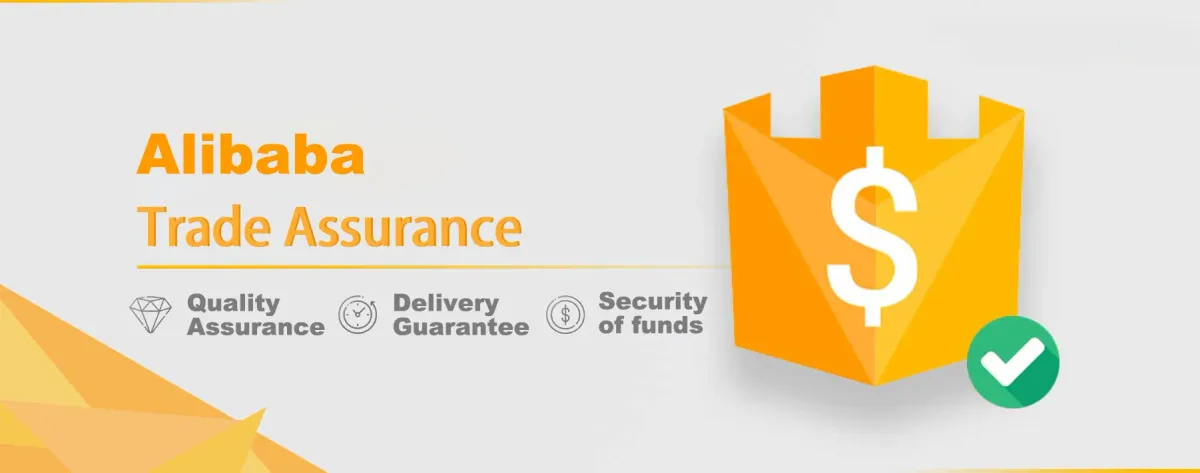
Trade Assurance is a contract with a timer. The platform holds your payment until you confirm receipt. If the supplier ships late, sends the wrong goods, or fails the quality terms written into the order, you file a claim. Protection covers only what appears in the online order record: chat promises and side emails are not part of it.
The claim window is not one number. Alibaba’s own guidance says standard claims may have 30 days, while eligible Enterprise and Enterprise Pro buyers may have 60 days. The deadline that applies to your order is shown on the order page, so check it before you place the order rather than after delivery. See how Trade Assurance protection works.
How the fee works. Trade Assurance is free for buyers. The seller pays a transaction fee that depends on the supplier’s market and the payment method, and some suppliers price that fee back into the quote. Ask whether the unit price includes it, separate the product cost from the platform fee, and confirm the current fee in the order checkout rather than trusting a percentage from an older guide. Our supplier price negotiation guide covers how to reopen a quote without losing the agreed terms.
Embed exact specs in the order record: material grade, dimensions, tolerance range, packaging, AQL level, model number, and finish. Attach a golden-sample photo. Vague descriptions kill claims.
Where it breaks: complex OEM specs rarely fit the order form, and any payment made outside the platform voids protection. Use Trade Assurance for new suppliers until order size or document complexity makes an L/C the better structure.
🧠 Expert Take: The moment a supplier asks to “settle the balance by bank transfer to save fees,” the protection is gone. Keep the whole payment trail on-platform or accept that you are now relying on the supplier, not the platform.
2. T/T Bank Wire With 30/70 Terms and Inspection Before Balance: The Most Practical Structure for Production Orders

Every factory pushes T/T. The wire itself protects nobody: a bank transfer is close to irreversible, and the FBI’s IC3 collects wire-fraud complaints as a major category. Safety comes from the structure around the wire, not from the rail.
Buyers confuse three versions. 30/70 before shipment releases the balance before the cargo moves. 30/70 against a B/L copy pays after booking. 30/70 after a passed pre-shipment inspection pays only when the inspection report lands.
Our rule is simple. Put the 70% behind an inspection gate on any order with custom specs, and use a B/L copy only for repeat, standard goods. A “staged” deal that demands the balance before booking space is 100% prepayment with extra steps.
Match the beneficiary name exactly. The bank account name must match the business license and the PI. A single character difference is enough for the bank to hold or reject the transfer, and unwinding it can take days. Run the five checks in Step 2 before you send anything.
For vetted factories on real production orders, gated T/T is usually the most practical way to pay at volume. It is not automatically the safest option: that depends on whether the inspection gate is real, independent, and written into the PI.
⚡ Power Move: Make the PI say “balance due only after a passed pre-shipment inspection,” and name the inspection standard and the inspection firm in the same clause.
3. Letter of Credit (L/C): Best for Large Orders With New or Lightly Vetted Suppliers
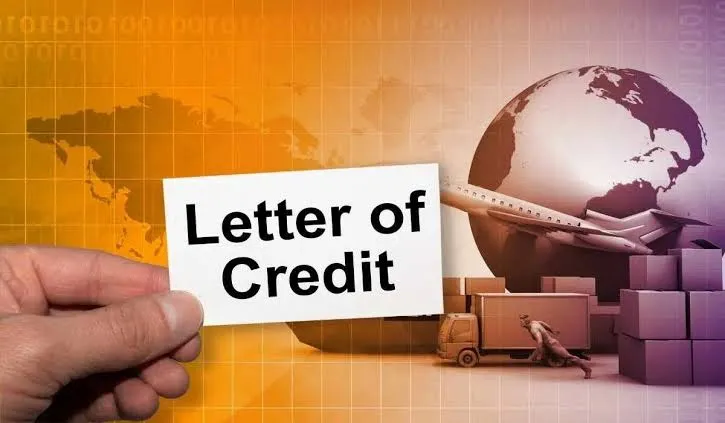
An L/C protects documents, not goods. Under UCP 600, banks deal with documents and not with the goods, services, or performance behind them. The bank pays when your documents match the letter’s terms; it never inspects the cargo.
That gap is the whole design. A weak L/C still pays on clean paperwork, which is why the safety upgrade is document design, not bank selection. Name a third-party QC firm in the presentation documents and require its inspection certificate before funds release, for example from SGS, Bureau Veritas, or Intertek. Check that the certificate itself is genuine before you accept it; our guide to avoiding fake certifications walks through the document checks.
Timing is fixed by the rules. UCP 600 gives the bank a maximum of five banking days after presentation to examine the documents. One missing signature, or a spelling mismatch between the invoice and the packing list, becomes a discrepancy, and each discrepancy adds an amendment fee and delays shipment.
Use an L/C when the order value, the supplier’s novelty, or your treasury controls justify the bank fees and paperwork. There is no universal dollar threshold: the right cutoff depends on what your bank charges and how much deposit is at risk. The U.S. International Trade Administration lists letters of credit as one of the most secure instruments available to international traders.
🧠 Expert Take: An L/C without a QC certificate in the document set protects the paperwork, not your product. Put the inspection certificate into the presentation documents before the letter is issued.
4. Escrow or Third-Party Held Funds: Useful in Theory, Limited in Real Factory Negotiations

Escrow sounds safer than it works in factory talks. A third party or agent holds funds and releases them at milestones, but private escrow is not Alibaba Trade Assurance: it uses a separate intermediary, which changes your legal footing and your recovery path.
The limits show up early. Many factories reject escrow for custom production because they need cash for materials and tooling, and a supplier who accepts it often prices the delay into the quote. Release criteria also turn contentious: photos, a QC report, or a passed AQL? Offshore intermediaries add recovery complexity if the funds freeze.
Escrow fits trusted sourcing partners or special project structures, not typical direct-factory orders.
🧠 Expert Take: Expect pushback, not enthusiasm. If a factory accepts private escrow without changing price or lead time, check who the intermediary is and which agreement governs the funds.
Suri Zhong, China Sourcing Agent
5. PayPal Goods & Services: Best for Samples, Not for Inventory-Scale OEM Orders
PayPal is fast, familiar, and useful for sample fees, artwork deposits, and small test buys where a small loss is acceptable. Pay with Goods & Services; Friends and Family carries no buyer protection at all.
The protection is narrower than most buyers assume. Under PayPal’s Purchase Protection terms (updated 26 January 2026), a significantly-not-as-described claim must be filed within 30 days of delivery and within 180 days of payment, whichever comes first. Item-not-received claims run to 180 days from payment. The exclusions matter more than the clock: custom-made items are excluded from not-as-described cover, and items intended for resale are excluded entirely. An OEM production order usually falls into one or both categories.
The 4%–6% is a pass-through, not a PayPal fee. Suppliers often add it to cover their own fee exposure, while PayPal’s published pricing is separate. Ask for the fee breakdown before you accept a PayPal quote for anything larger than a sample.
⚡ Power Move: Cap PayPal at sample and artwork value. Route production through Trade Assurance, inspection-gated T/T, or an L/C.
6. Wise, Payoneer, and Multi-Currency Transfer Rails: Efficient Tools, Not Protection
Wise and Payoneer are transfer infrastructure, not escrow. They do not adjudicate quality disputes. They move money quickly, show the fee up front, and simplify multi-currency account management. None of that protects the money.
Fees are route-dependent. On major currency routes, Wise’s conversion fee has typically sat around 0.4%–0.6% plus a fixed fee when checked in November 2026; your route and payment method can change both numbers, so use the Wise pricing calculator instead of a rule of thumb. Payoneer uses local receiving accounts and its own fee schedule.
These rails do reject beneficiary-name mismatches. That is fraud control, not quality control: it blocks some wrong-account payments, but it does not get your money back if the supplier ships the wrong product or no product at all.
🧠 Expert Take: Use transfer rails only after finding a reliable supplier, matching the beneficiary name exactly, and agreeing a milestone structure. They are a cheaper wrapper around a good process, never a replacement for one.
7. Methods to Avoid: Western Union, MoneyGram, Personal Alipay or WeChat, and Crypto Wallets

Never use these channels for supplier payments. Western Union, MoneyGram, personal Alipay, personal WeChat Pay, and crypto wallets are irreversible. Once collected, the cash is effectively gone; a bank cannot claw it back.
Each also has weak identity checks. A supplier can give a name that does not match the business license, and the payment leaves no company-to-company audit trail. If the factory later denies receiving the money, you hold a transfer slip and no contract counterparty.
Suppliers push “the boss’s account,” “our export agent,” and “faster settlement.” A documented export agent is fine: it pays from a company account tied to a formal agency agreement. A personal payment request has no paperwork. That is the red line. If you are not sure whether the beneficiary is the factory itself, a trading company, or an agent, our sourcing agent vs trading company breakdown explains what each one owes you in writing.
⚡ Power Move: Add this clause to every PI: “We do not pay personal accounts, wallets, or crypto. Any request to do so cancels the order.”
How to Execute the Safest Payment Plan for Chinese Suppliers?
No single rail is the plan. The plan is a sequence: verify the entity, gate the balance, and know which clock you are racing. We run this sequence for 500+ brands sourcing from China.
Step 1: Map Payment to Order Phases
There are two legitimate paths. Pick one before you sign the PI, and write the choice into it.
Path A, new supplier or custom spec: 30% deposit, with the balance released only after a passed pre-shipment inspection. The inspection must be independent and must reference the AQL plan in the PI.
Path B, repeat supplier and standard goods: 30% deposit, with the balance paid against a B/L copy after booking. This is acceptable only because the goods, the specs, and the supplier are already proven.
| Phase | New supplier / custom spec | Repeat supplier, standard goods |
|---|---|---|
| Samples | PayPal G&S or Trade Assurance, sample value | Same |
| Deposit | 30% by T/T or Trade Assurance | 30% by T/T |
| Before production | Factory audit + live video before deposit | Not required |
| Mid-production | DUPRO (during-production) check | Optional |
| Pre-shipment | AQL inspection; balance after passed report | AQL inspection; balance against B/L |
| Final balance | Same day the inspection passes | Against B/L copy |
A factory audit belongs before the deposit, not at mid-production. Mid-production is where you run a DUPRO check on units already being made. If the factory is new and nobody has walked the floor, paying a deposit is the wrong first step. Our factory audit checklist covers what to inspect on that visit.
Step 2: Run the 5-Point Coincident Check Before Any Wire
Run these five checks in order before any deposit or balance leaves your account.
- Collect the full Chinese legal name and USCC. Get the 18-digit Unified Social Credit Code and cross-check it with our supplier verification guide and our list of red flags in Chinese suppliers. Also check the official National Enterprise Credit Information Publicity System.
- Match the beneficiary name against the business license and the PI/contract. A single character mismatch is enough for the bank to hold the transfer.
- Investigate any export-agent or Hong Kong account mismatch. Ask for the agency agreement. See our supplier risk management framework.
- Require second-channel confirmation for any account change. Call the factory’s published number. Do not trust email alone.
- Send a test transfer only after the entity check passes. A $1 transfer proves the account receives funds. It does not prove the payee is the legal supplier. Entity verification comes from the business license, the USCC, and a matching beneficiary name, not from the test amount.
Step 3: Copy These PI Clauses Into Every Contract
Add these six clauses to your proforma invoice:
- Payment trigger: “Balance due only after a passed pre-shipment inspection per the AQL plan in this PI.” See how a pre-shipment inspection works and how our quality control team reports it.
- Inspection standard and AQL threshold: Name the standard and the plan. A common structure is critical/major/minor at 0/1.5/2.5 or 1.5/2.5/4.0; pick one and keep it consistent across the PI, the inspection report, and the remedy clause. Our AQL inspection standard explains the levels, and ISO 2859-1 is the underlying sampling standard. If the product needs certification, tie the product certification scope to the same clause.
- Account-change rule: “Any change to the beneficiary requires written confirmation and a new PI.”
- Delay penalty: “Late delivery is charged at X% of contract value per day, with a cumulative cap of 5% of contract value.” Insert the daily rate you negotiated; do not leave it implied.
- Incoterm: Name the term that matches the deal, such as FOB, EXW, CIF, or DDP. Do not default to DDP unless the supplier has quoted delivered duty paid. Our Incoterms guide explains which costs and risks sit with each side.
- Defect remedy: “The supplier repairs, replaces, or credits defective units at the buyer’s option.” Tie the remedy to the same inspection report. See our supplier management process.
Step 4: Know Your Dispute Clocks and Recovery Playbook
Each rail runs on a different clock. The clock, not the fee, decides whether you can still recover.
| Rail | Filing window | Clock starts |
|---|---|---|
| Trade Assurance | 30 days; 60 for eligible Enterprise | Delivery or receipt confirmation |
| PayPal, not received | 180 days | Payment date |
| PayPal, not as described | 30 days delivery or 180 days payment | Delivery date |
| L/C document check | 5 banking days | Document presentation |
For a PayPal not-as-described claim, the 30-day and 180-day deadlines run together and the earlier one applies. For any dispute, fix the evidence first: photos and video of the goods, the inspection report, the PI, and the order record. Then work down the contract hierarchy: repair, replacement, or credit before a refund discussion. Do not resell defective stock to recover cash. It can breach a brand agreement, and it is unsafe for any product with a defect that affects use or safety. For a cosmetic defect, a negotiated credit against the next order is usually the fastest recovery.
For supplier verification, inspection, and payment milestone management, contact LeelineGroup. If you are still choosing a partner, start with how to find a sourcing agent in China and our sourcing from China overview.
People Also Ask About Safest Way to Pay Chinese Suppliers
1. What is the safest way to pay a Chinese supplier for the first order?
There is no single safest method. The safest structure is the one you can still dispute. For a small first order kept fully on Alibaba, use Trade Assurance and write every spec into the order record. For a production order, use T/T with a 30% deposit and a 70% balance released only after a passed AQL inspection. The claim window is 30 days by default and 60 days for eligible Enterprise buyers; check the order page before you pay.
2. Is a 30% deposit and 70% balance safe?
Not by itself. A 30/70 split is safe only when the 70% sits behind an inspection gate or a B/L copy after booking. A blind 30/70 paid before shipment is 100% prepayment with extra steps. Write the inspection standard, the inspection firm, and the release condition into the PI, then confirm that the inspection is independent of the factory.
3. Does PayPal protect custom or OEM orders?
Usually not. PayPal's Purchase Protection terms exclude custom-made items from significantly-not-as-described claims and exclude items intended for resale entirely. A production OEM order commonly falls into one or both categories. PayPal can still protect samples and small eligible test buys, so cap it at sample value and route inventory purchases through Trade Assurance or gated T/T.
4. Is a letter of credit worth it for small orders?
Rarely. Bank issuance fees, document review, and amendment charges can outweigh the protection on a small PO. There is no universal dollar threshold, because the decision depends on your bank's fees and how much deposit is at risk. Use an L/C when the order is large relative to that exposure, the supplier is new, or treasury requires bank oversight. Put a third-party QC certificate in the bank documents before issuing.
5. What should I do if a supplier changes bank details?
Pause the transfer. Call the factory's published number and confirm through a second channel. Require a new PI and written confirmation. Match the beneficiary name to the business license. If the new account belongs to an export agent or a Hong Kong entity, ask for the agency agreement. Never trust an email-only change.
6. Is paying a personal account ever acceptable?
No for normal supplier payments. A personal Alipay, WeChat Pay, or bank account breaks the audit trail and makes recovery impractical. Pay only a company account whose name matches the business license and the contract. If the supplier insists on a personal account, treat it as a red flag and pause the order.
Sources and Verification
Rules and fees were checked in November 2026. Primary sources: Alibaba Trade Assurance protection for the 30/60-day claim windows and buyer fees, PayPal Purchase Protection updated 26 January 2026, UCP 600 for the document-only rule and the five-banking-day examination period, CFPB money transfers, and FBI IC3. Platform terms change without notice; confirm the current version on the platform before paying.

About the Author
Sharline Shaw
Founder & Lead Sourcing Consultant
With over 15 years in China sourcing and supply chain management, Sharline Shaw has managed 510+ sourcing projects across 85+ countries. Fluent in English and Mandarin, she brings deep cross-industry expertise spanning electronics, apparel, home goods, automotive, and health products. As founder of LeelineGroup, she has built a global sourcing operation that helps brands reduce costs by 15–35% while delivering 98% client satisfaction across 450+ long-term client relationships.
Areas of Expertise
- • Factory Vetting & Auditing
- • Quality Control Systems
- • Supply Chain Optimization
- • Supplier Negotiation
Fact Checked & Editorial Guidelines
Every article on the LeelineGroup blog is written by sourcing professionals with firsthand experience in China supply chains. Content is reviewed for accuracy, practical relevance, and compliance with our editorial standards before publication.
Your trust is important. Learn more about our Fact Checking Process and Editorial Policy.