Key Takeaways
A field-tested ESG audit runs in seven steps, and the order matters: records first, governance last.
- Start with the permits. A pollutant discharge permit naming another legal entity, an expired waste manifest, or a meter that never moves stops the audit before social scoring begins.
- Reconcile meters to output. Twelve months of electricity, gas, water and solvent data divided by real production volume exposes hidden night shifts and high-emission Tier-2 work that a tidy carbon report leaves out.
- Test payroll against the floor. Match timesheets to kWh curves, warehouse dispatch times and insurance rosters; a payroll-to-insurance gap above 20% means ghost rosters or under-reported contributions.
- Walk dormitories and fire safety as one control. Beds must match the worker roster, exits must be clear with production running, and training records signed in one batch mean nobody was trained.
- Interview workers off site. Age proof, agency ratios and fee payment only hold when workers are questioned away from supervisors; identical answers are a coaching signal.
- Map Tier-2 work, then demand a closed-loop CAP. The license, the real building and the process-flow map must agree, and every CAP needs a named owner, a root cause and closure evidence.
A quality audit asks one question. For ESG factory audit China projects, buyers need answers that hold up on four fronts: environmental, social, governance, and traceability. I have walked 300+ factory floors during third-party evaluations across Guangdong, Zhejiang, and Jiangsu. I benchmark against ISO 14001. We test documentary proof against shop-floor observation and triangulate records.
This exposes hidden compliance risk before customers, investors, customs, or board scrutiny. These seven checks show where supplier qualification breaks down. Use LeelineGroup’s factory audit checklist, our guide to sustainable sourcing and ESG compliance, and the China sourcing playbook as your map.
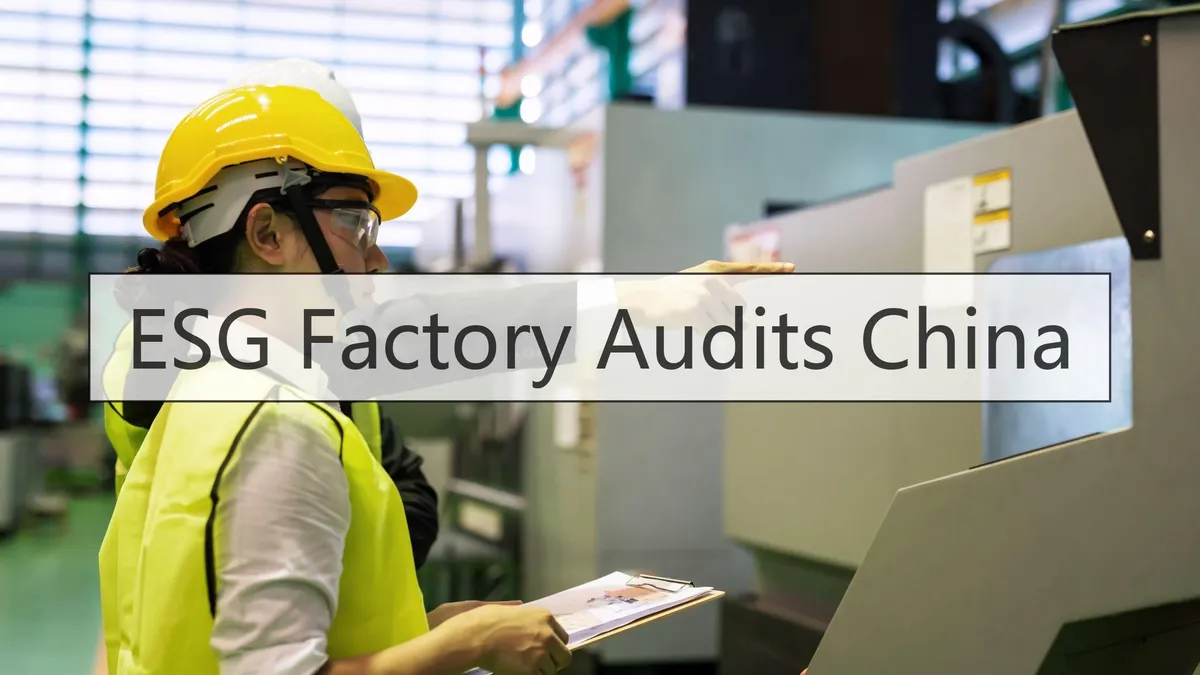
7 ESG Factory Audit Checks in China Every Buyer Should Run
Protect your brand from supplier surprises with a field-tested ESG audit method for China. Covers permits, wages and Tier-2 mills. Start auditing smarter now.
1. Check Environmental Permits, Wastewater Permissions, and Hazardous-Waste Manifests First

A broken environmental paper trail kills the whole audit. If permits do not match the site, stop. Do not score social or labor sections yet.
Start with the environmental impact approval file, the pollutant discharge permit that also sets wastewater limits, hazardous-waste storage controls, transfer manifests, and licenses. ISO 14001 certification is a management claim, not proof of current site compliance. Certificates expire. Operations change. I treat the certificate as a starting point, never as evidence.
Pull the paperwork and read the address and legal entity name out loud. Then walk to the gate and compare. Of the 68 third-party factories we audited in 2024, nearly half failed the first document check. Many managers showed us expired waste manifests. Some factories ran dirty machines without legal air permits.
Inspect expiry dates, wastewater logs, chemical labels, VOC equipment, hazardous-waste handover records, and third-party verification. At one Ningbo textile plant, the wastewater meter read identical numbers for 14 straight days. The floor operator said the pump was offline during peak dyeing. That single log undercut the ISO 14001 certificate hanging in the lobby.
Watch for permits covering a different legal entity, treatment equipment switched off during production, gaps in manifest dates, and identical handwriting across multiple logs. Paperwork cleaner than the workshop is a red flag, not a green one. Our list of red flags in Chinese suppliers covers what to do when the records fail.
Author’s Take: We audit environmental records first because this is where boards get sued. Primary E. Governance follows when records fail to reconcile with actual production volume.
⚡ Power Move: Get permit PDFs and manifest scans before booking the flight. Match legal entity and site address at the gate.
2. Reconcile Energy, Water, VOC, and Scope 3 Inputs Against Actual Output

A factory can show a carbon number. It rarely shows the meter reading behind it. Sustainability Manager Bill Zhou reviewed a carbon report from a Zhejiang metal supplier that makes parts for an outdoor-grill brand. The factory claimed flat energy use. Yet production output jumped 40 percent. Bill rejected the report on the spot.
Get primary activity data first: monthly electricity and gas bills, steam meter reads, water records, plus production volume. Match them to line-level schedules. Check workshop kWh meters against utility invoices. Pull night-shift usage.
Many factories hide a second shift to avoid overtime records, and that shift burns energy and water. For VOC, list every emitting process: coating, plating, dyeing, printing. Compare stated emissions to solvent purchase records. If a coating line reports near-zero VOC, the boundary is wrong.
Scope 3 emissions confuse many buyers. You have to calculate the real carbon data yourself: take the monthly power bills, divide total energy by the actual number of products, add scrap rates, and allocate the result by SKU family or process step.
Use the GHG Protocol boundary rules and the ISO 14067 guidelines where they apply, then reconcile inputs to the same meter reads. We built a worksheet for a Guangdong plater last quarter. Their Tier-2 anodizing mill was the largest emitter, and the factory’s report ignored it. Most carbon worksheets and spend-based reports fail this test.
Author’s Take: Flat energy curves during peak season are the fastest red flag. I flag E first, then G, because a narrow boundary can hide high-emission Tier-2 mills or platers. Demand the boundary map in writing.
⚡ Power Move: Ask for 12 months of meter reads and production logs before you accept any carbon number.
3. Reconcile Wages, Hours, and Social Insurance Using a 4-Step Anti-Coaching Protocol

A payroll sheet can look clean while the floor tells another story. I run LeelineGroup’s 4-step on-site triangulation SOP on every labor audit. It catches dual books and coached records fast.
Step 1: Compare HR timesheets and attendance logs to workshop electricity spikes and machine run patterns. Last March in Dongguan, the sheet showed 8-hour days. The kWh curve showed a full second shift, well past ILO working-time limits. That exposes hidden overtime and coached attendance data.
Step 2: Cross-check raw-material warehouse timestamps against claimed labor hours. If dispatch records show loading at 22:40 but payroll says the shift ended at 18:00, you have off-book labor or ghost rosters.
Step 3: Reconcile headcount and payroll against social-insurance and tax filings. Pull HR rosters, labor contracts, overtime math, and the five social-insurance contributions plus housing fund (wuxian yijin) required under China’s Social Insurance Law. At one Foshan plant, the payroll listed 214 workers. The insurance roster showed 91. That gap means ghost rosters or under-reported social insurance.
Step 4: Validate discrepancies through confidential worker talks away from supervisors. Use the canteen or dormitory. Ask open questions about clock-in rules and pay stubs. Identical scripted answers are a red flag.
Red flags: payroll totals that don’t match headcount, round-number overtime, insurance rosters smaller than active worker count, warehouse dispatches after “official” shift end, and scripted worker answers. Tag this primary S, with strong G implications under the SASB standards. Falsified wage and hour logs are record-integrity failures, not paperwork errors. In China ESG audits, this is where social risk hides.
⚡ Power Move: Pull 12 months of records and test them against floor activity. Fastest catch: insurance rosters. If the gap exceeds 20%, stop and escalate.
4. Inspect Dormitories, Fire Safety, and Emergency Preparedness as a Single Worker-Welfare Control

Most auditors check dormitories, then fire safety, then training records. That misses how the failures connect. I walk them as one system: where workers sleep, how they escape, and whether anyone taught them how. This maps to SMETA 4-Pillar social and health-and-safety sections.
Start with the roster. Count dorm rooms and beds against the active worker list. One Foshan factory claimed they had 380 workers. Inspector Wang counted only 260 beds during his visit.
The factory hid the remaining 120 workers. They slept in a dangerous uninspected building offsite. It was not on the audit scope. Now it was on mine.
Walk the exits during active production. Last June in Dongguan, a fire route was stacked with cartons three pallets deep. The evacuation map pointed to a door welded shut. Extinguisher tags were expired by 11 months. Check toilets and canteens against stated standards too.
Pull the drill log, alarm test records, first-aid inventory, and incident records. Then go to the line: PPE use, needle guards, lifting stations, ventilation at glue pots. Training records signed in bulk on one day tell you nobody sat through the session. Real signatures vary.
Tag this primary S, with light G exposure when logs look staged.
Author’s Take: Dorm conditions predict fire risk better than any certificate. Overcrowded rooms mean blocked exits.
⚡ Power Move: Count beds against the roster, then walk the nearest exit with production running.
5. Verify Young Workers, Agency Labor, and Whether Interviews Are Truly Uncoached
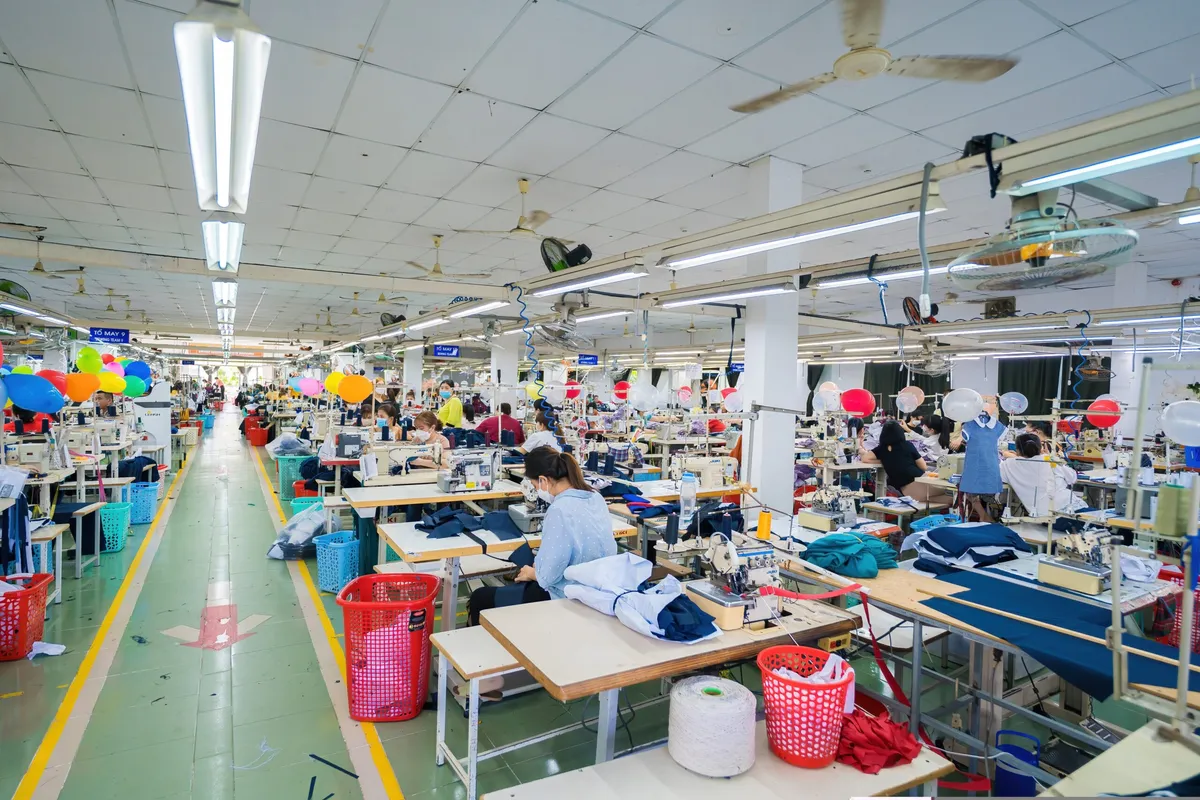
A clean ID file proves nothing if workers fear speaking. Age checks and labor sourcing are one control. It works only when interviews happen off-site, away from supervisors.
Start with ID checks. Match faces, birth dates, and hire dates. For student workers, check school agreements and hour limits. Pull agency contracts, dispatch ratios by workshop, payroll split between direct and agency labor, and grievance logs.
Compare agency headcount with peak output. One Dongguan plant claimed 12% dispatch labor. Q4 badge scans showed 38%. That gap points to undisclosed agency labor.
Our auditors wait outside the factory gates after shifts end. We talk to workers in private. Factory bosses never hear these chats. Workers tell us the truth about their long hours.
I ask: How did you get this job? Who holds your ID? What fees did you pay? I compare answers. ILO forced labor indicators flag fee payment and ID retention as serious risks.
Mini Q&A: Q: How old are you? A: 18. Q after the gate: When did you start here? A: Three years ago. That is the tell: an 18-year-old hired at 15. Workers reveal fees, held IDs, and underage hires only after leaving the property.
Red flags: identical answers, hovering managers, missing age-proof for young-looking workers, heavy peak-season dispatch labor, and fee denials that contradict worker accounts. Tag primary S.
Author’s Take: The interview room is the audit. Without workers away from supervisors, you cannot verify age or agency labor.
⚡ Power Move: Run interviews off-site, then cross-check agency payroll against gate logs.
6. Map Subcontracting, Legal-Entity Addresses, and Tier-2 Mills Before the Factory Hides Them
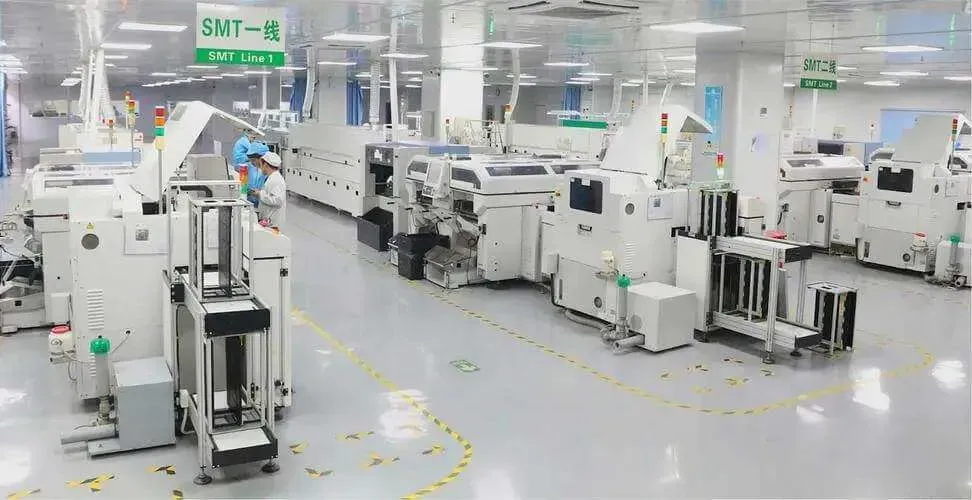
The company on your invoice might not make your goods. Many suppliers act as middlemen, so map the real supply chain before hidden factory risks reach your brand. Our guide to avoiding middlemen suppliers shows how to prove who actually makes the goods.
Our Shenzhen team checks the business license first. The document must state that they manufacture goods. Match the legal name to the real building, check the GPS pin, and use our guide to how to verify suppliers for the full document set. Then walk the lines and match capabilities to the claimed process. Ask what leaves the building: plating, dyeing, finishing, molding.
Pull subcontractor declarations, POs to sub-tier suppliers, transaction certificates or chain-of-custody records, and a process-flow map. The map must show where carbon- or pollution-intensive stages occur. In our anonymized 2024 audit set, 28% of factories used undisclosed night-shift subcontracting. The main line looked fine. The work moved after dark.
Demand Tier-2 names. Refusal is a finding, not a negotiation. Check for packaging or semi-finished goods arriving from unknown sites. Unexplained wet processing is another tell. Tag trade-only scope as G. Tag hidden plating, dyeing, or finishing as E/S. The risk sits where the factory hides it.
Author’s Take: We call this the governance bridge. If the license, site, and Tier-2 map do not reconcile, stop the audit. We have seen a clean Tier-1 report hide a Tier-2 mill with no permit.
⚡ Power Move: Ask for the process-flow map and Tier-2 list in writing before the site visit. Compare the license address at the gate.
7. Test Record Integrity, Whistleblower Access, and Whether the CAP Can Actually Be Closed

The finding is not the risk. The unclosed CAP is. Weak CAPs let the same defect return cycle after cycle.
Start with record integrity. Pull raw version histories from payroll, attendance, and complaint logs. Reject formatted reports. Backfilled attendance and duplicate-looking ledgers surface fast. Last quarter, a Guangdong supplier sent two attendance files. The second showed edits stamped 40 hours after my audit booking email. That is a G failure hiding S risk.
Check how workers actually report problems. A poster on a wall means nothing; workers told us they never call a hotline they do not trust. Visibility without confidence is non-functional, which is why supplier compliance management has to be tested, not just published.
Classify every finding before you write the CAP. A locked fire door and a missing box label are not the same grade of risk, and mixing them hides both.
Demand a closed-loop CAP: named owner, root cause, deadline, verification method, closure evidence, and 30/60/90 re-audit triggers. “Retrain staff” is not the root cause. A Foshan plant logged the same needle-guard finding for four straight audits, which is exactly the failure mode our supplier risk management process is built to catch.
The CAP promised retraining and never touched the broken guard bracket. Red flags: duplicate ledgers, backfilled attendance, a hotline no worker trusts, training-only fixes. Tag it G. Governance weakness multiplies E and S risk, and this is where a single finding becomes a compliance risk event.
Author’s Take: In ESG factory audit China work, record integrity is the gate. If logs were edited, every score sits on sand.
⚡ Power Move: Demand version history with metadata. If the supplier cannot export it, that is your first finding.
How Should You Use the 7 ESG Checks as a Supplier Buying Framework?
Compare Standards with the Same Decision Fields
Match the standard to the claim before you book the audit. Use the same fields every time.
| Standard | What it covers | Who typically recognizes it | What it misses | Use it when |
|---|---|---|---|---|
| SMETA 4-Pillar | Labor, safety, environment, ethics | Retailers on Sedex | Site proof, off-site interviews, Tier-2 mapping | You need a social baseline |
| BSCI | Labor rights, safety, environment basics, ethics | European retailers | Discharge permits, meter data, hidden subcontracting | You need retail social compliance |
| SA8000 | Worker rights, social systems | NGOs, mature brands | Environmental permits, product carbon | You need mature social systems |
| ISO 14001 | Environmental management system | Global buyers | Actual discharge, worker interviews, Tier-2 emissions | You need a management starting point |
No standard replaces site visits, off-site interviews, record triangulation, or Tier-2 verification. I treat every certificate as a claim to test, the same way we verify a Chinese ISO certificate before it counts.
Read the Report Like a Buyer

Critical findings stop the order. Blocked fire exits, expired discharge permits, and underage labor are Critical. Major findings need a corrective action plan (CAP) before production. Missing manifests, unverified agency labor, and flat meter logs are Major. Minor findings need correction but do not block. Missing labels and small training gaps are Minor.
A credible report shows raw evidence: meter reads, signed manifests, payroll against insurance rosters, version history, site photos, and off-site interview notes. Weak signs: only formatted PDFs, identical worker answers, or records edited after the booking email. Specify factory size and scope in the SOW, and use a factory capability assessment to size the site before you agree the audit days.
Lead Auditor Q&A
I asked our Lead Social & Environmental Compliance Auditor three questions.
Q: How do you run confidential off-site worker interviews? A: We meet workers after shift outside the gate. No supervisors. No names to management. I ask how they got the job, who holds their ID, and what fees they paid. I compare answers.
Q: How do you verify municipal wastewater discharge permits? A: I match legal entity, site address, permit limits, and expiry. Then I check the discharge meter against production logs and the treatment system. If the meter stays flat while dyeing runs, the permit is not credible.
Q: How do you calculate ISO 14067-style product carbon footprints when Tier-1 hides high-emission Tier-2 plating or dyeing mills? A: I demand the process-flow map and Tier-2 list in writing. Then I allocate monthly kWh, fuel, water, and solvent records by output and process step. Hidden plating or dyeing goes into the boundary before I accept the number.
Decide: CAP, Re-Audit, or Replace
- Issue a CAP for Major findings, with a named owner, root cause, deadline, and closure evidence.
- Re-audit when the CAP touches records, permits, or worker interviews.
- Replace the supplier when Critical findings repeat, records were edited, or Tier-2 disclosure is refused. Re-shortlist with a supplier comparison framework instead of a gut call.
- Log the decision in your supplier management file so the next audit starts from evidence.
Our take: a certificate buys a first meeting, not proof.
Contact LeelineGroup for enterprise-grade factory ESG audits and remediation support. We audit the site, verify the records, and help you close the CAP.
We receive no payment from Sedex, amfori, or ISO to promote these standards.
People Also Ask About ESG Factory Audit China
1. Is BSCI the same as an ESG audit?
No. BSCI is narrower. It covers labor rights, safety, environmental basics, and business ethics. An ESG audit adds environmental permits, meter data, governance, and traceability. Enterprise buyers usually need all of those layers.
In our ESG factory audit China projects, a valid BSCI certificate often sits next to a wastewater log that stopped six months ago. Treat BSCI as a social baseline, not full ESG proof. Add site verification, record triangulation, and a Tier-2 map before you approve the vendor.
2. Can a factory fake an ESG audit?
Yes. I have caught it on site, more than once. Watch five signals. Coached worker interviews with identical answers. Dual payroll books. A factory address that does not match the permit. Utility spikes during “closed” hours. Permit files cleaner than the workshop floor.
Each signal points to the same root cause: edited records. Check version history with metadata before you trust any score.
3. What happens if a factory fails an ESG audit?
Findings get classified first. A Critical finding, like a blocked fire exit or underage labor, triggers immediate escalation or supplier exit. A Major finding, like a missing hazardous-waste manifest, needs a CAP with a named owner, root cause, deadline, and a re-audit.
A Minor finding, like a missing label, gets documented and closed on a monitored timeline. Flatten all three into one bucket and you hide real risk. When the same Major finding reappears audit after audit, the CAP process is cosmetic, not functional.
4. How long does an ESG factory audit take?
Duration depends on factory size and scope. A single-site SMETA or BSCI check takes one to three days on site. A full ESG audit with Tier-2 mapping and Scope 3 verification takes two to three weeks including desk review.
Add a week when you need off-site worker interviews or a follow-up re-audit. Give the auditor your standard, site list, and product scope in the SOW. Vague scope is the main cause of delay.
5. Which standard should I request?
Pick based on the claim you must support. Use SMETA for a retail social baseline. Use SA8000 for mature worker-rights systems. Use ISO 14001 for an environmental management starting point. Use a bespoke ESG audit when you need Tier-2 mapping, Scope 3 data, or permit-level proof. No certificate replaces off-site interviews or record testing.
6. Can a quality audit replace an ESG audit?
No. An AQL check measures defects. It does not test discharge permits, wage records, or worker interviews. Last quarter, a supplier passed AQL 1.5 on the line and still failed on expired hazardous-waste manifests. Run both audits, as our comparison of factory audits vs product inspections explains. Use the quality report for product risk and the ESG audit for compliance risk.

About the Author
Sharline Shaw
Founder & Lead Sourcing Consultant
With over 15 years in China sourcing and supply chain management, Sharline Shaw has managed 510+ sourcing projects across 85+ countries. Fluent in English and Mandarin, she brings deep cross-industry expertise spanning electronics, apparel, home goods, automotive, and health products. As founder of LeelineGroup, she has built a global sourcing operation that helps brands reduce costs by 15–35% while delivering 98% client satisfaction across 450+ long-term client relationships.
Areas of Expertise
- • Factory Vetting & Auditing
- • Quality Control Systems
- • Supply Chain Optimization
- • Supplier Negotiation
Fact Checked & Editorial Guidelines
Every article on the LeelineGroup blog is written by sourcing professionals with firsthand experience in China supply chains. Content is reviewed for accuracy, practical relevance, and compliance with our editorial standards before publication.
Your trust is important. Learn more about our Fact Checking Process and Editorial Policy.