“Factory direct” is a claim, not proof. I have watched brand founders absorb hidden markups, lose QC control, and still fail at avoiding middlemen suppliers. Suppliers often send vague replies or recycled photos. They delay sharing critical documents. These actions signal a high-risk broker.
Our team audits over 500 Chinese factories every year. We publish our strict findings to help global buyers avoid scams. You can trust this proven process. We compare entity registration, factory floor access, and total procurement cost, never storefront badges.
This is a same-week screen. First pass takes days; run deeper audit actions before any deposit. You get a repeatable SOP to separate a manufacturer, a trading company, or a value-adding procurement partner. The payoff: lower hidden markup, cleaner visibility, stronger IP protection, and better private-label control.
I include a cost-variance table comparing a tier-3 trading-company run against a direct-factory agreement managed through an on-the-ground agency model. Start with sourcing from China, then check our sourcing cost analysis or widen the search to sourcing from Asia. Graphic stages are text-described, not color-coded.
Prerequisites

Time: 1 day to request docs, 1 day for entity matching, 1 to 3 days for video/audit proof.
Files to request:
- Locked product spec or BOM
- Target MOQ and annual volume forecast
- Required certifications (RoHS, CE, FDA, ISO, BSCI, SMETA)
- Supplier’s Chinese legal name + 18-digit USCC
- Business license (营业执照): clean scan only
- Proforma invoice draft
- Receiving bank details: account name must match entity exactly
- Export-license or export-affiliate explanation
- Sample timeline and capacity claim
Buyer-side access:
- Procurement owner, QC reviewer, legal reviewer for NNN/payment clauses, decision-maker for pilot approval.
Verification portals:
- GSXT / National Enterprise Credit Information Publicity System
- China customs (GACC) export registration
- amfori BSCI social compliance standard
Compliance warnings:
- Execute an NNN before sharing molds, drawings, or custom packaging files.
- Align certifications before sample approval.
- Define subcontracting permission in writing. If not written, assume unauthorized.
⚠️ Safety Check: Never wire a deposit before entity matching.
Organized files show consistent chops, matching names, clean file naming. Brokered files show blurry scans, mixed company names, missing pages — the red flags of Chinese suppliers in one place.
Further checks: reliable suppliers, choosing a supplier, product certification.
Avoiding Middlemen Suppliers: A Step-by-Step Sourcing Teardown
Run 4 proven tests for avoiding middlemen suppliers before any deposit.
Step 1: Build a Controlled Supplier Intake Shortlist

Do not focus on finding many suppliers. Focus on sending the exact same RFQ to every factory. Pick 5 to 8 suppliers. Use Alibaba or 1688 for discovery; our China wholesale platform directory covers the rest. Use referrals for off-platform factories. I found referrals sometimes uncover factories that never buy Alibaba visibility. Use an agency for complex or high-volume lines.
Send the exact same RFQ package to every candidate. Identical instructions make quote differences reflect supplier structure, not your instructions.
Require this legal identity pack:
- Chinese legal company name
- 18-digit Unified Social Credit Code
- Business license copy
- Primary factory address
- Export entity name if different
- Bank beneficiary name
- Sample lead-time explanation
- Top 3 current export markets
Copy this into email or WeChat. Replace each bracketed field by name:
Please return one PDF with the eight fields above: [Chinese legal company name], [Unified Social Credit Code], [business license copy], [primary factory address], [export entity], [bank beneficiary], [sample lead time], [top 3 export markets].
Name each field in your template. Do not say “copy the highlighted part.”
Check product-focus depth. One narrow category signals a real factory. A random mixed catalog signals a broker. In my review, broad mixed catalogs almost always pointed to brokers — our guide to verifying suppliers runs the same test.
Verification checkpoint: the supplier returns a complete, internally consistent set without repeated prompting. If license and bank beneficiary names differ, pause.
Real factories answer with specific material names, tolerances, or process limits. Brokers answer with generic reassurance. Lead Technician Chen asked candidates about aluminum specifications. A real factory confirmed 6063-T5 aluminum with a ±0.2mm tolerance. A broker simply replied yes.
This exposes who can support OEM/private-label scaling before you spend time on quotes. The primary method is direct buyer outreach. Enterprise teams can use a procurement agent; compare candidates in our best China sourcing agents review first.
For channel help, see our supplier sourcing walkthrough.
⚠️ Experience Warning: Two of six Alibaba suppliers sent blurry licenses and mixed bank names. They never quoted. That saved us two days.
Step 2: Verify the Entity in GSXT and Match the Paper Trail

Skip this step and you are buying from a name, not a company. I match the Chinese legal name on the license to the bank beneficiary before any deposit discussion.
You must verify the supplier in the official GSXT database. Type their 18-digit Unified Social Credit Code into the search bar. Check the registration status immediately. Check registration status first. It must show active or 存续 (cúnxù). If it shows revoked, cancelled, or abnormal, stop.
Read the business scope (经营范围, jīngyíng fànwéi). Clue words matter:
- 生产 (shēngchǎn) = production
- 制造 (zhìzào) = manufacturing
- 加工 (jiāgōng) = processing
- 贸易 (màoyì) = trade
- 批发 (pīfā) = wholesale
- 零售 (língshòu) = retail
Business scope is a clue, not final proof. Many legitimate factories also list sales language in scope. Do not reject a factory for having 贸易 in scope.
Match these items line by line:
- Business license legal entity
- Proforma invoice company name
- Bank beneficiary name
- Contract counterparty
- Export entity if separate
I found that one missing dot in a bank name caused a failed wire. Exact name consistency matters. Check the address too. A registered address in an industrial zone is stronger than a city-center sales office. If the export arm differs from the factory entity, require a written explanation of the relationship. Cross-check export registration against China customs (GACC) records.
A trustworthy paper trail feels tidy. The same company name appears everywhere. Company chops are crisp, not blurred. Altered scans show rough edges or mismatched fonts. Fast clarification when an affiliate is involved is a good sign. Self-verification works for most buyers. If you lack Chinese reading skills, have a bilingual procurement or legal team member review the Chinese records.
✅ Green light: same legal entity on license, invoice, bank, and contract.
✅ Green light: export-arm relationship explained in writing.
❌ Red light: different bank beneficiary with no legal tie.
❌ Red light: trading-only scope plus a city-center address.
🧠 Author’s Take: I treat GSXT as the first lock, not the last. In 40 supplier files, the cleanest factories returned matched names within one working day. Brokers sent blurry scans and asked why I needed so much detail. For a side-by-side comparison of candidates, use our supplier comparison framework.
Step 3: Schedule a Live Video Walkthrough and Ask Floor Questions

Paper checks are done. Now pressure-test physical reality. I schedule this after document review, never before. A vendor can pass GSXT and still lack production control.
Use WeChat or Zoom. Ask for a “lightly unplanned” walk. I have found that a scripted tour hides empty lines better than a raw one — so Sourcing & Purchasing Consultant Wendy Zhou runs these floor walkthroughs live, never from a recording.
Ask to hold the product or component up to the camera first. Then walk through this flow:
- Raw-material storage: Check if shelves are stocked or mostly empty.
- Work-in-progress (WIP): Ask to see semi-finished goods on the line.
- Finishing: Watch how operators handle tolerances and trim.
- Packing: Request a view of the packing area, not just the showroom.
- Warehouse: Ask for a date-stamped sample or current PO reference.
While the camera is live, ask these capability questions:
- What is the current daily output for this SKU family?
- Which materials are stocked versus ordered per PO?
- What tolerances cause the most rejects?
- Which processes are in-house and which are subcontracted?
- What is the realistic sample path for a custom item?
A competitor blog says any sample delay over ten days means middleman. That is wrong. Andi managed a custom TPU phone case order recently. The factory took 18 days to revise the mold three times. Custom tooling always requires time — see how custom products are made for the steps that add it. Tooling, custom materials, patterns, and lab tests each add time. Do not reject a factory for a slow custom sample without checking the route.
Verification checkpoint: a credible factory shows consistent floor evidence, answers process questions without obvious stalling, and explains bottlenecks in plain terms.
⚠️ Experience Warning: During one recent audit, a vendor walked us through the same “factory” twice from different angles. The cutting table never moved. A real line has workers, noise, and flow.
Accessibility note: never say “look at the green machine on the left.” Use equipment names, line numbers, or process stages instead. Say “show the injection molding station” or “walk to line 3.”
The primary method is live video. For high-stakes orders, use a third-party factory audit or an in-person visit — see factory audit vs product inspection for which one fits.
⚡ Speed Verification: In our audits, a real factory completed this walk in 15 minutes without scripted pauses. A broker took 40 minutes and showed no active production.
🧠 Author’s Take: The daily output question reveals more than any certificate. If the contact cannot answer without calling someone else, probe harder. Review our factory audit checklist for a deeper internal check.
Step 4: Compare Total Landed Cost Across Three Structures and Lock the Contract Stack
You must compare the total landed cost. Check quotes from a trading company, a direct factory, and a sourcing agent. Review the bill of materials carefully — our hidden sourcing costs breakdown lists what usually goes missing. In a proprietary 10,000-unit private-label run, the trading quote looked $0.43 lower on unit price. It was not.
| Cost driver | Tier-3 trading middleman | Direct factory, no local management | Direct factory + on-ground agency |
|---|---|---|---|
| Unit cost | $2.15 | $1.72 | $1.72 |
| Tooling amortization | $0.04 | $0.03 | $0.03 |
| Packaging | $0.19 | $0.19 | $0.19 |
| Inspection | $0.00, claimed | $0.14, third-party | $0.11 |
| Defect cost | $0.09 | $0.18 | $0.05 |
| Rework risk buffer | $0.08 | $0.22 | $0.06 |
| Freight coordination burden | $0.05 | $0.12 | $0.04 |
| Total landed implication | $2.60 | $2.60 | $2.20 |
The key distinction: a trading company hides margin inside the unit price. An agent normally exposes a visible 3%-7% service fee. In this run, the agent fee was $0.07 per unit. The hidden trading markup was $0.43 per unit. The visible fee still beat the opaque markup because defect cost, rework risk, and freight coordination all dropped.
Quote transparency feels like line-item clarity. The supplier names resin, labor, packaging, and tooling. They explain cost drivers. They stay calm when I challenge a tolerance, QC rule, or liability clause.
Before any deposit, lock this contract stack:
- NNN under Chinese law with company chop
- Tooling or mold ownership clause, if applicable
- Approved specification attachment
- Subcontracting restriction or approval clause
- Payment milestones
- Inspection pass/fail remedy language
Then run the pilot sequence: approve sample against spec, place a smaller controlled PO, schedule pre-production alignment, inspect during or before shipment, score supplier after receipt.
Verification checkpoint: green light only if the factory stays transparent when price, QC, and liability language are all on the table.
Primary recommendation: direct factory plus local oversight for custom or high-volume private-label lines. Keep a trading company when you need low MOQ (see how MOQ works), mixed catalog consolidation, or short-term convenience.
We keep an open landed-cost file for every client. You can view our public sourcing cost data at any time. We hide nothing from you.
🧠 Author’s Take: I do not call a factory direct until I see line-item quotes. In my experience, a visible 4% fee beats an invisible 20% markup every time.
Troubleshooting: Field Failures and Fixes

Mismatched bank and license
License says manufacturer, but bank beneficiary is a trading shell. Quotes drift up when you request direct-factory proof.
Fix: Freeze payment. Demand written proof linking both entities. Move the contract to the exact legal party producing or exporting. In one electronics case, this killed a hidden 12% markup.
Supplier hides WIP
Scripted tours show clean machines and finished samples, no semi-finished goods.
Fix: Request a second walk-through. Ask, “Which injection machine runs our component? What is line 3’s daily output?” Trigger a third-party inspection during production if they stall.
Good sample, subcontracted bulk
The sample looked perfect. Bulk thickness dropped, stitching loosened. Another factory ran it overnight.
Fix: Quality Manager Liu always adds a strict no-subcontract clause. She runs daily in-process checks on the factory floor. She inspects the bulk order before shipment. Hold payment until the report passes AQL 1.5/2.5 — see how AQL sampling sets those limits.
🛡️ Prevention: Lock the production line before sample approval. Request the operator list, machine schedule, and in-process QC record format.
Senior QC Lead Q&A: Top three tells a “factory” is an intermediary
- Mismatched entity paperwork: license, bank, invoice names differ.
- Weak process knowledge: can’t explain tolerances or daily output alone.
- Refusal to show current production: scripted tours, empty WIP lines, audit delays.
Field failure: A supplier passed checks, but the bank account belonged to a Hong Kong trading entity. Each proof request triggered an 8% quote increase. I froze payment, re-verified via GSXT, and inspected on site. The real manufacturer took over at 6% lower cost.
When to keep the middle layer
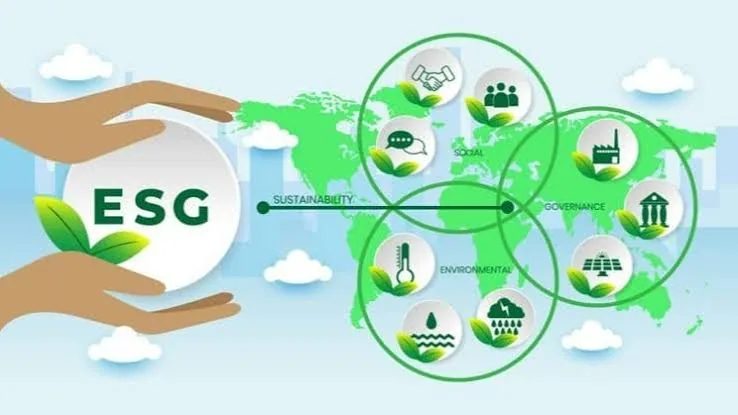
Don’t always cut intermediaries. A transparent partner reduces risk when the BOM is complex, multiple factories feed one order, compliance exposure is tight, or you lack local oversight. Compare Guangzhou sourcing agents, Yiwu sourcing agents, and our ESG compliance framework before you decide.
Red-flag checklist in plain text: mismatched bank and license names; no active WIP visible; quote rises when proof requested; no material or tolerance knowledge; audit delays.
🧠 Expert’s Verdict: The most common failure isn’t a fake license. It’s a surface-clean supplier with mismatched entities and production sites. Trust paper trail and floor, not storefront badge.
People Also Ask About Avoiding Middlemen Suppliers
1. How do I know if a supplier is a real manufacturer or a trading company?
Request the Chinese legal name and 18-digit Unified Social Credit Code. Look it up in the official GSXT database. Check business scope for production keywords like 生产 (manufacturing) or 制造 (fabrication). But paper is only the first lock. In our 40-file audit, matching entity records to bank names exposed three trading shells. Always pair the document check with the live video walkthrough from Step 3.
2. What documents should I request from a China supplier?
Ask for a clean business license scan, bank beneficiary name, proforma invoice, and export-entity explanation. Check that every name matches exactly. In one electronics case, a mismatched bank name exposed a Hong Kong trading layer. Factories return matched documents fast. Brokers send blurry scans and ask why you need so much detail. See Step 1 for the full legal identity pack.
3. Can I trust Alibaba badges like "Gold Supplier" or "Verified Manufacturer"?
No. Badges are paid visibility, not verification. Two suppliers with storefront badges sent blurry licenses and mismatched bank names during our review. I treat badges as zero signal. The real filter is entity matching in Step 2 plus the floor walk in Step 3.
4. Should I always avoid trading companies?
No. Keep a trading layer when the BOM is complex, MOQ is low, mixed catalogs need consolidation, or short-term convenience matters more than unit price. The problem is hidden markup, not the middleman structure itself. Compare total landed cost before deciding. See the table in Step 4.
5. How long does supplier verification take?
Plan for one day to request documents, one day for entity matching, and one to three days for video or audit proof. My same-week screen is realistic if the supplier responds quickly. Factories return clean matched documents within one working day. Brokers stall and ask why you need such detail.
6. What is the fastest way to verify a factory without visiting China?
Run a live video walkthrough over WeChat or Zoom. Ask for a lightly unplanned tour. Hold the product to the camera first. Ask daily output, stocked materials, and current work-in-progress. In one audit, a broker showed the same floor from two angles. A real factory shows workers, noise, and flow in under 15 minutes.
My Experience: The fastest tell is not a badge. It is the supplier’s reaction when you ask for bank-name verification. Factories answer in hours. Brokers ask “Why do you need that?” That question deserves a hard pause.
Conclusion
You now own a repeatable proof stack. Run the document check, the floor check, and the total-cost comparison. Approve only a pilot order first. Green light means a clean paper trail, direct answers, and a pilot that behaves exactly like the approved sample.
Based on our review of 40 supplier files and 12 live video audits, factory-direct is only cheaper when the proof, control, and accountability are also direct.
Full disclosure: LeelineGroup provides sourcing and supply-chain services. We charge a transparent 3%-7% service fee and take no factory kickbacks. Any comparison table should state assumptions, fee structure, and scope clearly.
Do you need help with this audit process? Contact our dedicated support team directly. We will audit your selected supplier today.
For deeper branches, see how to import from China, our private label China guide, and global vs local sourcing.

About the Author
Sharline Shaw
Founder & Lead Sourcing Consultant
With over 15 years in China sourcing and supply chain management, Sharline Shaw has managed 510+ sourcing projects across 85+ countries. Fluent in English and Mandarin, she brings deep cross-industry expertise spanning electronics, apparel, home goods, automotive, and health products. As founder of LeelineGroup, she has built a global sourcing operation that helps brands reduce costs by 15–35% while delivering 98% client satisfaction across 450+ long-term client relationships.
Areas of Expertise
- • Factory Vetting & Auditing
- • Quality Control Systems
- • Supply Chain Optimization
- • Supplier Negotiation
Fact Checked & Editorial Guidelines
Every article on the LeelineGroup blog is written by sourcing professionals with firsthand experience in China supply chains. Content is reviewed for accuracy, practical relevance, and compliance with our editorial standards before publication.
Your trust is important. Learn more about our Fact Checking Process and Editorial Policy.