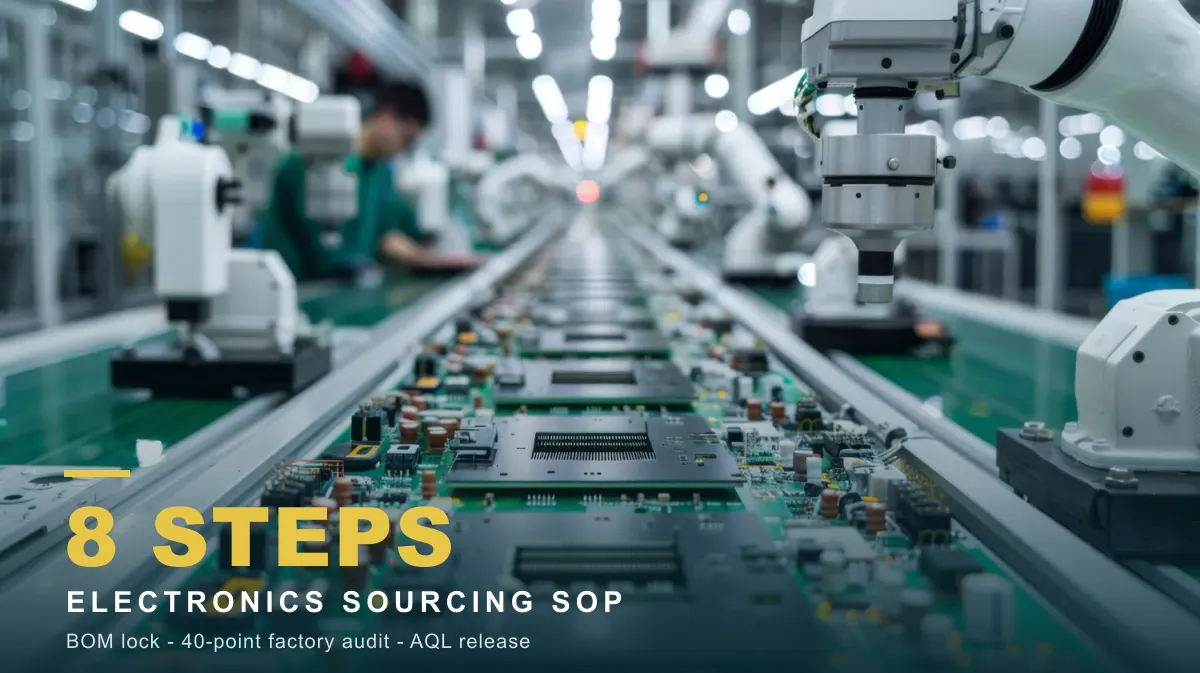
Two units can look identical but hide different chipsets, cells, firmware, connectors, or test reports. This guide teaches how to source electronics from China as spec control, not a factory list. I built it from on-site Shenzhen audits, locked BOM reviews, sample teardowns, and QC data.
Scope: finished electronics, IoT devices, and PCBA-backed products. Outside scope: component-only work and general China sourcing; see product sourcing.
At a glance: This is written for mid-market and enterprise buyers. Budget two to three hours to assemble your spec packet, and plan ten to eighteen weeks for the full cycle from spec lock to shipment. Difficulty: advanced. Lock the spec files before any deposit.
Key Takeaways
The controls that decide whether an electronics order ships clean or stalls at the dock:
- Lock the spec and controlled BOM before you request quotes. A written BOM with MPNs, an approved vendor list and an ECN path is what stops silent component swaps.
- Classify every SKU before you pick a route. Battery, wireless and app-connected products carry risks such as UN38.3, RF approval and firmware control that a standard-accessory process misses.
- Audit the factory on site. Score the 40 checkpoints for ESD, IQC, traceability and test capability, and approve only at 85/100 with zero critical failures.
- Tear down the sample and seal a gold sample. Match every MPN, the PCB revision, firmware and cell lot to the BOM, then lock a versioned reference unit.
- Verify every certificate against the exact SKU and BOM. A report for a similar model is not evidence; check the model, revision, lab and issue date.
- Release only on inspection data and hazmat clearance. Critical defects are zero tolerance, and a missing UN38.3 summary blocks any lithium-battery shipment.
Prerequisites
My team vetted this checklist on fourteen Shenzhen electronics builds. No supplier paid us.
- Minimum inputs: target SKU or reference unit, intended market, forecast volume, target landed cost, Incoterm preference, launch date, packaging requirements, firmware/app requirement, compliance markets. Skip one and shortlisting stalls.
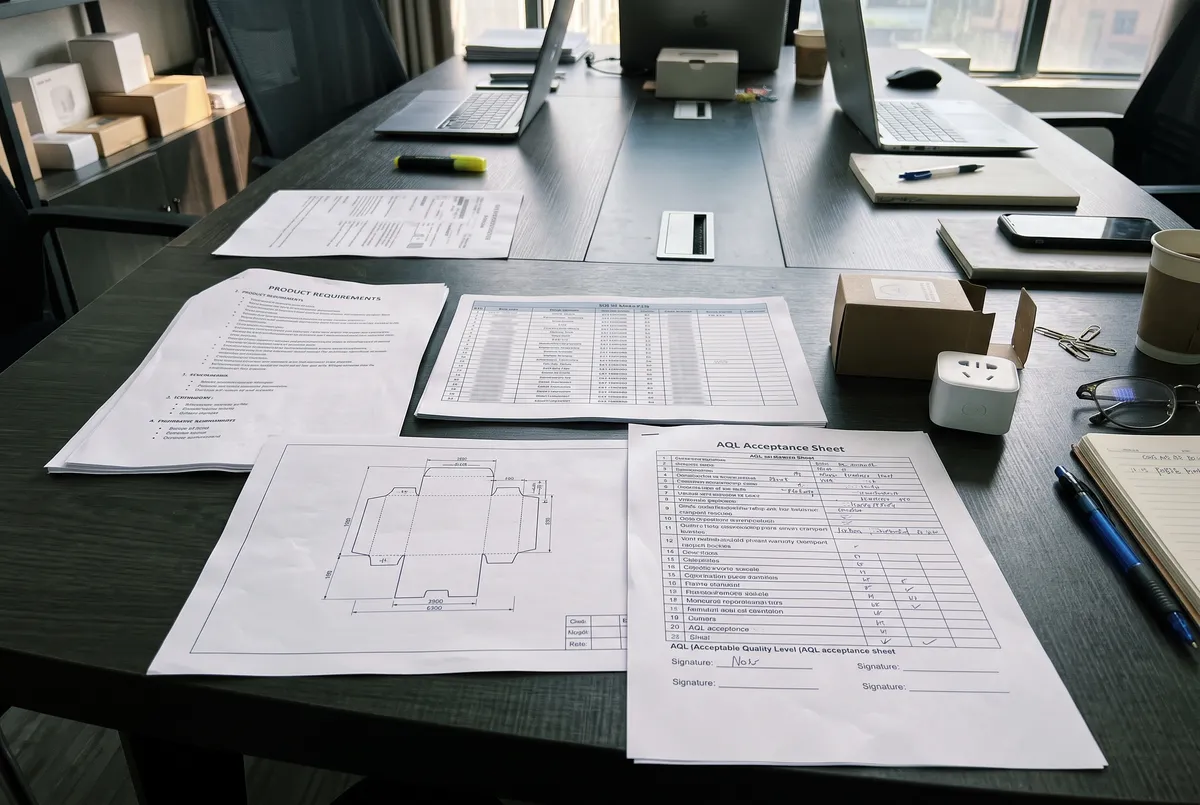
- Draft specification packet: PRD, target BOM or reverse-engineered sample notes, packaging dieline notes, acceptance criteria at AQL 1.5/2.5.
- Access and authority: procurement owner, engineering approver, compliance owner, ECN sign-off authority.
- Time estimate: ten to eighteen weeks. Shortlisting takes one to two weeks, the audit one to two, sampling two to four, compliance check one to two, the pilot one to two, mass production three to six, and shipment booking one. Certificate checking is one to two weeks; if you need fresh lab testing, add four to eight weeks.
⚠️ Safety First: Mains-powered, lithium-battery, RF/wireless, and children’s products need extra review before PO; dangerous-goods paperwork and battery labeling are the usual gaps. Check the UN Model Regulations before you book.
How to Source Electronics from China: The 8 Essential Steps
Protect your margin by treating sourcing as spec control. This eight-step factory playbook covers MOQs, SMT lines, and QC.
Step 1: Classify the Product and Pick the Sourcing Route

Before I compare quotes, I put every SKU through a product-type matrix. I learned this after a charger sample passed and a wireless unit failed on antenna layout and battery labeling.
| Product type | Sourcing difficulty | Hidden risk | Why spec control gets harder |
|---|---|---|---|
| Standard accessory | Low | Cable gauge, connector plating | Drawings and incoming inspection cover most risks |
| Battery product | Medium-high | Cell grade, UN38.3 label, BMS cutoff | Safety and shipping rules add cell lot traceability |
| Wireless product | High | Antenna keep-out, RF tuning, modular approval | Layout and firmware change RF; lab tests are needed |
| App/firmware smart device | Very high | Firmware owner, cloud dependency, OTA control | App and firmware releases change behavior after shipment |
In buyer language, OEM means you own the design and the factory builds it. ODM means the factory owns the design and you brand it. Custom development means you co-engineer a new product. For a seven- or eight-figure brand, use OEM or custom when IP and spec control matter. Use ODM for fast category tests with written exclusivity.
A direct factory gives cost and control. Trading companies give convenience but hide the source. A sourcing agent gives local eyes but adds a layer. Huaqiangbei gives fast samples but weak traceability. Shenzhen moves fast on PCBA and firmware. Dongguan runs deep on molds, plastics, and assembly. Most builds use both cities.
Record how the route shifts MOQ, tooling exposure, compliance burden, and lead time. For wireless units, check FCC equipment authorization before quoting. At sample review, a simple charger feels light and has a sealed shell and clean connector fit. A wireless IoT unit shows antenna keep-out, battery label, firmware QR, and more connectors.
Use a direct or managed factory for repeat volume. Use Huaqiangbei or a trader only to benchmark samples fast.
✅ Done when: every SKU has a named risk class, a chosen route, and a written list of the evidence you still need. If you cannot name the firmware owner or the battery label, stop.
From the floor: A buyer I worked with skipped this matrix and bought a lithium-battery product through a trader. The sample passed our check. The mass-production cartons arrived without the required battery labels. We caught it at pre-shipment, relabeled, and rebooked the shipment. That detour cost three weeks. Now I classify every SKU before I pick a route.
Step 2: Lock the Spec Sheet and Controlled BOM Before You Request Quotes

Do not request quotes yet. In our Shenzhen audits, quotes without written spec control invited silent swaps. I require the spec packet and BOM rules in writing first.
Spec sheet fields: lock every non-negotiable item: chipset or module family, PCB revision, battery cell brand/capacity/configuration, USB or charging protocol, firmware version, antenna/wireless stack, plastics grade, accessories, packaging, labeling, and carton requirements.
Controlled BOM lock workflow: publish an approved BOM schedule. Record exact MPNs. Name the approved vendor list. Define the alternate policy. Set the ECN approval path. Add an obsolescence notice rule. I use this same gate with LeelineGroup’s controlled BOM lock.
EBOM to factory BOM: convert the engineering BOM into a purchasable factory BOM. Keep MPNs and tolerances. Map each line to an approved vendor. Do not drop engineering intent.
Two traps: “same model, different board” is common. PCB revision marks, cell wraps, and connector fit can all change between “identical” units. “Inflated battery capacity” is the second trap. Require cell brand, lot, and capacity test proof.
“The swap is rarely in the chipset everyone checks. It is a passive, a cell, or a connector on a BOM line nobody re-reads,” says Sales Manager Yumi L., who works across electronic components.
Buyer approval gate: any capacitor, chipset, connector, or cell substitution needs buyer sign-off. No production release without it.
If your product is a low-complexity accessory without a full EBOM, use a simplified spec-and-sample lock instead.
✅ Done when: you hold a signed BOM lock sheet, an ECN log, an approved vendor list, and a sample sign-off from your procurement owner and engineering approver.
From the floor: On one charger build, the factory swapped the USB-C connector after sample approval. Connector wobble showed up at AQL inspection. We stopped the line and forced an ECN.
Step 3: Build the First Shortlist and Screen Out Middlemen
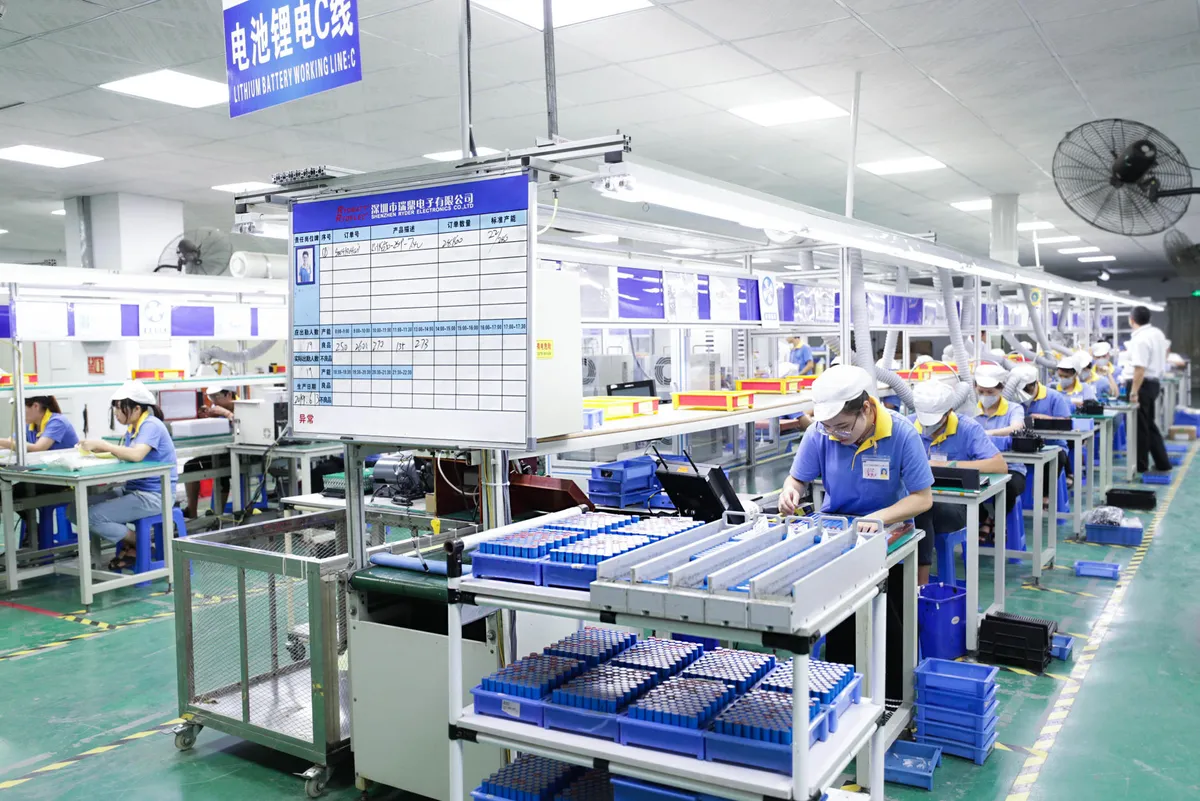
Start with referrals, vetted factory networks, trade-show contacts, controlled marketplace search, and a Shenzhen sourcing agent when local verification is needed. I sent three technical questions before quotes. Real factories answered line-level details fast. Quote brokers stalled. Generic factory photos are a tell.
| Type | Visibility | MOQ | Engineering | Markup risk | Corrective action |
|---|---|---|---|---|---|
| Factory | High | Flexible | Deep | Low | Owns line fixes |
| Trader | Hidden | Flexible | Shallow | High | Blames factory |
| Market stall | Low | Very flexible | None | Medium | Swaps sample only |
Identity screen: match the business license, legal name, export history, ownership structure, and quote issuer. Confirm the quote issuer is the manufacturer. Capability screen: in-house SMT versus outsourced PCBA, firmware support, test-fixture ownership, after-sales engineering. Hidden middlemen dodge line-level questions. Unauthorized subcontracting shows as slow answers and generic photos. Follow how to verify suppliers for the full identity check, and read hidden sourcing costs before you compare ex-works quotes.
Match the legal name on the license, the quote, and the bank account — not the badge or the logo on a website. See how to find reliable suppliers and the red flags of Chinese suppliers to read the early signals.
If you lack audit bandwidth, bring in a sourcing agent who can verify on the ground. Read how to find a sourcing agent in China before you choose one, and weigh supplier risk management in the final call.
✅ Done when: you have the business license, a legal-name match, export records, an ownership chart, the quote-issuer ID, and factory-address proof — all before deposit or tooling payment.
From the floor: One trader’s bank account name did not match the business license. We walked before paying.
Step 4: Audit the Factory on Site with the 40-Checkpoint SOP
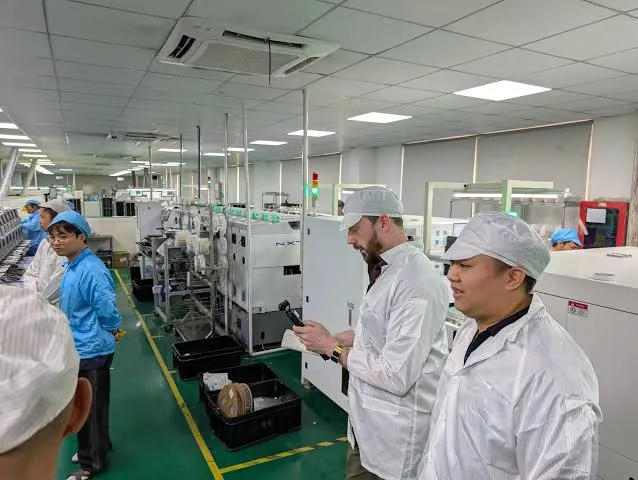
A valid license and ISO paper do not prove electronics competence. I walk the Shenzhen floor before opening the scorecard. I check ESD control against ANSI/ESD S20.20 or IEC 61340-5-1. I ask for the last wrist-strap and floor test logs. For moisture-sensitive chips, I check dry storage and bake records under J-STD-033.
I run the 40-checkpoint audit in eight groups: facility and legal identity, SMT ownership and capacity, ESD controls, IQC, test capability, process traceability, environmental and burn-in, and corrective action. Each checkpoint is scored and weighted to a 100-point total, and a defined set of items count as critical. One critical fail stops the audit, even at 90/100.
On the floor, count SMT lines. Check feeder setup and the smallest passive size. Confirm BGA capability and reflow profile logging. Watch AOI, ICT/FCT, and X-ray access for hidden joints. Review soldering rework discipline.
Pull IQC records, lot traceability, humidity/temperature logs, aging-room process, and calibration logs. Verify ISO 9001 scope using the official ISO 9001 overview. Confirm whether SMT, test, and burn-in are in-house or outsourced.
The factory’s QA manager put it plainly: most factories fail on traceability, not machines. Every unit has to trace back to a lot, a revision, and a test record.
If you cannot fly in, a live video walk can screen out weak factories. It cannot replace a floor audit for complex electronics.
✅ Done when: the factory scores at least 85/100 with zero critical failures before you approve a sample or a pilot.
From the floor: The full walk took six hours across two lines. A paper-only review would have missed a gap in the reflow logs.
Step 5: Run the Tactile Sample Review and Lock the Gold Sample

Treat electronics samples as future production standards, not sales demos. Slow this review down. The sample you approve becomes your production standard.
Start with visual inspection. Check casing seam gaps, connector insertion force, button feedback, and label placement. Note boot time and any delay. Then teardown. Match the PCB revision to the controlled BOM.
Verify chipset, cell brand/capacity, connector MPN, and firmware version. Run charge-discharge, thermal rise (record °C), compatibility, and app pairing. Review packaging and handling, including drop and carton scuff points.
Work line by line against the BOM and spec sheet. Tick every MPN, tolerance, and label. Any mismatch blocks approval. Ask the factory to show the test fixture, test steps, and pass/fail limits used on this sample. Confirm they can repeat those conditions in mass production.
Lock a gold sample with a version number, a sealed reference unit, a signed approval record, and a photo set.
If you are sampling a simple accessory, a lighter matrix is fine — but still document the approval.
✅ Done when: BOM, spec sheet, PCB revision, firmware, cell lot, test fixture, and a signed gold sample all match before pilot or mass approval.
From the floor: We tested two “identical” samples side by side at room temperature under load. Sample B booted four seconds slower and ran 9°C hotter. Teardown showed the silk-screen read V1.2 on one and V1.4 on the other. We rejected Sample B before the pilot.
Step 6: Run Forensic Checks on Every Certificate and Test Report

A certificate is only useful if it matches the exact SKU, PCB revision, wireless configuration, battery configuration, and approved BOM.
Check the model/SKU, applicant and manufacturer, test standard, issue date, sample photos, lab identity, and report scope. Scope must match your market: in the US, FCC rules cover radio and emissions, and retailers like Amazon often add a UL or other lab listing. In the EU, wireless products need CE under the Radio Equipment Directive; see CE vs FCC vs RoHS for how the three regimes differ.
They also need RoHS, REACH, and GPSR documents, and battery products face the EU Battery Regulation plus UN38.3 and IEC 62133. The UK still accepts CE for many products; check GOV.UK for your category.
A senior QA engineer on our Shenzhen audits described the pattern: fake reports fail on boring details. The model name is one digit off. The issue date is older than the PCB revision. The lab seal is a photocopy. Real reports match the BOM line by line.
Verify that wireless, charger, and battery claims use the correct report family. A Bluetooth device needs an FCC ID and an RF exposure report. Do not accept generic folder filler. Map every report back to the approved BOM and gold sample, and do not accept a report for a similar shell.
Review the documents yourself and verify the lab independently. If you lack in-house staff, hire a compliance specialist. Cross-check each report against your product certification records, and see how to avoid fake certifications and lab testing vs factory testing.
✅ Done when: every report field matches your SKU, BOM revision, and gold sample. If not, reject the batch.
From the floor: In our audits, three of ten suppliers sent recycled reports. One showed a lab seal from a lab that had closed two years earlier. We rejected the entire folder.
Step 7: Turn the Approved Sample Into a Manufacturing-Control System
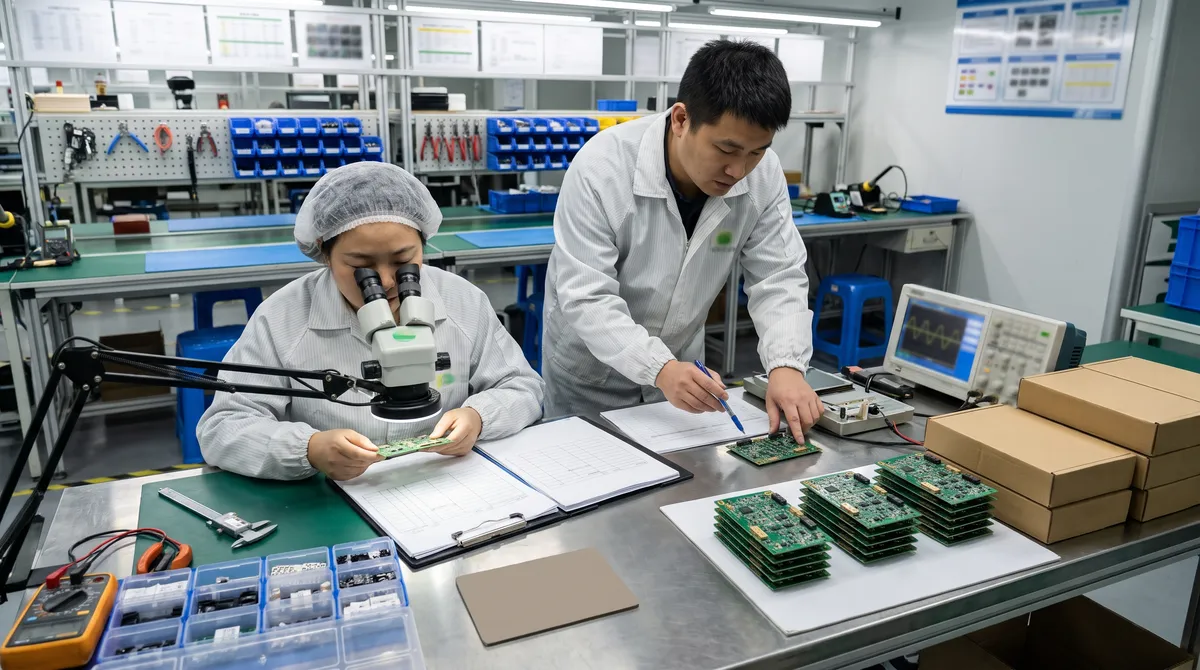
The biggest risk starts after sample approval. I run a factory launch meeting with buyer, QA, engineering, and line supervisor. The gold sample must become a controlled production record.
Publish this anti-substitution stack before the PO:
- A controlled BOM clause with frozen MPNs and alternate policy.
- The approved vendor list.
- A written ECN workflow and change-notification rule.
- Pre-production sample approval.
- First article inspection signoff.
For PCBA, lock the QC playbook before the first board moves: AOI, ICT/FCT where applicable, X-ray for hidden joints when needed, and written defect-class definitions. On the line, I expect lot stickers, first-article signoff sheets, AOI screens, and boards staged at 25%, 50%, and 75% in-process checks.
In buyer language, AQL and IPC-style criteria do different jobs. The workmanship standard defines acceptable quality. The sampling plan defines how many units to inspect and when the lot fails.
In one program, we replaced an unvetted factory, enforced IPC-A-610 Class 2, and added 25/50/75 in-process checks. Defects fell from 4.8% to 1.1%, and warranty cost dropped 37%. We counted defects at final AQL inspection, not on the line.
If you run lower volumes, you can use outsourced QA oversight, but keep the approval chain with you. Tie the control system to your quality control plan, gate it with pre-shipment inspection, and use the factory audit checklist as the readiness test.
✅ Done when: the factory holds traceability, BOM revision, the ECN log, first-article signoff, AOI/ICT/X-ray records, in-process sheets, and final inspection data — and you hold the line on any unapproved change.
From the floor: In one launch, the factory printed lot stickers after the 50% check. The AOI screen had no timestamp. We paused the line until QA rebuilt the traceability packet. It cost eleven hours.
Step 8: Release the Shipment Only After Inspection and Hazmat Clearance
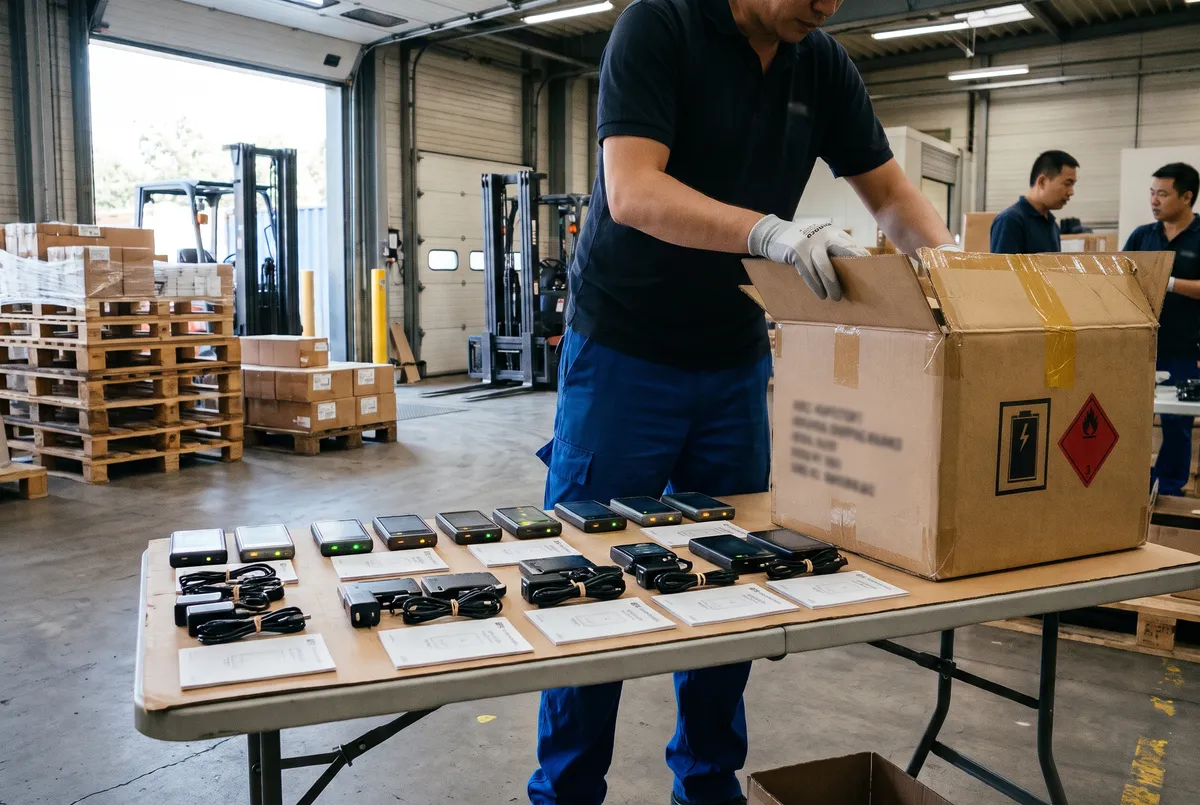
I do not let goods move until function, labeling, and dangerous-goods paperwork line up. Before release, I check the last pallets at the loading bay myself. I test power-on and core functions. I check cosmetics and count accessories. I match carton labels, barcodes, and user manuals. I squeeze cartons to feel packaging integrity and scan every barcode for legibility.
We sample under ISO 2859-1 at General Inspection Level II. Critical defects get zero tolerance. Major defects use AQL 1.5, or 1.0 for safety-critical SKUs. Minor defects use AQL 2.5. Write these limits into the PO, so the factory can’t argue later. I reject any safety, labeling, or function failure.
Battery products need a UN38.3 summary, MSDS/SDS when required, battery configuration, hazard class, carton marks, battery labels, and carrier-mode limits. Lithium-ion batteries ship as UN3480 (standalone) or UN3481 (packed with, or contained in, equipment). Lithium-metal cells use UN3090 or UN3091. All are Class 9.
Ask for the UN38.3 test summary for that exact cell and battery. Check it against the UN Model Regulations, Rev. 24. Air freight also follows IATA rules. Amazon may ask for an SDS and an exemption sheet before it accepts FBA stock.
Only my procurement owner and QA approver can release it. A missing UN38.3 summary blocks shipment.
Do pre-shipment inspection at the factory, buyer-side or third-party. A warehouse recheck on consolidated cargo is useful, but it never replaces factory release control. For the freight side, see shipping from China and Amazon FBA prep services. Compare DDP vs DDU before you book.
✅ Done when: only your procurement owner and QA approver can release, and a missing UN38.3 summary blocks shipment.
From the floor: In one Shenzhen release, a missing UN38.3 summary held a battery lot for three days while we rebuilt the paperwork.
Troubleshooting
Sample Passed, Mass Production Failed
Problem: gold sample approved, but mass units fail. Cause: uncontrolled BOM or subcontracted PCBA. What I do next:
- Stop shipment. Quarantine the lot.
- Trace lot numbers. Compare units to the sealed gold sample.
- Reopen the ECN. Demand a signed BOM lock and sub-tier PCBA disclosure.
Read during-production inspection to catch the drift before final inspection.
Certificates Look Real But Don’t Match the Unit
Problem: supplier sends CE/FCC/UN38.3 files that look genuine. Cause: a recycled or mismatched report from a similar SKU. What I do next:
- Verify model photos, applicant, revision, and lab details against the actual unit.
- Quarantine until confirmed. Reject if any field is off.
Battery Shipment Blocked by Carrier or Amazon
Problem: carrier or Amazon blocks the shipment. Cause: incomplete dangerous-goods paperwork or a wrong battery declaration. What I do next:
- Fix the UN38.3 summary, MSDS/SDS, and declaration.
- Relabel cartons if needed. Rebook on the correct route. Do not guess.
Do not do this:
- Approve a sample without a controlled BOM.
- Compare suppliers on ex-works price alone.
- Pay balance before inspection and shipping-file review.
🧠 Editor’s Verdict: Silent component drift after approval is the #1 failure point. It is a control problem, not a quality problem. Fix the control system, not just the batch.
People Also Ask About How to Source Electronics from China
1. What is the safest way to source electronics from China?
The safest way is to lock the spec and controlled BOM before you request quotes. Then verify the factory, match every certificate to the exact SKU and BOM, and gate release on inspection data. Quotes without written spec control invite silent swaps (see Step 2). No sign-off, no production release.
2. How do I stop a Chinese factory from swapping components?
Use a controlled BOM, approved vendor list, ECN workflow, and buyer sign-off on every chipset, capacitor, connector, or cell change. Any substitution needs written approval before production release. The teardown check in Step 5 shows how a board revision can slip past a “same model” label.
3. How long does a China factory audit take?
Plan one full day for a focused electronics audit. Walk the line, pull IQC records, check ESD, burn-in, calibration logs, and traceability. Remote video is only a filter, not a final gate for complex electronics. Score the result against the 40 checkpoints and keep a critical-failure veto.
4. What MOQ is realistic for custom PCBA in China?
Most of our custom PCBA runs start at a few hundred to about a thousand units, and setup drives that floor. Each run needs a stencil, feeder setup, a test fixture, and a first-article check. Chips and passives also come in full reels, so small runs pay pilot prices. Ask for a quote with setup costs on a separate line. See what MOQ actually means before you negotiate.
5. What inspection standard should I use for electronics from China?
Use AQL 1.5 lot sampling for branded electronics, and move to AQL 1.0 for high-value or safety-critical SKUs. Keep critical defects at zero tolerance, and write the limits into the PO so the factory cannot argue later. Read the AQL inspection standard for the sampling math.
6. What paperwork does a battery shipment need from China?
At minimum: a UN38.3 summary, MSDS/SDS when required, the correct battery label, hazard class, carton marks, and carrier-mode limits. Check the UN Model Regulations, Rev. 24 for carrier rules. Release only after procurement and QA sign off.
7. How long does China electronics sourcing take?
Plan ten to eighteen weeks from spec lock to shipment: shortlisting one to two weeks, the audit one to two, sampling two to four, compliance one to two, the pilot one to two, mass production three to six, and booking one. If lab re-testing is required, add four to eight weeks. Build that buffer into your launch date.
8. Can I use Huaqiangbei for private-label electronics?
Use Huaqiangbei for samples and benchmarking, not mass production. Market-stall samples often change at production because traceability is weak. For private label, move to a verified factory with a controlled BOM and lot traceability. Read the product inspection guide before you accept any sample as final.
Conclusion
Safe China electronics sourcing comes down to four controls: lock the spec, verify the factory, tie compliance to the BOM, and control release. Our Shenzhen audits show silent BOM swaps and mismatched reports cause more delays than line speed. Turn today’s notes into a sourcing brief, a controlled BOM, and an audit-ready supplier scorecard.
Then send the packet for screening, not a vague price request. Contact LeelineGroup for supplier screening, audit planning, BOM control, or inspection support. For a managed service, see the Shenzhen sourcing agent and supplier sourcing.
Disclosure: This article draws on LeelineGroup operating experience. LeelineGroup provides sourcing, audit, QC, and logistics services.

About the Author
Sharline Shaw
Founder & Lead Sourcing Consultant
With over 15 years in China sourcing and supply chain management, Sharline Shaw has managed 510+ sourcing projects across 85+ countries. Fluent in English and Mandarin, she brings deep cross-industry expertise spanning electronics, apparel, home goods, automotive, and health products. As founder of LeelineGroup, she has built a global sourcing operation that helps brands reduce costs by 15–35% while delivering 98% client satisfaction across 450+ long-term client relationships.
Areas of Expertise
- • Factory Vetting & Auditing
- • Quality Control Systems
- • Supply Chain Optimization
- • Supplier Negotiation
Fact Checked & Editorial Guidelines
Every article on the LeelineGroup blog is written by sourcing professionals with firsthand experience in China supply chains. Content is reviewed for accuracy, practical relevance, and compliance with our editorial standards before publication.
Your trust is important. Learn more about our Fact Checking Process and Editorial Policy.